


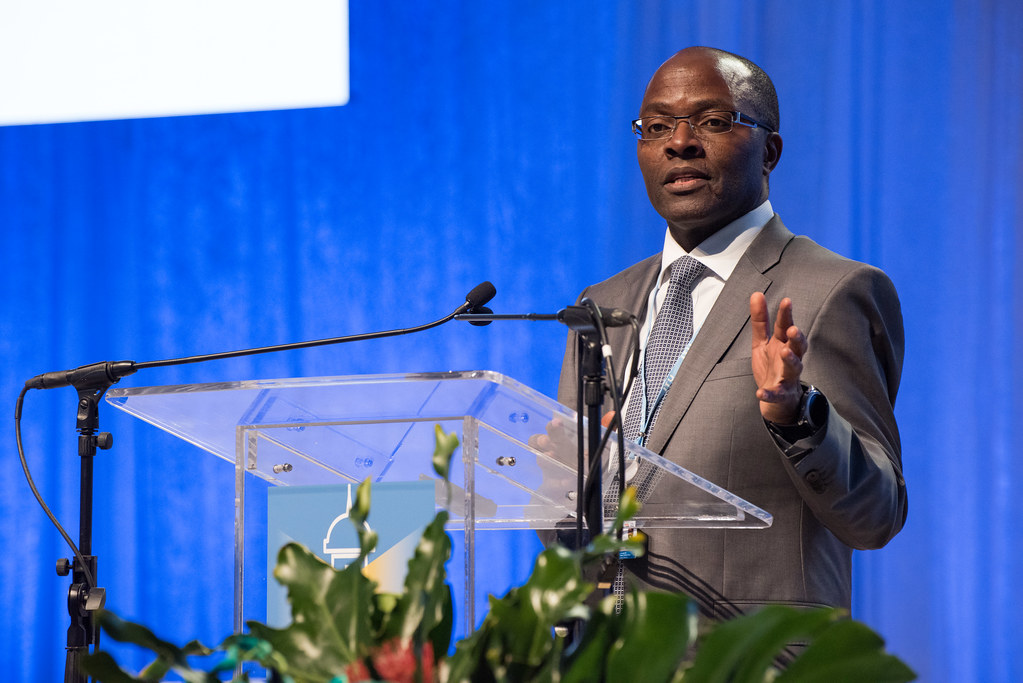

I am pleased to present you the 2023 edition of Facts and Figures, ITU’s independent, meticulously researched, and timely snapshot of the state of digital connectivity around the world.
The Facts and Figures series is an important record of where we are – and a good motivator to drive us to where we want to be. By mapping important data sets, we have a better understanding of how and where to put our resources and efforts towards achieving our goal of universal and meaningful connectivity.
There are reasons to be optimistic. According to our estimates, just over two-thirds of the world’s population are now online, with some 280 million new Internet users in 2023. Connectivity is progressing everywhere, but at different pace. On average, connectivity in the least-connected countries is tending to grow faster than that in other countries, but from an extremely low base. Currently, there is no evidence at the aggregate level of catch up or leapfrogging.
As we strive towards our goal of universal connectivity, we must address digital disparities across and within regions, and among populations. New technology introduction may bring new divides, and this is already proving the case for 5G. Global estimates produced here for the first time show that 89 per cent of the population in high-income countries is covered by 5G. In low-income countries, only one per cent of the population is covered.
In fact, 3G – not even 4G – remains by far the most prevalent mobile broadband technology in the poorest countries, where more than 20 per cent of the population remains off the connectivity grid.
Affordability is a significant enabler of connectivity and Internet has become more affordable in all regions and for all income groups. However, in low-income countries, the typical price of an entry-level mobile broadband subscription is equivalent to 9 per cent of average income, a share twenty times higher than in high-income countries. In many countries, fixed-broadband Internet is prohibitively expensive, if it is available at all. Fixed-broadband technology expands our digital capabilities as it is needed for the most data-intensive applications of the Internet.
Indeed, Internet traffic estimates, published here for the first time, reveal that fixed broadband accounts for 83 per cent of the world’s traffic, despite the rise of mobile broadband subscriptions and their greater affordability. This highlights the importance of investment in both fixed and mobile broadband infrastructures to meet user needs.
The importance of data collection and analysis are paramount in digital development. Data is relied upon by our Member States, our partners, and all the stakeholders committed to achieving universal and meaningful connectivity. With its robust evidence and global reach, ITU’s Facts and Figures remains a powerful advocacy tool to accelerate digital uptake worldwide. We can – and must –ensure that the benefits of digital connectivity are shared by all, laying the foundation for a more inclusive and sustainable future.
By Cosmas Luckyson Zavazava
Director, Telecommunication Development Bureau International Telecommunication Union
Source: Measuring digital development. Facts and Figures 2023, By ITU





![Addressing the gaps and challenges to unlock the full potential of AI in Africa [Report]](https://www.digitalbusiness.africa/wp-content/uploads/2024/04/State-of-AI-in-Africa-2023-696x456.png "Addressing the gaps and challenges to unlock the full potential of AI in Africa [Report]")
