


[Digital Business Africa] – As the 14th WTO Ministerial Conference (MC14) in Yaoundé approaches, tensions are rising around a central issue: whether to maintain the moratorium on customs duties applied to electronic transmissions, in force since 1998.
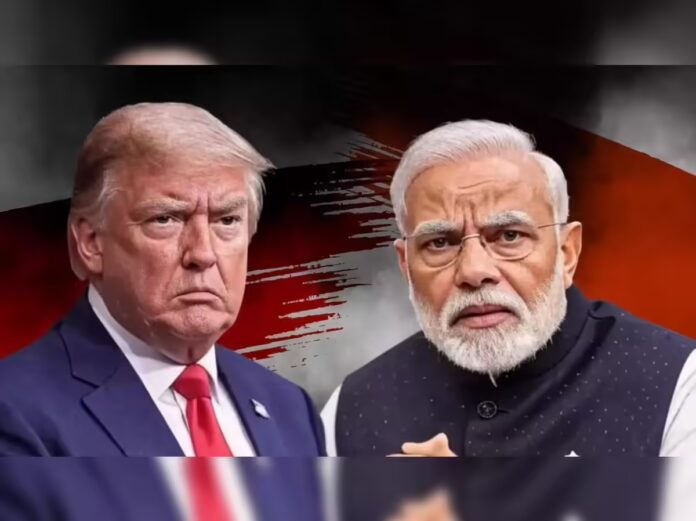
The United States and a wide group of countries — including Singapore, Switzerland, Japan, Korea, Australia, and several Latin American nations — are officially proposing to keep the moratorium on customs duties on electronic transmissions. They want to extend it, or even make it permanent.
India, for its part, is firmly opposed.
And the outcome of this standoff could determine the future of global digital trade… and that of the WTO itself.
Washington wants a tariff-free global Internet
In an official communication dated 17 March 2026, the United States and its partners state:
“The practice of not imposing customs duties on electronic transmissions has played an important role in the development of the digital economy.”
They therefore call for maintaining the moratorium, defining electronic transmissions as: “any transmission made using electromagnetic means, including its content.”
The moratorium is Washington’s top priority in Yaoundé.
U.S. Ambassador Joseph Barloon summed it up as follows: Maintaining the moratorium would give the United States the confidence to “remain fully engaged” in the WTO.
A diplomat quoted by Reuters warned:
“If Jamieson Greer (the 20th United States Trade Representative (USTR)) leaves Yaoundé without a moratorium, U.S. proclamations about the death of the WTO will grow even louder.”
Trump was already pushing this vision in October 2025
As early as October 2025, Donald Trump announced his intention to establish “a global digital economy free of tariffs and taxes.”
According to Bloomberg, his administration had already secured commitments from Malaysia, Cambodia, and Thailand to support the WTO moratorium.
Washington was even seeking to make it permanent to lock in a global digital order aligned with U.S. interests and the dominance of major tech companies.
India says no: firm, reasoned, and strategic opposition
While South Africa’s position remains unclear, India has confirmed that it will oppose any permanent extension of the moratorium.
An Indian representative, quoted in the minutes of a WTO meeting on December 2, stated:
“We do not support the extension of the moratorium. The development of e-commerce should not be confused with the supposed benefits of the moratorium. The cost of the moratorium is almost entirely borne by developing countries that are net importers of digital products, while its benefits accrue to a few developed countries.”
For New Delhi, the moratorium deprives developing countries of crucial tax revenues, as physical goods shift to digital formats.
India insists:
“A reconsideration of the moratorium is essential to preserve policy space and achieve domestic industrialization.”
And it is not just saying no.
It is proposing concrete actions:
- targeted technical assistance on digital literacy and e-commerce skills;
- transfer of digital technologies to developing countries and least-developed countries;
- an international mechanism to connect digital infrastructure needs with available financing.
In short, no moratorium without a genuine digital development agenda.
The United States responds: taxing digital trade would intensify the digital divide
At the same meeting, the U.S. representative replied:
“Imposing customs duties on electronic transmissions would undermine efforts to bridge the digital divide. It would impose significant administrative burdens and divert resources that could be better used to close that gap.”
Washington, therefore, wants to make the moratorium a cornerstone of the future global digital order.
An explosive reform context
Discussions on the moratorium are taking place in an already tense climate.
Internal WTO documents show that:
- the United States wants reforms,
- but rejects a detailed work program,
- while the EU, the United Kingdom, and China are calling for one.
Ngozi Okonjo-Iweala warns:
“I expect a difficult ministerial conference.”
Ministers will also debate the Most-Favoured-Nation (MFN) principle, which governs 72% of global trade.
Washington considers MFN to be “outdated for this era.”
A major issue for Africa
For African countries, maintaining the moratorium:
- reduces the cost of access to technologies;
- supports digital startups;
- avoids harmful tariff fragmentation;
- facilitates integration into global digital value chains.
However, some African governments share India’s concerns: how to compensate for tax revenue losses linked to dematerialisation?
MC14, the first WTO Ministerial Conference held in Central Africa, thus places the continent at the heart of a global debate on the future of digital trade.
Yaoundé, the stage for a battle over the global digital order
With the United States pushing for a tariff-free Internet, India refusing to give in, the European Union seeking to redefine the rules, and China defending multilateralism, MC14 is shaping up to be one of the tensest in recent WTO history.
What is at stake in Yaoundé goes far beyond the technical framework of e-commerce: it is the architecture of the future global digital order that is being shaped.
Digital Business Africa, which you will find at the Yaounde Conference Centre during MC14, will closely follow the negotiations and the reactions of African delegations in the coming days.
By Beaugas ORAIN DJOYUM
Also read: