Home Blog Page 6

Eddy Kayihura [AFRINIC CEO] : “All AFRINIC Services are continuing as normal and we do not foresee any service disruption”

Eddy Kayihura sheds some light on the issue surrounding the freezing of AFRINIC Financial Accounts on 23rd July 2021. Watch the video.

Synopsis

The main purpose of this video is to shed light on the issues surrounding the freezing of AFRINIC Financial Accounts on 23rd July 2021.

1) What is the current situation?

Last week, Friday, July 23rd 2021, one of our banks informed us that they received and enforced a court order to freeze 50 Million USD on AFRINIC’s accounts. The paperwork from the Bank states a debt of USD. 50 Million that AFRINIC may have contracted. This only affected the outflow of funds and we expect to hear more about it in the coming days when papers will be duly served to us.

I would like to emphasize that the procedure that the applicant used is a normal procedure that is accepted in multiple jurisdictions aiming to protect creditors and ensure that the debtor would not evade the payment once they hear about a claim against them. However, this is a temporary mechanism that allows the judiciary to operate in a safe environment until a decision by the court is made.

2) How have the AFRINIC operations been affected?

As we speak, all AFRINIC Services are continuing as normal and we do not foresee any service disruption or any lowering of the quality of service.

From the mailing list, One member raised a question about staff salaries and I am glad to inform you that the freezing order came after our payday and salaries had already been processed. At the moment, only three members of staff are yet to receive their July salaries and that is being attended to through internal solidarity mechanisms. It is important that I commend the attitude of my colleagues who have exercised patience during this time and shown continued commitment to the AFRINIC values of Excellence, Passion, Integrity and serving our Community. You are my heroes and a true embodiment of “AFRINIC en Avant”

We are fully conscious that such a situation will be hard to sustain in the long run and we are taking all the possible measures to address this.

On Monday, July 26th 2021, the legal team that I would like to commend embarked on a series of activities aiming at soothing the situation.

Yesterday, we filed our own application for variation of the freezing Order before the judge in chambers of the commercial division of the Supreme Court. Unfortunately, the commercial division of the Supreme Court issued a communique yesterday informing the public about the confirmation of a COVID 19 case in their premises. Meaning they remain closed only to open on Wednesday this week. We are however continuing to follow the application through the e-judiciary system.

4) What are the available options for AFRINIC?

Our first option is obviously that the court approves our variation request which would allow us to sustain all critical expenses that will enable us to continue serving the AFRICA region as well as the global internet ecosystem until the final decision of the court in this case.

We have also engaged our sister Regional Internet Registries to request for the joint RIR stability fund that was established back in 2015, this fund enables other RIRs to intervene to ensure the stability of the global internet. We would only trigger this option if our variation request is not successful.

We have an assurance of strong support from all of our counterparts, to ensure that AFRINIC remains empowered and strong, as part of the global RIR system; to continue to carry out our responsibilities and face any and all challenges ahead. Your continued support and advice remain valuable to us. MERCI.

On a side note, AFRINIC has been in operation for the past 17 years and we have established solid partnerships with our suppliers who could be also contacted for a grace period as we are dealing with the ongoing legal proceedings when the need arises. We will however do it in a reasonable manner without exposing the organization beyond its normal operational budget.

There could be other possibilities that we can explore but I will not delve much into them at this point.

5) A final message to AFRINIC Members

We would like to invite our members to continue their business as usual and expect utmost excellence in service from the AFRINIC Team. For those who have not yet paid their bills, we also encourage you to continue paying your dues as the inflow in the bank accounts is open.

We will keep you informed about the ongoing situation as often as possible and required. Should you face any challenges, feel free to escalate the issue through the mechanisms provided.

Eddy Kayihura

Chief Executive Officer, AFRINIC

[email protected] 

AT&T to run its mobile network and 5G services on Microsoft’s Azure for Operators cloud

[DIGITAL Business Africa] – Microsoft is buying AT&T’s 5G core technology  and then acquires the cloud platform orchestrating the mobile network of the number one US telecommunications company, AT&T.

Although the amount has not been disclosed, digital experts agree that it is a wake-up call for Amazon Web Services (AWS). According to Le Journal du Net, the editor of Redmond also takes over the entire team in charge of developing 5G services. This technology will be migrated to Azure for Operators, the Azure service for operators. With the goal of making Microsoft’s cloud the heart of AT & T’s 5G network. A network launched in 2018.

In fact, AT&T will move its 5G mobile network to the Microsoft cloud. The information is announced by Microsoft this June 30, 2021, at DALLAS. This strategic alliance provides a path for all of AT&T’s mobile network traffic to be managed using Microsoft Azure technologies. The companies will start with AT&T’s 5G core, the software at the heart of the 5G network that connects mobile users and IoT devices with internet and other services. Bringing existing and future network workloads to Azure for Operators will enable AT&T to increase productivity and cost efficiency while focusing on the delivery of large-scale network services that meet its customers’ evolving needs.

Skyscrapers with graphic overlay conveying network connections
AT&T to run its mobility network on Microsoft’s Azure for Operators cloud, delivering cost-efficient 5G services at scale.

In turn, Microsoft will gain access to AT&T’s intellectual property and technical expertise to grow its telecom flagship offering, Azure for Operators. Microsoft is acquiring AT&T’s carrier-grade Network Cloud platform technology, which AT&T’s 5G core network runs on. AT&T’s Network Cloud platform has been running AT&T’s 5G core at scale since the company launched 5G in 2018. This move brings real-world production 5G workloads to Azure for Operators. The Network Cloud platform engineering team will receive offers to join Microsoft. The move is aligned with Microsoft’s commitment to continuous, customer-driven innovation. Azure for Operators will help operators across the world deliver highly reliable, cost-effective and secure 5G services to consumer and enterprise customers.

“AT&T has one of the world’s most powerful global backbone networks serving hundreds of millions of subscribers. Our Network Cloud team has proved that running a network in the cloud drives speed, security, cost improvements and innovation. Microsoft’s decision to acquire these assets is a testament to AT&T’s leadership in network virtualization, culture of innovation, and realization of a telco-grade cloud stack,” said Andre Fuetsch, executive vice president and chief technology officer, AT&T. “The next step is making this capability accessible to operators around the world and ensuring it has the resources behind it to continue to evolve and improve. And do it securely. Microsoft’s cloud expertise and global reach make them the perfect fit for this next phase.”

AT&T will continue to operate its network and retain its customer relationships. By using Microsoft’s hybrid and hyperscale infrastructure, AT&T can substantially reduce engineering and development costs. Early access to Microsoft’s cloud, AI and edge technology will provide AT&T with the flexibility it needs to rapidly innovate and launch new services and customer experiences enabled by 5G.

“With Azure, operators can provide a more flexible and scalable service model, save infrastructure cost, and use AI to automate operations and differentiate customer offerings,” said Jason Zander, executive vice president Azure, Microsoft. “Through our collaboration with AT&T, Microsoft will expand its telecom portfolio to support operators with a carrier-grade cloud that provides seamless experiences across Microsoft’s cloud and the operator’s network.”

As AT&T design, development and engineering experts join its ranks, Microsoft can apply its knowledge to expand the technology skills it obtained from the 2020 acquisitions of Affirmed Networks and Metaswitch Networks to enable operators to run a secure telecom network in the cloud. Additionally, Microsoft will acquire AT&T engineering and lifecycle management software used to develop and deploy a carrier-grade cloud that runs containerized or virtualized network services. Microsoft will make the platform applicable to other carriers through Azure for Operators and invest in an ecosystem to enable simpler and faster transition of network workloads to cloud.

Microsoft will assume responsibility for both software development and deployment of AT&T’s Network Cloud immediately and bring AT&T’s existing network cloud to Azure over the next three years. The companies are not disclosing details on financial terms.

The increasing demand for highly reliable mobile services at competitive prices requires operators to redefine their service models, streamline operations and unlock industry-specific 5G opportunities from connected factories and digital retail to autonomous transportation and entertainment-from-anywhere.

According to the GSMA, operators are expected to spend $900 billion worldwide between 2021 and 2025 in mobile capital expenditures (CapEx), roughly 80% of which will be in 5G and much of it could run on cloud infrastructure. Operators moving to the cloud can save on hardware and development, benefit from cloud-enabled automation and data analytics, and manage real-time responses and peak traffic on demand. The delivery of new services can be accelerated through cloud-driven AI and IoT.

About AT&T Communications

AT&Thelp family, friends and neighbours connect in meaningful ways every day. From the first phone call 140+ years ago to mobile video streaming, ATT innovate to improve lives.

AT&T Communications is part of AT&T Inc. (NYSE: T).

About Microsoft

Microsoft (Nasdaq “MSFT” @microsoft) enables digital transformation for the era of an intelligent cloud and an intelligent edge. Its mission is to empower every person and every organization on the planet to achieve more.

By Digital Business Africa. Source: Microsoft

Hacker sells data of 700 million LinkedIn users on the dark web

[DIGITAL Business Africa] – The personal data of 700 of the 756 million users of the professional LinkedIn network have been sold by a hacker on the Darkweb since June 22, 2021.

And this is not the first time that this has happened. This is indeed the second time that the data of this professional social network has found its way into the hands of hackers. In April 2021, the data of 500 million Linkedin users had been hacked.

Restore Privacy reports that the hacker appears to have abused LinkedIn’s official API to download the data, the same method used in a similar breach last April.

On June 22, the hacker posted in a popular hacker forum that he had listed the data of 700 million LinkedIn users for sale. It also uploads a sample of data comprising one million LinkedIn users.

Restore Privacy states that it examined the sample and found it to contain the following information: Email addresses, Full names, Phone numbers, Physical addresses, Geolocation records, LinkedIn profile username and URL, gender, other social media accounts and names and finally the personal and professional experiences and backgrounds of LinkedIn users.

« D’après notre analyse et le recoupement des données de l’échantillon avec d’autres informations accessibles au public, il semble que toutes les données soient authentiques et liées à de vrais utilisateurs. De plus, les données semblent être à jour, avec des échantillons de 2020 à 2021 », précise Restore Privacy.

“Based on our analysis and cross-checking the sample data with other publicly available information, it appears that all of the data is genuine and relates to real users. In addition, the data seems to be up to date, with samples from 2020 to 2021,” says Restore Privacy.

The reaction of the professional social network was immediate. For LinkedIn, there has been no hack or leak of our data.

“Our teams investigated a set of data offered for sale that allegedly came from LinkedIn. We would like to assert that this is not a data breach and that no personal data of LinkedIn members is ‘has been exposed. According to our initial investigation, this data was scraped from LinkedIn and various other websites, and includes the same data that had already been reported a few months ago in our April 2021 Scraping Notice, “says the social network.

By Digital Business Africa

Sergio Pimenta: “IFC will focus on manufacturing and agribusiness in addition to access to financing for SMEs, with ICT as a cross-cutting them”

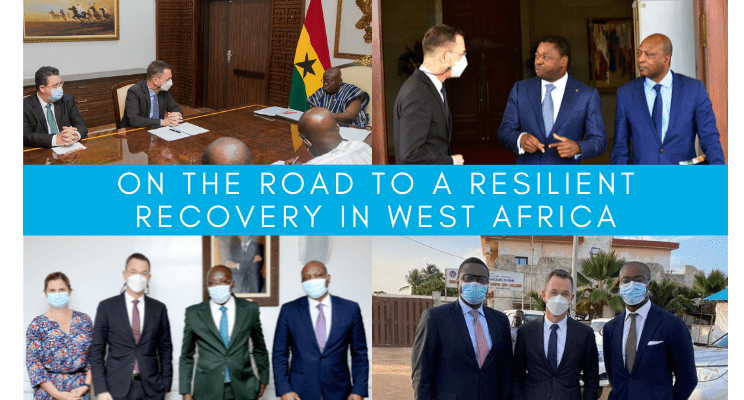
[Digital Business Africa – Expert Opinion – By Sergio Pimenta*] – Despite the application of safety protocols and the rollout of vaccines, which are rendering air travel a reasonable option again, physical travel in the midst of a pandemic must be weighed against the rewards. By that measure, I planned my first physical visit to sub-Saharan Africa in 18 months to be as quick, safe, and productive as possible.

I travelled mostly by road—more than 500 kilometers, across three borders, finding countless moments of inspiration along the way. My six days on the ground (June 5 to 10) took me to Togo, Benin, and Ghana, three neighboring countries in West Africa, but each with its own unique development needs. Still, I had one overarching objective: to better understand how these countries were coping with the economic impacts of COVID-19—and how IFC could best support their citizens and businesses.

My trip came fast on the heels of IFC announcing a $2 billion investment in support of Africa’s smaller businesses and trade, a package designed to help galvanize the continent’s economic recovery from the pandemic and to sustain and create jobs and business activity. This is only the latest of numerous IFC investments in Africa since the onset of the pandemic and part of a wider effort by the rest of the World Bank Group, other development partners, governments, the private sector, and dedicated individuals to stand up to this unprecedented crisis.

Togo, June 5-7 – Togo has been a star performer in reforms to enhance the business climate, an action plan supported by IFC. The Government of Togo’s response to COVID-19 was swift, but the pandemic has suppressed the economy, reducing growth to less than one percent in 2020. The Government has formulated a new roadmap for economic recovery for 2020-2025. In my meetings with Togo’s president, H.E. Faure Gnassingbé, and the Prime Minister, H.E. Victoire Dogbé, I reiterated IFC’s support for this important plan.

While in Togo, I was honored to represent IFC Managing Director, Makhtar Diop, at the inauguration of the Plateforme Industrielle d’Adétikopé (PIA). This integrated industrial zone by ARISE IIP is an ambitious project that aims to generate sizably more local value from agricultural resources such as cotton, cashew nuts and soybeans and create 30,000 jobs by 2025. With the opening of IFC’s office in Togo’s capital, Lomé, in 2019 and the hiring in 2020 of our team on the ground, IFC is poised to support Togo’s economic recovery through investments in the energy, health, ICT, manufacturing, MSMEs and other sectors. IFC will also continue to support the Government of Togo’s drive to strengthen the country’s business climate.

Benin, June 7-8:  Leaving Togo, we drove the scenic coast road through small towns from Lomé to Cotonou. IFC has been active in Benin for the last two decades, supporting several sectors. In line with the Government of Benin’s Programme d’Actions du Gouvernement (PAG), IFC is considering major investments in sectors that we believe have the potential for job creation. These include access to finance for SMEs, affordable housing, agribusiness, ICT, tourism, and vocational training. I communicated these focus areas in meetings with H.E. Abdoulaye Bio Tchané, Minister of State for Development and Coordination of Government Action, and with H.E. Romuald Wadagni, Minister of State for Economy and Finance, the World Bank Group’s new Governor for Benin.

https://twitter.com/SPimentaIFC/status/1402564045685903362

Shortly before leaving Benin, I caught a glimpse of a future pillar of Benin’s recovery—the site of the under-construction industrial zone of Glo-Djigbé. Like the PIA in Togo, Glo-Djigbé is being built by ARISE IIP and will add value to agricultural products, boosting Benin’s economy, which is expected to rebound to five percent growth in 2021 and 6.5 percent by 2023—close to pre-pandemic levels.

https://twitter.com/SPimentaIFC/status/1402565447824859136

Ghana, June 9-10: By 6 a.m. on Wednesday, we were on the road again, through the Ghana-Togo border*, across Ghana’s Volta Region, and into Accra. The route from Cotonou to Accra offers a unique glimpse of the differences and similarities of town life as one crosses these borders. Of course, between Togo and Ghana lies the added barrier of official language, which changes from French to English. As I entered Ghana, I was reminded that Ghana is home to the headquarters of the African Continental Free Trade Area (AfCFTA)—and the promise of virtually borderless commerce in the continent.

Ghana is also home to one of IFC’s biggest investment portfolios in Africa, close to $2 billion. My primary activity in Ghana was a two-day retreat with the Ministry of Finance to further align IFC’s strategy with the Ghana CARES program, the Government of Ghana’s comprehensive plan for post-pandemic recovery, with an emphasis on the private sector. The Minister of Finance, H.E. Ken Ofori-Atta, led the Ghana team, which included key ministers and others.

https://twitter.com/SPimentaIFC/status/1403318950872719361

In a separate meeting with H.E. President Nana Akufo-Addo, the president challenged IFC to invest more in manufacturing and agribusiness, both areas key to providing jobs for young people. IFC will focus on those areas in addition to access to financing for SMEs, with ICT as a cross-cutting theme.

In keeping with the industrialization theme of my three-country trip, I couldn’t miss a chance to visit the 500-hectare Tema Free Zone, an industrial park east of Accra largely developed by Ghanaian company, LMI Holdings. The zone, which hosts over 100 companies, highlighted the advantages of shared infrastructure and reliable power for the country’s industrialization strategy.

I then had just enough time to catch my flight out of Accra following a busy, but fruitful and eye-opening week in West Africa.

After more than a year of travel restrictions, I was heartened to witness first-hand these countries’ admirable responses and resilience in the face of the COVID-19 pandemic.

Outside of the formal meetings, this trip also provided insight into how men and women in West Africa are adjusting—physically, socially, and economically—to the realities of a COVID-19 world, and for me to take in the sights and sounds I’d missed so much.

In the last two years, IFC has grown its footprint in West Africa, bringing in talented new staff to step up our operations. This trip allowed me to meet our existing and new colleagues who have been working tirelessly on the ground and who give me great confidence that we can deliver on our commitments to Africa.

*As part of measures to mitigate the spread of the coronavirus, the Togo-Ghana border is open only to cargo and occasional diplomatic missions. 

*By Sergio Pimenta, Vice President at IFC – International Finance Corporation

Sergio Pimenta, IFC

After more than a year of travel restrictions, I planned my first physical visit to sub-Saharan Africa from June 5 to 10. My six days on the ground took me to three key countries in West Africa: Togo, Benin, and Ghana. Three neighboring countries, but each with its own unique development needs. As I travelled mostly by road—more than 500 kilometers across the three borders, finding countless moments of inspiration along the way, I had one overarching objective: to better understand how these countries were coping with the economic costs of COVID-19—and how @IFC – International Finance Corporation could best support their people and private sectors.

Thales appoints Gregory Ligny Vice-President, Africa

[DIGITAL Business Africa]Thales  Group announced on June 22, 2021, in Paris the appointment of Gregory Ligny as Vice President Africa. In this role, Gregory Ligny will be responsible for the strategic growth of the Thales Group for the entire continent, with a clear focus on developing local partnerships and digital transformation.

Gregory Ligny will lead Thales activities across the African continent, which include a growing number of strategic partnerships and projects in Defense & Security, Aerospace, Space, Digital Identity & Security and Transport

Gregory brings to this role a combined experience in Sales, project management and a solid understanding of the African market. Under his leadership, the Group will continue to accompany the continent’s vibrant growth”, said Pascale Sourisse, Senior Executive Vice President, International Development at Thales, in a statement.

Prior to this appointment, Gregory was Chief Operating Officer of Thales AMEWA (Africa, Middle East, Western Asia including Saudi Arabia and India). He previously managed Key Industrial Partners for Thales Africa.

Earlier in his career, he held key positions in sales, project development in Africa and overseas. Gregory holds an Executive MBA from HEC Paris and a Master’s degree in International Commerce.

About Thales

Thales (Euronext Paris: HO) is a global leader in advanced technologies, investing in digital and “deep tech” innovations – connectivity, big data, artificial intelligence, cybersecurity and quantum computing – to build a confident future crucial for the development of our societies.

The Group provides its customers – businesses, organisations and governments – in the defence, aeronautics, space, transport, and digital identity and security domains with solutions, services and products that help them fulfil their critical role, consideration for the individual being the driving force behind all decisions.

Thales has 81,000 employees in 68 countries. In 2020 the Group generated sales of €17 billion.

Source : Thales Press Release

Also read :

Cameroun : les explications de Martin Mbarga sur les retards dans la CNI produite par la technologie du français Thalès

Cameroun : l’ancien DG de Thales poursuivi dans le dossier des CNI informatisés

Le français Thales s’exporte au Maroc

Frankie Ng [CEO of SGS]: « We are convinced that our strategies will represent a great step towards enabling a better, safer and more interconnected world »

[Digital Business Africa] – SGS, one of the world’s leading inspection, verification, testing, and certification company, has presented its « Sustainability Ambitions 2030 (SA2030)» on May, 12 2021. With that « Sustainability ambitions 2030 », SGS is committed to adding Value to Society through its operations, culture and behaviour to enable a better, safer and more interconnected world for all its stakeholders.

Its new corporate sustainability strategy enhances the value that SGS creates for shareholders, employees, customers and society by increasing the Group’s contribution to the United Nations Sustainable Development Goals and by addressing stakeholders’ concerns as well as non-financial risks.

« Our SA2030 goals span our whole value chain and are comprehensive, tangible and easy to understand across our global network. They have clear action points and ownership for employees at a local level », state the Group.

To achieve this, SGS is focusing on three pillars – a better planet, a better society and better governance:

  • Better planet. The new strategy reinforces SGS’s commitment to protecting the planet. « We commit to meeting our Science-based target of reducing by 55% our CO2 emissions per revenue1 by 2030, maintaining our Carbon Neutral status, and fully adopting the recommendations of the Task Force on Climate-related Financial Disclosures. »
  • Better society. As a professional services company, SGS’s people are central to its strategy. « The SA2030 focus on promoting diversity and equal opportunities and prioritizing the health and safety of our employees by diminishing our Total Recordable Incident Rate by 30%2 in 2030. In that timeframe, we also commit to doubling our positive impact on the local communities where we operate through employee volunteering ».
  • Better governance. The SA2030 focus on promoting SGS’s operational excellence and efficiency, for example by expanding its World Class Services program across its laboratories. « We also focus on promoting sustainability across our extensive supply chain and developing our human rights due diligence program. By 2030 we aim to cover at least 90% of our spend with suppliers who have agreed with our Code of Conduct Principles. »
https://youtu.be/TOkm8QS2noU

SGS is committed to supporting its customers on their journey to sustainability, whatever their level of maturity in this process, through its Sustainability Solutions. On SGS’s website we can read that the company will use its impact valuation methodology to calculate the positive impact these services have on society. « SGS has linked ESG (Environmental, Social and Governance) performance to the variable remuneration of its top management. The newly created Governance and Sustainability Committee within the Board of Directors oversees sustainability ».

Frankie Ng, CEO, said, “As TIC industry leader, we are committed to continuously raising the bar on sustainability standards internally, for our industry and beyond. Our Sustainability Ambitions 2030 are completely aligned with our 2023 business strategy. We are convinced that both strategies will make a tangible and long-lasting positive impact on society and represent a great step towards enabling a better, safer and more interconnected world.”

On a YouTube video he adds that « Our Sustainability Ambitions 2030 set a path towards a better planet, netter society and better governance. We have set a long-term targets for 2030, and short-term targets for 2023 which are aligned with our 2023 business strategy. Our Sustainability Ambitions 2030 will generate a positive impact that goes beyond financial return and throughout our entire value chain, enabling a better, safer and more interconnected world for all stakeholders».

SGS is one of the world’s leading inspection, verification, testing, and certification company. SGS is recognized as the global benchmark for quality and integrity. With more than 89,000 employees, SGS operates a network of over 2,600 offices and laboratories around the world.

By DIGITAL Business Africa

Cameroon: The Francis Ngannou and MTN Foundations assist the underprivileged in Batié

[Digital Business Africa] – Douala, 1 May 2021. MTN Foundation, first corporate foundation in Cameroon, announces the handing of a significant donation to several associations in the district of Batié on 1 May 2021. This was during a ceremony at the head office of the Francis Ngannou Foundation, presided over by the Senior Divisional Officer  of the Upper -Plateaux Division, in the  presence of the Divisional Officer,  Mayor,  Paramount Chief of Batié, several parliamentarians and consuls as well as the population of Batié who massively turned out to welcome the new UFC Heavyweight World Champion in Mixed Martial Arts.

The donation, comprised of basic foodstuffs was symbolically handed over to Francis Ngannou, whose foundation will be responsible for distribution to the humanitarian associations that support the underprivileged in Batié.

In addition to the material donation, “we want to offer you something else. Smile and above all hope. Hope that tomorrow will be better than today. Hope that your dreams can come true. Because we are convinced that it is possible. Look at Francis. The child from Batié today on the roof of the world. He started from here, worked tirelessly and is writing a beautiful story that has only just begun. MTN’s story is not so different…”, said Jean Pierre Ngoule, MTN Cameroon’s Regional Director for the West, speaking on behalf of the MTN Foundation.

Thereafter, the World Champion and unbeatable ambassador of MTN Cameroon thanked the leading operator for the gesture in favour of needy communities, and the support he has received since the beginning of his national tour in Cameroon. “The unbeatable is not the one who has never lost. The unbeatable is the one who has fallen several times and got up again,” emphasized Francis Ngannou.

A state of mind that embraces the values of MTN. “These values we share with Francis and which go beyond our respective daily activities. We do more because we have the heart,” concluded MTN Cameroon’s representative at the ceremony.

__________

About The Francis Ngannou Foundation

The ultimate goal of the Francis Ngannou Foundation is to build, educate, train and develop through our gyms and trainings. With the popularity and scope of combat sports such as judo, boxing, karate, MMA and kickboxing, we envision that our trainees will expand their world view and get the opportunity to explore the world, harness their strengths and achieve their biggest dreams.

About MTN Foundation

MTN Foundation is the very first corporate foundation created in Cameroon. MTN Cameroon invests therein, each year, 1% of its turnover. The Foundation, since its official launch in 2006, works for the welfare of communities in Cameroon by investing in Education, Health, the Environment and Community Development. 

By MTN Cameroon

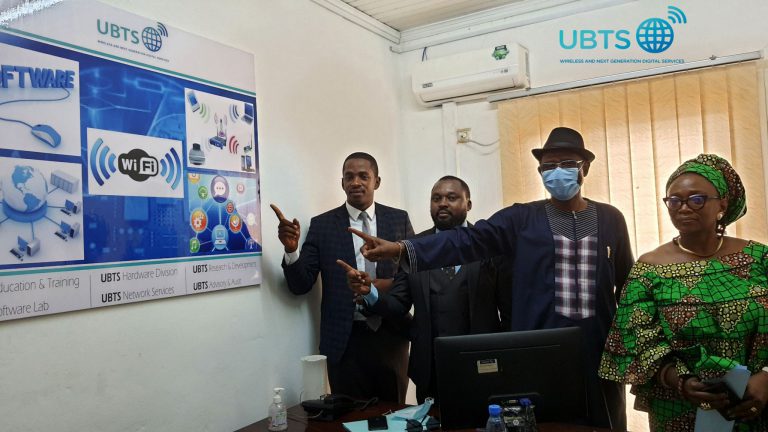
U.S. company UBTS INTERNATIONAL Corp. arrives in Cameroon with the ambition to offer Internet services in cities and rural areas

[Digital Business Africa] – The information is made public on the LinkedIn page of the American company UBTS INTERNATIONAL Corp. “The company UBTS CAMEROON PLC affiliated to UBTS INTERNATIONAL Corp. has just acquired from the Republic of Cameroon the telecommunications license for the establishment and operation of terrestrial radio networks for the provision of a city-wide Internet of Thing backbone, Open Roaming, smart city stack, digital platform services to the public and electronic communications. This license also allows the company to exploit all the business model possibilities offered by the attached value-added services to its telecommunications infrastructure”, the U.S. company writes.

According to information from Digital Business Africa, UBTS CAMEROON PLC, whose CEO is Armand Gaétan Ngueti, holds a first category license issued by the Ministry of Posts and Telecommunications and notified him by the Regulatory Agency telecommunications through its regional delegation of the Littoral.

In Cameroon, the telecoms license is issued to any natural or legal person to establish and operate a network or provide electronic communications services. There are two categories of license: the first category license and the second category license.

Article 40 of the implementing decree No. 2017/2580/PM of April 06, 2017, laying down the modalities for the establishment or operation of networks and the provision of electronic communications services in Cameroon indicates that the first category license covers: any support service, radio networks open to the public in one or more localities; collection and distribution networks, with a view to providing electronic communications services to the public; electronic communications networks open to the public in rural areas; virtual networks open to the public and passive infrastructure in support of electronic communications networks. All services that UBTS CAMEROON PLC can offer in the localities authorized in its specifications.

Article 10 of Law No. 2010/013 of December 21, 2010, governing electronic communications in Cameroon also stipulates that the license is issued to any natural or legal person to establish and operate, in particular: any support service; certain radio networks in one or more localities; independent private networks; temporary networks; experimental networks; collection and/or distribution networks, to provide electronic communications services to the public; electronic communications networks open to the public in rural areas; virtual networks open to the public and portability of telephone numbers.

UBTS CAMEROON PLC promises that it intends to build on the confidence of the Cameroonian government in its vision of digital transformation to plan, develop and implement a futuristic and robust telecommunications infrastructure in order to provide access to the connectivity and universal digital services for all individuals and organizations starting in metropolitan areas first and in rural areas thereafter.

About UBTS

Based in the United States, Universal Broadband & Technology Services (UBTS) International presents itself as a think tank on telecommunications infrastructures and digital platforms. “We were formed with the sole purpose of collaborating with the “locals” to promote and provide economic development programs consisting of digital transformation projects to enable cost-effective and affordable broadband internet with next-generation digital and Wi-Fi solutions in unserved and under-served communities, which until recently, being reliant on submarine Fiber backbone and expensive VSAT back-haul as the only trucking solution, has suffered from lack of proper broadband access solution which would allow for a scalable deployment of next-generation networks to serve the needs of local communities, ”says the company, which aims to connect populations in emerging markets to content and digital technologies experiences that matter to them.

By Digital Business Africa

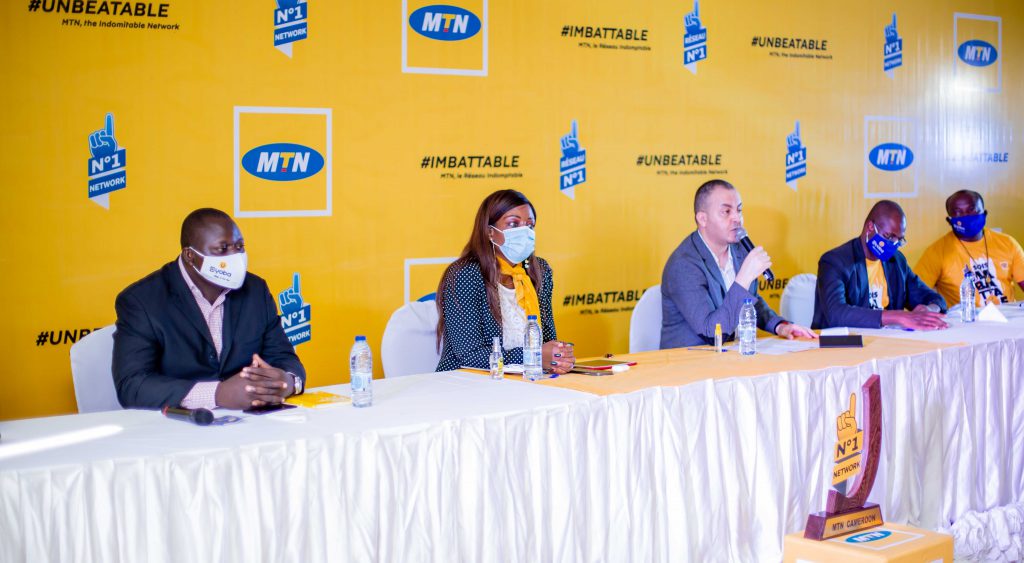
MTN Cameroon connects Indomitable Rigobert Song to its brand

Douala, 05 April 2021. MTN, Cameroon’s leading telecommunications company, is pleased to announce the launch of its new brand campaign dubbed “Unbeatable with MTN, the indomitable network”.

This new campaign shows the superiority of MTN Cameroon’s infrastructure through its indomitable network, performance in terms of coverage, speed and quality, covering more than 97% of the population in Cameroon through 2G, 3G+, 4G and 4.5G technologies.

MTN’s established leadership enables its millions of customers to be unbeatable in the face of everyday challenges. They can rely on the best bundles to call their loved ones at ease for as long as possible, and surf the internet at low cost and high speed.

MTN Cameroon connects Indomitable Rigobert Song to its brand

Ayoba free of charge for MTN Cameroon subscribers

MTN Cameroon subscribers can also take advantage of the 100% African messaging service, Ayoba, receive money and make payments in absolute security via MTN MoMo, the only GSMA-certified platform in the Cemac zone.

“We do business, but above all we want to bring value to our customers. When they are on our indomitable network, they are unbeatable. Hence our choice of the courage-captain, Rigobert Song to be the ambassador of this mindset, “explains the CEO of MTN Cameroon, Stephen Blewett.

This charismatic footballer is the embodiment of courage, motivation, leadership and perseverance in football and in life. Reason why “we are delighted to work with Rigobert Song on this campaign,” added Stephen Blewett.

“As a footballer and as a man, life’s trials have given me the opportunity to push myself to succeed. And sometimes to get through when all seemed lost. I was able to do this probably because I had an indomitable spirit, but also because I had great people around me. I am thrilled by the way MTN has supported Cameroonians every day with its network and services for years and this is an honour to be associated again with this leading brand,” says Rigobert Song about his new adventure with MTN Cameroon.

About MTN Cameroon

Subsidiary of the MTN Group represented in 21 countries and leader in telecommunications in Africa, MTN Cameroon is a communication and payment solutions provider present in Cameroon since February 2000. MTN Cameroon’s network is certified by Ookla as the best and fastest in the country, and by Rohde & Schwarz as the best network in voice and internet quality in Cameroon. The company is also the first and only GSMA Mobile Money certified operator in the CEMAC zone. MTN Cameroon is the leader in the telecommunications sector in Cameroon and one of the five most significant companies in the country.

By MTN Cameroon

To Defeat Cybercriminals, SGS Launches Cybersecurity Services

[Digital Business Africa] –  SGS, the world’s leading inspection, verification, testing and certification company, has been marketing cybersecurity services for companies and organizations since March 9, 2021.

SGS helps clients seize digital opportunities while mitigating risks with its SGS Cybersecurity Services, an integrated cybersecurity solution.

Connected digital solutions offer an unprecedented level of convenience but create new opportunities for criminals.

Traditional business and the digital world are increasingly intertwined. From the automation of production plants to smart homes and autonomous vehicles, the Internet of Things (IoT), where computers, systems and all kinds of smart devices communicate wirelessly, is no longer science fiction – but science fact.

Today, the IoT brings convenience to everyone’s life – professional and personal. But at the same time, it opens new ways for criminals to cause significant financial damage, breach privacy or even harm lives.

Governments, stakeholders and regulators across all industries around the world are working on establishing new standards and regulations to tackle the cybersecurity challenge with a focus on the complete supply chain, life cycle of components, products, networks and systems.

It is therefore imperative for organizations to increase their cybersecurity maturity to sustain their market position. A cyber-secure culture needs to be embedded and processes and protocols should be developed to support it. This can take time, but criminals will not wait, and so prompt action is required.

A trusted partner

This is where SGS Cybersecurity Services come in. As a trusted partner, SGS uses in-depth knowledge and expertise in cybersecurity – from transistors to cloud solutions – to enable customers to raise their security maturity to the level required to meet challenges.

SGS Cybersecurity Services are built on three pillars with the opportunity to tailor deliverables based on specific industry needs, such as those for the consumer IoT, medical device, semiconductor, automotive and industrial sectors:

  1. Training on regulations, standards, state-of-the art attacks and associated countermeasures, including insights on best practices and detailed technical topics such as side-channel and fault analysis attacks
  2. Assessment of hardware, software, networks, crypto and secure management systems covering the entire technology stack of digitally interconnected solutions
  3. Certification, where focus is given on conformity assessments against existing and future standards and regulations

A 3-step approach is used to support clients in their aim to enhance their cybersecurity capabilities:

  • Step one: a comprehensive cybersecurity gap analysis of organizational structures and processes, skill sets, as well as digital products and services
  • Step two: based on the analysis from Step 1, an action plan and roadmap are developed and implemented together with the client, addressing and closing identified gaps, accompanied by training, audits, reviews and security assessments
  • Step three: having implemented all the defined tasks in Step 2, effectiveness will be demonstrated by conformity assessments performed internally or by independent third parties

SGS Cybersecurity Services help to increase security maturity through customization and its comprehensive approach. Clients can be assured, and reassure their customers, of their cybersecurity levels, enabling a better, safer and more interconnected world.

More about SGS Cybersecurity Services

For further information, visit www.sgs.com/cybersecurity-services.

By Digital Business Africa

With the second wave of Covid-19 in Cameroon, Bitcoin can help

[Digital Business Africa – Expert advice] – The health minister recently confirmed the newest COVID-19 death report for February and warned of a potential second wave of infections. Minister Malachie told reporters “we are not far from the second wave. Clusters are multiplying. If we remain indisciplined, we will get to the second wave,” according to CRTVWeb. As with the previous infection wave, economic instability is to be expected, and many experts are hoping many will brace themselves and prepare as best they can. Although agricultural exports from CEMAC nations are beginning to rise, this has not been a reliable source of economic growth and stability.

Fortunately, there may be a solution through one of the newest and most revolutionary technologies of this century: bitcoin.

The digital currency, bitcoin, provides low transaction fees and is not operated by a central authority. Bitcoin’s transparent and open-access nature, thanks to the public-ledger technology known as “Blockchain”, can help bitcoin avoid many of the inefficiencies associated with fiat money. Recently, American cryptocurrency exchange, Yellow Card, expanded to Cameroon with the stated goal of bringing financial freedom to Cameroonians.

With the second wave of Covid-19 in Cameroon, Bitcoin can help

Yellow Card was founded in 2016 by Chris Maurice and Justin Puiroux to help ease the challenges of sending money across borders. However, the fast-growing company has since taken Africa by storm, operating currently in 13 countries with plans to expand to even more within the month.

As Yellow Card opens its doors, Cameroonians can expect to see the benefits and technological growth that the company has created in other countries that it operates in.

Yellow Card is particularly keen on becoming an educational source about bitcoin and blockchain technology, in addition to providing a safe and convenient means of buying and selling bitcoin in Cameroon. Many crypto experts believe that as Bitcoin adoption increases, it will become readily available for everyday financial transactions.

Yellow Card’s easy-to-use exchange platform which is available for Android and iOS devices is focused on providing the best way to buy and sell bitcoin at the best rates.

Speaking on the rising cryptocurrency interest in Cameroon as well as how people can use it, Chris Maurice stated, “Bitcoin can be a powerful tool for Cameroonians to start their own savings and even begin investing–all without the need of a bank account.”

Just a few weeks ago, bitcoin hit an all-time high in value and has been of keen interest for investors and economic experts alike. Particularly, institutional investors including

MasterCard, Visa, Tesla and Square, Inc. have turned to bitcoin as a viable option to help their institutions in a fast-changing financial market. But the beauty of bitcoin is that it is as useful to organisations as it is to individuals, offering fast and instant means of transacting, transparency and security, to name a few.

To download the mobile application visit;

Finally, bitcoin could be a simple solution to stimulating and developing Cameroon’s tech-sector as well as providing economic freedom to people across the nation. This will help boost the economy and livelihoods of many despite the unfavourable economic conditions that COVID-19 might cause.

Written by Zoe Nawar

Covid 19: MTN injects $ 25 million to support AU vaccination program

[Digital Business Africa] -South African telecommunications group MTN announced on January 27, 2021 that it had donated US $ 25 million to support the African Union’s COVID-19 vaccination program. These funds are expected to help get up to seven million doses of the COVID-19 vaccine for health workers across the continent, which will help the African Centers for Disease Control and Prevention’s immunization initiative.

The devastating impact of COVID-19 has been unprecedented and profound.  Public and private partnerships are needed if we are to succeed in the fight against the pandemic and restore social and economic norms for our continent and our communities,” says Ralph Mupita, President and Chief Executive Officer of MTN Group.

Our goal is to ensure that all those who need the COVID-19 vaccine have access to it very quickly, but the biggest hurdle in Africa has been financing of the vaccines, and the logistics of vaccinating at scale. We therefore welcome the right partnerships, like the one with MTN, to achieve our minimum 60 percent vaccination target,” says Dr John Nkengasong, Director of Africa CDC.

Since the start of the pandemic, MTN has been helping to limit the spread of the virus and save lives and sources of income in its African market. This donation is another example of MTN’s efforts to help find lasting solutions to address the challenges facing the continent and ensure a healthy Africa for all Africans.

We believe ongoing collaborations with key stakeholders across sectors are essential as vaccines are deployed in all our markets, with communication tools, technology and digital services being vital support infrastructure for a successful mass vaccination programme,” concludes Mupita. “In the coming months, MTN Group will look at similar support commitments for the markets in which we operate in the Middle East.”

The announcement comes as on January 14, 2021, South African President Cyril Ramaphosa, also president of the African Union, announced that the African Union had obtained 270 million interim doses of COVID-19 vaccine on behalf of the members of its state, thanks to advance purchase commitment guarantees of up to $ 2 billion from manufacturers by the African Export-Import Bank, Afreximbank.

By Jephté TCHEMEDIE

SGS Group simplified its operational into six new focus areas composed of four divisions

SGS 2020 Full Year Results. A Strong Performance in 2020 Confirms the Group’s Strategic Evolution

“I am proud of the dynamism and responsiveness demonstrated by our employees in a challenging period. Their hard work, commitment and entrepreneurialism in supporting our customers have resulted in a strong operational performance for SGS in 2020, reinforcing our leadership position in the TIC industry.

We have taken significant strategic steps forward in 2020, both through the acquisition of SYNLAB Analytics & Services (A&S) and by launching the next phase of our planning. The strong operational performance combined with this important move confirms our strategic evolution which further aligns SGS to the key TIC ‘megatrends’”, said Frankie Ng, Chief Executive Officer of SGS.

A Strong Financial Performance

Total Revenue reached CHF 5.6 billion, down by 15.1% (a decline of 8.8% at constant currency*), notably driven by the disposal of the Petroleum Service Corporation (PSC) in 2019. Organic Revenue* declined by 6.5% impacted by the pandemic. A gradual improvement throughout H2 2020 was experienced with a return to growth in December.

Operating Income decreased from CHF 1 082 million in prior year to CHF 795 million in 2020, mainly driven by the exceptional gain of CHF 268 million on the disposal of the PSC business in 2019 and the impact of the COVID-19 pandemic in 2020.

Adjusted Operating Income* decreased from CHF 1 063 million in prior year to CHF 900 million in 2020, a decline of 15.3% (a decline of 8% at constant currency*).

Adjusted Operating Income Margin* of 16.1% remained stable in 2020 at historical rate but increased by 20 basis points at constant currency*. This improvement was driven by the structural cost optimization program implemented in H2 2019, strong cash collection (resulting in a lower allowance for expected credit losses) and additional measures taken in 2020 due to the pandemic.

Profit Attributable to Equity Holders decreased from CHF 660 million in 2019 to CHF 480 million in 2020, a decrease of 27.3% over prior year.

Basic Earnings per Share decreased from CHF 87.45 in prior year to CHF 64.05, a decrease of 26.7%.

Free Cash Flow (FCF)* increased significantly by 12.6% from CHF 673 million in prior year to CHF 758 million in 2020 driven by strong working capital management.

The Board of Directors is pleased to propose a Dividend to remain stable at CHF 80 per share.

Significant Strategic Milestones Achieved In 2020

We have implemented the next stage of our strategic evolution with the purpose of enabling a better, safer and more interconnected world for employees, customers, shareholders and society. Our operational structure has been simplified into six new focus areas, composed of four divisions: Connectivity & Products, Health & Nutrition, Industries & Environment and Natural Resources and two cross-divisional strategic units: Knowledge and Digital & Innovation. This will improve our market approach and increase cooperation and agility in our global network.

The acquisition of SYNLAB Analytics & Services (A&S) further aligns SGS to the Health, Nutrition and Environment TIC megatrends and enhances our market position in Europe. It also adds a range of complex services and accelerates the adoption of our hub and spoke model, offering greater scope for automation and digitalization and generating strong operating synergies.

Throughout 2020, SGS has successfully developed our Next Normal solutions and leveraged our remote service delivery solutions to better serve our customers and society with higher value-added services. To provide improved supply chain visibility, we leveraged our market-leading technical capabilities and adapted our delivery models using our digital tools and sensor-based technology. Remote inspection, audit, consulting and other digital delivery solutions all gained customer traction and acceptance in 2020.

Additional innovation of our service portfolio included our global Life Sciences network delivering COVID-19 vaccine testing and new innovative therapeutics for several global clients. We continue to be TIC market leader in PPE testing and inspection. In addition, we have seen strong progress on contract signings across our TIC services on disinfection and business recovery.

We have defined our 2030 sustainability ambition which encompasses a holistic and global approach to sustainability both in terms of how we behave as a company and the value we provide to our customers through our services. We will launch our 2030 sustainability plan in Q2 2021.

Frankie Ng, Chief Executive Officer of SGS, presents the six new focus areas composed of four divisions

Financial Discipline and Continued Investment in Strategic Priority Areas

We have continued to invest in high growth potential markets, reinforced our pricing initiatives, cost control and working capital management and successfully refinanced part of our debt in a challenging year.

  • We successfully issued two bonds with a total value of CHF 500 million.
  • We achieved over CHF 90 million of structural cost savings, coupled with strong cost management and EVA-driven performance management.
  • Supported by our focused capital allocation strategy, we have continued to invest heavily in our strategic priority areas including wireless, 5G, semiconductors, food testing and investment into IT systems to continue to drive productivity increases.

Download the full report (PDF) >
Download the Alternative Performance Measures supplement (PDF) >
Join the webcast at 14:00 CET >
Learn more >

* Alternative Performance Measures (APM) – refer to the 2020 Full Year APM document

For further information, please contact:

Investors: Toby Reeks
SVP Corporate Communication, Sustainability & Investor Relations
t: +41 79 641 83 02

Media: Daniel Rufenacht

Group VP Corporate Communications
t: +41 78 656 94 59

www.sgs.com

ABOUT SGS

SGS is the world’s leading inspection, verification, testing and certification company. SGS is recognized as the global benchmark for quality and integrity. With more than 89,000 employees, SGS operates a network of over 2,600 offices and laboratories around the world.

By SGS

MTN MoMo customers access MoneyGram international transfers

(MTN Cameroon – Douala, 1st December 2020) – MTN Cameroon, leader in the telecommunications sector in Cameroon is pleased to announce that it is now possible for its customers to receive international money transfers via the operator MoneyGram. This is the result of a new partnership between MoneyGram  and MFS Africa, which extends the inbound international money transfer service to MTN MoMo payment accounts on new channels.

Thanks to this initiative, millions of people around the world can safely send money directly to the MTN MoMo account of their loved ones in Cameroon. All MTN Cameroon subscribers with an active MTN MoMo account will be able to benefit this service which is simple to implement and provides an excellent customer experience.

The concretisation of this partnership is part of our strategy in Africa, where we have made a giant stride in 2020, enabling us to access mobile wallets and offer account deposit solutions in key markets. As a brand, we are proud of our strategy because it makes life easier and more valuable for our customers and enables us all to continue caring for our loved ones,” said John Gely, MoneyGram Africa Executive.

A positioning that espouses MTN Cameroon’s vision and enables the organization to bring even greater customer satisfaction. “Indeed, our customers receive money directly in their MTN MoMo payment accounts and can withdraw it without the stress of filling out documents or constraint of going to any branch. This allows us to continue helping our customers to respect the protective measures with regard to the ongoing health crisis. Moreover, we are delivering on our promise to always make their lives brighter with simple, accessible and secure services,” said MTN Cameroon’s MTN Mobile Money Director, Alain Claude Nono.

It is important to point out that the MTN MoMo payment account has been operational in Cameroon for 10 years now and enables millions of users to send and withdraw money, pay their bills free of charge in shops, and for several services. With more than 80,000 active access points across the ten regions of the country, MTN Mobile Money is the largest network of distribution or payment points in Cameroon and most innovative financial service as well as safest platform, with the first and only GSMA certification in the CEMAC zone.

About MTN Cameroon

Subsidiary of the MTN Group represented in 21 countries and leader in telecommunications in Africa, MTN Cameroon is a communication and payment solutions provider present in Cameroon since February 2000. MTN Cameroon’s network is certified by Ookla as the best and fastest in the country, and by Rohde & Schwarz as the best network in voice and internet quality in Cameroon. The company is also the first and only GSMA Mobile Money certified operator in the CEMAC zone. MTN Cameroon is the leader in the telecommunications sector in Cameroon and one of the five most significant companies in the country.

By MTN Cameroon

5G charging, cloud and the edge conundrum

Many enterprises across different industries still often rely on robust on-premises systems or even small on-site servers to tackle core computing tasks. This will soon change with the arrival of new cloud computing capabilities delivered at the edge of 5G networks – enabling retailers, for example, to build enriched in-store visual experiences streaming directly from the network; or manufacturers to run advanced AI-based visual inspections directly from 5G-enabled devices.  

This will produce many benefits for enterprises. For example, removing the need for local processing power can thereby help to reduce costs and the need for on-site space. With data processing and compute cycles at the edge, businesses can optimize latency, lower processing costs associated with data storage, and eliminate the need to transport data from the edge to a central location for real-time computation. This new edge ecosystem will be formed through partnerships of service providers, hyperscale cloud providers (HCPs) and applications developers, which will make it possible to leverage high-speed 5G connectivity with cloud applications available at the edge. In a recent white paper, we explore the various edge deployment strategies for service providers. 

In this scenario, while service providers are defining their role in the 5G value chain, the monetization of edge services becomes extremely important for them in capturing as much as possible of this new revenue stream. It comes with two different, yet connected, challenges: Telecom BSS must support new charging and billing capabilities while catering for the technical needs of those new services, such as lower latencies and guaranteed service level agreements (SLA).  

Charging at the edge does not mean charging edge services 

Charging these edge services comes with new challenges as it involves an updated architecture, new 5G network parameters, partners and new business models, to name a few. However, this is different than building the charging architecture that supports it. Where to charge for edge services? Does charging need to also be moved to the edge? These are key questions that must be answered (and implemented) to support the best monetization model of this ecosystem. Edge services on top of 5G connectivity are mostly enterprise applications expected to cover complex and critical business needs. They can´t be impacted by the centralized nature of charging and billing systems, which could impact the latency or user experience if the signaling traversing from edge sites to central BSS locations becomes bottlenecked. For online credit-controlled services, this could make the difference between perfect service delivery and session failure. But do these edge services really need real-time charging? 

For example, you do not stop the industry robot, the connected ambulance or the self-driving train when the pre-paid account is exhausted, or the company monthly data allowance has been consumed. Pre-paid business models are not suitable for this kind of monetization. Those are three examples of the types of 5G-enabled B2B (or B2B2B) use cases that will most probably rely on charging data records (CDRs) generated by the 5G charging function (5G CHF) for charging based on type and amount of traffic per network slice, usage aggregation, hierarchies distribution, invoicing, revenue sharing and big data input, among others. In summary, this can comprise any parameter coming from 5G core through the service-based interface. 

Learn more about the 5G charging function in our eBrief “What is the 5G CHF?”. 


Download eBrief

5G-enabled critical operations for important and lucrative corporate and public sector customers are unlikely to have data-capped or pre-paid offers. Even if we look at the 5G consumer market use cases – mainly with fixed wireless access, gaming and augmented or virtual reality– it is hard to justify the move of charging to the edge site (or at least closer to that) as many use cases will not demand it. 

A modular and service-based BSS architecture can solve this equation 

But there may be cases where it will be beneficial to place parts of the charging system at the edge, or at least closer to a specific location with critical 5G services where usage data needs to be consumed really fast (for example, for business intelligence or AI) or privacy and security are big concerns. That´s why, for service providers, it is important to make sure that the BSS, specifically charging, is modular enough following 3GPP service-based architecture. In this way, it will be possible, for example, to detach the CHF from the converged charging system (CCS) and place it at the same edge site where critical services are processed or closer to it along with the session management function (SMF). Since the CHF is responsible for generating all 5G event data records (EDRs) in the updated network architecture, it will guarantee the lower latency needed. After this, with no real-time pressure, it will communicate with the central (or distributed) CCS to process the events records. This distributed architecture, in conjunction with high-resiliency and active-active subscriber base distribution, will form the base of the updated charging architecture that will support and monetize new 5G services at the edge. 

Here at Ericsson, we have developed a wide suite of different capabilities in this area so that service providers can choose the best architecture that fits their business needs. For example, within Ericsson Charging, the CHF is a container that can be deployed in a separate location, in an automated fashion through the use of continuous integration and continuous deployment (CI/CD). It is even possible to temporarily move a CHF instance to an edge site for special services or events.  There are endless possibilities for enabling enterprise 5G cloud edge services monetization. When stepping into new edge markets, service providers should ensure that their BSS has the flexibility to support a range of different possibilities and a modular architecture that allows for additions and changes to accommodate changing requirements over time. 

By Israel Mor, Digital Business Support Systems at Ericsson*

Israel mor

Israel Mor is driving Digital Business Support Systems (DBSS) readiness and delivery across the globe. With 18+ years of experience in the technology, IT, services and sales areas he is eager to build the ecosystem needed to support the new demands of the digital lifestyle and help businesses to deliver revolutionary revenue management solutions.

Dr Ann Aerts [Novartis Foundation]: “We have strong evidence that AI can be a critical support to doctors and nurses”

[Digital Business Africa] – According to Dr Ann Aerts, director of the Novartis Foundation, many countries are ill-prepared to deal with a newly emerging disease such as COVID-19, in addition to the current burden of infectious diseases and the ever-growing tide of chronic diseases. She, therefore, believes that digital technology and AI are essential catalysts for rethinking health systems so that they move from reactivity to proactivity, then to prediction and even prevention. Her explanations in this Interview with Digital Business Africa.

Digital Business Africa: The Novartis Foundation has focused under your leadership on how artificial intelligence and data science can transform health and care around the world. How could it be possible for artificial intelligence and data science to transform health?

Dr Ann Aerts: We have strong evidence that AI can be a critical support to doctors and nurses, enabling them to provide better diagnosis, treatment and care for their patients. But there is resistance to fully embracing this potentially transformative technology.

Data science and machine learning can also be used to predict health trends at a population level – e.g. predicting outbreaks of COVID-19 in the current pandemic (see the example of UNICEF’s Magic Box on p.39 of the report). Particularly in Africa, where there is a great shortage of trained health care professionals, technology can allow much greater access to medical expertise (see the case of Babyl Rwanda on p.63 of the report).

Depending on the type of AI, optimization or even full automation of health operations is possible.

 Dr Ann Aerts

Digital Business Africa: What are the achievements of the Novartis Foundation to reach that goal?

Dr Ann Aerts: If we focus this question on this current report, this is the first time that lower- and lower-middle income countries have been offered a maturity roadmap to implement AI in health. The roadmap is a practical guide towards a clearly defined goal, in this case the realization of an environment that enables AI solutions in health to unleash their full transformative potential.

While the Foundation has worked on many smaller projects which deploy technology to support access to health, we have realised that we need to think bigger and persuade governments to play a core role in driving uptake of AI at scale. This report aims to help governments do this.

We bring together the ecosystem of data and AI innovators, policy-makers, researchers and tech investors in low- and lower-middle-income countries through DASH in Africa, a collaboration between the Harvard Global Health Institute, Mbarara University of Science and Technology, and the MIT Critical Data Group (see http://dashinafrica.org/). We are a catalyzer of collaborations allowing for AI innovations with proven potential for population health impact to scale, and we help government innovation teams in lower-income countries build on their digital and AI capabilities.

Digital Business Africa: What are your future ambitions for the Novartis Foundation?

Dr Ann Aerts:  We are leveraging our learnings, tools and evidence from the urban health initiative Better Hearts Better Cities, to co-create a population health approach with selected low- and lower-middle income countries, enabled by data, digital and AI.

Helping countries to transform their health systems from being reactive to proactive, predictive and preventative can address some of their largest health challenges.

Digital Business Africa: What are your main ambitions for African countries in AI and health?

Dr Ann Aerts: Advancing digital and data-led approaches to improve the health of African populations through a rich offering, including An urban population health toolkit that will help policymakers and other stakeholders replicate any part of the Foundation’s programs that suit their health priorities; a business case that shows a cost-benefit analysis of the Foundation’s programs; a needs assessment tool that governments and other stakeholders can use to help guide their priority setting in health; a roadmap to optimize population health; Heart health programs that can be implemented in schools and workplaces, along with data that proves that these programs are effective; The framework for achieving AI maturity in health systems; AI tools and policy guidance to help policymakers and other stakeholders use data and AI to improve heart health in their communities.

Interviewed by Digital Business Africa

Nervis Tetsop Nzometiah: “Using electronic waste will make the 3D printer low cost and affordable”

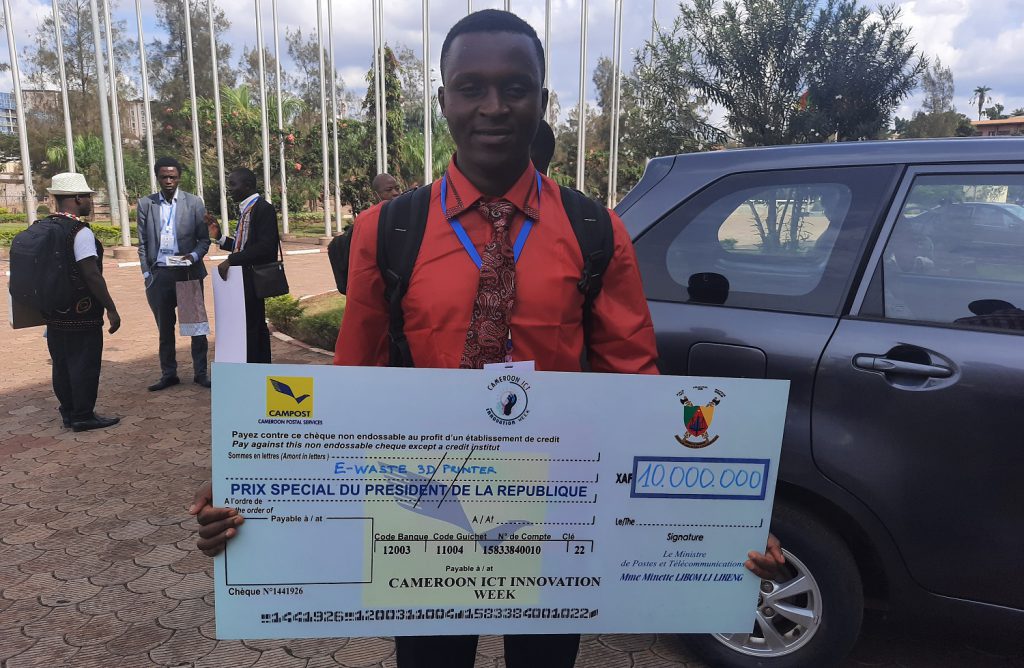
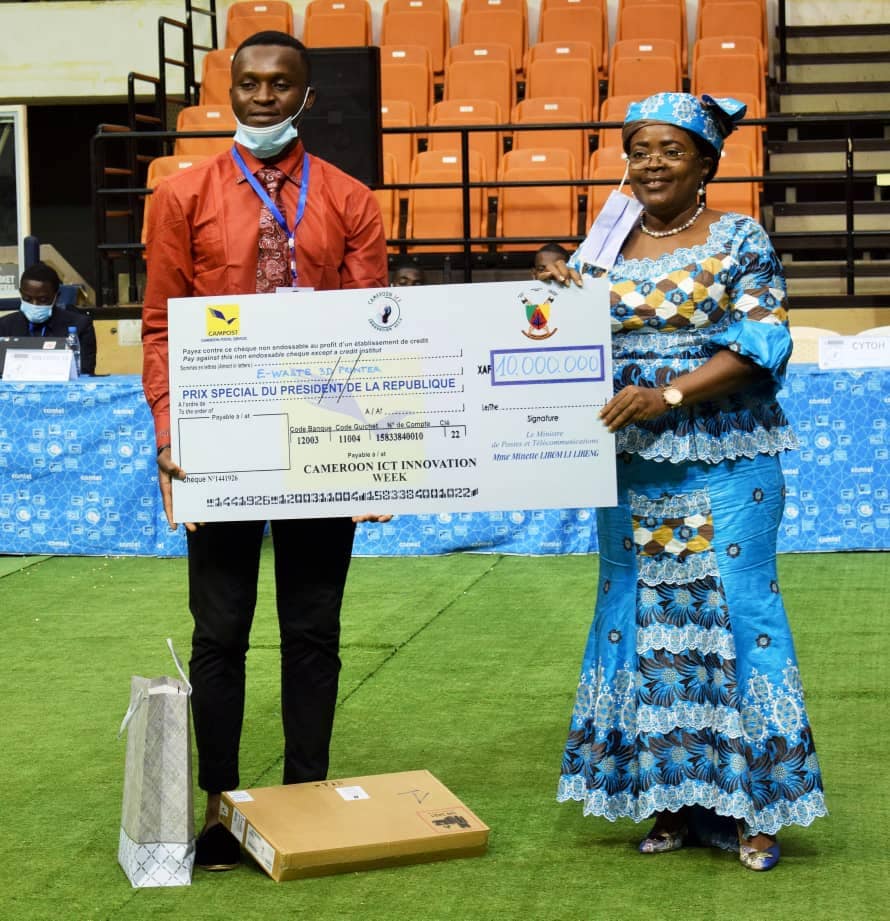
[Digital Business Africa] – Nervis Tetsop Nzometiah (22-year-old) is the winner of the 2020’s Special Prize of the President of the Republic in the digital sector. He won the first prize of the national competition for the best ICT project of the year held during the Cameroon ICT and Innovation Week with his e-Waste 3D printer project. The results were unveiled in Yaounde this 28th august 2020. In this interview with Digital Business Africa, he explains the objectives of his project.

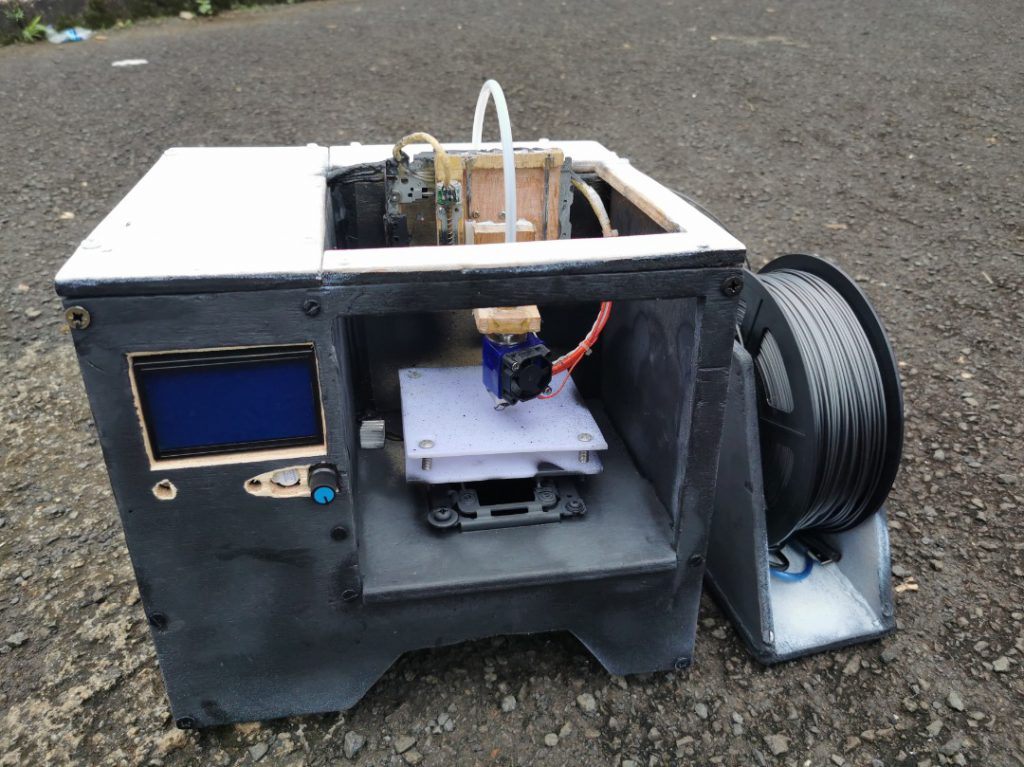
e-Waste 3D Printer
e-Waste 3D Printer

Digital Business Africa: What is the short story behind the e-Waste 3D Printer initiative?

Nervis Tetsop Nzometiah: In manufacturing industries, 3D printing has caught the attention of manufacturing as the next industrial revolution. As an innovator who loves creating and trying new things, I wanted to try out something new by building a 3D printer. Not only that, I have never had access to 3D printers which is an important tool for me to work on my projects effectively as an engineering student. This solution helps students, manufacturers, hobbyists to quickly make parts for their projects.

Nervis Tetsop Nzometiah

Digital Business Africa: Why did you choose electronic waste to manufacture your 3D printer?

Nervis Tetsop Nzometiah: I choosed electronics waste because I saw useful parts in it that can be used to build amazing things, using electronic waste will make the 3D printer low cost, affordable, and because we want to reduce the disposal of electronic waste in the environment.

Digital Business Africa: What types of electronic waste are used to make your 3D printer?

Nervis Tetsop Nzometiah: The types of electronic waste used are motors, switches, and other mechanical parts gotten from old photocopiers, printers, and CPU’s.

Digital Business Africa: You said you can produce nose shields and protective masks with your 3D printer. What types of nose shields could you produce and what are your production capabilities?

Nervis Tetsop Nzometiah: The 3D printer can print head bands for faceshields and nose shields similar to cotton facemasks’ but with some extra features in it. With respect to the production capabilities, the prototype only demonstrates it’s possibility. But once we do a bigger version of the prototype, we can produce mass production of the face/nose shields.

Digital Business Africa: What kind of objects have you already printed with your prototype?

Nervis Tetsop Nzometiah:  I have been able to print an spoon, a rectangular shaped stamp of Nervtek, and a bowl.

Nervis Tetsop Nzometiah

Digital Business Africa: How long did you take to build this prototype?

Nervis Tetsop Nzometiah: I started researching and working on the project in 2018 where I did the first prototype which could only draw 2D designs. After this step, I went on to further development the project into a 3D printer which I have now. It took me approximately four months to implement the e-Waste 3D Printer prototype.

Digital Business Africa: What do you need more for your project to be fully operational?

Nervis Tetsop Nzometiah: All research has been done already and what is left to fully develop the project is a well-designed structure of the printer, more sophisticated parts to make it more solid and robust.

Nervis Tetsop Nzometiah

Digital Business Africa: If you were given the opportunity to meet the President of the Republic, H. E. Paul Biya, what would you have said to him?

Nervis Tetsop Nzometiah: If I am given the opportunity to meet with the president, I will, first of all, thank him for giving me and other youths a platform to showcase our skills and finance to support us to further develop our solutions. Secondly, I will plead with him to open an incubation centre were projects like ours can startup and be well nurtured before moving to independence. 

Interview by Digital Business Africa

Also read: Innovation / Cameroun : Le projet e-Waste 3D Printer de Nervis Tetsop Nzometiah remporte le Prix spécial du président de la République

Swi Innocent: “We intend to use Cameroon e-translate in saving Cameroonian languages”

Swi Innocent: “We intend to use Cameroon e-translate in saving Cameroonian languages”

[Digital Business Africa] – Swi Innocent won the second prize of the national competition for the best ICT project of the year held during the Cameroon ICT and Innovation Week with his project named “Cameroon e-translate”. The results of this competition were unveiled in Yaounde the last 28th of august 2020. In this interview with Digital Business Africa, he explains the objectives of his project.

Swi Innocent

Digital Business Africa: What is the short story behind Cameroon e-Translate initiative?

Swi Innocent: Around the ending of 2019, when COVID 19 was at its peak, my team and I sat down and taught of a means to help the government of any good will person reach everyone in Cameroon using the tool of sensitization. We decided to build this system with which uses artificial intelligence to leverage the power of big data and large corpus to produce efficient translation from Cameroon official languages to its indigenous languages.

We have as main objective this year to digitalize at least 10 local languages, built a mobile kit which can perform translation offline, deploy the Android and web portal at the soonest.

Digital Business Africa: Presently, the Gomala’a translation is available on Cameroon e-Translate. Can all french sentences already be translated into Gomala’a by Cameroon e-Translate?

Swi Innocent: Majority of French sentences can be translated, but rare French words which are not used in daily life or words which the system did see in its training data will not be translated and may be considered as a name and just maintained in the sentence.

Digital Business Africa: How do you work to integrate local languages into your solution without errors?

Swi Innocent: We use a data dictionary to extract sentences used as examples and we also get data from the translated version of the Bible, books written in local languages and in the corresponding official language are our sources of data collection. With these well sensors sources, margin of error is greatly reduced.

Digital Business Africa: Generally what is the rate of error made by Cameroon e-Translate when translating?

Swi Innocent: We have over 70% accuracy with the current engine, but we are building a new engine based on transformers and we believe it will increase to over 90%.

Swi Innocent

Digital Business Africa: Is your online translator already available on the web?

Swi Innocent: It is available but on a private site, we wish to ensure that we have enough security level before going public.

Digital Business Africa: What do you need more for your project to be fully operational?

Swi Innocent: We need legal support and partnership understanding with related enterprises.

Digital Business Africa: What is your strategy to integrate the more than 250 local languages that exist in Cameroon?

Swi Innocent: We start by launching a data collection campaign called « operation save my language ». Here, we shall encourage individuals to send any documents to us through our website, using Google forms. We will collect sentences and materials from any person willing to give so as to save their language.

Digital Business Africa: What are your ambitions?

Swi Innocent: We intend to use Cameroon e-translate in saving Cameroonian languages and put value to our nation. Then we shall intend to the entire African continent, digitalizing and making the African languages and cultures immortals.

Digital Business Africa: If you were given the opportunity to meet the President of the Republic, H. E. Paul Biya, what would you have said to him?

Swi Innocent: I will tell him we have taken upon ourselves to be the first line of defence for the Cameroonian languages and cultures.

Interview by Digital Business Africa

Also read: Innovation / Cameroun : Le projet e-Waste 3D Printer de Nervis Tetsop Nzometiah remporte le Prix spécial du président de la République

Nervis Tetsop Nzometiah: “Using electronic waste will make the 3D printer low cost and affordable”

Hon Isaac Adongo writes: “Unipass Icums Is A Messed Manual System; Stop The Huge Revenue Theft And Restore Wes Blue/Gcnet Now”

Hon Isaac Adongo writes: “Unipass Icums Is A Messed Manual System; Stop The Huge Revenue Theft And Restore Wes Blue/Gcnet Now”

  • The Government of Ghana led by H.E Nana Addo-Dankwa Akufo Addo has deliberately deployed a weak so-called Integrated Customs Management System (ICUM) through Unipass to enable he and his cohorts of family and friends steal our dwindling revenues from the Country’s ports.
  • For decades, Ghana has been at the forefront of leading innovations in trade facilitations in the sub region. Those innovations came after series of dialogue, research, feasibility studies and surveys that identified lapses in the system and sought credible mechanisms to reverse their impact on trade flows and the bottlenecks to revenue generation. The successful deployment of these initiatives have not only helped to minimise inefficiencies and improved revenue generations in Ghana’s twin ports, they have enhanced Ghana’s image as a destination of choice for traders in West Africa.
  • Combined with other initiatives by other stakeholders in the sector, these measures have ensured that trade flows into and through the ports have enjoyed strong growth (until recently), resulting in more revenues generated for the state. In the business sense, these initiatives have also helped to position Ghana’s economy in an attractive light as positive scores in trade facilitation brightens a country’s chances of clinching a better spot in the World Bank’s enviable table of Ease of Doing Business.
  • The institutions at the forefront of these achievements have been the Ghana Community Services Network (GCNET), which started operations in 2002, and the West Blue Consulting Ltd, which started operations in 2015.
  • Since assuming office, the President and his family and friends have sought to pursue policies to deny the Ghanaian tax payer and the economy the benefits of increased streams of revenue by deploying his costs but ineffective solutions that only tend to benefit his corrupt nature.
  • You will recall the termination of the international call clearing house arrangement with Afriwave that saved Ghana millions of dollars in revenues that would have been lost to the state and replaced by the signing of a multi-billion dollar (about $1.2 billion contract) with Kelni-GVG which has proven to have no capacity to independently assure us of tax revenues from the Telcos and the signing of a dubious mobile money interoperability agreement costing the Ghanaian user some (US$1.3 billion) and the infamous Unipass deal that requires Ghanaians to pay more for a useless manual system.
  • IMPACT ON REVENUES
  • In 2015, the solutions of the two firms, Wes Blue and GCnet were combined to provide an integrated end-to-end processing platform to deliver the Ghana National Single Window (GNSW), the Ghana Customs Management System (GCMS) and its Trade Facilitation Single Window Platform (TFP) -components to meet ISO 9000 and 27000 certification standards. The integration proved successful, resulting in government revenues consistently rising (except in 2019 when government reduced benchmark values at the ports) to the admiration of all governments.
  • The data shows that customs revenue generated through the system rose from GHC7.5 billion in 2015 to about GHC13.2 billion in 2018. This represented an accumulated growth in customs revenues between 2015 and 2018 of about 76%.
  • Unsurprisingly, the system the two companies have put together has not had any system breaches since its inception. Indeed, the system’s robustness in the midst of expanded port operations has been remarkable as evidenced through the increased revenues delivered year-in-year-out.
  • In spite of these outstanding performances, GCNET and West Blue whose contracts are due to expire at the end of 2023 and 2020, respectively, are paid a combined fee of 0.54% of Free on Board (FOB) i.e. taking into consideration government’s 35% shares in GCNET.
  • Now, after these years of sustained innovations, deliberate investments and visible improvements in the gains, the country is readying itself to throw away its best trade facilitation service providers for a company that neither has a track record nor a concrete, a defined, a professed or a self-procured system to work with. The Akufo-Addo-Bawumia government is ready to abandon the tried and tested system that the GCNet and the West Blue built for the country for something neither the government nor its promoters have been able to say makes it worth the consideration, talk less of being superior to what we already have in place. They have set in motion a clandestine move to abandon the best for the worst and turnaround and give the best’s platform to the worst to transact business.
  • After cancelling the contracts of Wes Blue and GCNET before they fully run out their terms, Nana Addo has taken a dangerous step to saddle this country with potential judgement debts just to satisfy his parochial corrupt interest. What is worse is that the system being implemented at the ports today takes Ghana back to pre-2002 outmoded ancient manual operations at our ports.
  • It is instructive to note that this development is deliberate and meant solely to allow Nana Addo and his family and friends weaken the robust end-to-end system that was built by Wes Blue and GCNET to facilitate easy, faster and controlled clearance of goods at the port so they can clear goods for free at the expense of the state.
  • For example, the following deliberate approach are being used to steal revenue at the port using the dubious Unipass system;
NoDescriptionEffect on RevenueNature of system used
1The sector commander of Tema Port issued directives to shipping lines and consolidators to go ahead and manually release cargoes and send emails to notify GRA. This means that someone at GRA scans through emails to confirm whether the numerous cargo should be released with electronic verificationThese cargoes are unlikely to have attracted duty and taxes as the directive did not require payment and other doc for release of cargoesManual operation in a so-called non-existent end-to-end electronic system
2.A customer advisory released by CMA CGM, titled ICUMS Go-Live-Manual Release process at Tema, the shipping line indicated that they were required to send emails to confirm BOE payments and release orders to TerminalsCollusion between importers and customs officials has been reintroduced to deny the state appropriate duties and taxes.A manual system resulting in a long room-like operation with agents reporting multi visits to see customs officers to expedite confirmation to shipping lines.
3From 28th to 30th May, 2020, the state did not collect duties and taxes at the port. This was meant to be for installing and operationalising seamless transition to an electronic end-to-end ICUMS Systems  The state lost an estimated GHC100 million at the Ports.Why is the transition and actual ICUMS operations still manual after we lost about GHS100 million
4No entry has been processed at the Elubo border for one weekAll revenue for the state for one week completely lost to bogus UnipassManual system  called integrated.
5Entries are not going through at KIA and declarants are compelled to make payments against clearance to be corrected later.Manual collusion with customs officers eminent as importers are unlikely to return to perfect transactionsFully Manual with arbitrary and colluded duty valuations
6In Tema, no single end-to-end transaction has gone through since 1st JuneThis is how the system will operate even after the backlog of Wes Blue/GCNET transactions are cleared at excessive revenue loss to the stateNo functional end-to end system installed by Unipass at the Ports
7Out of 750 clearing agents on the Wes Blue/GCNET system, only 450 are able to access the dysfunctional ICUMS with no end product. About 300 agents cant access this bogus systemDelays and revenue loss as only 450 agents are doing the work of 750 agents in a manual system. Huge revenue losses to the stateIneffective manual operation
8I have seen a declaration for 2009 Honda Civic with zero duty assessed and a 2016 Chevrolet with GHc14 duty assessedHuge revenue losses to the state as the system allows agents to state the value of vehicles instead of Home Delivery values installed to automatically value vehiclesManual manipulations
9.Though out last week, no vehicle was cleared from safe bondHuge revenue losses and frustration of importersManual clearing
10All the instructions from GRA and Flow Charts of the new system does not speak to an electronic end-to-end system but a manual system with several expected modules and their operations missing in the directives and flow chartsPerpetual manual operations with dysfunctional standalone ICUMS systems leading to delays and revenue lossesManual
11There are no electronic bonded warehousing arrangements. Such goods are taken out of the port to locations not found on any electronic system for tracking and control to recover the appropriate duty.Huge revenue losses from manual warehousing of imports without an electronic system of tracking and revenue assuranceManual stealing
12Transhipments and export cargo for our neighbouring landlocked countries are manually released without electronic tracking and revenue assuranceThese cargoes will potentially not cross our borders but sold in Ghana without payment of duty and taxesManual stealing
  • WHERE IS GHANA LINK/UNIPASS’S SYSTEM?
  • Quite clearly, the ICUMS by Unipass is a scam and a means to re-introduce a manual system to loot national revenue from the port for Nana Addo’s pension and those of his aging family and friends.
  • What is incredulous but speaks to the diabolism associated with the government’s decision to sacrifice the best for the worst is that neither the government nor the Ghana Link/UNIPASS have been able to show Ghanaians the system that they are coming to use to execute the questionable contract that the government sole-sourced to them. 
  • The GCNET/West Blue system has been audited by both local and international agencies and has been acclaimed globally for its robustness and efficiency. The system has received some of the highest ISO certification for this as well as several local and international awards. West Blue for instance has won some of the most recognised national and international awards, including the World Customs Organisation’s International Best Practice Award, the National Information Technology Development e-Governance Award 2015, the Anas Aremeyaw Anas Transparency Award at the 2017 Ghana Shippers Awards and the Best Technology and Innovative Award at the 2017 Ghana Maritime and Shippers Award.
  • In the case of the Ghana Link/UNIPASS, they have no proper track record in the business and no verifiable superior systems that they are ready to deploy in Ghana or that they have deployed elsewhere. And that is a challenge I am throwing to both the government and the Ghana Link/UNIPASS cohorts to show to Ghanaians their system, where and how it was deployed and the track record in superiority. While at it, let me state that the closest anyone can affiliate Ghana Link to port services delivery is through its subsidiary, Africa Link Inspections Company Ltd (ALIC) in Sierra Leone. Information available indicate that ALIC was contracted by Sierra Leone to deliver an end-to-end system in 2012. However, as at January, 2020 when their contract was being terminated, they were yet to deliver a single project. The Company was found not only to have failed to implement important and vital components of their contract, but also to have in connivance with their parent company, Ghana Link, allegedly, manipulated financial records for tax evasion purposes. Again, the Sierra Leonean Authorities also found that ALIC had allegedly failed to pay taxes to the tune of Le45 billion. As a result, the government initiated steps for the abrogation of their contract with the company. Yet, this is the company thr Akufo-Addo-Bawumia government has sole-sourced our trade facilitation project to. But that is not even all.
  • In Ghana also, Ghana Link’s earlier scanning and valuation service was noted to be poor.  I, therefore, dare the government and Ghana Link/UNIPASS to provide evidence of their activities that make them a better service provider and a better option to the existing robust end-to-end system that Ghana currently runs with GCNET and Wes Blue Consulting.
  • The confusion that ensued at the ports when the government decided to push out the tried and tested GCNet/West Blue Consulting system and bring in Ghana Link/UNIPASS who have no system, to start with, speaks volumes. There is no gainsaying that that confusion will only swell and blossom into huge losses in government revenues at the ports in the unlikely event that the government carries through with its dubious plan.
  • THE HIDDEN AGENDA
  • In spite of these negative factors, our government led by President Akufo-Addo has decided to replace companies that have been delivering improved services and revenues; companies that are acclaimed globally for their capacity and transparency (as shown by the awards mentioned earlier), with a company that has been found not only to be incompetent and incapable of delivering a Single Window system, but also allegedly, very corrupt.
  • I am aware that Dr Bawumia was launching some digital platform yesterday. It so sad that the lame duck Vice President has run away from his so-called paperless port project to embark on other such projects that can only last the selfish business interest of Nana. What is the live span of his digitisation project? One more Unipass or Kelni-GVG interest from Akufo Addo and his family people and we are back to a manual systems
  • I wish to inform Hon. Alan Kyeremantan that I respect him so much and would advise him to stay away from attempting to clean up the mess of Hon Osafo Marfo. If he refuses and allows himself to be destroyed, the people of Ghana will combine him and Osafo Marfo for posterity to deal with them.
  • The emergence of manual releases and clearing of cargo, manual warehousing of cargo, manual releases of export or transhipment cargo and engendering human interference in the clearing system is a deliberate attempt to abuse the port system and enrich private pockets at the expense of the state.
  • The only reason this can happen is when there are ulterior motives. Some of these are;
  • Contract Fees
  • Why will any government replace a cheaper system that is delivering its mandate with a more expensive one that is unproven to be superior?
  • As noted earlier, the combined fees paid to GCNET and West Blue for their services is 0.54% of FOB. With this Ghana Link/UNIPASS deal, government of Ghana has decided, for whatever reason, to pay 0.75% of FOB.
  • This was after granting Ghana Link duty- and tax-free importation of their inputs (which GCNET and West Blue do not enjoy).
  • Who is ripping Ghanaian importers of the 0.21% FOB? Why will any responsible Government not motivated by greed and corruption charge its citizens more for poor and untested system that simple due diligence in Sierra Leon shows is unworkable?
  • The question to President Akufo-Addo is; what specific addition is Ghana Link/UNIPASS bringing on to warrant the extra 0.21% of FOB? Why is government providing Ghana Link with inordinately higher fees for a service that is being provided at a lower cost? Ghanaians want to know why they will be paying more for this unproven system. This is why I cannot resist the termination to state that this project is beginning to lend itself to somebody’s pension project where everything must be done to ensure that it is successfully through to deliver the needed kickbacks for that person when the NPP exits power in January 2021.
  • But that is nation wrecking. It is sacrificing a collective and national good for an individual’s selfish and heartless gains. That is why the continuous push of this project makes it obvious that the Akufo-Addo-Bawumia government is recklessly trying to erode the gains that successive governments have made in trade facilitation in Ghana. This GCNET/Wes Blue concept is one of the only projects that each government in the Forth Republic has built upon. The Akufo-Addo government will be the only one to depart from this. And strangely, they are doing so, so recklessly that the potential of saddling the country with substantial judgment debt couldn’t be higher. My believe is that the puppet masters pulling the strings for this transaction could only be motivated by what they stand to gain privately. Those people must be reminded that dawn is on the horizon and they will answer.
  • I wish to call on all well-meaning Ghanaians to resist this heinous fraud being visited on Ghanaian importers and business community by Nana Addo and Osafo Marfo and call on the President to cancel the Unipass deal and allow the sanctity of contracts to prevail by restoring and allowing Wes Blue/GCNET contracts to run their unexpired terms.

Hon Isaac Adongo

ICUMS Deployment – The New Normal? [By EDWARD AKRONG*]

From the days of the Single Document (SAD) through the Automated System for Customs Data (ASYCUDA), Ghana has never hidden or let go the appetite to digitize the eco-system of its supply chain, pursuing the most efficient path for its international trade and optimizing revenue mobilization whilst ensuring trade facilitation is not encumbered in any way.

Ghana, in 2002 joined the League of Nations that have braced the odds to properly automate their customs processes by employing the services of Ghana Community Networks (GCNET) to set us on this course. This journey we have since progressively updated and extended in line with international best practices.

In 2015, the Government of Ghana phased out the Destination Inspection Companies whose services had been engaged since the year 2000 to replace the pre-shipment inspection system which involved the inspection of imports before shipment from the country of supply.

Customs thus took over their core mandate of Classification, Valuation and Risk Management with Westblue Consulting as the Consulting and Technical Partner for the Division; this ushered in the second phase of the development of the Ghana National Single Window.

BACKGROUND

In 2017, the Vice President of the Republic of Ghana made an audacious move to intervene in the port processes with what he termed the Paperless Port Processes.  This was in apparent response to our clarion call for a Governance Structure that had been missing in the effort at digitizing our clearance process. This was to cure the turf wars and bridge the gaps between the ICT network operators and also amongst the State Regulatory Agencies.

His Excellency, the Vice President succeeded to a very large extent in curing the turf wars and bridging most of the gaps through a 3-pronged policy initiative (the removal of Customs barriers within the country; Mandatory joint inspections and a Paperless Port)

A high point in this arrangement was the removal of Customs Compliance as a

Seat in all Collections at the seaports and get them embedded with the Customs Technical Services Bureau (CTSB) except that there was a slight variation during implementation.

UNIPASS

The argument has been that in the absence of a single vendor a Single Window environment cannot be achieved. So irrespective of the huge gains made by the Paperless Port Policy initiative by His Excellency the Vice President (which has effectively been thrown away with the introduction of UNIPASS), which saw the bridging of the gaps amongst the regulatory agencies culminating in the 3 member inspection team (CUSTOMS, FDA AND GSA) and also the seamless integration between the ICT network operators, the UNIPASS deal came to pass.

An earlier attempt at launching this New Customs clearance system on the 1st of January 2019, was aborted upon a directive from the Economic Management Team (EMT) which came up with a DECISION NOTE dated 20th December, 2018 which in part asked for

a demonstration of a fully developed end to end technology Solution system, successfully tested, with the independent Stress Report
Provide a comprehensive implementation plan to the EMT by end January 2019

On the 25th of February, 2020 we had an invite from the EMT to a meeting and on the Agenda was “Update on the Transition of the Port System: UNIPASS of  Korea Customs, GcNET, West Blue in response to the EMT Decision Note of December 20, 2018”. Also invited to this meeting were GcNet, West Blue, GPHA, Ghana Revenue Authority(Customs), and Freight forwarders. This meeting was called off at the last minute. This means we never got to explore the demands of the Decision Note.

On the 26th of February 2020, we received a letter in copy from the Senior Minister Hon. Yaw Osafo-Maafo, announcing the deployment of the New Customs Management System in 49 designated land frontiers from the 1st of March 2020, chief among which were Paga, Elubo and Aflao.

The Takoradi deployment was officially rolled out on the 1st of April, 2020 and by the 27th day of April when I (President of the Association) visited Takoradi upon numerous complaints, the following (report attached) was observed and appropriately reported to the Honourable Minister of Trade.

It should be noted that it is this report and other interventions that caused a shift in the deployment date of the new system in Tema and KIA from 28th April to 15th May and subsequently to the 1st of June, 2020.

On Monday the 1st of June, 2020 the system was finally deployed in Tema and KIA after a supposed simulation exercise the previous weekend.

ISSUES

Having deployed on the land frontiers it must be noted however that before 1st of June there was laxity of choice between the usage of the existing platform and the New System. Declarants who attempted usage of the new system quickly reverted to the old system due to the challenges encountered.

On the 1st June however, because of the National mandatory rollout, there was no other choice than to contend with the Integrated Customs Management System (ICUMS) as it has come to be known.

Big systems deployment of this sort or even those of lesser magnitude, are bound to suffer initial hiccups or what is universally accepted as ‘teething problems’. ICUMS has effectively deployed for well over 3 months on the land frontiers and over 60 days on the seafront. Seeing that Takoradi mirrors a perfect image of Tema and considering the fact that Takoradi issues had been on the front burner all this while, one really wonders what the objective of the “SIMULATION” exercise was all about when Takoradi had presented an accurate basis for piloting and troubleshooting.

Post 1st June Deployment

On the 1st of June 2020, ICUMS was effectively deployed, GcNet and West Blue were shut down. We were given the marching orders and the directives for what was to become the deployment of a superior system, operated by a single vendor and with an end-to-end seamless delivery. What happened?

1.    INACCESSIBLE SYSTEM

For a few hours after deployment the system was generally inaccessible (screenshots available)

Remarks: This situation was remedied on Day 1

2.    IMPORTER TAX IDENTIFICATION NUMBER (TIN) CHALLENGES

Information about the importer at the entry of his or her TIN should automatically populate for a continual process of clearance. This is the basis for which one begins a declaration but unfortunately, it has been fraught with challenges to this day.

Remarks: Though solutions have been attempted, this has become a recurring challenge of the ICUMS since its inception (Refer No. 16 of Takoradi report attached) leading to a manual solution of importer TIN recapture. It must be noted that this cannot be a solution for a digitized system.

3.    NO BENCHMARK FOR DELIVERY TIME

ICUMS per the ‘Trade Facilitation Agreement with Ghana Link’ has no SLA (Service Level Agreement) indicating process delivery times with which every other stakeholder can plan. Thus declarations can get locked up in the system for weeks with no benchmark for redress.

Remarks: Solutions have generally been on a  ‘piecemeal’  approach. Declarants have had to approach the technical teams at the command center for solutions.

4.    RESORT TO MANUAL PROCESSING

ICUMS as we speak has not been fully integrated with other players in the chain ie. Terminals, Shipping Lines, Ground Handlers and some Courier stations. This has led to the re-emergence of manual processes of release to our chagrin.

5.    SECURITY

Consolidators (Break Bulk)

The back-end operations of one consolidator expose the transactions of other consolidators in form and substance. Consolidator ‘A’, when he or she logs in is able to see the operations of other consolidators in real-time.

Remarks: This is an anomaly because releases can intentionally or unintentionally done for whatever effect. For a superior system of this sort, confidentiality is key to trust.

Absence of Administrators Control

There are no administrative controls. The systems log-in architecture stops the administrator from having any oversight controls once a log-in credential has been created for the Assigns. (Refer No.12 of Takoradi report attached)

Remarks: This is a serious anomaly. The administrator must necessarily be able to view and effect audits of every single declaration done.

6.    SYSTEM CALCULATOR CHALLENGES

There seems to be a huge problem with the computation of figures in ICUMS, and of particular interest is that of vehicle declarations. We also have noticed a trend of Customs Validated Duty Declaration Documents with figures which defy reason. Below are a few examples:

●      Wrong application of Exchange Rate.

Forex conversion for duty purposes requires a simple multiplication of the exchange rate by the figure in question. The product of this calculation should never be in dispute, but we have situations of botched calculations. Evidence abounds.

●      Non-application of required Taxes

In several instances, the one percent inspection fee (which is subject for discussion) has not been charged. This is not to say it is not being charged at all because in other cases this fee has been charged.  Certainty must be brought to bear.

●      Wrong application of Taxes

Taxes (1% Inspection Fees) have been erroneously applied together with Vehicle Examination Fee in vehicle duty computation.

●      Bizarre computation of Taxes

We have seen bizarre situations of declarations with tax bills which double at the time of payment at the banks only to be told that these are system errors. Also in this bizarre category is a declaration with a mysteriously increased tax base and a corresponding hike in IRS fee with no relation to the declared or assessed CIF (cost+insurance+freight).

7.    CALL CENTRE

We have forever indicated that at the epicentre of this whole ecosystem is the presence of a top-notch Call Centre. (Refer no. 25 of Takoradi report attached).

It is evident that this has not materialized. The constant trooping of our members to the command center in search of solutions betrays the non-responsiveness of a functional call center as we must have it.

8.    INFORMATION MANAGEMENT

The flurry of letters (some of which immediately come to cancel earlier ones), process instruction diagrams, instructions just popping up on our social media platforms does not suggest a coherent project delivery. This is raising a lot of anxiety and a nightmare for change management in the whole chain.

9.    TRAINING

Training (Refer no. 24 of Takoradi report attached) has been poorly managed leading to fatigue amongst declarants. Follow up training sessions are popping up only a week after full deployment which only underscores our earlier observation of a not-so-well packaged delivery.

10.  FRONTIERS

For the first 4 days of June, no import declaration had gone through at most of the frontier stations. For now a lot of manual interventions have been resorted  to.

There are reports of ICUMS inability to issue the Temporary Vehicle Importation (TVI) certificate.

We have had reports of sudden restrictions on some Customs Procedure Codes even though the Schedules remain unchanged. The effect of this is the application of statutory levies whereas in recent past those levies were not applicable.

The introduction of Manifest creation and Bill of Lading at the road frontiers comes as a strange requirement and this is having a toll on the operations of declarants.

We have had to contend with so many issues with this change; cost is escalating because all time related fees (Demurrage, Terminal rent, State Warehouse Rent, Ground Handlers Rent at the Airport, Truck Demurrage at land frontiers), have not been held in check as we contend with massive delays and as a result of the change in processes.

If this is the new normal, the scope of the whole delivery chain will have to be redefined. Not too long ago, when PAARS was deployed it reduced the delivery time of CCVRs to a publicized 48 hours as per their Service Level Agreement (SLA). The ground handlers at the Airport took a cue and slashed down the free allowable days from 8 to 4 days.

This request to redefine the scope should be treated with all seriousness. Operators within the chain must not benefit undeservedly from a situation which has arisen through no fault of the Trader.

The government will have to carefully appraise this dire situation and advise itself on the choices to make going forward in this matter.

By EDWARD AKRONG, PRESIDENT – GHANA INSTITUTE OF FREIGHT FORWARDERS (GIFF). 08/06/2020