



[DIGITAL Business Africa] – The Gambia is positioning itself as a hub for media innovation in Africa by hosting, in Banjul from 14 to 15 April 2026, a strategic training session on artificial intelligence applied to journalism. This initiative is part of the 17th General Assembly of the African Union of Broadcasting (AUB) and marks its 20th anniversary.
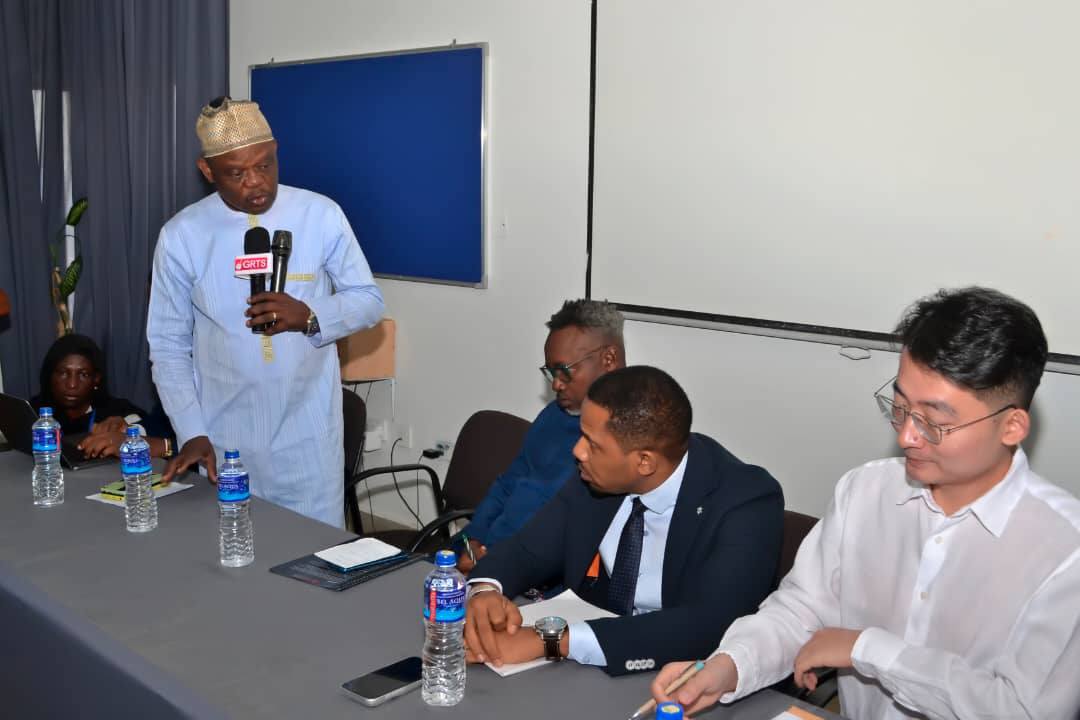
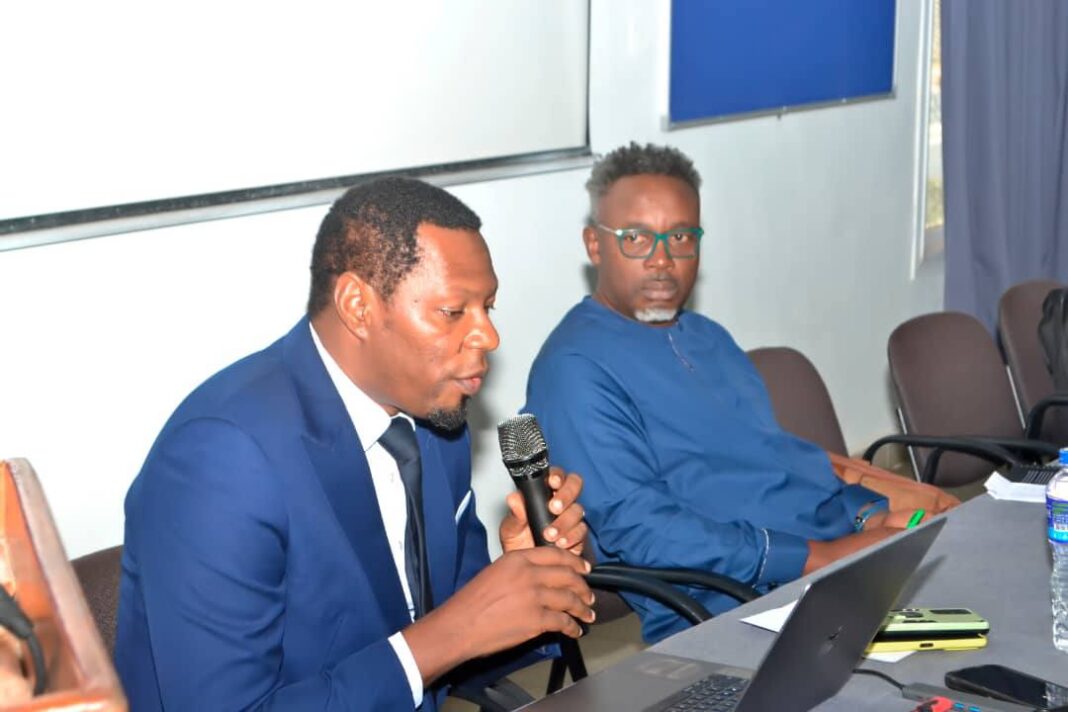
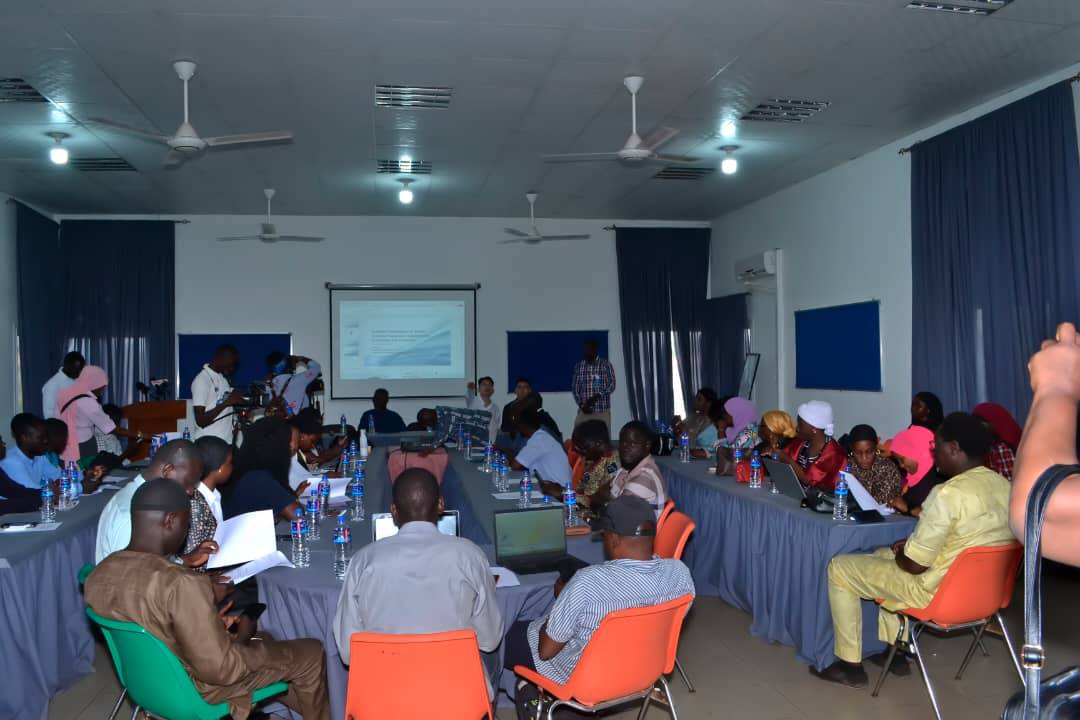
Over two days, 60 Gambian journalists were trained by international experts from Cameroon, China, and The Gambia. The workshop was led by Beaugas Orain, CEO of ICT Media STRATEGIES, and Amran Gaye, Founder & CEO of DreamConnect Edu & Travel, alongside two Chinese experts from the National Radio and Television Administration (NRTA), including Leroy Zhang, Global Marketing Manager at the Academy of Broadcasting Science. Haman Mana, Publisher of the newspaper Le Jour, served as facilitator.
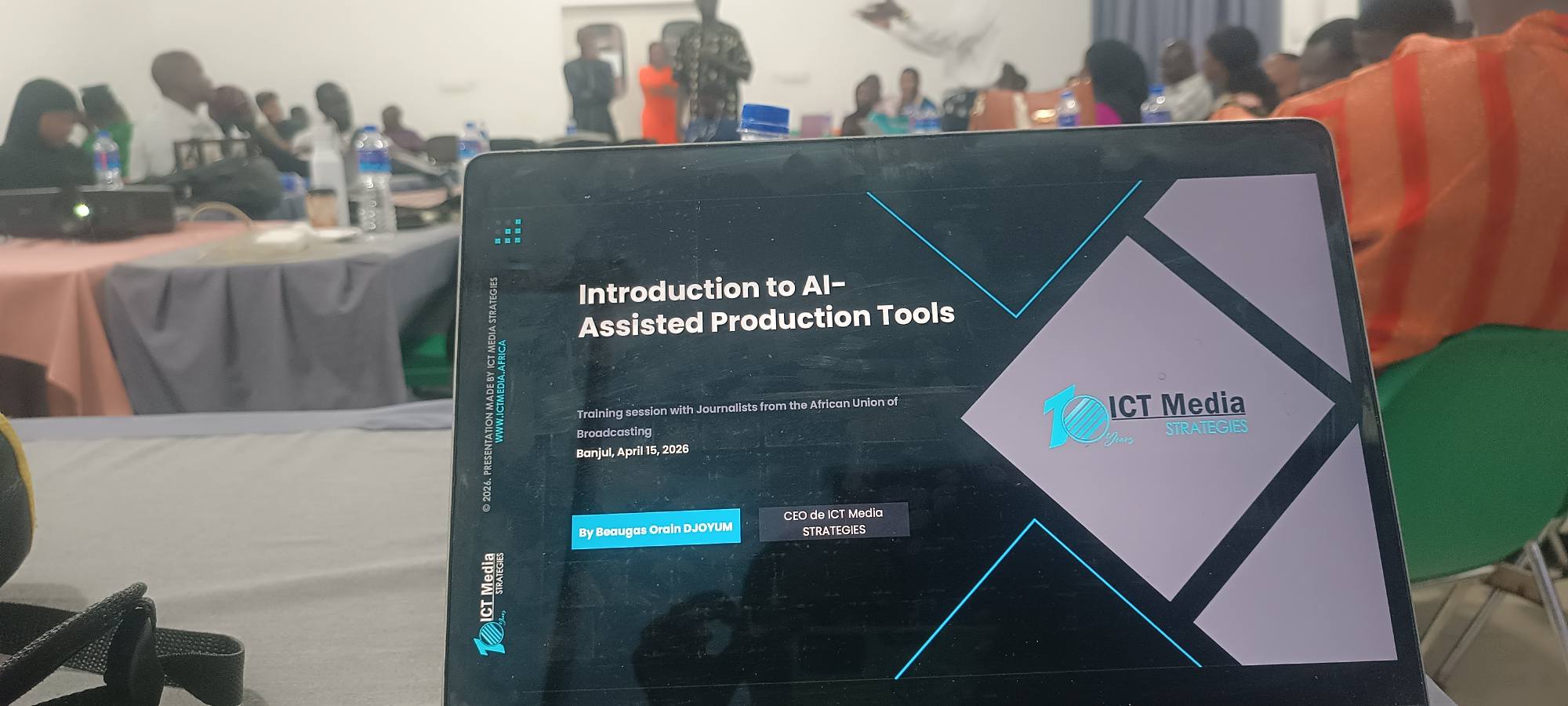
In this context, the CEO of ICT Media STRATEGIES delivered the core training modules, combining strong pedagogical and practical value. The first module, titled “Introduction to AI and Journalism,” laid the foundations and emphasised the ethical framework essential to journalistic practice in the age of artificial intelligence.
He then introduced participants to editorial assistance tools through the module “Introduction to AI-Assisted Production Tools: Editorial Assistants; Automation; Information Analysis,” including a specific focus on “How to Use AI Tools to Fight against Deepfakes and Fake News?”. Finally, a third module, “AI-Assisted Media Content Creation: Text, Image, Audio, Video; Editing; Post-production,” provided a hands-on immersion into advanced uses of AI for multimedia content production.
For Dr. Ismaila Ceesay, Minister of Information, Media and Broadcasting Services of The Gambia, the stakes are both clear and urgent:
“Today our journalists and broadcasters face a dual responsibility. The first responsibility is to embrace innovation while defending truth.”
In his opening remarks, the minister highlighted AI’s transformative potential for newsrooms:
“AI can help our newsrooms work smarter. It can also improve audiovisual storytelling. AI can strengthen data journalism. It can automate production processes and improve audience engagement. Essentially, it makes your work easy.” However, he also warned of its risks: “But at the same time, it can also be weaponised through misinformation, deepfakes, manipulated content, and synthetic propaganda.”
The acceleration of the news cycle represents another major challenge.
“Now, news breaks first on digital platforms, even before it reaches our TV,” he noted, adding: “Falsehoods travel faster than facts, and artificial intelligence is increasingly part of this ecosystem. Therefore, this training is timely.”
A similar perspective was expressed by Grégoire Ndjaka, Director General of the African Union of Broadcasting, who called for the responsible use of these technologies: “What is important is not only knowing how to use artificial intelligence, but also the best practices in this domain.” He added: “If artificial intelligence is well used, it is beneficial for society, but if it is not well used, it can be very harmful to the country.”
At the national level, this initiative is part of a broader transformation of The Gambia’s audiovisual landscape. Abdoulie Sey, Director General of GRTS, sees it as a strategic lever: “This is one of the steps towards the transformation and reformation of GRTS… the hardware has to be changed… the software as well… the mentality, capabilities and the skills of the people working there in general have to be changed.” He emphasized: “How do you do that? By continuous training.”
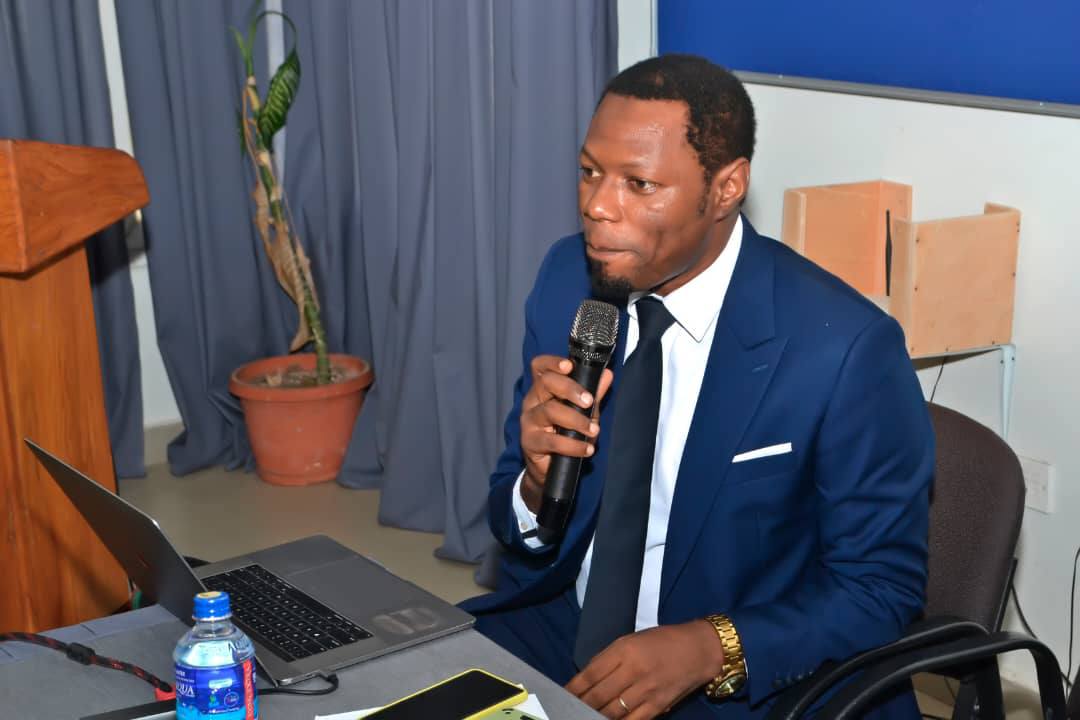
Speaking as a trainer, Beaugas Orain DJOYUM praised the quality of the exchanges and the commitment of participants:
“It was a real privilege to contribute to strengthening the capacities of Gambian journalists on such a strategic issue as the integration of artificial intelligence into journalistic practice. Through concrete examples and hands-on use of targeted AI tools, we shared methods and best practices aimed at making AI a lever for improving the quality of information.”
He continued by stressing the ethical stakes:
“The key challenge is to ensure that these technologies do not become tools for manipulation or the destruction of the reputation of institutions, brands, and individuals, but rather powerful instruments serving truth, verification, and the fight against misinformation. I would like to thank the Director General of the AUB for this opportunity, which allows me to share this expertise at the African level.”
Beyond The Gambia, this training reflects a broader trend across the continent: the gradual integration of artificial intelligence into media ecosystems. Amid opportunities to optimise editorial processes and risks associated with misinformation, African media are now called upon to strike a balance between technological innovation and editorial responsibility.
In this context, initiatives like this resonate strongly with the objectives of E-Gov’A 2026, to be held in Yaoundé, which will highlight the intersections between artificial intelligence and governance in building efficient public services in a “cashless, paperless, seamless” Africa.
By Digital Business Africa