Home Blog Page 5

Declaration for the Future of the Internet: “Supporting an Internet that is open, free, global, interoperable, reliable and secure” [Document]

[DIGITAL Business Africa] – The Future of the Internet Declaration was signed and presented on 28 April 2022 at a hybrid event in Washington hosted by the White House National Security Council. Many countries participated in this conference via video conference. Three African countries signed the declaration: Niger, Kenya and Cape Verde.  

In this declaration on the future of the Internet, the 60 signatory countries commit themselves to working towards and supporting an Internet that is open, free, global, interoperable, reliable and secure. They also commit to ensuring that the Internet reinforces democratic principles, human rights and fundamental freedoms; provides opportunities for collaborative research and commerce; is developed, governed and deployed in an inclusive manner so that unserved and underserved communities, especially those connecting for the first time, can navigate it safely and with privacy and data protection; and is governed by multi-stakeholder processes.

Digital Business Africa brings you the full Declaration:

“We are united by a belief in the potential of digital technologies to promote con- nectivity, democracy, peace, the rule of law, sustainable development, and the enjoyment of human rights and fundamental freedoms. As we increasingly work, communicate, connect, engage, learn, and enjoy leisure time using digital technologies, our reliance on an open, free, global, interoperable, reliable, and secure Internet will continue to grow. Yet we are also aware of the risks inherent in that reliance and the challenges we face.

We call for a new Declaration for the Future of the Internet that includes all partners who actively support a future for the Internet that is open, free, global, interoperable, reliable, and secure.

We further affirm our commitment to protecting and respecting human rights online and across the digital ecosystem. Partners in this Declaration intend to work toward an environment that reinforces our democratic systems and promotes active participation of every citizen in democratic processes, secures and protects individuals’ privacy, maintains secure and reliable connectivity, resists efforts to splinter the global Internet, and promotes a free and competitive global economy.

Partners in this Declaration invite other partners who share this vision to join us in working together, with civil society and other stakeholders, to affirm guiding principles for our role in the future of the global Internet.

Reclaiming the Promise of the Internet

The immense promise that accompanied the development of the Internet stemmed from its design: it is an open “network of networks”, a single interconnected communications system for all of humanity. The stable and secure operation of the Internet’s unique identifier systems have, from the beginning, been governed by a multistakeholder approach to avoid Internet fragmentation, which continues to be an essential part of our vision.

For business, entrepreneurs, and the innovation ecosystem as a whole, interconnection promises better access to customers and fairer competition; for artists and creators, new audiences; for everyone, unfettered access to knowledge.

With the creation of the Internet came a swell in innovation, vibrant communication, increased cross-border data flows, and market growth—as well as the invention of new digital products and services that now permeate every aspect of our daily lives.

Over the last two decades, however, we have witnessed serious challenges to this vision emerge. Access to the open Internet is limited by some authoritarian governments and online platforms and digital tools are increasingly used to repress freedom of expression and deny other human rights and fundamental freedoms.

State-sponsored or condoned malicious behavior is on the rise, including the spread of disinformation and cybercrimes such as ransomware, affecting the security and the resilience of critical infrastructure while holding at risk vital public and private assets.

At the same time, countries have erected firewalls and taken other technical measures, such as Internet shutdowns, to restrict access to journalism, information, and services, in ways that are contrary to international human rights commitments and obligations. Concerted or independent actions of some governments and private actors have sought to abuse the openness of Inter- net governance and related processes to advance a closed vision.

Moreover, the once decentralized Internet economy has become highly concentrated and many people have legitimate concerns about their privacy and the quantity and security of personal data collected and stored online.

Online platforms have enabled an increase in the spread of illegal or harmful content that can threaten the safety of individuals and contribute to radicalization and violence. Disinformation and foreign malign activity is used to sow division and conflict between individuals or groups in society, undermining respect for and protection of human rights and democratic institutions.

Our vision

We believe we should meet these challenges by working towards a shared vision for the future of the Internet that recommits governments and relevant authorities to defending human rights and fostering equitable economic prosperity.

We intend to ensure that the use of digital technologies reinforces, not weakens, democracy and respect for human rights; offers opportunities for innovation in the digital ecosystem, including businesses large and small; and, maintains connections between our societies.

We intend to work together to protect and fortify the multistakeholder system of Internet governance and to maintain a high level of security, privacy protection, stability and resilience of the technical infrastructure of the Internet.

We affirm our commitment to promote and sustain an Internet that: is open, free, global, interoperable, reliable, and secure and to ensure that the Internet reinforces democratic principles and human rights and fundamental freedoms; offers opportunities for collaborative research and commerce; is developed, governed, and deployed in an inclusive way so that unserved and underserved communities, particularly those coming online for the first time, can navigate it safely and with personal data privacy and protections in place; and is governed by multistakeholder processes.

In short, an Internet that can deliver on the promise of connecting humankind and helping societies and democracies to thrive.

The Internet should operate as a single, decentralized network of networks – with global reach and governed through the multistakeholder approach, whereby governments and relevant authorities partner with academics, civil society, the private sector, technical community and others.

Digital technologies reliant on the Internet, will yield the greatest dividends when they operate as an open, free, global, interoperable, re- liable, and secure system.

Digital technologies should be produced, used, and governed in ways that enable trustworthy, free, and fair commerce; avoid unfair discrimination between, and ensure effective choice for, individual users; foster fair competition and encourage innovation; promote and protect human rights; and, foster societies where:

• Human rights and fundamental freedoms, and the well-being of all individuals are protected and promoted;

• All can connect to the Internet, no matter where they are located, including through increased access, affordability, and digital skills;

• Individuals and businesses can trust the safety and the confidentiality of the digital technologies they use and that their privacy is protected;

• Businesses of all sizes can innovate, compete, and thrive on their merits in a fair and competitive ecosystem;

• Infrastructure is designed to be secure, interoperable, reliable, and sustainable;

• Technology is used to promote pluralism and freedom of expression, sustainability, inclusive economic growth, and the fight against global climate change.

Principles to promote this Vision  

The partners in this Declaration intend to uphold a range of key principles, set out below, regarding the Internet and digital technologies; to promote these principles within existing multilateral and multistakeholder fora; to translate these principles into concrete policies and actions; and, work together to promote this vision globally, while respecting each other’s regulatory autonomy within our own jurisdictions and in accordance with our respective domestic laws and international legal obligations.

These principles are not legally binding but should rather be used as a reference for public policy makers, as well as citizens, businesses, and civil society organizations.

Protection of Human Rights and Fundamental Freedoms

• Dedicate ourselves, in conducting and executing our respective domestic authorities, to respect human rights, including as reflected in the Universal Declaration of Human Rights, as well as the principles of the rule of law, legitimate purpose, non-arbitrariness, effective oversight, and transparency, both online and offline, and call upon others to do the same.

• Promote online safety and continue to strengthen our work to combat violence online, including sexual and gender-based violence as well as child sexual exploitation, to make the Internet a safe and secure place for everyone, particularly women, children, and young people.

• Promote safe and equitable use of the Internet for everyone, without discrimination based on sex, race, color, ethnic, national or social origin, genetic features, language, religion or belief, political or any other opinion, membership of an indigenous population, property, birth, disability, age, gender identity or sexual orientation.

• Reaffirm our commitment that actions taken by governments, authorities, and digital services including online platforms to reduce illegal and harmful content and activities online be consistent with international human rights law, including the right to freedom of expression while encouraging diversity of opinion, and pluralism without fear of censorship, harassment, or intimidation.

• Protect and respect human rights and fundamental freedoms across the digital ecosystem, while providing access to meaningful remedies for human rights violations and abuses, consistent with international human rights law.

• Refrain from misusing or abusing the Internet or algorithmic tools or techniques for unlawful surveillance, oppression, and repression that do not align with international human rights principles, including developing social score cards or other mechanisms of domestic social control or pre-crime detention and arrest.

• Refrain from misusing or abusing the Internet or algorithmic tools or techniques for unlawful surveillance, oppression, and repression that do not align with international human rights principles, including developing social score cards or other mechanisms of domestic social control or pre-crime detention and arrest.

A Global Internet

• Refrain from government-imposed internet shutdowns or degrading domestic Internet access, either entirely or partially. • Refrain from blocking or degrading access to lawful content, services, and applications on the Internet, consistent with principles of Net Neutrality subject to applicable law, including international human rights law.

• Promote our work to realize the benefits of data free flows with trust based on our shared values as like-minded, democratic, open and outward looking partners.

• Promote cooperation in research and innovation and standard setting, encourage information sharing regarding security threats through relevant international fora, and reaffirm our commitment to the frame- work of responsible state behavior in cyberspace.

Inclusive and Affordable Access to the Internet

• Promote affordable, inclusive, and reliable access to the Internet for individuals and businesses where they need it and support efforts to close digital divides around the world to ensure all people of the world are able to benefit from the digital transformation.

• Support digital literacy, skills acquisition, and development so that individuals can overcome the digital divide, participate in the Internet safely, and realize the economic and social potential of the digital economy.

• Foster greater exposure to diverse cultural and multilingual content, information, and news online. Exposure to diverse content online should contribute to pluralistic public discourse, foster greater social and digital inclusion within society, bolster resilience to disinformation and misinformation, and increase participation in democratic processes.

Trust in the Digital Ecosystem • Work together to combat cybercrime, including cyber-enabled crime, and deter malicious cyber activity.

• Ensure that government and relevant authorities’ access to personal data is based in law and conducted in accordance with international human rights law.

• Protect individuals’ privacy, their personal data, the confidentiality of electronic communications and information on end-users’ electronic devices, consistent with the protection of public safety and applicable domestic and international law.

• Promote the protection of consumers, in particular vulnerable consumers, from online scams and other unfair practices online and from dangerous and unsafe products sold online.

• Promote and use trustworthy network infrastructure and services suppliers, relying on risk-based assessments that include technical and non-technical factors for network security. • Refrain from using the Internet to undermine the electoral infrastructure, elections and political processes, including through covert information manipulation campaigns. • Support a rules-based global digital economy which fosters trade and contestable and fair online markets so that firms and entrepreneurs can compete on their merits. • Cooperate to maximize the enabling effects of technology for combatting climate change and protecting the environment whilst reducing as much as possible the environmental footprint of the Internet and digital technologies.

Multistakeholder Internet Governance

• Protect and strengthen the multistakeholder system of Internet governance, including the development, deployment, and management of its main technical protocols and other related standards and protocols.

• Refrain from undermining the technical infrastructure essential to the general availability and integrity of the Internet.

We believe that the principles for the future of the Internet are universal in nature and as such we invite those who share this vision to affirm these principles and join us in the implementation of this vision.

This Declaration takes into account, and expects to contribute to, existing processes in the UN system, G7, G20, the Organisation for Economic Cooperation and Development, the World Trade Organization, and other relevant multilateral and multistakeholder fora, the Internet Corporation for Assigned Names and Numbers, Internet Governance Forum, and Freedom Online Coalition.

We also welcome partnership with the many civil society organizations essential to promoting an open, free, global, interoperable, reliable, and secure Internet, and defending fundamental freedoms and human rights online.

Partners in this Declaration intend to consult and work closely with stakeholders in carrying forward this vision.

★★★★

Download the Declaration For The Future For The Internet here 

The 32 signatories, in addition to the EU Member States and the US, as of 28 April 2022 are

 AlbaniaAndorre 
ArgentinaAustralia 
Cabo VerdeCanada 
ColombiaCosta Rica 
Dominican RepublicGeorgia 
Island Israel 
Jamaica Japon 
Kenya Kosovo 
MaldivesMarshall Island 
Micronesia Moldavia 
Montenegro New Zeland 
Niger Macédoine du Nord 
Perou Serbia 
TaiwanTrinite-And-Tobago 
United KingdomUkraine 
Uruguay 

Elon Musk: “I am offering to buy 100% of Twitter for $54.20 per share in cash, a 54% premium over the day before I began investing in Twitter”

Digital Business Africa presents Elon Musk’s proposal to acquire Twitter.

Exhibit B

Bret Taylor

Chairman of the Board,

I invested in Twitter as I believe in its potential to be the platform for free speech around the globe, and I believe free speech is a societal imperative for a functioning democracy.  

However, since making my investment I now realize the company will neither thrive nor serve this societal imperative in its current form. Twitter needs to be transformed as a private company.

As a result, I am offering to buy 100% of Twitter for $54.20 per share in cash, a 54% premium over the day before I began investing in Twitter and a 38% premium over the day before my investment was publicly announced. My offer is my best and final offer and if it is not accepted, I would need to reconsider my position as a shareholder.

Twitter has extraordinary potential.  I will unlock it.

Elon Musk

/s/ Elon Musk 

Script

[SEND VIA TEXT]

As I indicated this weekend, I believe that the company should be private to go through the changes that need to be made.

After the past several days of thinking this over, I have decided I want to acquire the company and take it private.

I am going to send you an offer letter tonight, it will be public in the morning.

Are you available to chat?

[VOICE SCRIPT]

1.Best and Final:
a.I am not playing the back-and-forth game.
b.I have moved straight to the end.
c.It’s a high price and your shareholders will love it.
d.If the deal doesn’t work, given that I don’t have confidence in management nor do I believe I can drive the necessary change in the public market, I would need to reconsider my position as a shareholder.
i.This is not a threat, it’s simply not a good investment without the changes that need to be made.
ii.And those changes won’t happen without taking the company private.
2.My advisors and my team are available after you get the letter to answer any questions
a.There will be more detail in our public filings. After you receive the letter and review the public filings, your team can call my family office with any questions

SCHEDULE 13D

Explanatory Note: This statement on Schedule 13D amends the Schedule 13D of Elon Musk (the “Reporting Person”) that was filed with the Securities and Exchange Commission on April 5, 2022, as amended on April 11, 2022 (collectively, the “Schedule 13D”), with respect to the Common Stock of Twitter Inc. (the “Issuer’). This amendment to the Schedule 13D constitutes Amendment No. 2 to the Schedule 13D. Capitalized terms used but not defined herein have the meanings given to such terms in the Schedule 13D. Except as set forth herein, the Schedule 13D is unmodified.

Item 4.     Purpose of Transaction.

Item 4 of the Schedule 13D is amended and restated in its entirety to read as follows:

On April 13, 2022, the Reporting Person delivered a letter to the Issuer (the “Letter”) which contained a non-binding proposal (the “Proposal”) to acquire all of the outstanding Common Stock of the Issuer not owned by the Reporting Person for all cash consideration valuing the Common Stock at $54.20 per share (the “Proposed Transaction”). This represents a 54% premium over the closing price of the Common Stock on January 28, 2022, the trading day before the Reporting Person began investing in the Issuer, and a 38% premium over the closing price of the Common Stock on April 1, 2022, the trading day before the Reporting Person’s investment in the Issuer was publicly announced.

The Proposal is non-binding and, once structured and agreed upon, would be conditioned upon, among other things, the (i) receipt of any required governmental approvals; (ii) confirmatory legal, business, regulatory, accounting and tax due diligence; (iii) the negotiation and execution of definitive agreements providing for the Proposed Transaction; and (iv) completion of anticipated financing.

There can be no assurance that a definitive agreement with respect to the Proposal will be executed or, if executed, whether the transaction will be consummated. There is also no certainty as to whether, or when, the Issuer may respond to the Letter, or as to the time table for execution of any definitive agreement. The Reporting Person reserves the right to withdraw the Proposal or modify the terms at any time including with respect to the amount or form of consideration. The Reporting Person may, directly or indirectly, take such additional steps as he may deem appropriate to further the Proposal.

If the Proposed Transaction is completed, the Common Stock would become eligible for termination of its registration pursuant to Section 12(g)(4) of the Securities Exchange Act of 1934, as amended, and would be delisted from the New York Stock Exchange.

The foregoing description is qualified in its entirety by reference to the full text of the Letter, a copy of which is attached hereto as Exhibit B and is incorporated herein by reference.

The Reporting Person has engaged Morgan Stanley as its financial advisor.

Neither the Letter nor this Schedule 13D is meant to be, nor should be construed as, an offer to buy or the solicitation of an offer to sell any of the Issuer’s securities.

The Reporting Person intends to review his investment in the Issuer on a continuing basis. Depending on the factors discussed herein, the Reporting Person may, from time to time, acquire additional shares of Common Stock and/or retain and/or sell all or a portion of the shares of Issuer common stock held by the Reporting Person in the open market or in privately negotiated transactions, and/or may distribute the Common Stock held by the Reporting Person to other entities. Any actions the Reporting Person might undertake will be dependent upon the Reporting Person’s evaluation of numerous factors, including, among other things, the outcome of any discussions referenced in this Schedule 13D, the price levels of the Common Stock, general market and economic conditions, ongoing evaluation of the Issuer’s business, financial condition, operations and prospects, the relative attractiveness of alternative business and investment opportunities, investor’s need for liquidity, and other future developments.

From time to time, the Reporting Person may engage in discussions with the Board and/or members of the Issuer’s management team concerning, including, without limitation, the Proposal, potential business combinations and strategic alternatives, the business, operations, capital structure, governance, management, strategy of the Issuer and other matters concerning the Issuer. The Reporting Person may express his views to the Board and/or members of the Issuer’s management team and/or the public through social media or other channels with respect to the Issuer’s business, products and service offerings.

Except as set forth above, the Reporting Person has no present plans or intentions which would result in or relate to any of the transactions described in subparagraphs (a) through (j) of Item 4 of Schedule 13D. However, the Reporting Person reserves the right to change his plans at any time, as he deems appropriate, and in light of his ongoing evaluation of numerous factors, including, among other things, the price levels of the Common Stock, general market and economic conditions, ongoing evaluation of the Issuer’s business, financial condition, operations and prospects, the relative attractiveness of alternative business and investment opportunities, Reporting Person’s need for liquidity, and other future developments.

Item 7.     Material to be Filed as Exhibits.

Exhibit A:Letter Agreement, dated as of April 4, 2022, by and between Twitter, Inc. and the Reporting Person (incorporated  herein by reference to Exhibit 10.1 to the Current Report on Form 8-K filed by the Issuer with the Securities and Exchange Commission on April 5, 2022).
Exhibit B:Letter from the Reporting Person to the Issuer dated April 13, 2022.

SIGNATURE

After reasonable inquiry and to the best of my knowledge and belief, I certify that the information set forth in this statement is true, complete and correct.

Date: April 13, 2022

By:/s/ Elon Musk 
 Elon Musk

Source: https://www.sec.gov/

Thibault Baras : « Nous espérons développer au Cameroun un centre de formation dédié aux technologies virtuelles et à la réalité augmentée »

[DIGITAL Business Africa] – Lors du match d’ouverture de la CAN Total Energies 2021, l’hologramme virtuel d’un lion est apparu sur le toit du stade et sur l’esplanade. Le directeur général de Dreamwall (studio d’animation 2/D 3/D et de création graphique) et de Keywall (solution TV dans la création de décors virtuels et réalités augmentée aux habillages d’émissions), créateur de cet hologramme, a tenu une conférence sur les technologies virtuelles et la réalité augmentée à l’Institut de Formation et de Conservation du Matériel audiovisuel, IFCPA, ce lundi 10 janvier 2021. Digital Business Africa l’a rencontré au terme de cet échange avec les jeunes pour une interview. Précisions, il n’a pas souhaité parler du montant de son travail. L’interview porte donc simplement sur son travail.

DIGITAL Business Africa :  L’hologramme du lion apparu au stade Olembé lors de la cérémonie d’ouverture de la CAN 2021 a suscité des messages d’admiration parmi plusieurs internautes. De quoi est fait cet avatar ? Et quels étaient les jeux de cette technologie ?

Thibault Baras : C’est un lion virtuel en réalité augmentée, animé qui fonctionne comme un moteur de jeux. Il mesure 16 mètres de haut, six mètres de long et pèse plus d’une tonne. Ce ne pouvait pas être possible de mettre une statue comme celle-là sur la tribune. Heureusement c’était virtuel ; le toit ne s’est pas effondré (rire). Tout le monde a pu bénéficier de ce spectacle…  

Il était important d’empêcher que le lion entre en collision avec les danseurs sur la scène. Tout comme il est important de respecter l’environnement. Et donc la réalité augmentée ne fait sens que si elle est crédible à un certain niveau. Puisqu’ici, on sait bien qu’un lion géant n’existe pas. Par contre, son intégration dans un environnement réel est utile.

Par exemple s’il avait plu, il aurait été logique qu’il y ait de la pluie qui passe devant le lion, de la fumée ou des choses comme ça. En réalité augmentée, l’on doit prendre en compte tous ces éléments.

DIGITAL Business Africa : Comment un tel projet a été pensé et mis en œuvre ?

Thibault Baras : Au niveau de la réalité augmentée, nous avons un partenaire technologique qui est une société turque. Cette entreprise a été l’une des premières à intégrer l’utilisation des moteurs de jeux dans les technologies de télévision et de l’audiovisuel. Nous utilisons donc ces technologies qui permettent l’insertion d’éléments virtuels de réalité augmentée au sein du monde réel.

DIGITAL Business Africa : Le peuple camerounais peut-il s’attendre à une autre apparition de ce lion à la cérémonie de clôture de la CanTotalEnergie 2021 ?

Thibault Baras: Peut-être peuvent-il s’y attendre. En tout cas, je ne serai plus là.

DIGITAL Business Africa : Vous avez travaillé chez Canal+, où vous avez innové avec un système statistique qui a transformé le reportage sportif. Quel regard portez-vous sur le niveau d’infographie des chaînes de télévisions africaines ? 

Thibault Baras : J’ai regardé quelques programmes dans ma chambre d’hôtel, le soir très tard en revenant du stade. Je pense qu’il y a une marge de progression en matière d’infographie dans les chaines africaines. Mais, je n’ai pas suffisamment d’expérience pour juger ce que proposent les chaines africaines dans le domaine de la réalité virtuelle.

DIGITAL Business Africa : Que fait Dreamwall pour accompagner les jeunes talents camerounais dans la réalité augmentée ?

Thibault Baras : Avant la Covid-19, le studio de Dreamwall était ouvert à Yaoundé. L’on pouvait recevoir toutes les personnes désireuses de se faire former dans la réalité virtuelle. Maintenant, cela n’est plus possible. Nous sommes obligés de limiter les effectifs et surtout en ayant recours au télétravail. Cela n’a pas beaucoup de sens. Dans le futur, on espère développer un centre de formation dédié aux technologies virtuelles et de réalité augmentée au Cameroun. Là, il y aura un premier projet, puis devra s’ouvrir un centre de formation, dans tous les cas. Mais, ce n’est pas à l’ordre du jour.

DIGITAL Business Africa : Un mot à l’endroit à ces étudiants qui voudraient faire leurs preuves dans la technologie de la réalité augmentée

Thibault Baras : Pour pouvoir embrasser l’utilisation de ces nouvelles technologies, il faut s’intéresser à tout ce qui se passe dans le monde, en matière de technologie. Mais, il y a un élément essentiel : ce sont les moteurs de jeux. Il faut se concentrer sur eux, sur leur utilisation à travers des formations en ligne. C’est l’avenir dans la télévision, que ce soit dans l’automobile, l’aviation, la médecine. Ces sont ces moteurs de jeux qui vont vous permettre, dans quelques années, de porter des lunettes de réalité augmentée. Quand vous irez chez le médecin, vos lunettes pourront vous montrer l’intérieur de votre corps.

Propos recueillis par Jean Materne Zambo

Smart Click Africa launches the CamerExcellence concept to celebrate Cameroonian talents who excel internationally

[Digital Business Africa] – On the occasion of AFCON 2021, the association Smart Click Africa, in collaboration with the firm ICT Media STRATEGIES, specialized in e-Reputation and Personal branding, launched this January 09, 2022, in Yaounde the web platform CamerExcellence (www.camerexcellence.cm) to celebrate Cameroonian talents in all fields.

The association is taking advantage of the African Cup of Nation’s competition to offer on the CamerExcellence.com website, as well as on its social networks Facebook, Twitter, LinkedIn, TikTok, and Instagram (@CamerExcellence) portraits, visuals, and some videos of Cameroonian talents in sport, culture, economy, innovation, and many other areas where Cameroonians excel. The focus is on those who excel on the international stage.

CamerExcellence is an opportunity to inspire more young Cameroonians and those of the world, by telling and/or presenting on the web and social networks the story of Cameroonian figures and icons who, through their hardworking spirit, their abnegation, and their determination, have succeeded and are now the pride of Cameroon. During this AFCON 2021, we will, in addition to football, celebrate these talents who make Cameroonian excellence. We present to the world this other face of Cameroon: a breeding ground and a reservoir of diverse skills from which each State of the planet can draw to achieve exploits, succeed and achieve excellence”, explains Beaugas Orain DJOYUM, president of the association Smart Click Africa and CEO of ICT Media STRATEGIES.

He added that the deployment will be done more on the web and invites Cameroonians to produce more media content on Cameroonian icons and to share them on the web and social networks using the hashtag #CamerExcellence.

About Smart Click Africa

Created in 2018, the Smart Click Africa Association aims at promoting a healthy and safe Internet. It is committed to promoting better use of the web, social networks, and digital solutions in Africa. The association has already launched several projects such as the 10 Million Smart Citizens program or even recently the Covid19.CM platform.

More on smartclickafrica.org

About ICT Media STRATEGIES

Created in 2015 in Yaoundé, the ICT Media STRATEGIES firm specializes in business intelligence, e-Reputation, and personal branding. It supports states, businesses, and individuals in improving their online reputation through various actions.

More on ictmedia.africa 

More on ictmedia.africa

PRESS CONTACT

ASSONGMO NECDEM

+237 699 55 77 88

+237 243 25 64 36

Mail : [email protected]

Web : smartclickafrica.org

Voici le bureau exécutif de l’association des opérateurs historiques de télécommunications de la CEEAC conduit par Judith YAH SUNDAY épse ACHIDI

[DIGITAL Business Africa] – A l’initiative de la Camtel, les opérateurs historiques de télécommunications des pays membres de la CEEAC se sont réunis à Yaoundé au Cameroun du 15 au 16 décembre 2021 dans le but de tenir l’assemblée générale constituante de leur association.  

La rencontre de Yaoundé en présentiel faisait suite à deux sessions initiales de prise de contact via vidéoconférence les 15 octobre 2021 et 15 novembre 2021. Lors de ces rencontres virtuelles, les directeurs généraux des sept opérateurs présents ont validé d’un commun accord le projet de statut et ont convenu d’une rencontre en présentiel à Yaoundé.

Aussi, la rencontre de Yaoundé a permis l’adoption des statuts de l’Association des opérateurs historiques de télécommunications des pays membres de la CEEAC et l’élection à l’unanimité du bureau de l’association composée de :

– Madame Judith YAH SUNDAY épse ACHIDI, Directeur Général de la Cameroon Telecommunications à la fonction de la Présidence de l’Association ;

Monsieur Didier MUSETE, Directeur Général de la Société Congolaise des Postes et Télécommunications, représenté par monsieur Maurice MUFUSI à la fonction de la Vice-Présidence de l’Association ;

Monsieur Yves CASTANOU, Directeur Général de Congo Télécom, représenté par monsieur Anicet KANGA à la fonction du Secrétariat Permanent de l’Association ;

Monsieur Axcèle KISSANGOU MOUELE, Directeur Général de la Société de Patrimoine des Infrastructures Numériques du Gabon, à la fonction du Secrétariat Permanent Adjoint ;

– Madame Elise GOLDOUM, Directeur Général de la Société des Télécommunications du Tchad (Groupe SOTEL TCHAD), à la fonction de Responsable de la Commission Financière de l’Association.

A travers l’association des opérateurs historiques des télécommunications de l’Afrique centrale, les membres fondateurs entendent contribuer de manière significative au développement de l’économie numérique et à la transformation digitale de la sous-région ; favoriser les échanges d’expérience, la coordination des activités et la collaboration entre les opérateurs membres, en vue d’harmoniser le développement des moyens de télécommunications ; représenter et défendre les intérêts des opérateurs d’infrastructure et de transport de communications électroniques face à la position dominante des opérateurs mobiles à capitaux privés et aussi de faciliter l’accès au broadband et au Cloud intra-africain.

Judith Yah Sunday, DG de Camtel, élue présidente de la nouvelle association des opérateurs historiques des télécommunications de l’Afrique centrale

L’association ambitionne également de stimuler l’écosystème de l’entrepreneuriat et des startups du numérique afin de promouvoir la croissance économique et la création d’emplois ; d’étudier, discuter et faire connaître les questions touchant la commercialisation des services de communications électroniques en Afrique centrale ; de promouvoir le développement des communications électroniques et des entreprises du secteur ; de créer une plateforme de dialogue structuré et constant avec l’ensemble des parties prenantes, dans l’optique de partager les grandes problématiques du secteur.

Digital Business Africa constate tout de même que l’association est constituée davantage des opérateurs publics de transport des communications électroniques et de déploiement d’infrastructures numériques.

C’est ainsi que l’on note parmi les membres fondateurs Camtel pour le Cameroun, Congo Telecom pour le Congo Brazza, la SCPT (Société congolaise des postes et télécommunications) pour la RD Congo, SOTEL et SUDACHAD pour le Tchad et enfin la SPIN Gabon et ACE Gabon pour le Gabon.

Par Digital Business Africa

Lire aussi

James G. Claude [GVG]: “Our goal for 2022 is to expand our business and increase our already significant presence on the African continent”

[DIGITAL Business Africa] –  Global Voice Group  (GVG) iOne of the core leaders in its business segment, says its systems analyse and process eight billion telecom-related transactions every day and have helped ensure compliance of more than 115 million mobile devices.

For the year 2022, the group crowned “Technology Company of the Year” on November 24, 2021 by Africa Tech Week during an awards ceremony held in South Africa, sets itself the goal to develop its activities and increase its presence on the African continent, by multiplying new partnerships.

Digital Business Africa gives the floor today to James G. Claude, CEO of GVG, who presents the trends of 2022 and its ambitions in 2022.

Digital Business Africa: The year 2021 is coming to an end with a tentative economic recovery in many African states. What do you see as the key e-governance challenges for African states in 2021?

James G. Claude:  The biggest challenge for African states is to achieve their digital transformation in a sovereign and self-sufficient manner, without being dictated to by GAFAM or influenced by the current digital powers. This challenge of sovereignty and self-sufficiency implies the development of technological infrastructures in African countries capable of supporting the needs of businesses, individuals and governments alike.

In Africa, there is currently a strong demand for data centres and regional cloud computing from both businesses and governments in Africa. A report by Arizton speaks of a combined annual growth of 15% until 2026.

But even today, much of the data generated in Africa is beyond the control of Africans. This situation is improving with an increased investment in local digital development in Africa, spurred by growing internet penetration on the continent. But the data gap between Africa and the rest of the world remains large, with Africa accounting for just 1% of the world’s data centres.

Digital education also has a major role to play in creating a more favorable environment for investment in this area.

Digital Business Africa: What do you think will be the main trends in 2022 in terms of regulation of the mobile and digital ecosystem in Africa?

James G. Claude: I anticipate two very strong and complementary trends: a growing desire to achieve greater regulatory harmonisation in this area in sub-Saharan Africa and the increasing adoption of technological tools to support the regulation of these ecosystems.

Regulatory harmonisation is essential to achieve economies of scale that promote digital inclusion and reduce inequality in sub-Saharan Africa. There are pan-African organisations such as Smart Africa, of which we are a member, that have been working hard over the past few years to achieve a framework that harmonises regulation across all African countries.

I hope that the ambition of greater regulatory and tariff harmony will be realised by 2022.

If we achieve this, the consequences will only be positive for Africa’s economic integration and both financial and digital inclusion thanks to economies of scale and a subsequent fall in prices. But this harmonisation also requires a comparable technological upgrade within governments and regulatory authorities in all African countries. There is currently a very strong consensus across Africa on the need to accelerate the digital transformation not only of companies, but also within governments and state agencies.

It is a new paradigm that is emerging, one of ICT-enabled governance and data-driven regulation and Big Data. At GVG, we have been actively working on this transformation for almost twenty years in Africa in the areas of telecom regulation and financial ecosystem governance.

Digital Business Africa: How does GVG intend to deploy in African countries in 2022? James G. Claude: Our goal for 2022 is to expand our business and increase our already significant presence on the African continent, both through new partnerships and by strengthening our existing partnerships with our African clients.   We are working on a portfolio that meets the evolving needs of governments. We are a flexible and adaptable company and we intend to continue in the same vein.

Digital Business Africa: Which of GVG’s control solutions do you think will be most prominent in 2022?

James G. Claude: If the last two years have taught us anything, it’s that everything can change from one day to the next. The needs of consumers and their governments can change rapidly for many different reasons, a pandemic, an economic crisis…

Technology itself is already by its very nature a fast-moving industry. That’s why we like to keep up to date, we try to adapt quickly to new trends, we listen carefully to our customers’ needs. Covid has set its own rules; the progress towards a digital economy has been incredible in the last year and a half. We already offer several tools that support governments in financial inclusion and digital transformation.

For example, we’re helping to address interoperability with our Transfin payment gateway; we’re helping to secure mobile money and remittances, which many families in Africa depend on, with platforms like M3 and X Stream. We continue to create, grow and adapt to the needs of African governments. We are working hard to be able to present several solutions soon that will surprise with their technological innovation… I can’t tell you more at the moment. Digital Business Africa: You are deploying many solutions in Africa, such as TransFin, SafetyNet, Simbox control solutions, etc. What are the electronic communications regulation solutions you have deployed that you are most proud of in terms of their impact on states and populations?

James G. Claude: Our solutions help governments gain better regulatory and fiscal control of key sectors for the economic development of their countries. They help protect these sectors and, by extension, the users of their services, that is, the citizens. Every time we implement one of our solutions, we contribute to building a more secure economy, and that is the achievement we are most proud of.

Just to give you some figures, our systems analyse and process eight billion telecom-related transactions every day. To date, they have helped ensure compliance for over 115 million mobile devices.

But much of our work goes beyond these numbers. At GVG, we strongly believe that capability building is fundamental to digital transformation. That’s why we also train the public employees who work with our solutions, once implemented, so that they gain the autonomy and skills to handle these tools well. The impact of our solutions on governments therefore goes far beyond their direct financial benefits

Digital Business Africa: In April 2021, you signed an agreement with Guinea Conakry to deploy a state-of-the-art regulatory platform for the mobile and digital ecosystem in Guinea. Was this one of your biggest deals in 2021?

James G. Claude: The Guinea deal is certainly of particular importance to us.

Every new customer is always an exciting challenge and a new opportunity to excel. But when it’s an old partner who has accompanied us in our development in the past, this partnership renewal is a sign of confidence that inspires and motivates us in particular.

So, yes, this is one of our great successes in 2021, on a par with the overall performance of our company, which has managed to stay on course and create new jobs despite the pandemic.

Digital Business Africa: Global Voice Group (GVG) was also named ‘Technology Company of the Year’ on 24 November 2021 by Africa Tech Week at an awards ceremony in South Africa. What is the significance of this award for you?   James G. Claude: This award is a reflection of the great work done by each of the departments and people that make up the Global Voice Group. An award like this always makes you proud of the company you represent. In 2021 when we are still fighting a pandemic that has severely affected the global economy, receiving an award like this makes you, as CEO, realise what a great team you have.

Never before have I believed more in the saying: ‘If you want to go fast, go alone. If you want to go far, go together’. GVG lives because we are a team, a family that pulls through, in the best and worst of times.

Awards like this give us the energy to continue working on developing new solutions that support financial inclusion and digital transformation on the African continent.

Digital Business Africa: In June 2021, GVG fervently denounced the defamatory attacks in some media that accused you of abuse of dominant position among others. In your view, GVG strictly adheres to international standards of good practice in tendering for public contracts. Who do you think your detractors are and what is your strength that makes your solutions the most popular?

James G. Claude: We don’t usually pay attention to slander, because our work speaks for itself. But sometimes you have to raise your voice in the face of lies and defend a team that works hard to achieve its goals.

Our solutions gain support precisely because we don’t waste our time doing anything other than our work. When we set a goal, we put 100% of our effort into it, always putting the customer and their needs first.

Interviewed by Beaugas Orain DJOYUM

How I hijacked the top-level domain of a sovereign state [Expert Opinion*]

[Digital Business Africa] –

Digital Business Africa brings you the testimony of Fredrik N. Almroth, ethical hacker and promoter of Detectify, who in 2020 acquired the domain name used in NS delegations for the Democratic Republic of Congo ccTLD (.cd). He then temporarily took control of 50% of all DNS traffic for websites using .cd and could have exploited it for malicious purposes and other abuses. His testimony as published on his website:

Note: This issue has been resolved and the .cd ccTLD no longer sends NS delegations to the compromised domain.

TL;DR: Imagine what could happen if the country-code top-level domain (ccTLD) of a sovereign state fell into the wrong hands. Here’s how I (@Almroot) bought the domain name used in the NS delegations for the ccTLD of the Democratic Republic of Congo (.cd) and temporarily took over 50% of all DNS traffic for the TLD that could have been exploited for MITM or other abuse.

dns hijack hero labs

Background

‘Twas the week before Christmas 2020 and I decided to run an analysis of all NS records used by all the TLDs globally. However one thing caught my attention. The domain name “scpt-network.com” had the EPP status code “redemptionPeriod”, which meant that someone had failed to renew their domain (pay their invoice?) in time.

This is quite problematic as the name servers managing .cd are the following:

almroot@x:~$ dig NS +trace cd | grep "cd."
cd.			172800	IN	NS	ns-root-5.scpt-network.com.
cd.			172800	IN	NS	igubu.saix.net.
cd.			172800	IN	NS	sangoma.saix.net.
cd.			172800	IN	NS	ns-root-2.scpt-network.com.
cd.			172800	IN	NS	sabela.saix.net.
cd.			172800	IN	NS	ns-root-1.scpt-network.com.

So I figured I might as well make a bash script to ping me of any EPP status change of the domain.

To my surprise, about a week or so later, I got a ping that the domain had reached status “pendingDelete”.

I realized the severity of this. The domain name would soon be available for purchase by anyone on the Internet, meaning that the person who gets hold of that domain name would also get the NS capabilities of .cd.

I modified the script, and started probing the registrar on a minute basis for any further status changes.

On the evening of December 30, I got a ping. I opened my laptop and purchased the domain name to keep it from falling into the wrong hands.

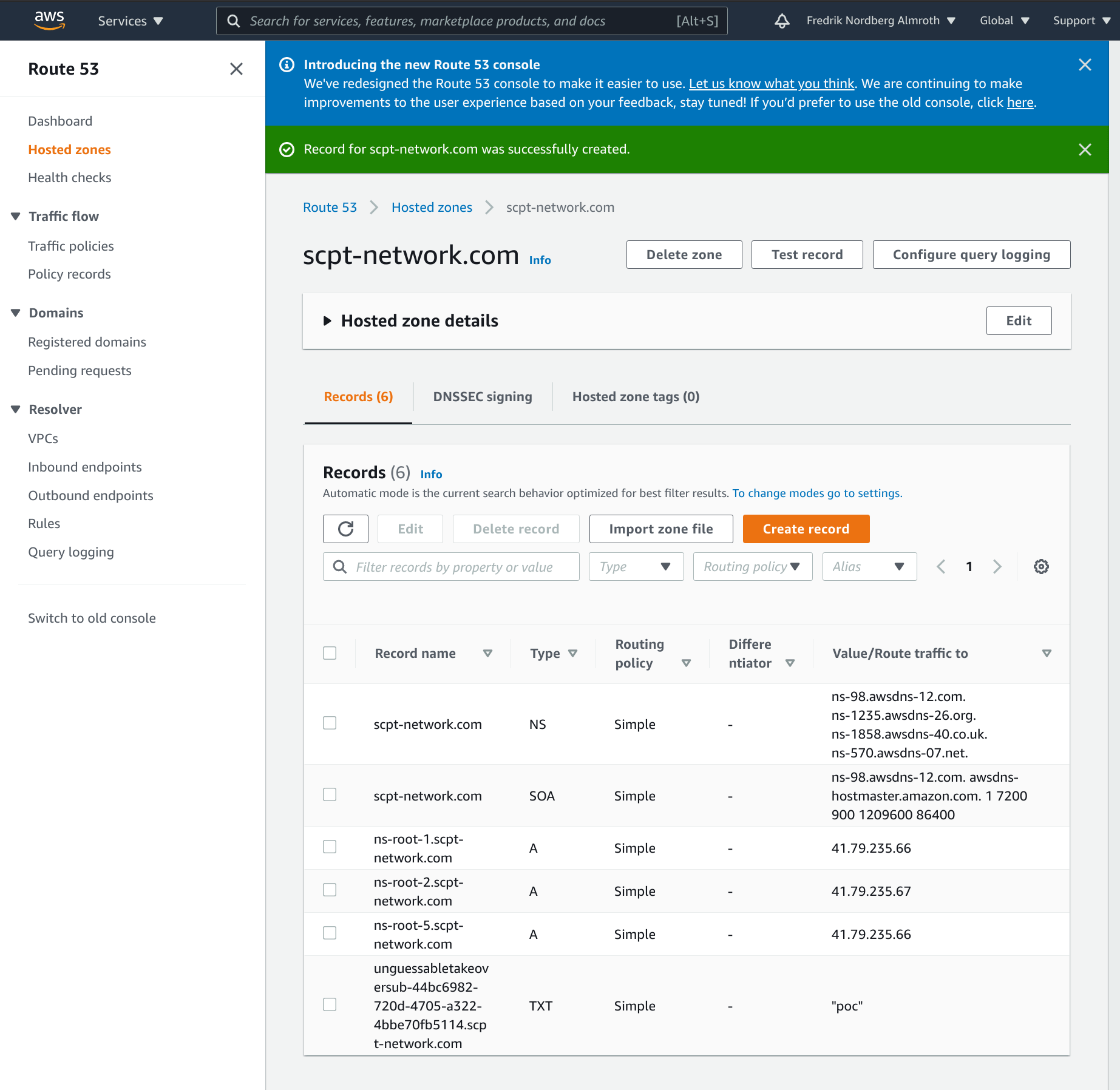
scpt-network.com CD domain hack

As the three remaining delegations pointing to SAIX (the South African Internet eXchange) were still working, the TLD remained operable throughout this time (albeit with a slight performance impact on any domain lookups).

Since I owned scpt-network.com, I could configure any subdomain under the zone at will. If I created a new subdomain (like ns-root-1) with an A-pointer to IP 1.3.3.7, then 1.3.3.7 would get legitimate incoming DNS queries meant for .cd. Any DNS response to those queries would be accepted by the caller.

cd dns hijack

To not reply would cause the caller to reach a timeout, and the status code SERVFAIL would be assumed. This is good as a SERVFAIL will force the caller to try reaching any other name server (NS record) for the zone (.cd). That is, the caller would eventually hit one of the legitimate SAIX records and be routed appropriately to the correct destination.

Potential impact

Hijacking the country-code top-level domain of a sovereign state has serious negative implications, especially if the domain were to fall into the hands of cybercriminals or a foreign adversary. The Democratic Republic of Congo (DRC) is not a small country. There are roughly 90 million people, not to mention many international companies and organizations operating with a .cd website.

DNS hijacking involving the TLD of an entire country is rare but not unheard of. For example, the ccTLD of the former Soviet Union (.su) has been hijacked by cybercriminals in the past, and the Lenovo and Google websites for Vietnam (.vn) also fell prey to DNS hijacking in 2015. Redirecting DNS traffic from legitimate .cd websites to a phishing site is one clear potential for abuse, but there’s more.

If I had operated with malicious intent, I could have also:

  • Passively intercepted DNS traffic
    – which could be used for surveillance or data exfiltration
  • Made new domain names “out of thin air”
    – imagine the capabilities if leveraged for Fast Fluxing
  • Launched remote code execution (RCE) attacks on local networks
    – and target companies that use WPAD to query public DNS servers
  • Replied to legitimate DNS queries with bogus DNS responses
    – and completely took over targeted apex domains for companies or institutions with a .cd website or even launched a DDoS attack.

For example, I could have crafted an exploit that completely hijacked a specific apex domain under .cd. Let’s imagine that I always reply with NS ns-root-1.scpt-network.com (instead of these four: [ns1,ns2,n3,ns4].google.com) for any NS requests to google.cd. Now the caller will see this, and then carry out any subsequent DNS requests to ns-root-1.scpt-network.com which I control.

This also got me thinking, what if I replied to all NS queries with a reference back to myself. Then for any A question replied with 1.3.3.7, all domain lookups for any apex or subdomain would eventually hit my manipulated A pointer. All subsequent network traffic would then be redirected to 1.3.3.7 and lead in a DDoS attack.

In fact, this would also affect the availability of the entire TLD. 50% of the DNS traffic would become faulty, and the impact of (both) DoS attacks could be amplified by setting a high TTL in the DNS replies.

Taking this a step further, say I were to explicitly target TXT records served for google.cd. Then I would be able to abuse the Let’s Encrypts DNS-01 challenge to issue a valid certificate for google.cd and effectively undermine SSL/TLS communications.

As I could control the NS delegations of any .cd apex domain, and get valid certificates, I would have been able to perform a MITM attack even when SSL/TLS is enforced by the target.

While Google has various counter measures and mitigations for this kind of abuse, it’s safe to say this is not the case for all apex domain names under .cd. Further information on how CA’s verify the ownership of domain names can be found in BR 1.7.3.

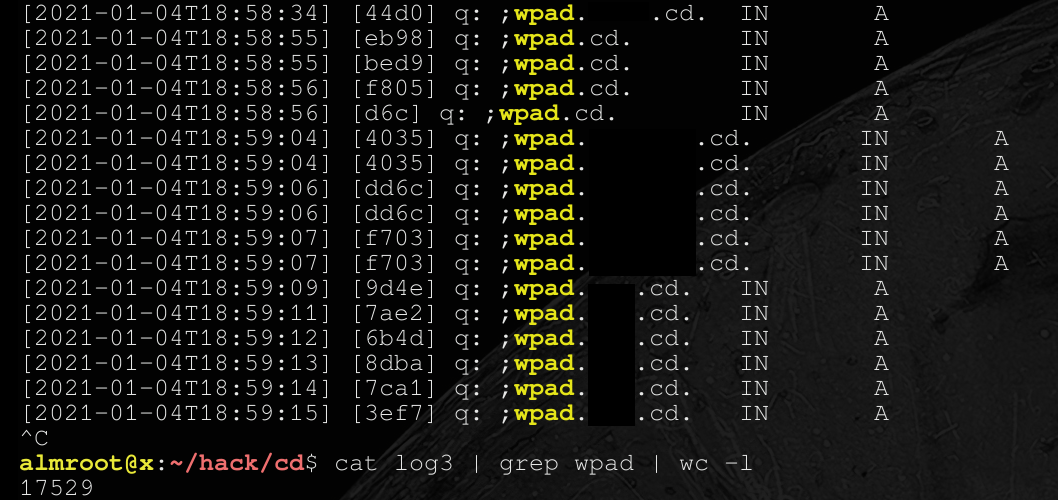
Last but not least, with privileged access on an upstream host with DNS control, I could even infiltrate the local networks of companies (redacted in screenshot below) that send DNS lookups for WPAD by monitoring their queries, spoofing a reply, and redirecting the local network caller to download and execute malicious JS-based proxy configuration over the Internet. The WPAD protocol has had its share of issues, including RCE vulnerabilities as discussed by Google’s Project Zero.

wpad dns hijack

Mitigation

On January 7th, I reached out to the Administrative and Technical contacts listed for .cd on IANA’s webpage. My initial thought was to transfer back the ownership of the domain name to the entity operating .cd.

Although one of the contacts replied and delegated to their colleague, as of this writing, I haven’t received any follow-up confirmation that they fixed the issue. Nonetheless, the issue seems to have been patched shortly after I contacted them as the DNS traffic I previously controlled for .cd has since been redirected to scpt-network.net.

I also submitted a report on January 8th to the Internet Bug Bounty on HackerOne, and I’m looking forward to seeing how they respond.

Conclusion

The potential implications for DNS hijacking of a ccTLD are widespread and have extreme negative consequences, especially if the attacker has bad intentions. This vulnerability affects more than a single website, subdomain, or even a single apex domain. All .cd websites, including those for major international companies, financial institutions, and other organizations that have a .cd domain in Africa’s second most populous country could have fallen victim to abuse, including phishing, MITM, or DDoS.

As of this writing, I still own the domain name for scpt-network.com although NS delegations from the ccTLD .cd seemed to have stopped around January 8, 2021 after I reached out to the ccTLD contacts on January 7th. I did this to prevent malicious actors from hijacking the ccTLD of the Democratic Republic of Congo within the narrow window of time the domain name for one of the name servers managing the .cd TLD could’ve been taken over by anyone. Luckily, in this case, no damage appears to have been done.

How can companies protect themselves from DNS hijacking and subdomain takeovers? Find out here!

Interested in joining me in the Detectify Crowdsource ethical hacker community? Take our challenge and find out if you got what it takes at https://cs.detectify.com/apply.

Fredrik N. Almroth

Fredrik Nordberg Almroth (@Almroot) is Co-Founder and Head of Engineering at Detectify. He has been elected Security Expert of the Future 2015 by Symantec and is featured on Google Security Hall of Fame. Fredrik has helped organizations like Google, the UN and the US Air Force uncover web vulnerabilities, and is a staunch security defender committed to making the Internet safer for everyone.

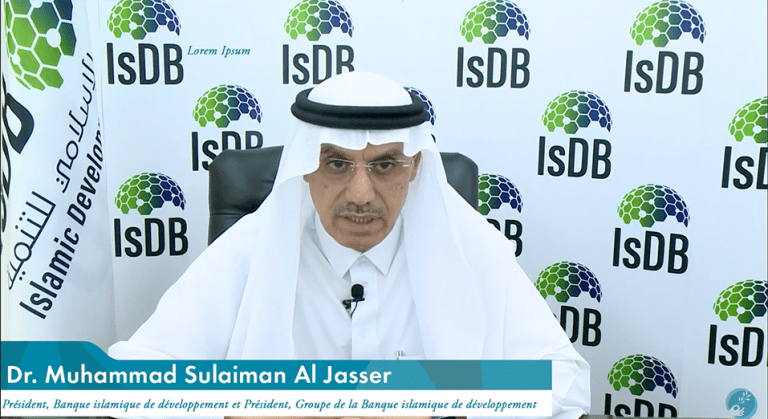
Dr Muhammad Sulaiman Al Jasser at Paris Peace Forum 2021: “We have allocated US$4.5 billion to support economic recovery in countries affected by the Covid-19 pandemic”

[DIGITAL Business Africa] – On the occasion of the fourth edition of the Paris Peace Forum which opened on November 11, 2021 in Paris, Dr. Muhammad Sulaiman Al Jasser, President of the Islamic Development Bank and Chairman of the Islamic Development Bank Group, called on world leaders to work together as one team with one vision and one goal: to create jobs and lift the poor out of extreme misery in the wake of the Covid-19 pandemic.

In the video in which he launches his appeal, he explains the need to act quickly.

At this critical juncture of human history, collective action on health and economic recovery is indispensable. We, the members of international community are compelled to act swiftly as a large section of humanity falls into the abyss of poverty and unemployment. The cost of inaction will be too much to bear in the aftermath of the pandemic. We must invest in human well-being, promote a globally coordinated response and build resilience to future shocks“, says Dr Muhammad Sulaiman Al Jasser.

He is convinced of the success of collective action: “We can achieve this goal by working as one team with one vision and one goal, one team that shares knowledge and builds capacity. A vision that ensures support for the poorest and most vulnerable communities; a goal that creates jobs, lifts the poor out of extreme poverty and invests in green recovery.

As an example, he takes the case of the bank he heads. The ISDB has, according to his explanation, a track record in providing development solutions through Islamic finance, south-south cooperation, and infrastructure development.

We have allocated US$4.5 billion to support economic recovery in countries affected by the Covid-19 pandemic to help them build back better. As a member of international family, we believe that improving global governance is a collective responsibility. Hence, We extend hour hands to our partners to overcome the menace of poverty and inequality for a sustainable future for all“, he said.

Dr Muhammad Sulaiman Al Jasser Speaks

The Transform Fund

It will be recalled that in 2018, the IsDB also launched the Transform fund. A $ 500 million innovation and technology fund that provides seed money to start-ups and SMEs in Africa and around the world to facilitate economic and social progress in their respective cities and communities.

In this context, the bank organized its “Transformers Summit” in Dakar, Senegal in December 2019. A summit that is part of the Islamic Development Bank’s commitment to Science, Technology and Innovation (STI).

The Islamic Development Bank (IsDB)

The Islamic Development Bank (IsDB) is a multilateral development bank (MDB), working to improve the lives of those we serve by promoting social and economic development in Member countries and Muslim communities worldwide, delivering impact at scale.

It provides the infrastructure to enable people to lead better lives and achieve their full potential. The IsDB claims a presence in 57 member countries across four continents, touching the lives of one in five people around the world.

This is how the bank presents itself: “We are one of the world’s most active multilateral development banks and a global leader in Islamic finance. Our operational assets exceed USD 16 billion, our subscribed capital is USD 70 billion and our credit rating is AAA.”

“We believe all people have the right to live in dignity and prosperity, and that nurturing economic growth is the best route out of poverty; We equip people to drive their own economic and social progress at scale, putting the infrastructure in place to enable them to fulfill their potential; We build collaborative partnerships between communities and nations, across the public and private sectors; We foster innovative and sustainable solutions to the world’s greatest development challenges, as we work towards the UN Sustainable Development Goals.”

We promote innovative and sustainable solutions to the world’s greatest development challenges, while working towards the United Nations Sustainable Development Goals (SDGs). We create collaborative partnerships between communities and nations to work towards the achievement of the SDGs by harnessing the power of science, technology and innovation, and promoting ethical and sustainable solutions to the world’s greatest development challenges.

The Islamic Development Bank Group

The IsDB Group has evolved from a single entity to a group of six entities: the Islamic Development Bank (IsDB), the Islamic Research and Training Institute (IRTI) , the Islamic Corporation for Insurance of Investments and Export Credits (ICIEC) , the Islamic Corporation for the Development of the Private Sector (ICD) , the International Islamic Trade Finance Corporation (ITFC) and the World WAQF Foundation (WWF).

By Beaugas Orain DJOYUM

Patrick Benon: “At Orange, one of our key ambitions is to find, support and promote the best digital talents”

[Digital Business Africa] – The awards ceremony to the winners of the 2021 edition of the Orange Social Entrepreneur Award in Africa and the Middle East (POESAM) was held on November 10, 2021 in Douala in the presence of the CEO of Orange Cameroon, Patrick Benon, and the director of Orange Digital Center Cameroon, Emmanuel ETIA.

According to Patrick Benon, CEO of Orange Cameroon, one of Orange’s main ambitions is to find, support and promote the best digital talents who will influence our lives in the future. This ambition, he says, has three components: finding, supporting and promoting.

Digital Business Africa offers you the full speech of the CEO of Orange Cameroon.

Pour Patrick Benon, l'une des principales ambitions d’Orange est de trouver et d’accompagner les meilleurs talents digitaux
National Jury, POESAM

“Dear members of the Jury,

Members of the media,

Orange Cameroun family,

Honourable guests,

Ladies and gentlemen,

Thank you for being part of the 11th edition of the Orange Social Venture Prize Award Ceremony. This is an important occasion for both the nation and Orange Cameroun as we recognise innovation and local talent.

At Orange, one of our key ambitions is to find, support and promote the best digital talents who will influence our life tomorrow. As you may have noted, there are three components in this ambition: finding, supporting and promoting.

In term of finding : Orange is continuously looking for startups that have ideas and solutions that can change and improve the way we interact as human beings.

In term of supporting : as soon as  the startups are found, we have different mechanisms to support them. First, we offer them access to our networks through APIs so that they can develop their solutions. Secondly, we support them via Orange Fab network of accelerators and incubators. And finally, we can support them financially via Orange Digital Ventures.

In term of promoting: Orange promotes the startups by offering them access to market opportunities and by increasing their exposure both at national and international level.

The Orange Social Venture Prize is part of this strategy of finding, supporting and promoting innovative ICT projects that can improve living conditions for African populations, in areas such as health, finance, education and agriculture. 

Comme chaque année, la compétition est lancée simultanément dans 17 pays en Afrique et au Moyen-Orient et se déroule en deux étapes :

  • Une étape nationale qui permet de primer les 4 meilleurs projets de chaque pays incluant un prix spécial féminin
  • Une étape internationale qui met en compétition, les lauréats des différents pays engagés

Au cours de la décennie passée, le POESAM, Prix Orange de l’Entrepreneur Social en Afrique et au Moyen-Orient, a permis à Orange Cameroun d’accompagner des lauréats qui font aujourd’hui référence dans différents domaines à l’instar de Caysti, Clinic Agro, Naya Limited, AquaCulture ou encore AUI Technologies lauréat du prix international 2019.

Cette année encore, le Cameroun détient la palme d’or en termes de participation avec 392 projets proposés sur les 1679 projets retenus dans les différents pays. C’est l’occasion pour moi de dire un grand bravo à nos jeunes entrepreneurs et surtout les inciter à continuer dans cette voie.

Après une première étape d’évaluation par des salariés bénévoles d’Orange Cameroun, 13 projets ont été soumis à l’évaluation d’un grand jury composé pour l’essentiel de dirigeants d’entreprises.  Les 04 lauréats retenus par le Grand Jury et que vous allez découvrir ce soir, recevront :

  • Pour les 1er, 2e, et 3ième prix, en plus d’un accompagnement de 6 mois, une dotation financière respectivement de 2 millions, 1 million et 500 000 FCFA
  • 06 mois d’accompagnement et 1 million de FCFA pour le prix spécial féminin récompensant le meilleur projet porté par une femme ou permettant d’améliorer les conditions de vie des femmes.

Les 04 lauréats ont été par ailleurs inscrits au concours POESAM international pour défendre les couleurs du Cameroun, et la très bonne nouvelle, c’est que le grand gagnant du POESAM 2021 International est parmi les lauréats que nous célébrons ce jour.

Je voudrais ici remercier tous les participants au POESAM 2021 pour la qualité de leur travail et surtout, dire à ceux  qui ne seront pas primés ce soir, que les équipes Orange se tiennent à leur disposition pour les aider à améliorer leur projet. Nous espérons les revoir l’année prochaine avec des dossiers encore plus compétitifs.

Mes remerciements vont également à tous ceux qui ont participé à l’évaluation des différents dossiers et particulièrement aux membres du grand Jury pour leur disponibilité, leur expertise et leur engagement au service de la promotion de l’innovation camerounaise.

Ainsi, à travers ce concours, et autres initiatives comme Orange Digital Center, le Groupe Orange fidèle à sa stratégie axée sur l’égalité numérique, continue à repérer, soutenir, et promouvoir les talents de demain pour le développement socio-économique de nos pays.

Je vous sais impatients de découvrir nos lauréats 2021, aussi je cède la place à la reconnaissance des talents et de la créativité.

Je vous remercie”

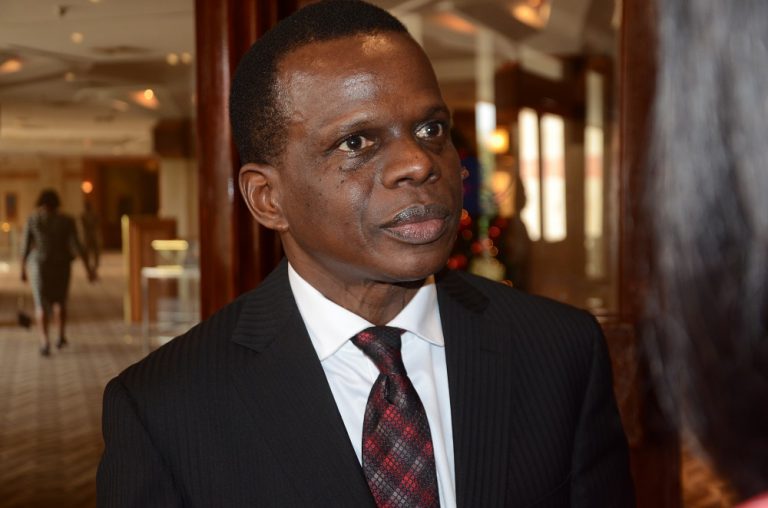
Plaudits for milestones in ECA-Cameroon relations during Antonio Pedro’s term as Head of Central Africa Office

Yaounde, 14 October 2021 (ECA) – The Government of Cameroon has expressed gratitude to the United Nations Economic Commission for Africa (ECA) for its extensive support to the country’s structural transformation and economic diversification processes in the past five years, thanks to the coordination of outgone Director of ECA’s Office for Central Africa – Antoni Pedro, under the leadership of UN Under Secretary General and Executive Secretary of ECA – Vera Songwe.

Several members of Government paid tribute to Mr Pedro who was recently appointed to the post of Deputy Executive Secretary of ECA in Charge of Programme Support. They included: Prime Minister – Joseph Dion Ngute, Minister of Economy, Planning and Regional Development – Alamine Ousmane Mey, Minister of Industry – Gabriel Dodo Ndoke, Minister of Trade – Luc Magloire Atangana Mballa, Minister of Small and Medium-Sized Enterprises, Social Economy and Handicraft – Achille Bassilikin III, Minister Delegate to the Minister of External Relations in Charge of Relations with the Commonwealth – Felix Mbayu, and Minister Delegate to the Minister of Environment, Protection of Nature and Sustainable Development – Nana Aboubakar Djalloh.

Mr Pedro has already taken up his new post at ECA’s headquarters in Addis Ababa.

During goodbye encounters with the Government Officials, Mr Pedro received plaudits for the strategic policy advisory services and technical support ECA’s Office for Central Africa, located in Cameroon’s capital city – Yaounde, gave to the country, since his arrival as Head of the office in August 2016, reinforced by the vision of Executive Secretary Vera Songwe, who was appointed by the UN Secretary General to lead the Commission a year later. In her reforms, the Executive Secretary called for each sub-regional office to become a centre of excellence in a domain critical to the development priorities of the respective sub-region. In Central Africa, the choice was simple: economic diversification, cemented by the adoption in September 2017 of the Douala Consensus on economic diversification through resource-driven and trade-induced industrialisation!

Major achievements in ECA-Cameroon cooperation during the last five years include: promoting the discourse and practice of economic diversification through the Douala Consensus; leading in the formulation of AfCFTA strategy for Cameroon and identifying the Kribi-Douala-Edea (KED) Growth Triangle as the launch pad for the operationalisation of the country’s industrial development master plan (PDI)..

“We will never forget the key role you played in overhauling our Industrial Development Masterplan (PDI), in the return of UNIDO to Cameroon and in the design of our forthcoming wood-sector Special Economic Zone in our forest rich East Region”  said Industry Minister Gabriel Dodo Ndoke to Mr Pedro.

Minister Dodo Ndoke requested the outgone Director to continue to maintain the links with Cameroon and serve as the country’s Ambassador in mobilizing policy advice and technical support to the country, while at ECA’s headquarters.

The past five years also saw ECA working with Cameroon to build the foundations for the emergence of a productive pharmaceutical industry in the country; to recalibrate the country’s digital economy strategies and to train senior civil servants in the alignment of national development plans with Agendas 2030 and 2063.

Through its Yaounde Office, during the same period, ECA also provided analysis on the socioeconomic impacts of COVID-19 on Central Africa (including Cameroon) and reparative measures to be taken with the view to avoiding a double jeopardy on the health and economic sectors, as well as analysis on better road safety measures as factors for unperturbed economic growth.

The Commission also supported designated institutions in developing an integrated approach to climate, land, water and energy strategies and the National Observatory on Climate Change (NOCC) in promoting resilience on climate change.

ECA also assisted Cameroonian officials to mainstream accountability measures in development planning and provided training to the country’s planners on how to deal with a huge urban sprawl to be caused by an estimated 70% of people to be concentrated on the country’s cities by 2050.

“I am very touched by the appreciation the Government of Cameroon has expressed with regards to the collaboration with ECA under the guidance of our Executive Secretary, whose credo has been and remains – IDEAS FOR A PROSPEROUS AFRICA, with many of these ideas having shaped the country’s trajectory on salient issues such as the African Continental Free Trade Area, the Digital Economy and job-creating growth based on economic diversification,” said Mr Pedro before he left for Addis Ababa.

“It has been a very fulfilling five years thanks to the indispensable support of an assiduous group of staff members at ECA’s Central Africa Office, to whom I am most grateful.”

“I also use this opportunity to express my most sincere gratitude to both the Government and the people of Cameroon, to the Governments and people of all our member States in Central Africa, to the leadership of the CEMAC and ECCAS commissions and COPIL, to the United Nations family in the subregion, and to all our development partners including the private sector.”

The newly appointed Deputy Executive Secretary in Charge of Programme Support at ECA said he would continue to follow up on the important work being done by ECA in Central Africa in general and in Cameroon in particular – which he considers to be the vortex of progress on economic diversification in Central Africa.

Meanwhile staff of ECA’s Subregional Office for Central Africa collectively and individually expressed gratitude to Mr Pedro for his leadership.

Current Officer in Charge – Jean Luc Mastaki – “Mr Pedro’s contributions to the work of ECA and to the development of Africa are a hallmark of exceptional technical and managerial capacities.”

“What great ideas! what great initiatives! What a drive for the mobilisation of strategic partnerships! What energy! what inspiration!  ECA is lucky and must seize the opportunity to benefit from your leadership at the level of Deputy Executive Secretary,” Mr Mastaki concluded.

“You inspired us greatly to mould ECA’s Office for Central Africa into a Centre of Excellence on Economic Diversification,” said Adama Coulibaly – who heads the Office’s Subregional Initiatives section.  

“We will keep up with the good work in order to meet the challenges of the future with all the learning and tools we gained from your leadership,” Mr Coulibaly added.

Some of the most important projects on Cameroon recently initiated by Mr Pedro to be operationalised by the Office in the immediate term include the brokering of funding form the Africa Finance Corporation (AFC) to set up of a Special Economic Zone on the wood value chain, and training of Cameroon national planners on the appropriation and use of ECA’s Geographic Information System (GIS) spatial planning and investment decision tool.

Source : ECA

Guiding Telcos Along the SASE Journey

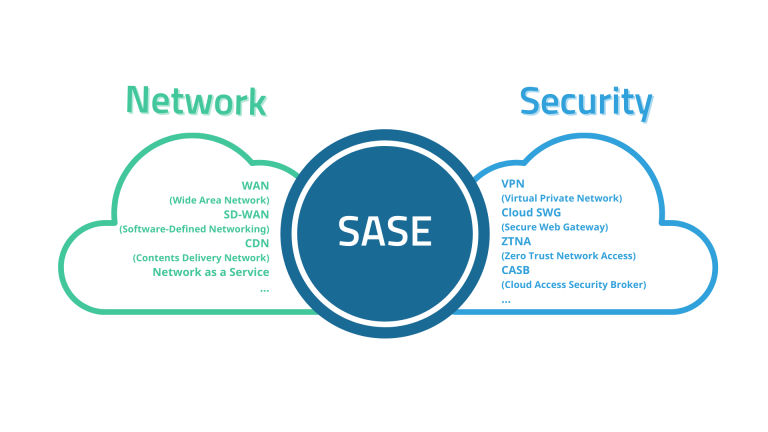
The pandemic has impacted every aspect of our lives, but in particular it has fragmented the traditional working environment, scattering employees to different locations and thus making secure access more challenging, as most of the connections to the internet no longer happen from behind a firewall. The end users, no matter where they are, need to have access to the web in a safe way, without the risk of being infected by the most advanced malware. To respond to the security challenges that are emerging in the IT space a new framework, called SASE (Secure access service edge) has emerged.

In this Q&A, Alessandro Monforte – Cisco’s Head of Cloud Security Sales for South Europe, Middle East and Africa – explains more in detail how these new security issues are best addressed using SASE –– solutions. Cisco believes that service providers will be pivotal in pushing the adoption of SASE to the enterprise market.

Why is the role of operators and service providers so important in delivering better cybersecurity?

There are several reasons. During the pandemic, the amount of phishing and malware attacks really skyrocketed, mainly because everyone was a bit more fragile and exposed. Cyber attackers do not stop because of the pandemic; everyone is more

inclined to look for information about outbreaks or updates on recent laws approved by governments, so we’re more inclined to go and click on links that we shouldn’t. According to Talos – the Cisco cyber lab that is the biggest privately owned cyber lab worldwide – from March to December 2020,

more than 300,000 domains were registered with the words “coronavirus” or “COVID”, and more than half of these were malicious.

Service providers have the coverage to provide security services to residential users as well as small and medium businesses. These users buy data
from them, so the service provider can approach them and say “don’t worry, I can offer you voice
and connectivity as well as a security service that will protect you.” These users are likely not skilled in terms of IT security, so service providers are able to offer this protection as a service, protecting their sensitive data from exfiltration. This is fundamental, as the amount of phishing attacks that aim at exfiltrating home banking credentials has more than tripled.

The service provider is naturally in contact with both residential and SMB users, and because many of them probably don’t have much knowledge of things like ransomware, they require protection from the

SP. There are third party studies saying that over 70% of residential and SMB customers are ready to buy security services from their provider. The role of the SP towards the corporate segment is a bit different; they can guide them through the SASE journey.

So what exactly is the SASE journey?

This is the adoption of secure access service edge solutions. This is important because now that everybody’s working from home, the amount of people that are accessing applications, data or domains from their home – or while they’re on the move – is increasing a lot. So if I try to access applications that are no longer in my company’s data centre, but are in a public or private

cloud – these kinds of access no longer happen from behind a firewall. Wherever they are, access to applications and data need to be secured – so the SASE framework, which also covers the ‘secure remote worker’ use case, is ideally regulated by the service provider.

Customers are aware of the need for cybersecurity but seem reluctant to delve too deeply – which has led to a trend for operators to offer it as an additional service.

It’s also a way for service providers to increase loyalty – they can offer customers security for the same amount that they’d typically pay for a contract. This also improves brand awareness.

What are the factors that make businesses and consumers particularly vulnerable in emerging markets?

When we talk about the mass market, IT skills are typically very low, so they’re much more likely to be infected by advanced threats. The new trend in cyber attacks is ‘zero-day’ malware, i.e. malware that has never been seen before. Traditional anti-virus security solutions are signature-based – they block what they know. If they don’t know something, how can they block it? Zero-day malware is aimed at people with low IT skills, because they’re much more likely to be caught out. It’s so common now to see very well-crafted messages sent to mobiles – which obviously have much smaller screens than computers – from something that appears to be your bank,
and people enter security tokens or other sensitive information, and then they’re screwed!

Being able to offer extra security is a good way for operators in emerging markets to attract customers and increase loyalty; presumably it can also increase their revenue?

Absolutely, and with a very high marginality – and that’s even more important than the extra revenue. These are very affordable services; even if the carrier charges 50 cents on the dollar, they can make wide margin for residential and SMBs.
For enterprises where the employees are more involved, the role of the SP is more complex and more connected to the SASE.

How will the connection between operators and enterprises develop as SASE becomes more widespread?

More and more, applications and data are being shifted from the different companies’ data centres into the public or private cloud. So, how do employees get access to corporate applications that are no longer in the data centre, and are instead in the cloud? They need a connection that offers very well-defined quality of service, and they need the applications and data in the cloud to be secured – along with their access. This emerging trend is due to the fact that users are increasingly widespread – they are no longer working from the branch campus.

The SASE has the connectivity portion and the security portion, so the service providers acts as something of a vehicle for the SASE solutions – they don’t provide all the layers of the SASE connection, but they help to deliver the SASE solution to the corporate markets. This is ideal, because it’s in the interests of the SP to go to these markets with new services – they’re not just trying to sell voice and connectivity to them.

SASE is an emerging concept in cybersecurity that is fast gaining traction – what is the concept and what are the use cases that it’s best suited for?

SASE stands for Secure Access Service Edge – it’s a framework developed by Gartner that’s used to respond to the latest IT trends emerging in the enterprise segment. As I said before, the main trend is applications and data shifting from the data centre into the cloud. This happens for a number of reasons – for example to get more scalability and less OPEX. Sooner or later, enterprises will inevitably make these changes.

The second trend is the end users – the employees – are becoming more widespread, working from home or smaller branch offices. These users still need to have access to the internet with good quality of service no matter where they are, and they need this to be secure even though accessing websites, applications and data no longer happens from behind a firewall – it’s direct internet access.

The SASE framework allows a response to these trends – it’s not a product, it’s a concept comprised of different layers. There’s the connectivity layer – this can be SD-WAN (software-defined wide area network) or even 5G once this becomes more widespread. The latter provides a lot of bandwidth, and will probably become the best way of accessing the internet with good quality of service. This is key – the quality of service has to be comparable to what the end users perceive when they’re working from the office.

Next is the security layer, which is used to secure applications and data in the cloud but also ensures that when end users have access to a specific domain, they do not get infected – they are prevented from accessing malicious destinations. Within this layer, we also have ‘zero-trust’, which is aimed at identifying anyone requesting access to corporate applications in the cloud and establishing whether they have the correct permissions.

As 5G becomes more established, it will facilitate abuses of connectivity and access, creating risks but also opportunities. What are the key pitfalls of forthcoming technologies, including 5G but also AI, IoT etc?

Obviously hackers tend to follow the development of technologies – they don’t stand still. The risk is that the security technologies available will not be able to keep pace with the development of cyber attacks.

It will be fundamental that security technologies must be based on machine learning algorithms, because this is the only way that they can become predictive. This is key: your security solution is your defence mechanism, so it has to be more advanced than the attacking technique. The opportunity for the service provider is to embrace security services, bundling them with their traditional services.

This will deliver a lot of benefits: more ARPU, higher marginality, better brand awareness – it’s a way of increasing loyalty to differentiate themselves from the competition. Let’s not forget that the importance of cybersecurity is increasing – people are aware of the need to protect their PC, even if their IT skills are poor.

This is perhaps even more important in emerging markets where people rely massively on their mobile phone rather than a computer – it’s their bank account, it contains a lot of personal data. Are people in these regions becoming more aware of the need to protect their devices with cybersecurity?

Absolutely. Also don’t forget that a mobile screen is relatively small – if you get a phishing message from your bank that looks mostly correct, a lot of people aren’t paying attention to the domain because it’s harder to see.

How is the trend towards hybrid working increasing the need for cybersecurity?

People are working from home, or small branch offices that aren’t as well equipped in terms of security – this is a very complex scenario. It would be much easier for the company’s IT administrator, or even for the service provider, to deliver connectivity to an employee working in a campus network,

but that’s not the case. End users are everywhere, and the applications they’re trying to access are no longer located in the campus data centre – they’re in the cloud. Despite this complexity, end users need to perceive the same quality of service, and they need to browse safely. Hybrid work has complicated the job of IT administrators, and also the job for service providers delivering connectivity. During the pandemic, the main challenge that SPs had to face was that their connections to branch offices weren’t dimensioned correctly for the amount of traffic that they were expecting, so they had to make sure that the branch networks didn’t collapse. The reason is clear – the source of the traffic was totally different, it’s much less concentrated and more widespread.

In the SASE journey, it’s desirable for the service providers and corporates to partner with vendors like Cisco that own all the layers of SASE. Cisco is the biggest SD-WAN vendor in the world and is also a leader in security.

The SASE journey doesn’t happen overnight; it’s at least several months, possibly even years, so it helps to have a vendor who can guide you through all the different steps of the adoption of this framework.

This is because all the components are integrated; our security solutions are integrated with our SD-WAN; our zero-trust is integrated with everything. This is why we’re the ideal SASE partner for SPs and enterprises; our cloud solution – Cisco Umbrella – can be delivered very easily to millions of residential and SMB users without any drop in end user experience.

By Alessandro Monforte, Head of Cloud Security Sales for South Europe, Middle East & Africa at Cisco

Alessandro Monforte is an experienced Senior Sales Manager in the IT,
security and mobility areas. He is in charge of selling Cisco Cloud Security,
Email Security and EndPoint Protection Solutions in South Europe, Middle East and Africa. Prior to Cisco he worked for multinational telco companies,
in charge of business development and account management activities in the areas of network infrastructure, mobile security and cloud services. He studied telecommunications engineering in Rome and got an MBA from Bocconi School of Management in Milan.

CISCO

Protect what’s now and what’s next with the most comprehensive integrated cybersecurity platform on the planet. Simplify your experience, accelerate your success, and secure your future with Cisco Secure.

As the largest enterprise cybersecurity company in the world, we lead the way with solutions that are driving the industry in Secure Access Service Edge (SASE), Extended Detection and Response (XDR), and zero trust.

Cisco Umbrella—a key component of Cisco’s SASE architecture—integrates multiple standalone security services and appliances into a single, centrally managed, cloud-native solution that can scale to protect a remote and roaming workforce.

Cisco Umbrella helps service providers deliver a “clean network”. It meets business and consumer customers’ critical security needs and creates a new revenue opportunity for operators.

Attach security that is easy to provision, deploy, and manage. Stop threats before they reach your customers’ networks and endpoints.

umbrella.cisco.com

Orange Money: 10 years of resilience to enable Cameroonians to discover the countless benefits of dematerialised payments

Today, the undisputed leader in mobile payment in Cameroon,  Orange Money  celebrates the progress made with all of its customers without exception.

10 years ago, it was still a pipe dream for the majority, almost everyone did not believe it. To offer someone to pay or reimburse it through Orange Money was akin to an attempted “theft”

By popularizing its service across Cameroon, Orange Money has made a strong contribution to financial inclusion. This has only been possible thanks to the massive adoption of mobile payment by most Cameroonians.

Orange Money: 10 years of resilience to enable Cameroonians to discover the countless benefits of dematerialised payments

Much remains to be done, of course, but it is fair to recognize that a lot has changed. It is fair to say THANKS to all these partners who believed in it and to the millions of Cameroonians who adopted Orange Money to simplify their lives.

Source: Orange Cameroon

5G Security Is a Matter of Trust

In developing markets, 5G will bring connectivity capabilities that don’t exist currently. Across the world, 5G is a game changer in terms of supporting the Internet of Things (IoT), connecting devices to deliver everything from smart transport networks and driverless cars, to the provision of health services and energy. It will underpin and enable connectivity across all our critical infrastructure. The potential is limitless – as is the security threat.

The Risks of 5G

With greater connectivity comes greater risk.

The surface area for an attack increases, effectively, with 5G, and the more connected devices there are, the more vulnerabilities. The benefit of 5G is the speed at which we can connect – that means attacks can happen faster, too. The future of warfare, arguably, is in taking down infrastructure; imagine the disruption from compromising a nation’s energy or water supply, interfering with data-driven healthcare and medical supplies, or taking over a capital city’s transport network.

This potential threat is why some governments are wary of 5G equipment providers who may have links (real or perceived) to state-sponsored security services. The wrong kind of access to 5G hardware could, in theory at least, give you a back door into national infrastructure.

As more countries adopt 5G, these threats will increase. We’ll see an increase in availability of bandwidth over 5G – which is significantly harder to track than wired networks. Tracking attackers will also take longer as they can use IPv6 with cloaking over 5G networks, masking their trail somewhat.

There’s also physical security to consider. We’re going to have more physical locations for 5G technology infrastructure, and they’re unlikely to be as secure as current sites are due to their location and number.

The Current Security Picture

Currently, in developing countries, most IoT networks are isolated in the wider network. There are individual use cases, but as 5G is rolled out, more and more devices will connect to each other. We need to start thinking about IT and OT (operational technology) networks as the same thing, under a combined security framework.

Any system is only as secure as its weakest endpoint, and that could be a smart meter, an autonomous car or a robotic surgery device in a new, interconnected world. Calculating the number of connected devices is inherently impossible but it’s fair to say they will exceed the number of laptops or smartphones even today, these representing a substantial risk to networks.

Security is as critical to the success of the 5G roll-out as getting the right hardware in the first place. But who do we trust to deliver that security? Who is responsible for securing our infrastructure? We have minimum global security standards for 5G. But not all 5G networks operate in exactly the same way, and there’s plenty of room for interpretation.

As with most standards, they lay out the bare minimum, and can’t possibly be expected to go into the detail of all the different variations of service or hardware providers involved in the network.

The future of 5G security

Some organisations will specialise in running smart meters. Others will focus on autonomous vehicle technology. They’ll operate differently, with different vulnerabilities. Experts in the national grid will know more than an overseeing body within government what the specific vulnerabilities might be in their environment. What equipment is connected to the network (and how secure is it)? What data is being transferred (and how is it secured, stored and mirrored)? What’s the risk versus reward – and how much risk is deemed acceptable to keep costs down?

The security risk posed by a vulnerability in my washing machine isn’t the same as a backdoor into the transport network, for example. Even government standards will change depending on location. And so will their priorities. Richer nations might be able to ban an equipment provider that’s perceived as a security threat, but nations with less capital to invest might be attracted to its low price and overlook the potential risk.

All countries will put their own financial interests first – the US is likely to favour American equipment providers or equipment from allied nations, in the same way that Chinese allies – or nations benefitting from Chinese investment in Africa, for example – might favour Huawei.

Then there’s Vodafone, which is working to launch an Open RAN (Radio Area Network) in Europe and Africa with strategic vendors Dell, NEC, Samsung Electrics, Wind River, Capgemini Engineering and Keysight Technologies.

The big question is: who is responsible for securing the new networks and devices that 5G will enable? There is an assumption that it is the hardware providers. Manufacturers of washing machines will have to be security and data transfer specialists or hire people who are.

Private networks put the onus of security onto the enterprise; public network security becomes the network operator’s problem. There are some big questions. Identity verification and authentication is part of all our lives now when we log in to a bank account or utility service, but it’s harder to authenticate a robot, if part of your system is automated.

There have to be strict security rules for any device that’s going to attach to the network, to validate entry to it using something more than a device ID . We’re seeing unique codes being generated (a bit like a software licence key) which can be created by an authorised computer.

But that has flaws – what humans make, humans can break – and with the kind of computing power available today, decrypting a code is simply a matter of time. So, we see the entry of dynamic encryption keys that don’t stay constant to stay ahead of the hackers. It’s a race. No sooner does technology evolve, than hacking increases in sophistication. You can buy a cybercrime kit as a service, now, if you know where to look, complete with robots to deliver DDOS attacks, 24//7 support team and even ‘try before you buy’ schemes available for first-time buyers.

This is big business, and the stakes are high. Most enterprises I talk to are fairly early on in their 5G roll-outs, and determining the possibilities and use cases that will most benefit their businesses.

5G is still in its infancy, and smart cities are still at the proof-of-concept stage. But there are huge possibilities, particularly in the developing world where traditional infrastructure has been patchy. It is critical that we think about – and design – security right at the point at which we envisage the 5G network, and think about it holistically, across IT and OT networks.

We often talk about the ‘race’ to roll out 5G networks. But that’s not the race to win. We should be focusing on the race to build the security for those networks. For that to happen, government, standardisation organisations and 5G providers must work together to set, apply and regulate security standards, constantly assessing risk – and the organisation responsible for setting the standards, 3GPP, is complex and will only grow in complexity as more members are added to its groups.

Unless we want to rely on trust that this public-private partnership will deliver to secure a nation’s infrastructure, we need effective regulation and oversight to enforce those standards, both globally and locally

By Jon Harrod, Director ISG

Jon Harrod
Jon Harrod

Jon specialises in the IT and data network/telecommunications sectors with over 25 years’ delivery, programme and transformation management experience. Jon’s business management experience includes leading the definition, design deployment and delivery of global data network services; analysis of complex sourcing service contracts; product and portfolio management.

Jon has a strong background in managing technical support, network communication infrastructures, business systems and data centre operations, with a proven ability to plan and lead successful business system and network infrastructure design, implementation and migrations at client, national and global levels.

Since joining ISG Jon specialized in IT and Managed Data network Services leading the definition, design and delivery of projects through-out Europe, North and South America and Asia Pacific in the Public, FMCG, Manufacturing, Financial Services, Petrochemical and Pharmaceutical sectors., having recently led the following complex engagements:

• HSBC – Global stream lead for Network Services (Voice/Data) sourcing advice and vendor management.

• Shell-Assessment of global IT and Managed Network Services contracts and pricing.

• British American Tobacco – Lead consultant for sourcing review of global network services. • BP – Sourcing advisory and scenario planning of global telecoms.

• Credit Suisse – WAN and voice Performance Improvement initiatives to consolidate European voice and data networks

ISG

ISG (Information Services Group) (Nasdaq: III) is a leading global technology research and advisory firm. A trusted business partner to more than 700 clients, including more than 75 of the world’s top 100 enterprises, ISG is committed to helping corporations, public sector organizations, and service and technology providers achieve operational excellence and faster growth.

https://isg-one.com/

Published in “SPECIAL REPORT: CYBERSECURITY”. Copyright © 2021 Developing Telecoms Ltd.

MTN Cameroon and CAMTEL sign a memorandum of understanding for the implementation of Local Roaming

Yaounde, 28 September 2021. MTN Cameroon and Cameroon Telecommunications (Camtel) announce the signing of a memorandum of understanding for the implementation of national roaming services. Under this memorandum of understanding, a CAMTEL subscriber could, in areas not covered by the company’s network, switch to MTN’s network to continue to access telecommunications services.

The memorandum of understanding was signed on 28 September 2021 in Yaounde, between the Managing Director of MTNC, Mr Stephen BLEWETT, and his counterpart from CAMTEL, Madam Judith YAH SUNDAY épse ACHIDI.

MTN Cameroon and Camtel are thus pioneers in Cameroon in particular and in Central Africa in general in the deployment of the “Local Roaming” solution thereby demonstrating once again that, although competition is rife in the telecommunications sector, business between operators can still be a reality.

This project will allow Camtel subscribers to switch automatically to the partner network and continue to enjoy, using their CAMTEL SIM cards, services such as sending and receiving national and international SMS, sending and receiving national and international calls, and Internet access.

This new partnership which links the South African giant to the Cameroonian incumbent operator, reflects the determination of the two operators to improve the customer experience of subscribers in Cameroon. “This is yet another act that demonstrates MTN’s commitment to contribute to the development of the telecommunications sector in Cameroon. We are thus launching national roaming, to ensure that all Cameroonians with a SIM card can remain reachable throughout the country,”said Stephen Blewett, Managing Director of MTN Cameroon.

For Madam ACHIDI née Judith YAH SUNDAY, CAMTEL’s General Manager, “Local Roaming is a form of infrastructure sharing used more and more by mobile telephony operators around the world to provide themselves with the means to ensure rapid territorial coverage. As a result, our strategy of presence and densification throughout the country will be based among other things on Local Roaming through the network of our partner MTN in areas where the CAMTEL network is not yet available in order to provide CAMTEL subscribers with quality service”.

The signing of this innovative agreement undoubtedly will increase the competitiveness of telecommunications operators in this constantly changing environment. Cameroon is therefore aligning itself with international standards with regard to national roaming services.

Source : MTN Cameroon and Camtel

Bridging the digital divide by 2030

New Partner2Connect coalition advances digital transformation and sustainable development in hardest-to-connect countries

[Digital Business Africa] – Geneva, 20 September 2021. The International Telecommunication Union (ITU) announced today the launch of the Partner2Connect Digital Coalition to foster meaningful connectivity and digital transformation in the world’s hardest-to-connect countries.

These include the Least Developed Countries, Landlocked Developing Countries, and Small Island Developing States – groups facing specific development challenges and designated for priority assistance in pursuit of the United Nations-backed Sustainable Development Goals (SDGs) for 2030.

The world’s 46 least developed countries (LDCs) are struggling to extend connectivity to all their citizens – even as pandemic conditions push economic, educational, and social activities increasingly online.

“The COVID-19 pandemic has impacted the least developed countries in unprecedented, profound, and disproportionate ways,” said the ITU Secretary-General, Houlin Zhao. “Through partnerships with UN agencies, ITU aims to support the LDCs in the face of this challenge, harness the power of digital technologies, and turn today’s digital transformation into a development transformation for all.”

While Internet coverage and affordability are gradually improving in some LDCs, only 25% of people across all LDCs have started using the Internet. Another 50% are theoretically able to access the Internet but are not using it, according to the latest data on Internet connectivity worldwide.

Doreen Bogdan-Martin, Director of the ITU Telecommunication Development Bureau, said: “In the wake of the COVID-19 pandemic, ITU has re-doubled its efforts to help countries rapidly expand connectivity to connect the 3.7 billion people who are still offline, along with the millions of communities around the world where connectivity is still too poor to offer meaningful benefits. Based on the principles of inclusion, partnership and SDG-focused digital development, the Partner2Connect Coalition can pave the way to the Global Digital Compact and the 2023 UN Summit of the Future.”

The compact and the summit are among the main milestones in the UN Common Agenda presented this month by the UN Secretary General, António Guterres.
“The new coalition recognizes that progress can only be achieved through a multistakeholder based approach,” Bogdan-Martin added.

Usage gap widest in LDCs

A new report, Connectivity in Least Developed Countries – Status report 2021, highlights the persistent digital divide within LDCs.

The report, released at the Digital Coalition kick-off, was produced jointly by ITU and the United Nations Office of the High Representative for the Least Developed Countries, Landlocked Developing Countries and Small Island Developing States (UN-OHRLLS).

“Many LDCs are losing out on opportunities associated with the digital economy – and they shouldn’t have to,” said Courtenay Rattray, UN High Representative for OHRLLS. “The reasons go beyond access to broadband connectivity. They speak to the critical issue of Internet usage, which has to do with affordability, skills and the amount of local content. Enabling more people to get online and to use the internet productively will help deliver massive payoffs, not only in e-commerce but everything from education and health to governance.”

Along with affordability, the root causes of the wide usage gap include low awareness about the benefits of the Internet, lack of access to devices, insufficient skills, low content relevance, and lack of appropriate regulation.

Working to drive digital transformation

The Partner2Connect Digital Coalition aims to create a platform for global leadership to mobilize commitments, resources, and partnerships, and to implement solutions and projects, to drive digital transformation. Leaders from government, international organizations, and the private sector, as well as youth representatives, gathered from across the globe in a virtual launch meeting, sharing their visions of advancing connectivity to drive socio-economic development.

Coalition actions will focus on four key areas: connecting people everywhere; empowering communities; building digital ecosystems; and incentivizing investments.

Each focus area will be supported by a working group.

In line with the UN Secretary General’s Roadmap for Digital Cooperation, the Partner2Connect Digital Coalition has received support from the Office of the Secretary-General’s Envoy on Technology.

The coalition will also coordinate closely with the Broadband Commission for Sustainable Development.

Convened by ITU, the four working groups will meet on a regular basis to discuss issues, define key actions, and make recommendations to advance coalition aims in each focus area.

Committed to progress

The coalition will work through a pledge and commitment mechanism set to be launched in early 2022, proving a platform for governments, private sector companies, philanthropic entities, UN agencies, international or regional organizations, civil society, youth organizations and academia to make financial, policy, advocacy, and programmatic pledges.

A tracking system will be developed to monitor implementation and report on a regular basis on progress and impact achieved.

The coalition preparatory process, starting today, will help refine the governance and pledge models ahead of the Partner2Connect Digital Development Roundtable, set to take place next year on 7-9 June during the ITU World Telecommunication Development Conference (WTDC, 6-15 June 2022).

The Partner2Connect Digital Coalition builds on the outcomes of the first chapter of the Road to Addis discussion series, organized by ITU to build momentum towards the WTDC. The second chapter of the series looks at the four Partner2Connect Digital Coalition focus areas, with events planned between November 2021 and May 2022.

Highlights of the first chapter of the Road to Addis series can be found in an e-booklet, The Connectivity Road to Sustainable Development.​


About ITU
The International Telecommunication Union (ITU) is the United Nations specialized agency for information and communication technologies (ICTs), driving innovation in ICTs together with 193 Member States and a membership of over 900 companies, universities, and international and regional organizations. Established over 150 years ago, ITU is the intergovernmental body responsible for coordinating the shared global use of the radio spectrum, promoting international cooperation in assigning satellite orbits, improving communication infrastructure in the developing world, and establishing the worldwide standards that foster seamless interconnection of a vast range of communications systems. From broadband networks to cutting-edge wireless technologies, aeronautical and maritime navigation, radio astronomy, oceanographic and satellite-based Earth monitoring, as well as converging fixed-mobile phone, Internet, and broadcasting technologies, ITU is committed to connecting the world. For more information, visit www.itu.int.​​

Source : ITU

Three Paths to Accelerating Digital Access in West and Central Africa

[Digital Business Africa – Expert opinion – By Ousmane Diagana*] – Just before the coronavirus (COVID-19) pandemic struck, just over half of the world’s population approximately (51%) had access to the internet compared with just 30% in Western and Central Africa.

With the strict lockdown implemented during the pandemic, many services were only available to people across the region through the internet.  Ever since, the need for universal, affordable, and safe high-speed connectivity has increased exponentially. West African countries will not be left behind and will need to deepen reforms and attract the necessary investments for increased digitalization of services, an essential condition for strong, resilient, green economic growth and quality job creation.

The stakes are therefore high and the region is showing tremendous potential and opportunities. Although the challenges are not to be underestimated, this potential allows us to hope that West and Central Africa will accelerate the digitalization of its economy. What will it take? Three important steps:

Four Challenges  First, we must tackle the digital divide to provide access, usage, and affordability of the internet.

Many West and central African countries have been facing four main challenges: low network coverage and quality, high operating costs, barriers to market entry, lack of competition, and high operating and investment risks.

Providing financial services via mobile phones can be difficult when only 40% of West Africans own a cell phone. This underlines the existing disparity between “the haves” and the “have-nots” when it comes to access and affordability of devices, the internet, and digital tools. This disparity also disproportionately affects rural populations, women, and vulnerable groups in the region. And there are significant differences across Africa. While people in the Central African Republic pay more than 20% of their average earnings for 1GB of mobile broadband data, Egyptians only pay 0.5%.

In Senegal, only 26% of small firms use smartphones, compared with 65% in Brazil. During a pandemic, access to a smartphone not only connects people via messaging, but it can be a useful tool for businesses and economies.

Government Regulation According to a World Bank/UN Broadband Commission report, it is estimated that the cost of closing this digital divide by 2030 in Africa alone will be US $100 billion. This is why we must increase investments and attract the needed operators and strategic partners by mobilizing private capital, addressing capital risks, and building strategic alliances between governments and private operators.

We must also support the design and implementation of policies and regulations that de-risk and promote private investment in digital infrastructure. These two levers will help address the issues of affordability and make connectivity productive.

As digital infrastructure improves, there is a need for both the public and private sectors to promote and incentivize internet uptake by developing systems and applications that allow people to do meaningful transactions online, such as applying for government services, opening bank accounts, and applying for credit.

Unlocking New Opportunities with Digitalization 

Second, we must build ‘digital stacks’. Our research estimates that half a billion people in Africa lack an official ID, making it difficult for them to access key services and thus being denied the opportunities being created by digitalization.

Identification systems in some countries in West Africa are not yet inclusive and trusted. Current manual, paper-based approaches for identifying their population makes it hard for governments and the private sector to improve how their services are delivered and to reduce fraud and waste.

Digital IDs aligned with the ten Principles on Identification for Sustainable Development offer a solution to this, providing the opportunity to expand and transform the delivery of healthcare, education, financial, and other key services, especially for rural populations, women, and the most vulnerable groups.

The good news is that many African countries are well on their way to developing these processes, and many are doing so with technical and financial support from the World Bank and our Identification for Development (ID4D) initiative.

Reliable Data Digital IDs are one of three components of “digital stacks,” along with digital payments and trusted data platforms. A digital stack allows people and businesses to prove and verify their identity securely, make and receive payments fast and easily, and share and verify personal data, such as credit histories and academic qualifications. Together, these functions unlock significant social and economic benefits and accelerate the transition to digital economies, societies and governments.

To succeed in the digital transformation agenda, we must work together to empower Africans with greater agency over their personal data and help governments ensure that cash transfers programs and services reach the right beneficiaries, reduce fraud and fiscal leakages. This needs “whole-of-country” strategies, with strong leadership and coordination at the policy-level. It also needs the definition and implementation of common standards to ensure interoperability at the technical level, a strong data protection, and cybersecurity frameworks.

Finally, we must think boldly with regional and continental approaches. 

While continuing to drive digitalization efforts at the national level, West African countries must look beyond their own borders. I believe that success in the digital economy requires economies of scale and network effects far beyond what any individual country can muster on its own. 

Time for a Single Digital Market in Africa. Our research in East Africa shows that a more deeply integrated and competitive digital market among the six East African Community (EAC) countries alone would generate up to a US$2.6 billion boost in GDP and 4.5 million new jobs in the subregion. The potential of an integrated digital market in West Africa and at the continental scale is even greater.

To make this vision a reality, we need to support countries in modernizing and harmonizing telecoms and data policies and regulations to promote regional scale investments in broadband and cloud infrastructure and widespread access to relevant digital content and services – including in lagging areas. It will also require streamlining and harmonizing business registration and digital taxation policies, and enabling fast, low-cost, and reliable cross border digital to unlock digital trade and e-Commerce.

But none of this can happen overnight. A digital transformation in Africa will require greater leadership and collaboration from Governments, the Private Sector and Civil Society. We are working closely with sub-regional, continental and international partners, such as the African Union Commission (AUC), the Regional Economic Communities, and Smart Africa.

The COVID-19 pandemic shows a unique opportunity to reverse inequality and promote strong economic growth. Accelerating Africa’s digital transformation can be a part of this reality. It will require closing the digital divide, building digital stacks, and achieving a Single Digital Market. We need to act now.

By Ousmane Diagana, World Bank Vice President, Western and Central Africa 

*Ousmane Diagana

Three Paths to Accelerating Digital Access in West and Central Africa
Ousmane Diagana

Ousmane Diagana, a Mauritanian national, is the Regional Vice President for Western and Central Africa as of July 1, 2020. In this position, Mr. Diagana leads relations with 22 countries, and oversees a portfolio of projects, technical assistance and financial resources worth more than $38 billion.

Prior to this appointment, Mr. Diagana was the Vice President of the World Bank Group Human Resources. In that role, he provided overall strategic leadership on human resource matters to the entire World Bank Group and oversaw the development and implementation of the World Bank Group People Strategy, and Human Resources policies, programs and services.

From October 2015 to January 2018, he was the Vice President for Ethics and Business Conduct (EBC) and Chief Ethics Officer of the World Bank Group.

Mr. Diagana is recognized as an organizational leader, personal mentor and a professional role model. He brings to this role a deep knowledge of Bank Group operations, a reputation for innovative and strategic thinking, recognized managerial skills, and country office perspective.

Previously, he was World Bank Country Director for Côte d’Ivoire, Burkina Faso, Benin, Guinea, and Togo, based in Abidjan and prior to that he held the position of Country Director for Mali, Niger, Chad, and Guinea, based in Bamako. Between 2006 and 2009, Mr. Diagana was Country Manager in Niger and from 2004 to 2006, he was Program Leader in Morocco. In these capacities, he effectively led diverse, multi-disciplinary teams to deliver innovative strategies and operations —including in fragile and conflict-affected countries. In 2009, Mr. Diagana received the Good Manager Award from the World Bank Group Staff Association in recognition of his leadership skills.

Ousmane Diagana joined the World Bank in 1992. He has degrees in economics, finance, and planning, a certificate in education policies and analysis and speaks French, English, Arabic, Soninke, Fulani, and Wolof.

Cameroon : MTN customers receive a 100% refund for all payments via MoMo

Douala 12 August 2021. Mobile Money Corporation is pleased to announce the launch of its new campaign dubbed “MoMo Pay”, which rewards all payments made from the MTN MoMo account.

MTN Cameroon subscribers with an active MTN MoMo account who have made a payment via MTN MoMo of at least 100 FCFA will be able to benefit this promotion which runs from 10 August to 31 October 2021.

Practically, all payments of a minimum of 100 FCFA made between 05am and 10pm are 100% reimbursed either in airtime for calls to MTN, in cash, or in data bonus.

To win cash prizes of up to 50,000 FCFA, the MTN MoMo subscriber must simply make a payment via MoMo of at least 5,000 FCFA. A winner will be chosen every 30 minutes from 08 am to 10 pm. Winners refunded in MTN calls and free Internet will receive the full amount of their payment capped at a maximum of FCFA 10,000 per reimbursement. In this regard, the winners will have to activate their bonus by dialling *160#.

The “MoMo Pay” promo is in line with MTN Cameroon’s vision to deliver on its promise to make the lives of its subscribers brighter with simple, accessible, and secure services for greater satisfaction. This promo is also characterized by an innovation, which is the payment by QR code, at merchant points that accept MTN MoMo, to ease an exceptional customer experience. In this light, customers will need to download the MTN MoMo app while merchants will download the MoMo Merchant app, all of them available on Playstore and Appstore.

With more than 10 million subscribers owning a mobile money account, these innovations help to reinforce MTN MoMo’s position as leader in the merchant ecosystem, and  the most secure payment method in Cameroon,” said Alain Nono, General Manager of Mobile Money Corporation.

The “MoMo Pay” promo is valid for payments in high schools, colleges and universities, payment at MTN own-stores, payment of Eneo and Canal+ bills, CNPS contributions, taxes, insurance premiums at Activa, SUNU, Prudential Beneficial, online payments, as well as payment at the over 125,000 active merchant points.

The MTN Mobile Money service is operational in Cameroon for more than 11 years now and enables millions of users to send and withdraw money, receive money from abroad, pay bills free of charge in shops, and pay for various goods and services.

The MTN Mobile Money service, with more than 60,000 active top-up points and 125,000 active merchants who accept payment through MTN MoMo, totals more than 185,000 access points across the 10 regions of the country and is the largest distribution network in Cameroon, as well as the most secure mobile money platform, with the first and only GSMA certification within the CEMAC zone.

By MTN Cameroon

The potential of digital on opinion making as a social agent of Covid-19 systemic racism

[Digital Business Africa – Expert Opinion. By Gilles Couture*] – It was during a meeting on June 4, 2021 between Jean-Philippe Denis, editor of the Revue française de gestion and Christophe Benavent, professor of digital communication at the University of Paris-Nanterre for Xerfi Canal of Grenoble École de Management that Christophe Benavent confirmed the importance of computational tools such as Python and R statistics languages of Donald Trump’s speech databases to better understand the nature and scope of tweets collated on the ResearchGate platform. And for good reason.

The 55,000 tweets over 10 years, the 600 million Likes in 2020, and the 100 million followers of Donald Trump on social networks participate in the fabrication of opinion as a social agent of Covid-19’s systemic racism on five continents. This posture reinvents in a factual way the opinion on the web and its measurement by the software of analysis of the social networks and the polls where the opinions are controlled a little like in a test tube.

It is therefore understandable that the societal structure that oppresses groups according to racial identity reduces and compromises people’s rights and freedoms when, in terms of human security, the perils of Covid-19 are fuelled by phenomena of social suffering such as poverty, food insecurity and community rivalries. Pierre Bourdieu’s theory of distinction and reproduction is thus a necessary passage for reflections on the measurable outcomes of web opinion as a social agent of Covid-19’s systemic racism.

At the heart of this approach is Marshall McLuhan’s work on media and the coloniality of power reproducing racial hierarchies of culture. The debate is far from over in a world of rumor as it becomes part of the Sisyphean task of perfect justice. At the European Development Days EDD on June 15-16, 2021, the United Nations and the European Union recognized the potential of digital on opinion making as a social agent of Covid-19 systemic racism.

The February 4, 2021 agreement between the SWIFT interbank payment system, the European Central Bank’s Digital Euro project, and the Central Bank of China’s Silk Roads Digital Yuan based on the Chinese standard gold bullion is no exception. This initiative is the result of the dialogue that gives a new dimension to the financing of the U.S. trade deficit on the informal agenda of the U.S. Federal Reserve FED Conference in Jackson Hole in late August 2021.

The main objective is to determine the parameters of the Covid-19 U.S. trade deficit financing following the IMF’s special drawing rights of US$660 billion allocated to finance African economies at the Paris Summit on May 18, 2021. This is why the global liquidity trap of zero interest rates as a false price for the rent of money of central banks is on the agenda of the Seminar Quebec School of Management, Understanding the digital dollar a citizen issue, among other geopolitics of the Internet and currencies.

This great game of politics goes hand in hand with Max Weber’s ideal that the ethics of conviction and the ethics of responsibility are not contradictory but complement each other. According to Katharina Pistor, author of The Code of Capital (2018), from the Hammurabi Code 1750 BC, through the Treaties of Westphalia in 1648, the Congress of Vienna in 1815, the redhibitory defects of opinion as a social agent of systemic racism reveal the mystery of capital and its legal transmutation.

This mystery is defined here as the operation of the law and its high priests, the jurists who are masters of potions, of the dialectic that more often gathers than it opposes the interest of the rich to the functioning of the States below, and sometimes in spite of, any public action. It is in this same vein that the governance by numbers formulated by Alain Supiot, in his 2012-2014 course at the Collège de France, contributes to the increase in wealth inequalities since it constitutes the reign of law as a political style, rhetoric and ideological orientation, the algorithms its police and the platforms the States.

In relation to Covid-19i’s new paradigm of work and employment, the killer question where are the judges of personal law, contract law, property law? Or better yet, are policymakers willing to promote a citizen’s convention on media and civil rights compliance and its racial component and the fight against digital violence, especially against women from an equity perspective?

By *Gilles Couture, Adm. A.

Blogger and administrator of the Séminaire École de Québec du management

Understanding the digital dollar a citizen issue

Hidden Processors of Success beyond ICT Knowledge and Skills [By President Olusegun Obasanjo]

[Digital Business Africa] – Former Nigerian President Olusegun Obasanjo, special guest of ICT University, delivered a poignant message to ICT University graduate students gathered at the Palais des Congrès in Yaoundé on July 31, 2021, for the 6th official ceremony of graduation from this academic institution specialized in ICT training.

Digital Business Africa offers you the entire speech of the one who is well known in Cameroon for his involvement in the resolution of the border dispute which opposed Nigeria to Cameroon between 1993 and 2006 on the Bakassi peninsula rich in oil and natural gas and which resulted in the signing of the Greentree Agreement (official treaty of June 12, 2006, in the United States which resolved this border dispute).

His commencement speech is entitled “Processors of Success beyond ICT Knowledge and Skills

Cameroun : Les cinq sages conseils du président Olesegun Obasanjo aux jeunes diplômés de l’ ICT University
31 Juillet 2021. Palais des Congrès de Yaoundé. President Olesegun Obasanjo and Pr Victor Mbarika.
  • “The Founder and President, Board of Trustees, Professor Victor Mbarika
  • Members of the Board of Trustees
  • The Vice-Chancellor Rev. Prof. Emmanuel Anyambod Anya
  • Members of Senate
  • Members of Diplomatic Corps
  • Staff and students of ICT University, Cameroon
  • Graduating Students
  • Family and friends
  • Distinguished Ladies and Gentlemen

Let me begin by thanking the President of the Republic of Cameroon and my dear brother, H.E Paul Biya, and all the state officials who received me when I arrived from Zanzibar yesterday for the warm reception and the arrangements made for my visit.

Let me also thank the President of the University, Professor Victor Mbarika, who has been relentless in trying to bring me here for the last three years or so. I have always wanted to come and see with my eyes the great work that is being done here and of which he spoke so much on all the occasions he visited me in Abeokuta. Unfortunately, there was always one constraint or the other and I couldn’t come. So you can imagine my pleasure and delight at being able to join you today to celebrate with you on the joyous occasion of the 2021 Graduation Ceremony.

I wish to especially thank the University management for the honour of my recognition to be conferred during this ceremony as a Distinguished Visiting Professor of the University. I assure you that this is a responsibility that I take very seriously.

It is also my delight to note that you will be commissioning this afternoon, the new ICT University building. Being the Proprietor/Chief Promoter of the first private university of science and technology in Nigeria- the Bells University of Technology, which is six years older than this university, I can appreciate the import of this new addition to the physical facilities of the university.

My dear graduating students, after four or more years (depending on the course of study) of lectures, practicals, tutorials, internship, tests and more tests, you are now ready to be admitted to various degrees. Your family and friends have congregated today to rejoice with you. You are now a changed person from when you were admitted first as an undergraduate, in terms of knowledge and skills in your different ICT courses.

Cameroun : Les cinq sages conseils du président Olesegun Obasanjo aux jeunes diplômés de l’ ICT University
Le président Olusegun Obasanjo au palais des Congrès à Yaoundé. Discours aux diplômés de la ICT University

The  ICT  University  Cameroon offers training in several programmes including Information Technology, Software Engineering, Telecommunications, Accounting and Business Management. I am confident that in these programmes, you had the benefit of quality training in the fundamentals, current status and future directions of ICT. Hardware and software segments did not escape your gaze in each of the ICT courses. This training has positioned you to be a major player in the 5th Industrial Revolution and made you arrowheads for the pursuit of the Sustainable Development Goals (SDGs) and the Africa Union’s Agenda 2063.

Your training has underscored the fact that artificial intelligence is all around us, from self-driving cars and drones to virtual assistants and software that can guide you when moving from one city to another in Cameroon. Digital fabrication technologies are interacting with the biological world on a daily basis. Engineers, designers, and architects are combining computational design, additive manufacturing, materials engineering, and synthetic biology to pioneer a symbiosis between microorganisms, our bodies, the products we consume, and even the buildings we inhabit.

In soccer, for which Cameroon is famous, you have what is called “the most valuable player”. This country has such globally-renowned valuable players like Roger Milla (present at this ceremony), Samuel Eto’o and Patrick M’Boma.

Dear graduands, I foresee you emerging in the coming months and years in the elite list of valuable players in driving the wheels of the Fifth Industrial Revolution and among the architects of the Sixth. If you sustain, indeed elevate your current tempo of quality, I also foresee this University, in the not-too-distant future, on the list of top 10 universities in the world in ICT, rubbing shoulders with M.I.T and Caltech.

President, Distinguished Ladies and Gentlemen, I was given the liberty of choosing the topic of this commencement speech. I was quick to select a topic that will lead me to reflect with you on what in computer lingo can be called the “processor of successor”. Hence the title of my address is “The Hidden Processors of Success Beyond ICT Knowledge and Skills”.

Let us set the stage for the use of the processor analogy. For an ICT-driven gadget such as a phone, a clock, a car, laptop or desktop, to successfully operate, the processor should be functional. You can have all the high-end hardware and software in the device like the phones almost all of you are holding in your hands or pockets as I speak, but without a functioning processor, you have a literally dead device in your hand.

Over the years, you have acquired the high-end hardware and software of your courses. You have been taught the latest in cybersecurity, artificial intelligence, quantum computing, big data science, current and emerging programming languages. You know the ABC of operating systems and all the razzmatazz of multithreading. So, you are good to go into the world. Or are you?

To be truly kitted for the world you are walking into, you need to activate/strengthen what I have labelled “processor for success”. There are several components to this processor. What I intend doing in this address is to focus on a handful, which can be taken to be among the top ranking. If you permit further analogy, these components can be likened to the variables with the highest canonical loadings or Eigenvalues in a multiple regression model. I am sure you can all relate to this concept in your research and statistics class.

The first, and not necessarily in order of merit, of the components of the processor for success, is humility. Yes, you now have a degree in ICT and related disciplines, perhaps the first in your family. Should this be basis for swollen headedness? Surely not. Rather, it should make you sober and meek knowing that the knowledge you have acquired is made possible by those who know better or those who have acquired before you.

Humility is a quality of not thinking that you are better than others. It is a lack of arrogance and a lack of pride. It is submission but not subservience. It comes with wisdom as pride comes with disgrace. Humility brings honour along its trail. I entreat you to clothe yourself with humility towards one another. There are several habits of humble people I want you to cultivate or embrace as you go along in life. Humble people have an accurate view of themselves, acknowledge their mistakes and limitations, are open to other viewpoints and ideas, keep their accomplishments and abilities in perspective, and appreciate the value of all things, including other people.

Humility is letting others go first, speaking well of others and congratulating them for a job well done – giving credit where credit is due, acknowledging, both your shortcomings and strengths.

The second component of the “processor for success” is the ability to take advantage of opportunities. Opportunities exist everywhere – in business, politics, education, family, agriculture, engineering, accounting, telecommunications, development planning, public health and in several other areas. Did you notice that my list includes all the programmes offered in this university for which you are receiving a degree today?

A question that immediately arises is “how do you prepare yourself to take advantage of opportunities?” The first is through education. You must be curious to learn and to know. You must be mentally and morally prepared. You must see an opportunity for learning in all situations.

The second is to draw on your innate ability to scan the environment and be sharp-eyed enough to detect opportunities. You must be able to “smell” opportunities from far off, like a dog with an acute sense of smell.

While I was in office as President of Nigeria, my government provided an ambient environment that enabled a number of the billionaires in Nigeria today to make their money. While the ambient environment was provided for all, those who saw opportunities in this environment took advantage and are now celebrated today in their successful endeavour. Most of them are also sources of blessing to others.

My dear graduating students, you are familiar with the maxim: “opportunity knocks but once”. In other words, you may never have a second chance. In your quest to achieve success in life, I encourage you to be deft in the assessment of opportunities around you and to take full advantage of them.

When you fail, try, try again. It is not all roses. If you read, watch TV, listen to the radio, converse with friends and walk around your city or village you will be amazed at the opportunities that pop up for you as an ICT graduate. I want to be able to visit this university in a year or two, as a Distinguished Visiting Professor, to learn that at least 50% of the graduating class of 2021 took my advice and are now gainful employers of people in their small, medium or large-scale businesses.

31 juillet 2021. Palais des Congrès de Yaoundé.
31 juillet 2021. Campus de l’ICT University de Yaoundé. Le président Olusegun Obasanjo et le Pr Jacques Fame Ndongo, ministre d’Etat, ministre des Enseignements secondaires, visitent les installations.

The third component of the “processor for success” is the development and strengthening of 21st-century skills. These include collaboration and teamwork; creativity and imagination; critical thinking; and problem-solving. We now live in a world that is inundated with motley challenges including climate change, violent extremism, raging pandemic and political conflicts of unimaginable proportion in all regions of the world. You need these skills to be able to contribute in your individual and collective ways to dowse the tension the world is experiencing.

The world needs team players, critical thinkers and problem solvers. You have to stand up to be counted among the ranks of persons with these attributes. Most of the causes of disputes, conflicts and violent confrontations in the world today are poor management or mismanagement of diversity and neglect of real and perceived injustice. What will be your contributions to reversing the situation?

The fourth component from my own point of view is commitment. This goes with remaining focused and determined. You can hardly achieve much with wavering and unsteady attention to any cause or project. The ride may be rough and tough, commitment will keep you on course and enhance your competence and performance. Whatever you have to do, do it with all your heart, body, mind and soul. There should be no half-measure or half-heartedness. There must be faithfulness and loyalty to the cause, the assignment, the project or the work in hand. Let it be said that if you give him a task and he accepts to do it, he will not fail and if he does; it will not be because he has not deployed his best endeavour, and you give the task will not be able to do better no matter how hard you try. That is commitment with responsibility. Take responsibility and it will all be well.

31 juillet 2021.Campus de l'ICT University de Yaoundé. Le président Olusegun Obasanjo et le Pr Jacques Fame Ndongo, ministre d'Etat, ministre des Enseignements secondaires, visitent les installations.
31 juillet 2021.Campus de l’ICT University de Yaoundé. Le président Olusegun Obasanjo et le Pr Jacques Fame Ndongo, ministre d’Etat, ministre des Enseignements secondaires, visitent les installations.

Let me end with the fifth component which is prayers. For success in life, you have to be prayerful and remain close to God. When at a crossroad, go to God in prayers and if possible engage in fasting as well. But meditate in the Word of God. When in need of guidance to make choices in life, go to God in prayers. When you encounter failures and/or disappointment, go to God in prayers. Give Him thanks always and He will meet you at the point of your need.

These are my five highs of the “processor for success”. They are by no means exhaustive.

President, graduating students, ladies and gentlemen, in this address, I identified five components in what I labelled “processor for success”. I should reiterate that there are other components but I only selected five for the purpose of this commencement lecture.

In concluding my use of the analogy of the processor, as you are aware, processors run on different clock speeds. It is my prayer that in applying these components you run on higher rating of Gigahertz in order to assure you greater successes in life.

My final words to you are that as you go forth, always remember the following:

Your communities need you. Cameroon needs you. The world needs you. You have been prepared for the task ahead and the time to prove it is now. There will be challenges but you have all it takes to deliver. Go out there and make us proud.

Once again, I thank the Founder and President, Board of Trustees, Professor Victor Mbarika for inviting me to this ceremony and I wish you all a very successful celebration.”

Olusegun Obasanjo

Yaounde, July 31, 2021

Read also

Cameroun : Les cinq sages conseils du président Olusegun Obasanjo aux jeunes diplômés de l’ ICT University

Role of the African Network Information Centre (AFRINIC) as an Internet Registry

This video highlights the role of the African Network Information Centre (AFRINIC) as the Internet Registry providing service to its members in the Africa region.

1) Who is AFRINIC

AFRINIC is the internet registry for Africa and the Indian Ocean. To explain what a registry does, let me take a step back and show you how it plays when you go to the internet. You open your phone or your computer and go to visit a website. But you need to have an address. And the place where you go needs to also have an address. Like when you travel from home to a shopping centre, you need to have an address from where you are to an address of where you are going. Now, for all this to work in the digital world, there are registries behind that allocate IP addresses to different players in the internet ecosystem.

AFRINIC came last of the five Regional Internet Registries: we have ARIN in North America, RIPE NCC in Europe, APNIC in Asia and Pacific as well as LACNIC in Latin America. Each registry allocates resources based on the needs expressed by the Internet players within their region.

Because we came last, the portion of resources that we manage is also smaller, and it is just below 6% of the global resources. Currently, we have more than 1900 members and we are on track to pass the mark of 2000 members within this year.

Some of our members are internet service providers, data centre providers, universities, governments, banks and anyone that needs an address block in the digital space. The allocation process is as follows: A potential member comes to us, fills forms, requests and justify the need, and after proper assessment, we provide resources to them as per the current availability and policies.

Besides, AFRINIC is a private company limited by guarantee, a not-for-profit organisation.

The Resource Members elect the 8 members of the board and once elected, these individuals as well as myself we become the Registered Members of AFRINIC for the purposes of the local Companies Act and its bylaws.

The fees some members pay, go from about $38,400 per year for the biggest accounts, down to $100 for some Universities. We also have some members who don’t pay anything to us as they are considered critical infrastructure for the Internet.

As a registry, we are also involved in internet routing security, as we ascertain network or route identity.

2) How does AFRINIC perform its operations as RIR?

AFRINIC has multiple components that I’ll break down for you. We have the registry, which is the core function. It is installed on systems hosted in 2 data centres in South Africa, and we are currently implementing another disaster recovery centre in Kenya. In these data centres, our equipment hosts the databases that allow different players to interact with us.

Besides the team managing the registry function, we have other departments dealing with our engagement, training, communication, software maintenance as well as other administrative services. AFRINIC is manned by 54 employees and most of them are in Mauritius.

As far as governance is concerned, I mentioned earlier that the Board of Directors comprises nine members, including eight elected by the membership from different regions of AFRICA, and myself.

I’d like to commend the work of our board members who donate their time and skills voluntarily at no fee.

I also want to appreciate all the other volunteers who devote their time and energy to support different AFRINIC working groups. These clusters collaborate to ensure AFRINIC is addressing its challenges in the best way possible as we adhere to bottom-up principles.

We publish our budget on our website every year. Out of the 5.5 million $ on the 2021 budget, staff costs represent approximately 50%. The rest is made of activities to support community events, like the annual Africa Internet Summits together with AFNOG and multiple other sister organizations that contribute to the growth of the African internet ecosystem. We like to call ourselves the AF*.

We also organise training to ensure that the next generation of engineers understands IPv6 better. IPv6 is the next-generation Internet Protocol that is not affected by the existing scarcity in IPv4 resources.

We also provide other free online material and sessions where we support engineers to master different technologies that allow Africans and non-Africans to build resilient networks.

I’d like to commend the team that has recently produced Arabic content on IPv6 with the support of the Internet community in Sudan. It shows that AFRINIC is more than just us here.

Allow me to also mention some of the other projects we run with different partners where we ensure that critical Internet infrastructure is improved by getting resources like root servers instances and DNS zones closer to the users.

In simple terms, it’s as if we bring to a country a building that has International shops that were not previously available locally. And we use some of our financial resources to ensure these servers get in different cities across the continent and tremendously improves the users experience on the Internet.

3) There are fears that what is happening might affect the services AFRINIC renders. What would happen if these services stopped?

As stated in my previous video, this current state of affairs is a temporary situation where the court assesses the different files from the various parties. However, we understand that we have no control over how long it would be. This is why we have been busy working on different contingency mechanisms, and ensuring that we continue to provide services to the best of our capacity.

First of all, let me speak about the registry. I mentioned the possibility of us calling upon the Joint RIR Stability Fund that was established back in 2015 to ensure the registry or core function of any regional internet registry continues to operate even in case of emergency.

As stated, we will only call upon this option, when we assess that the current process in court takes longer than we can bear.

However, as explained earlier, AFRINIC also performs other duties that are not as vital as the registry function.

For those ones, we are currently analysing how to downscale them or put some activities on hold to ensure that we focus on the critical services. I’d like to reiterate to you that we are considering this situation very seriously, and we are doing all it takes to ensure everything continues to operate smoothly.

4) In conclusion, I would like to tell you about Umuganda.

Back home in Rwanda, before the pandemic changed our lifestyle, people within their neighbourhood would gather once per month and serve their communities by cleaning the area, building classrooms or cutting grass. In simple terms, random people acting responsibly with their environment and donating their time, energy and skills towards a common community goal.

I am convinced that our community and staff that are already involved in some sort of “Umuganda” would do all they can to ensure AFRINIC lights continue to sustain the digital transformation of our continent.

Thank you, Asante, Muito Obrigado, Shukran

Eddy Kayihura

Chief Executive Officer, AFRINIC

[email protected]