
Home Blog Page 2

Liisa-Ly Pakosta: ‘The digital era will favour nations that design with everyone in mind“

Dubai’s latest three-year budget that was announced last week, the largest in its history, is a clear message about the kind of future the emirate – and the country as a whole – intends to build. It places long-term investment behind public services, innovation and the digital infrastructure that supports daily life. For those who care about the shape of tomorrow’s societies, this is an important signal. It reflects an understanding that the strength of a digital nation rests on the quality of its public services.

For Estonia, a country that chose to digitise early and completely, that message resonates. Our experience has shown that technology should make life easier and societies fairer. As innovation scales, the real measure of progress must look beyond the number of services online, and instead at how many people can access them with ease. The UAE’s commitment to building an innovation-driven society, where digital systems create opportunity and improve daily life, reflects the same belief.

Digitisation succeeds when it is designed for everyone. Estonia began with a simple idea to make access universal. That meant building services that worked as well for a parent in a small town as for an entrepreneur in the capital. Libraries became digital gateways, and public services were built around inclusion, transparency and trust.

The UAE’s We the UAE 2031 national plan speaks of wellbeing, opportunity and global competitiveness, yet at its heart lies a human idea where a nation’s success is measured by how well it serves its people. Digital progress is the tool that makes this possible.

This shared philosophy explains why co-operation between Estonia and the UAE is growing quickly. Our countries are now working together on AI governance, digital justice and secure data exchange – areas that rely on technology and institutional trust in equal measure.

<blockquote class=”twitter-tweet”><p lang=”en” dir=”ltr”>Mohammed bin Rashid approves largest budget in Dubai’s history<br><br>Dubai Government General Budget Cycle for 2026–2028<br><br>Total Expenditure: AED 302.7 billion<br><br>Total Revenues: AED 329.2 billion<br><br>Operating Surplus: 5%<br><br>His Highness also approved the Dubai Government General Budget for… <a href=”https://t.co/OUmZL4KLxW”>pic.twitter.com/OUmZL4KLxW</a></p>&mdash; Dubai Media Office (@DXBMediaOffice) <a href=”https://twitter.com/DXBMediaOffice/status/1992524778700472764?ref_src=twsrc%5Etfw”>November 23, 2025</a></blockquote> <script async src=”https://platform.twitter.com/widgets.js” charset=”utf-8″></script>

Artificial intelligence dominated conversations at this year’s GITEX event, which was held last month in Dubai. The technology promises to redefine how economies operate and how governments and citizens interact. But every powerful tool demands responsibility. AI must be transparent, explainable and aligned with public values.

In Estonia, we call our next step the “AI Leap” – a national effort to make AI literacy part of everyday education and to build ethics and accountability into design. The UAE’s own work to integrate AI into schools and public administration shows the same maturity of vision. Both nations recognise that innovation without understanding risks leaving people behind. Education ensures that technology remains understood and purpose driven.

GITEX is often described as a showcase of invention, but it is also a study in collaboration. Each breakthrough on display depends on shared data, interoperable systems and public-private partnerships that cross borders. This is where Estonia and the UAE find common ground.

For Estonia’s entrepreneurs, the Gulf is one of the most dynamic markets in the world. For the UAE, Estonia’s experience offers a living example of what trusted digital infrastructure can unlock.

Estonian companies have been active in the region for years. Nortal, a digital transformation specialist, and B.EST Solutions, a leader in secure e-governance, have established long-term partnerships and are contributing to major national projects. Alongside them, a new generation of Estonian innovators is attracting growing interest from Gulf partners. CybExer Technologies, a next-generation cybersecurity platform, and Skeleton Technologies, whose proprietary energy storage solutions are helping power the data economy, reflect how Estonia’s agile start-up ecosystem is supporting the Gulf’s transformation ambitions.

Both nations recognise that innovation without understanding risks leaving people behind

Our trade continues to expand, and our dialogue now focuses on joint capacity building in cybersecurity, digital trade and green technology. Yet, this ambition to co-create is not founded on trade, but on a shared conviction that progress must be inclusive. The digital economy thrives when everyone can take part, regardless of age, income or background. When people trust the systems that connect them, they use them, and innovation follows.

The UAE’s energy and Estonia’s experience complement each other. One brings the ambition and scale to transform entire industries, the other brings the lessons learned from years of digital experimentation. Together, they show that modernisation and human values work best side by side.

What is happening In the UAE today is a timely reminder that the future is shaped by long-term choices. It applies scale to an approach that is increasingly visible across the Emirates, where digital infrastructure, strong public services and inclusive growth are treated as strategic priorities rather than ambitions. When governments plan in this way, they create the conditions for innovation to take root.

The digital era will favour nations that design with everyone in mind. Estonia and the UAE are working to ensure that the benefits of progress are shared widely and confidently. The future will belong to countries that build systems their citizens trust and use, and make sure no one is left behind.

By Liisa-Ly Pakosta is Estonia’s Minister Of Justice And Digital Affairs, in the National News
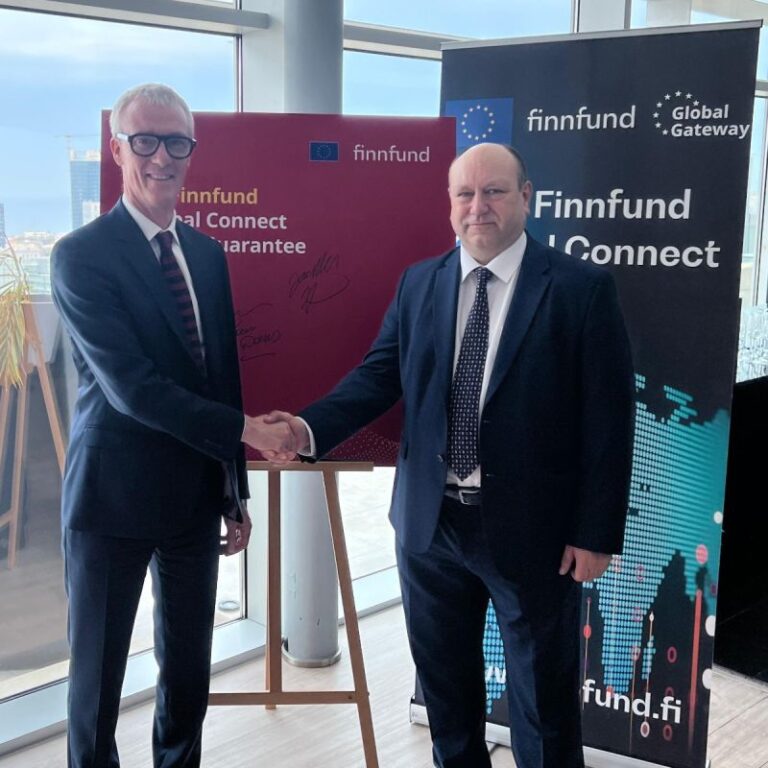
Finland and the European Union launch a EUR 1.312 trillion CFA franc programme to accelerate digitalisation in Africa

[DIGITAL Business Africa] – A major new financial mechanism has just been launched to support digital transformation in developing countries, particularly in Africa. Finland and the European Union have officially launched a strategic programme aimed at mobilising up to 2 billion euros – equivalent to nearly 1.311 trillion CFA francs – to accelerate digitalisation in Africa, Asia and Latin America. This initiative, known as the EU Finnfund Global Connected Guarantee, is the EU’s largest guarantee programme ever dedicated to the digital sector.

As highlighted on Finnfund’s LinkedIn page, this initiative comes at a time when the EU is seeking to strengthen its presence in global digital infrastructure, in response to the rising influence of Chinese investments (via the Belt and Road Initiative) and American investments (driven by major cloud and tech companies).

According to Finnish Prime Minister Petteri Orpo, “for Finnish companies, this is an excellent and tangible opportunity to enter new markets”, stressing that this financial mechanism is not only an economic instrument but also a strategic lever designed to position Europe as a key partner in Africa’s digital transformation. He made the announcement this week during the EU–AU summit held in Angola.

Launched in partnership with the Finnish impact-investment institution Finnfund, the programme provides 222 million euros in EU guarantees to secure Finnfund’s investments in innovative digital projects. In addition, the EU will allocate 13 million euros to support the preparation and structuring of future investments. The objective is clear: to deploy robust digital infrastructure, support technological innovation, and strengthen access to digital services in regions still facing structural gaps.

This financial tool opens major opportunities for the African continent, where demand for broadband connectivity, data centres, mobile payment infrastructure and artificial intelligence solutions is rapidly growing. For international development partners, it is also a strategic instrument to reduce the global digital divide.

A programme focused on Africa and critical digital infrastructure

According to Finnfund, the mechanism will support major infrastructure projects such as subsea cables, data centres, mobile payment platforms, artificial intelligence solutions, and other high-value digital innovations for public services and enterprises.

“This programme creates pathways for Finnish digital expertise to access new international markets. Bridging the digital divide is not only a significant commercial opportunity but also a way to generate impact. Investments may include subsea cables, data centres, mobile payment solutions, artificial intelligence and other digital innovations,” explains Jaakko Kangasniemi, CEO of Finnfund.

For Africa, this direction is a strong signal, as it targets sectors where infrastructure gaps still slow digital adoption: international backbone, high-speed networks, cloud computing, cybersecurity, digital financial inclusion, and connected public services.

Full alignment with the European Union’s Global Gateway strategy

The EU Finnfund Global Connected Guarantee initiative represents one of Finland’s most significant contributions to the EU’s Global Gateway strategy, which aims to mobilise 300 billion euros to upgrade critical infrastructure in partner countries, with Africa as a priority region.

For Finland, it is a strategic commitment, as underlined by Prime Minister Petteri Orpo:

“Finnfund’s new programme represents Finland’s most significant contribution to the EU’s Global Gateway strategy. It is also a shared recognition of the digital sector’s essential role in sustainable development. For Finnish companies, this is a tangible opportunity to enter new markets.”

The announcement was made during the EU–AU summit in Luanda, Angola, in the presence of Ursula von der Leyen, President of the European Commission.

African companies directly involved

In practice, the programme opens the way for three major dynamics in Africa:

  1. Broader access to international financing for telecom operators, digital infrastructure providers, tech startups and digital platforms.
  2. Opportunities for co-development between African and Finnish companies in key sectors: fibre optics, data centres, payment solutions, AI, cybersecurity.
  3. Acceleration of connectivity and digital transformation, particularly in underserved areas. 

Reaction from ICT Media STRATEGIES

Beaugas-Orain DJOYUM, CEO of the strategic intelligence and e-reputation firm ICT Media STRATEGIES, believes this programme is a major strategic lever for the continent:

“This initiative launched by the European Union and Finland represents a major step forward for financing digital transformation across the African continent. By mobilising up to 2 billion euros (around 1.312 trillion CFA francs), the programme opens new prospects for modernising our infrastructure, supporting innovation, and strengthening our digital sovereignty.”

The CEO of the Yaoundé-based firm also outlines key prerequisites:

“It is essential that the access mechanisms, eligibility criteria and participation conditions be presented clearly, accessibly, and in a manner adapted to the realities of African States and our technology companies. Only under these conditions will stakeholders fully seize these opportunities and contribute to building a strong and competitive African digital ecosystem, in collaboration with European partners,” says Beaugas-Orain DJOYUM.

A massive economic impact

According to the World Bank, a 10% increase in digital connectivity can generate up to 2.5% GDP growth. For African countries—often hindered by high internet costs and limited infrastructure—access to new financial instruments is a decisive lever.

The programme doubles the investment volume already mobilised through Africa Connected, launched in 2023 under the EFSD+ framework. Extending the initiative to Asia and Latin America does not diminish Africa’s central position in Finnfund’s and the EU’s priorities.

Towards a new era of EU–Africa digital cooperation

The initiative positions the European Union as one of the key actors in financing Africa’s digital transformation. It comes at a critical moment marked by the rise of AI, growing demand for data centres, increasing cybersecurity challenges, the need for stronger international connectivity, and demographic pressure on digital infrastructure.

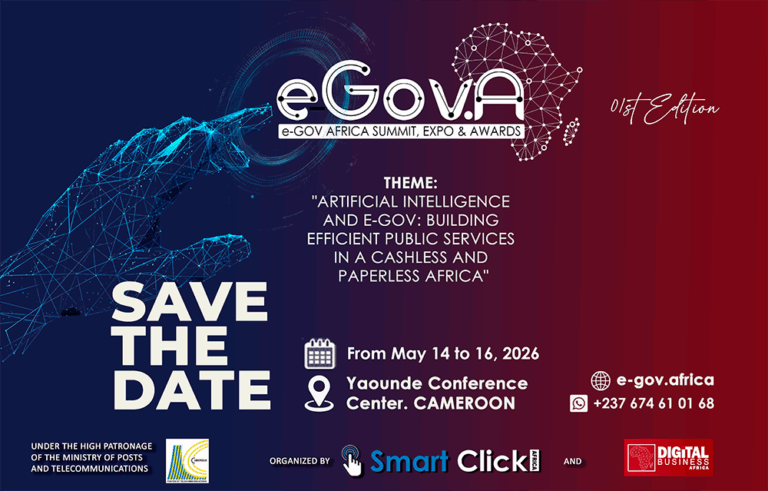
With this programme, Africa gains a strong and ambitious mechanism to accelerate its digital shift, attract strategic investments, and strengthen its role in the global digital economy. The initiative will undoubtedly be discussed in greater detail during E-Gov’A (e-Gov Africa Summit, Expo & Awards) 2026, the flagship event on e-government and digital innovation in Africa organised by Smart Click Africa and Digital Business Africa, to be held from 14 to 16 May 2026 in Yaoundé, Cameroon, under the high patronage of the Ministry of Posts and Telecommunications.

By Digital Business Africa

E-Gov’A 2026: Africa’s Strategic Expo for Smart Governance and Digital Innovation

Yaounde, November 5, 2025 – From May 14 to 16, 2026, the city of Yaoundé will host the inaugural edition of E-Gov’A (e-Gov Africa Summit, Expo, and Awards. The African e-Governance and Digital Innovation Expo), a landmark event held under the theme:
“Artificial Intelligence and e-Governance: Building Efficient Public Services in a Cashless and Paperless Africa.”

Held under the High Patronage of the Ministry of Posts and Telecommunications (Minpostel), E-Gov’A is spearheaded by the Smart Click Africa association (www.smartclickafrica.org) and Digital Business Africa, the leading strategic digital intelligence platform for Africa (www.digitalbusiness.africa).

The event aspires to become the pan-African reference platform for showcasing digital solutions that are transforming public administration and significantly improving the lives of African citizens.

Accordingly, strong institutional backing and active participation from sectoral ministries, development partners, tech companies, SMEs, startups, and key players in the African digital ecosystem are expected to ensure the success of this pioneering initiative.

A Strategic and Immersive Program

  • E-Gov’A Summit: High-level ministerial and technical panels
  • E-Gov’A Expo: Exhibition space featuring live demos, booths from institutions, companies, and African GovTech startups
  • E-Gov’A Workshops: Practical training sessions (both free and paid), hosted by companies and institutions, tackling real-world e-governance challenges. For example: “How to Integrate AI for Greater Efficiency in Public Administrations”
  • E-Gov’A Startup Challenge: A hackathon rewarding the most impactful citizen-centric digital solutions
  • E-Gov’A Awards: Prestigious awards for the most innovative administrations, institutions, companies, and startups in the GovTech landscape across Africa

Voices from the Organizers

“E-Gov’A stands as a tangible African response to the pressing need for public sector modernization. It will spotlight not only the transformative digital tools already reshaping our institutions, but also the key challenges and decisions shaping tomorrow’s digital Africa.”
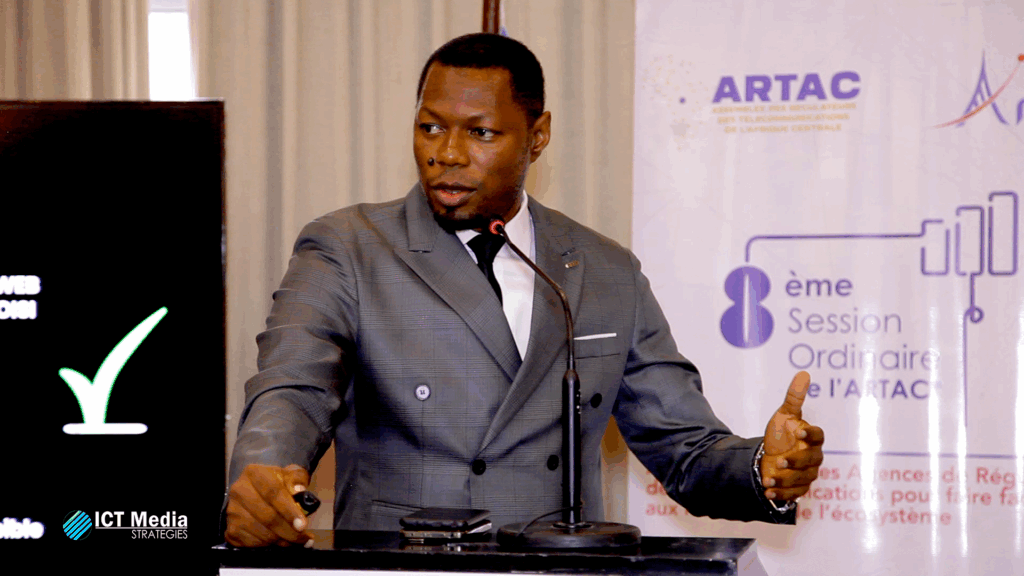
Beaugas Orain DJOYUM, Chair of the Organizing Committee, President of Smart Click Africa, CEO of ICT Media STRATEGIES

beaugas-orain-djoyum-:-« l’information-strategique-a-un-cout,-mais-c’est-un-investissement-rentable-pour-les-entreprises »
Beaugas-Orain Djoyum : « L’information stratégique a un coût, mais c’est un investissement rentable pour les entreprises »

“The 2026 edition of E-Gov’A has been meticulously curated to deliver intense moments of strategic reflection. We will convene top-tier speakers – ministers, international experts, innovators, and senior public officials – to exchange insights, visions, and experiences around the digital transformation of African administrations, institutions, and enterprises.”
Joseph Nana, Event Curator, E-Gov’A

Joseph Nana : “We will convene top-tier speakers – ministers, international experts, innovators, and senior public officials – to exchange insights, visions, and experiences around the digital transformation”

Core Objectives of the E-Gov’A Expo

E-Gov’A aims to accelerate the digital transformation of public services in Africa, spotlight the continent’s most innovative homegrown digital solutions, and foster constructive dialogue between governments, startups, institutions, and tech enterprises on inclusive, citizen-centered, and secure digital governance.

Key goals include:

  • Promoting modern, efficient, and accessible public administration
  • Showcasing innovative digital tools from companies, institutions, and startups that enhance e-governance
  • Highlighting the efforts of African states in digital transformation
  • Encouraging synergies between governments, startups, donors, and tech firms
  • Facilitating interoperability, digitization, and equitable access to public services

A Must-Attend Event for Africa’s Digital Future

Public officials, tech companies, telecom operators, startups, development partners, journalists, academics, and engaged citizens — E-Gov’A invites you to Yaoundé from May 14 to 16, 2026, to collectively reimagine public governance and digital innovation in Africa.

Media Contact
Estha NDEME – Program Manager, Smart Click Africa
[email protected]
+237 690 80 77 81 / +237 674 61 01 68
www.e-gov.africa
WhatsApp / Telegram / Facebook / LinkedIn: @eGOVAfrica
https://digt.al/DBA


Semiconductors, servers, telecoms: AI drives global trade in 2025 with USD 1.92 trillion in exchanges in six months

[DIGITAL Business Africa] – Artificial intelligence (AI)-related goods have emerged as the main driver of global trade growth in 2025, confirming that the digital economy now rests on massive flows of high-value physical goods. This is one of the key findings of the updated 7 October 2025 edition of the World Trade Outlook and Statistics published by the World Trade Organisation (WTO).

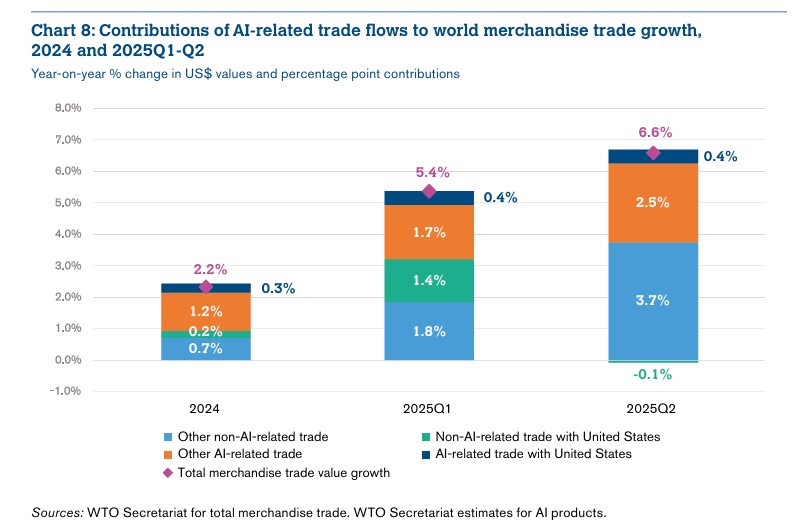
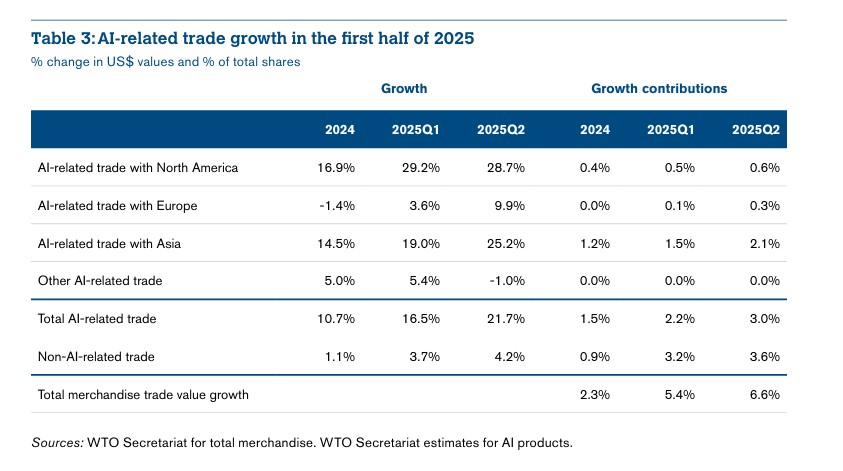
According to WTO economists, trade in AI-related goods – covering around 100 product lines, ranging from semiconductors and processors to finished computers, servers, and telecommunications equipment – expanded by more than 20% year on year in the first half of 2025. In value terms, these exchanges reached USD 1.92 trillion, compared with USD 1.61 trillion over the same period in 2024.

By comparison, trade in non-AI goods grew by less than 4% over the same period. Although AI-related products account for less than one-sixth of global merchandise trade, they contributed nearly half of overall trade growth in the first half of 2025, accounting for 43% of that growth.Semi-conducteurs, serveurs, télécoms : l’IA tire le commerce mondial en 2025 avec 1 920 milliards de dollars d’échanges en six mois

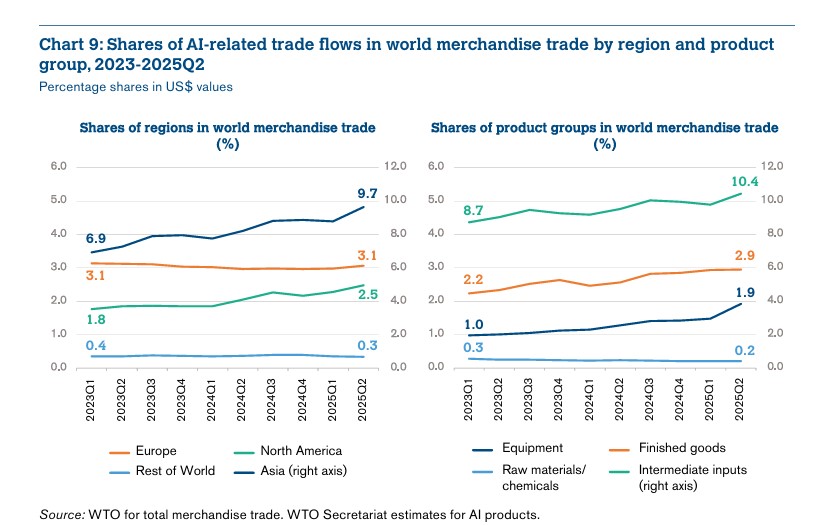
This chart shows that global trade growth in 2025 is largely driven by AI-related goods. While non-AI trade is expanding only modestly, flows of semiconductors, servers, and telecommunications equipment account for most of the increase in the value of world trade, confirming the structuring role of AI in the international economy.

A profound restructuring of global trade around AI

For the WTO, these figures reflect a deep restructuring of global economies around artificial intelligence. The observed momentum spans the entire digital value chain: from raw silicon and speciality gases to the machines used in semiconductor manufacturing and testing, and on to the servers and computers powering cloud computing platforms and AI applications worldwide.

The United States played a leading role in merchandise trade developments in the first half of 2025. Imports rose sharply in the first quarter as firms front-loaded purchases ahead of anticipated tariff increases. However, this cyclical effect faded in the second quarter as inventories built up earlier in the year were drawn down.

AI-related goods, by contrast, followed a more stable trajectory. Unlike the volatility observed for other products such as precious metals or pharmaceuticals, US imports of semiconductors, servers and finished computers continued to grow at a steady pace. This stability suggests that demand for AI infrastructure is primarily driven by long-term structural investment rather than short-term trade policy arbitrage.

A dynamic increasingly driven by emerging economies

By the second quarter of 2025, momentum in AI-related trade had gradually shifted beyond the United States. Other economies accounted for nearly 40% of global AI-related trade growth, with a marked rise in Asian suppliers and emerging markets.

Asia accounted for nearly two-thirds of global growth in AI-related trade in the first half of 2025. East Asia – notably the Republic of Korea, Japan and Chinese Taipei – remained the engine of supply of semiconductors and advanced telecommunications equipment. At the same time, South-East Asian economies such as Viet Nam and Thailand strengthened their roles, supported by supply-chain diversification and increased investment.

Other regions are also asserting themselves in this dynamic. The Middle East increased its imports of servers and telecommunications hardware, linked to government-led digital transformation programmes in Saudi Arabia and the United Arab Emirates. In South America, Brazil and Chile stepped up purchases of computing and cloud-related equipment.

In Africa, growth remains uneven but tangible: South Africa, Nigeria and Egypt increased their imports of telecommunications infrastructure, signalling investment in connectivity as a prerequisite for broader digital adoption.Semi-conducteurs, serveurs, télécoms : l’IA tire le commerce mondial en 2025 avec 1 920 milliards de dollars d’échanges en six mois

WTO warnings for 2026

In their analysis, WTO economists nevertheless stress that global trade growth is likely to slow in 2026, due to the combined effects of a decelerating global economy and the introduction of new tariffs. The robustness observed in 2025 may therefore not be sustained at the same pace.

WTO Director-General Ngozi Okonjo-Iweala welcomed the resilience of global trade in 2025, while calling for vigilance. According to her:

“The measured response of countries to tariff changes in general, the growth potential of AI, and increased trade in the rest of the world – particularly among emerging economies – helped mitigate trade setbacks in 2025.”

She also highlighted the rise in trade among countries of the Global South. According to the WTO, South-South trade increased by 8% in value in the first half of 2025, compared with 6% for global trade overall. South-South trade with partners other than China grew even faster, rising by close to 9%.

The key role of trade multilateralism

For Ngozi Okonjo-Iweala, this resilience is not accidental. It largely reflects the stability provided by the rules-based multilateral trading system.

“The resilience of trade in 2025 owes no small part to the stability provided by the rules-based multilateral trading system. However, complacency is not an option. The current disruptions to the global trading system call on nations to act to reinvent trade and jointly establish a stronger foundation that delivers greater prosperity for people around the world,” she added.Semi-conducteurs, serveurs, télécoms : l’IA tire le commerce mondial en 2025 avec 1 920 milliards de dollars d’échanges en six mois

A central challenge for developing countries

These developments confirm that tomorrow’s global trade will increasingly be structured around artificial intelligence and digital infrastructure. For developing countries, and Africa in particular, the challenge goes beyond simply consuming technology: it is about integrating into AI value chains, capturing a share of industrial value added, and anticipating the fiscal, customs and regulatory implications of this transformation.

For African policymakers, these data also point to the urgent need to rethink industrial, customs, and tax policies so that Africa does not remain merely an import market for AI infrastructure but becomes an actor in its production, assembly, and regulation.

This reading is shared in full by the WTO Secretariat. Commenting on the study’s findings, WTO Director-General Ngozi Okonjo-Iweala stressed that the new trade data confirm a structural shift in global trade driven by artificial intelligence and the digital economy.

“For the sake of growth, development and employment prospects across the WTO membership, we must sustain what is working well. But we must also reform what is not working and reposition our Organisation to better support Members in taking advantage of exciting new trade opportunities – particularly in the digital economy. The latest trade data are among the latest signs that artificial intelligence is no longer an emerging issue on the horizon: it has arrived, with very significant implications for trade, as underscored in our recently released World Trade Report entitled ‘Making Trade and Artificial Intelligence Work Together for the Benefit of All’.”

In this statement, the WTO Director-General clearly calls on Members to move beyond a passive or defensive approach to the digital transformation of global trade.

For her, artificial intelligence is no longer a prospective or theoretical issue but a fully-fledged economic reality that is already shaping trade, requiring both the consolidation of the effective elements of the multilateral trading system and reforms to better support the new opportunities offered by digital trade.

As the WTO debates the future of the moratorium on electronic transmissions and the multilateral framework for digital trade, the 2025 figures highlight an essential reality: the digital economy is increasingly material, industrial and strategic. Ignoring this dimension would mean missing one of the major industrial, technological and strategic turning points in contemporary global trade.

By Beaugas-Orain DJOYUM

Jappcare Autotech: A Homegrown Solution to Road Safety in Cameroon by Sinet Akih

[Digital Business Africa] – Cameroon’s roads claim countless lives every year due to poorly maintained vehicles. Determined to change this, product manager turned entrepreneur Sinet Akih has launched Jappcare Autotech—a tech-driven platform offering real-time monitoring, maintenance schedules, and spare parts to put safety back in the driver’s seat.

Poorly maintained vehicles are a silent but deadly contributor to road accidents across Cameroon. For Sinet Akih, a product manager turned entrepreneur, this challenge presented both a personal mission and a business opportunity. His answer: Jappcare Autotech, a startup designed to make vehicle maintenance smarter, more accessible, and more reliable.

Tackling a National Problem

Jappcare Autotech is not just another digital platform. It provides real-time vehicle health monitoring, customized maintenance schedules, and an integrated e-commerce marketplace for spare parts. The goal is simple yet transformative: reduce the number of road accidents linked to poor maintenance by empowering drivers with timely data and easier access to spare parts.

“Too many lives are lost on our roads because vehicles are not maintained properly. Jappcare wants to change that by putting technology at the service of safety,” Sinet explains.

By leveraging his strong background in product marketing and management, he has built Jappcare to be scalable and locally relevant, with the potential to expand beyond Cameroon into other African markets grappling with similar road safety issues.

Beyond Business: Building Ecosystems

While Jappcare is his flagship venture, Sinet’s broader vision for technology is also about ecosystem building. In 2022, he launched the Bamenda Community Challenge (BCC) to equip youth in the conflict-affected Northwest Region with tech and entrepreneurship skills. Over two editions, BCC has trained dozens of young innovators, supported business ideas with cash prizes and mentorship, and attracted hundreds of participants and dignitaries.

From Bamenda to the National Stage

Sinet is also a lead organizer of the Cameroon International Tech Summit (CITS), the country’s largest technology event. CITS gathers innovators, investors, and policymakers to accelerate Cameroon’s digital growth.

A Vision Rooted in Local Relevance

Through Jappcare, Sinet Akih is demonstrating that African startups can solve African problems while maintaining global scalability. His mission is clear: to save lives, strengthen road safety, and build a model of innovation that begins in Cameroon but speaks to the whole continent.

By Digital Business Africa

Cameroon: MINESUP and MINJEC to Fund 5,000 Student Projects in Digital, Agriculture, and Tech Sectors – Apply Now!

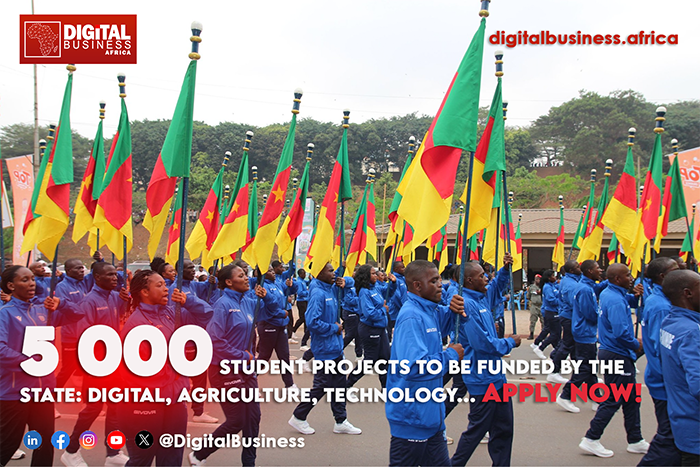
[Digital Business Africa] – In an official joint communiqué signed on September 11, 2025, in Yaoundé by Professor Jacques Fame Ndongo, Minister of State, Minister of Higher Education (MINESUP), and Mounouna Foutsou, Minister of Youth Affairs and Civic Education (MINJEC), the Cameroonian government has announced a special call for applications to finance 5,000 innovative projects initiated by student-entrepreneurs across the country.

Goal: Support creative youth for sustainable socio-economic integration

Selected candidates will benefit from technical support and financial assistance to help them integrate into the productive economy and the national entrepreneurial ecosystem.

This ambitious initiative seeks to:

  • Promote the creation of startups and innovative projects by young people;
  • Boost the national economy through four key sectors: agriculture, digital, industrial crafts, and emerging technologies;
  • Facilitate the professional integration of graduates in a context of growing unemployment.

Priority Sectors: Digital, Agriculture, and Emerging Technologies

The program will give special attention to projects in the following areas:

  • Digital: mobile app development, e-commerce, cybersecurity, AI, digital transformation, etc.;
  • Agriculture: agri-tech, local processing, value chains, smart farming equipment;
  • ️ Emerging Technologies: renewable energy, robotics, environment, fintech, etc.

In Line with the President’s Vision

This special call aligns with Cameroon’s Vision 2035 and fulfills the President’s commitment to place youth at the center of economic transformation. It is part of the National Development Strategy 2020–2030 (SND30) and echoes the student-entrepreneur concept introduced by MINESUP.

It complements existing frameworks such as the Three-Year Special Youth Plan (PTS-Jeunes) and the Income-Generating Activities Support Program (PACAGR).

Who Can Apply?

 The program targets students who are:

  • Cameroonian nationals;
  • Aged 15 to 35;
  • Officially enrolled in a public or private university in Cameroon;
  • Residing in Cameroon;
  • Registered with the National Youth Observatory (ONJ);
  • And holding an innovative project, prototype, or startup under development.

Note: Special encouragement is given to female candidates, persons with disabilities, and students in incubation programs.

Application Requirements

From the date of the communiqué until September 19, 2025, each applicant or group must submit the following documents:

  1. A motivation letter addressed to both Ministers;
  2. A completed application form (downloadable here or available at Youth Promotion Multipurpose Centers – CMPJ – or university offices);
  3. A project description or business plan;
  4. A copy of the national ID card or valid receipt;
  5. A copy of student ID, proof of registration, or tuition fee receipt for the current academic year;
  6. A location map;
  7. Company creation documents for those already owning a startup or prototype.

Submission Deadline: September 19, 2025

  • Physical submissions (sealed envelope) must be deposited no later than 3:30 PM at:
    • MINESUP’s Mail Office (Ministerial Building No. 2, 9th Floor, Room 929), or
    • MINJEC headquarters (opposite the National Archives), or at Regional Delegations of MINJEC, or authorized university institutions.
  • Digital submissions must be sent by 11:59 PM to:
    [email protected] or via www.minesup.gov.cm

Important: Applications must clearly state: “FOR THE SELECTION AND FUNDING OF FIVE THOUSAND (5000) STUDENT-ENTREPRENEUR PROJECTS IN CAMEROON TO SUPPORT SOCIO-ECONOMIC INTEGRATION

Useful contacts:

    • MINJEC : 696 255 162 / 655 593 322
    • MINESUP : 679 389 992

A Strategic Lever for the Future

This program reinforces the University–Enterprise model already promoted by events like GETEC (Salon du Génie et Talent de l’Étudiant Camerounais). It offers Cameroonian youth a real opportunity to shape their own employability and contribute to the country’s digital and economic transformation.

A Message to Cameroon’s Youth

Jacques Fame Ndongo (MINESUP) and Mounouna Foutsou (MINJEC), co-signatories of the communiqué, urge students to apply massively. This is a unique opportunity to accelerate professional integration through entrepreneurship.

By Digital Business Africa

Sundar Pichai vs. Donald Trump: When Silence Becomes the Sharpest Weapon

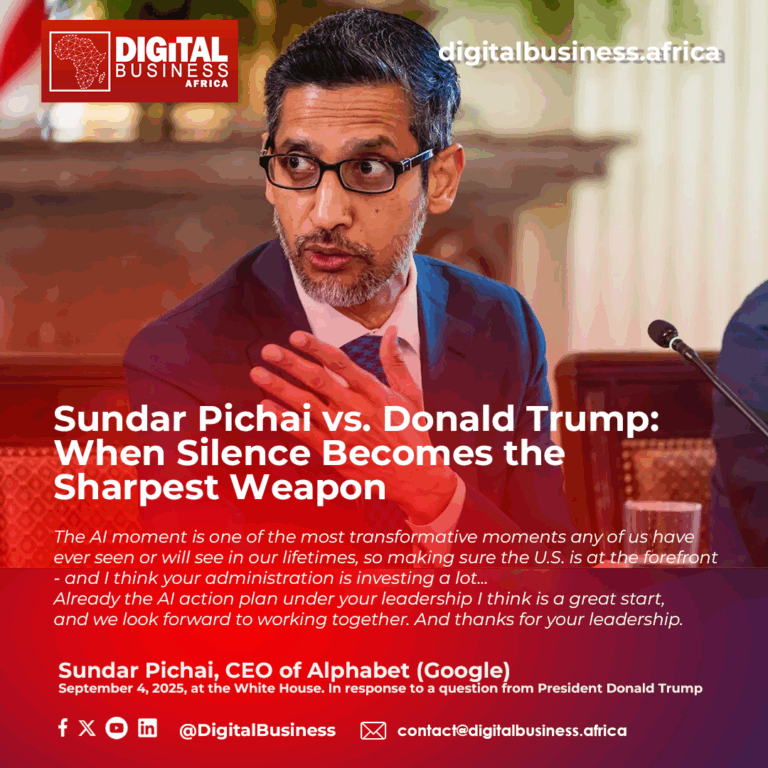
[Digital Business Africa – Opinion] – When confronted with those who hold power or influence, truth is not always the strongest sword. Sometimes, silence cuts deeper than words. Sundar Pichai, the reserved CEO of Google, proved this point before Donald Trump at a White House state dinner on September 4, 2025.

I know the feeling well. When confronted with lies or distortions, I’ve often chosen silence. It puzzles those who know the truth, but sometimes silence and restraint weigh heavier than a rebuttal. Especially when the one across from you holds the power—or when you simply cannot win by correcting them.

That night, Pichai offered a masterclass in strategic restraint.

Trump had gathered the titans of tech: Mark Zuckerberg (Meta), Bill Gates (Microsoft), Tim Cook (Apple), Sam Altman (OpenAI)… with Elon Musk’s absence glaring.

At one point, Trump turned to Pichai: “Google had a great day yesterday. Would you like to talk about this memorable day?”

He was referring to Judge Amit Mehta’s ruling that spared Alphabet, Google’s parent company, from a brutal antitrust breakup. No forced split between Google Search and Chrome. The outcome? Alphabet gained a staggering $230 billion in market cap in just a week.

Humble as ever, Pichai replied: “I’m glad it’s over,” drawing laughter in the room. He then pivoted to flattery—praising Trump’s “leadership” on AI and America’s tech competitiveness.

That’s when Trump interrupted sharply: “It’s Biden who launched this lawsuit, you know that, right?”

False. The case was initiated by the Justice Department… under Trump himself. Pichai knew it. Everyone who followed the case knew it. Yet he did not correct the president.

Why? Because in that room, at that moment, the truth had no upside. Worse, pointing it out might have irritated Trump, jeopardized Google, and complicated other ongoing cases—especially those involving YouTube and Trump’s suspended accounts after the January 6 Capitol insurrection.

And that’s the lesson.

Sometimes, silence outperforms even the most eloquent defense of truth. Before correcting a boss, a strategic partner, or a political ally, ask yourself three questions:

  • What do I gain by speaking the truth right now?
  • What consequences might it have for me and my organization?
  • Is this the right time and place to set the record straight?

That night, Pichai chose silence – and pivoted to praise:

“The AI moment is one of the most transformative moments any of us have ever seen or will see in our lifetimes. So making sure the U.S. is at the forefront — and I think your administration is investing a lot… Already the AI action plan under your leadership I think is a great start, and we look forward to working together. And thanks for your leadership.”

As Warren Buffett wisely put it: “It takes 20 years to build a reputation and five minutes to ruin it. If you think about that, you’ll do things differently.”

Sundar Pichai did things differently. He preserved his own reputation, Google’s credibility, and, not least, its billions in market value—with nothing more than the power of silence.

By Beaugas ORAIN DJOYUM

Camtel + Blue = “System Error”: How to Lose Customers in Six Easy Steps

[DIGITAL Business Africa] – In recent weeks, telecommunications services in Cameroon have been facing significant turbulence. From degraded service quality in many areas to repeated power outages that disrupt electronic communications, subscribers are forced to deal with an unstable and unreliable internet.

At the Cabinet meeting of July 31, 2025, chaired by Prime Minister Joseph Dion Ngute, the Minister of Posts and Telecommunications, Minette Libom Li Likeng, delivered an alarming report: insufficient service continuity, incomplete and uneven national coverage, recurrent network congestion, and fluctuating speeds, “caused by the gradual saturation of ageing infrastructure.”

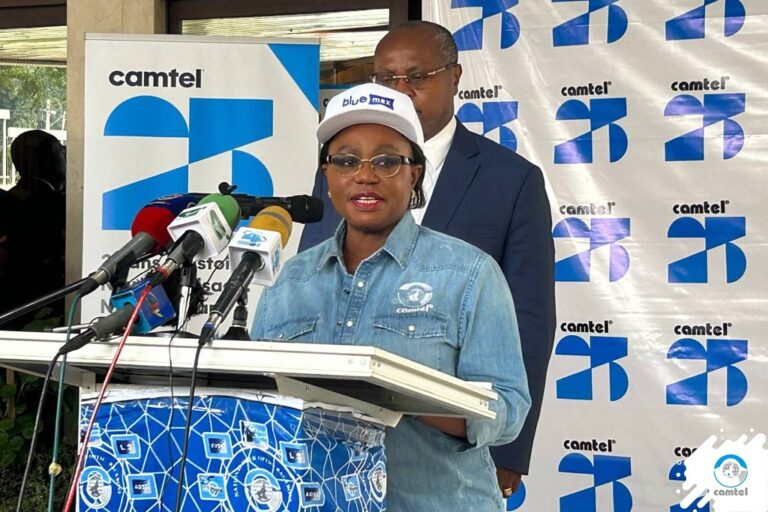
While all mobile operators are affected, the situation at Camtel is particularly critical and demands urgent action. On top of the general sector challenges, Camtel faces a growing list of customer complaints, compounded by what is seen as a disastrous customer service record.


To grasp the scale of the problem, one only needs to look at a few concrete situations that shape the daily experience of Camtel and Blue subscribers – myself included.

1 – The shortage of replacement SIM cards


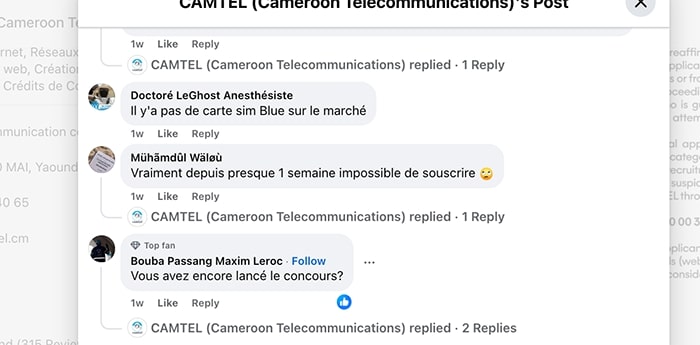
If your phone is stolen or lost, it’s impossible to keep your Blue number. For months now, replacement SIM cards have been unavailable nationwide. Instead, you are told to buy a new SIM card – meaning a new number.

Serious consequence: the thief or hacker could continue using your old number if you haven’t had it blocked, with all the associated risks.

2 – Data bundles purchased… but unusable

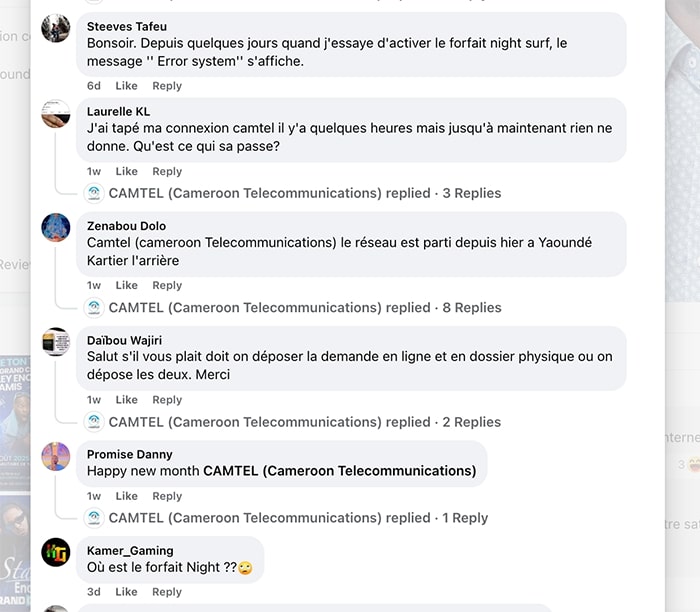
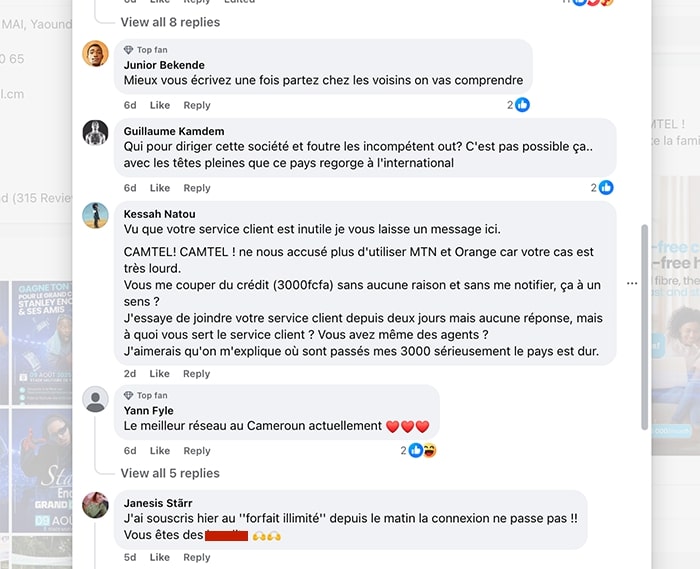
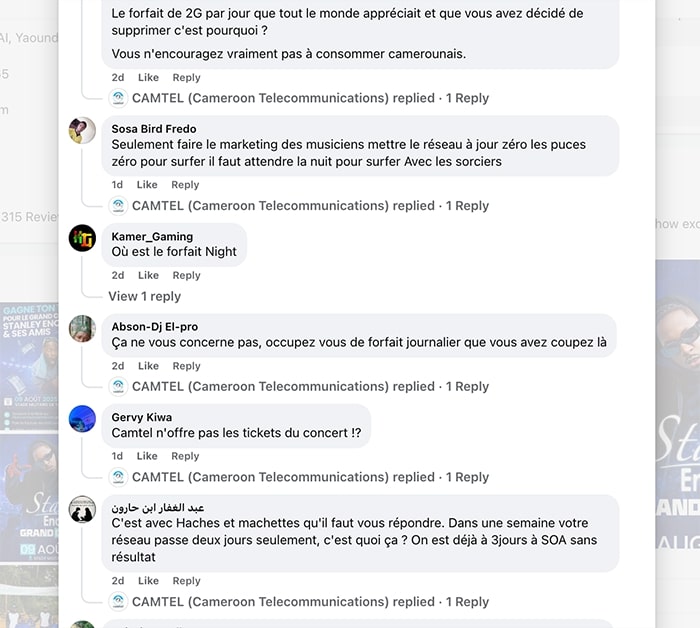
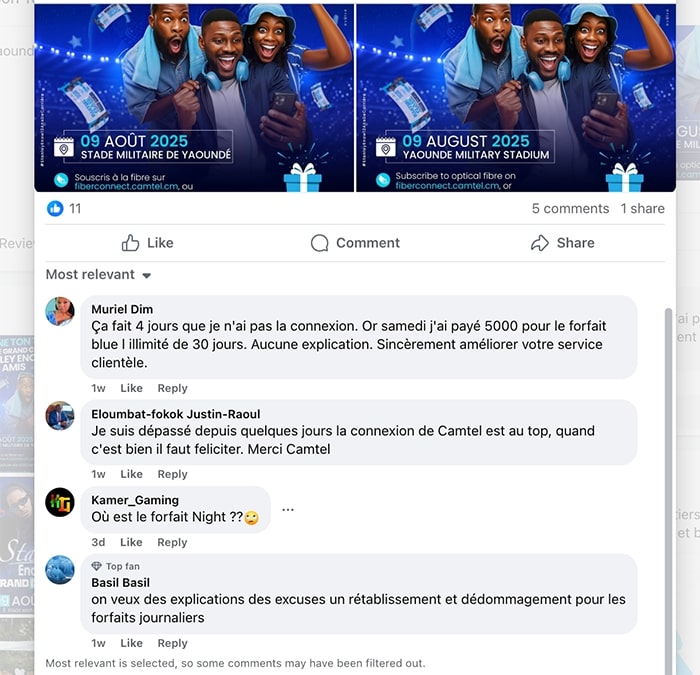
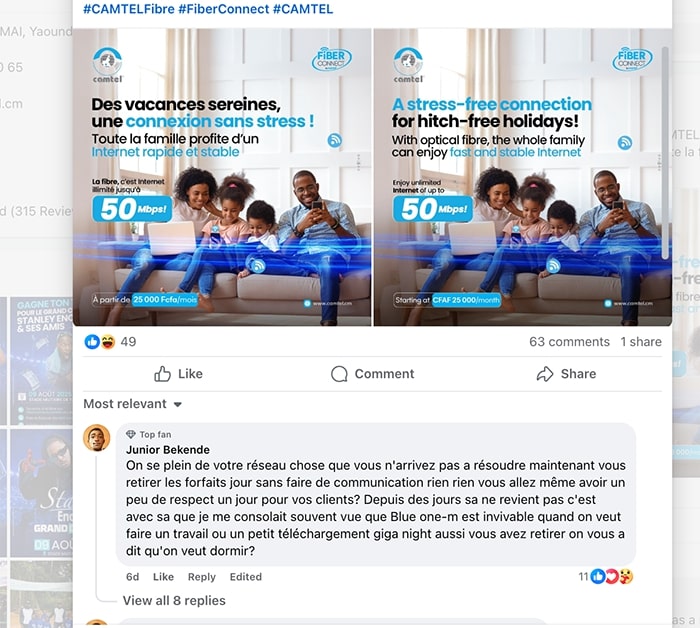
This is one of the top complaints from Blue subscribers. A glance at the comments under Camtel’s Facebook posts gives a clear picture of the frustration.

Many customers purchase a bundle but are unable to use it. The operator should consider issuing automatic refunds, as Orange recently did in a similar case.

3 – FTTH: Faster installation, but poor after-sales service


Camtel now focuses much of its communication on its FTTH (Fibre to the Home) offers — at the expense of suspended Blue Bundles. Installation times for FTTH have improved compared to the past, when customers could wait up to three months. However, after-sales service remains a nightmare.

Unexplained outages despite bills being paid, endless delays for reconnection… Unless you have a friend working as a Camtel technician, you’ll need plenty of patience.

4 – Power cuts = Internet cuts

In Emana, Yaoundé, Blue subscribers know it well: when Eneo cuts the power, Blue internet service also goes down.


The result: customers switch to Orange or MTN while waiting for electricity to return.

5 – Failed bundle activations: “System Error”

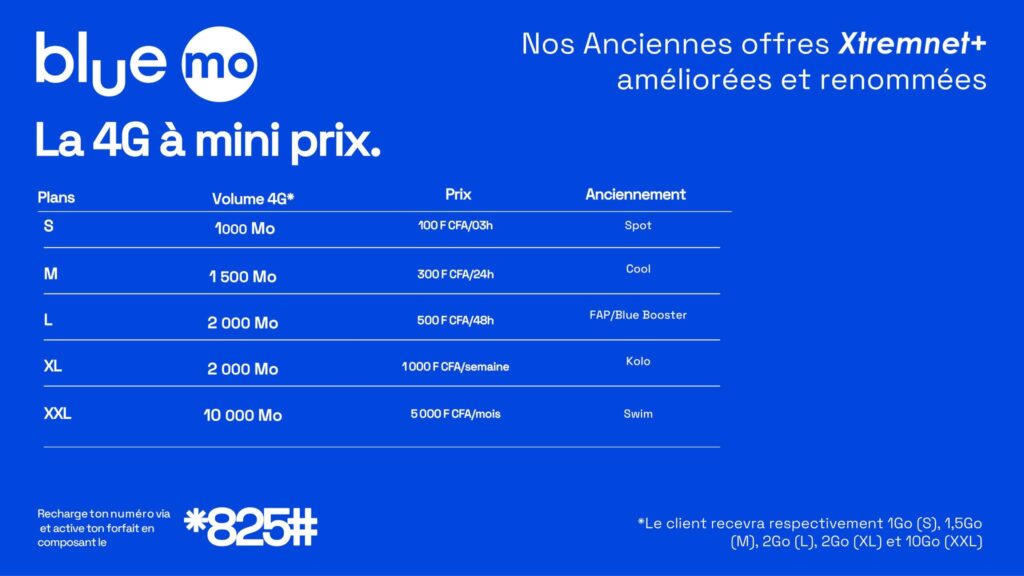
Heavy Blue data users are all too familiar with the “System Error” message. After a few activations of popular bundles like M (1.5 GB/day for 300 CFA francs) or L (2 GB/48 h for 500 CFA francs), many subscribers find they cannot buy another bundle the same day.


In effect, you want to give Camtel your money, and the system replies, “System Error” – essentially, “No thanks.”


A Camtel technician at an agency might explain that your number has been “blocked” from making further activations and that it must be unlocked by another service outside Camtel’s main branch. Sometimes this takes hours. Meanwhile, customers simply turn to the competition. And for years, no solution has been found to eliminate the notorious “System Error”.

6 – Silent removal of bundles and abandoned customers


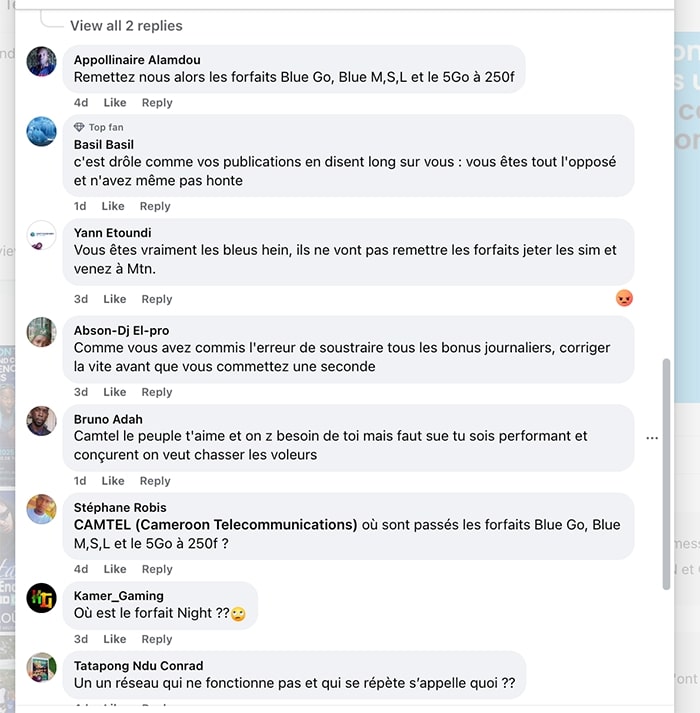
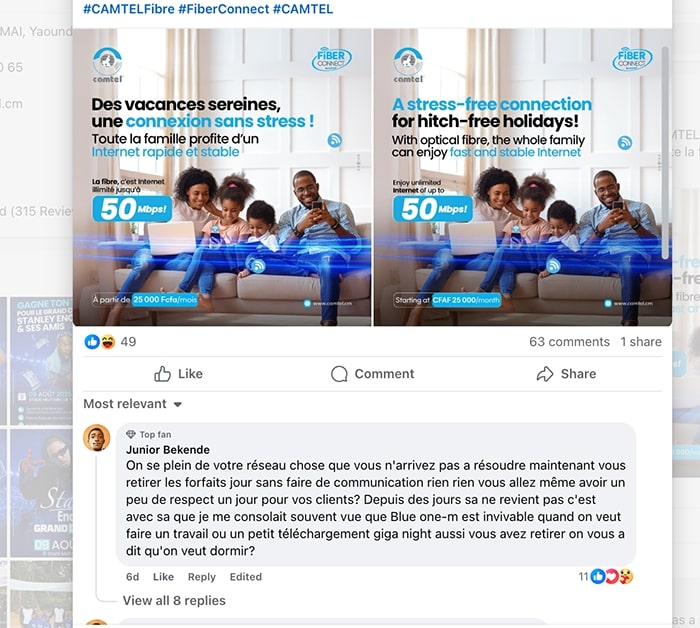
For nearly two months, Camtel has removed, without any official explanation, several Blue data bundles — including daily bundles (100 to 2,000 CFA francs) and the popular night bundle. Now, only one remains: 1,000 CFA francs for 2 GB valid for 7 days.

Faced with numerous unanswered questions from users on Facebook, Digital Business Africa reached out two weeks ago to Camtel’s Head of Communications Unit, Head of Communications Division, and CEO Judith Yah Sunday. To date, there has been total silence. Despite follow-ups, our submitted interview protocol is still awaiting a response.

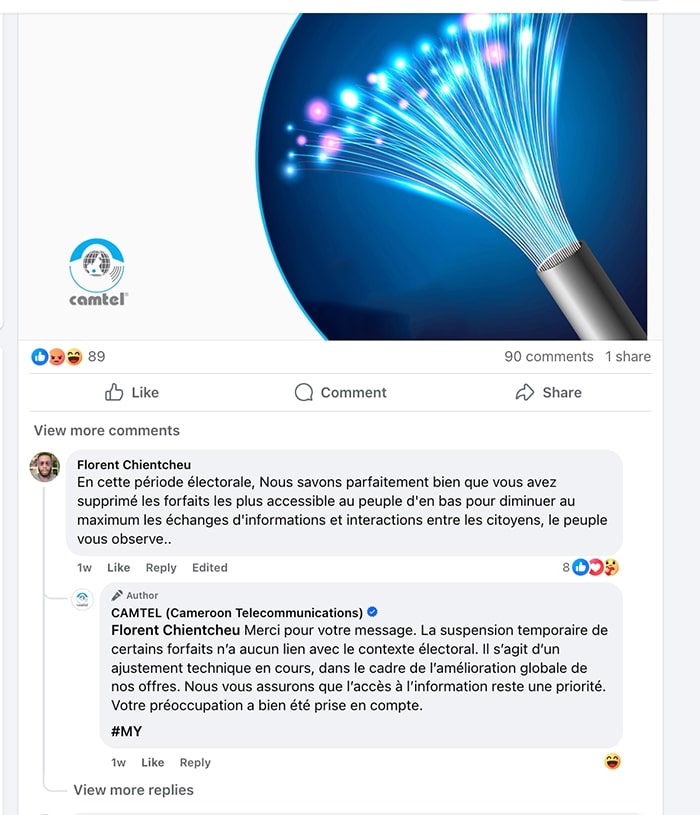
This silence has only sped up the subscriber exodus to MTN and Orange. It took a brief comment from Camtel’s community manager on Facebook to learn that the change was supposedly “a technical adjustment as part of an overall improvement of Camtel’s offers.” Users have drawn their own conclusions, with some linking the move to Cameroon’s current pre-election climate, accusing Camtel of reducing affordable bundles to curb online discussions and interactions.

In any case, calls to restore daily and night bundles flood Camtel and Blue’s Facebook pages with every new post.

The absence of communication: a relationship disaster

In relationship marketing, silence in the face of a major customer issue is known as customer abandonment: the company no longer meets its clients’ usual needs. The result is a breakdown of trust and accelerated churn (customer migration to competitors).

Yet, when she took office in December 2018, Judith Yah Sunday promised to base her leadership on two pillars:

  • Customer Centricity – delivering a quality customer experience.
  • Change Management – reinventing governance and operational methods.

Anchored to these two pillars, Camtel will continue to uphold its core values: extending network coverage, expanding our product and service catalogue, and ensuring service quality. This is the honour of our commitment.” declared the Camtel CEO in September 2023 during the company’s 25th anniversary celebrations.

Nearly seven years later, it is clear the first pillar has yet to be realised.

Predictable consequences

Beyond the feeling of abandonment expressed by subscribers, the consequences for Camtel are manifold. The removal of bundles tailored to specific usage habits directly leads to customer loss – and thus high churn – in favour of MTN and Orange, which offer daily bundles from 100 to 500 CFA francs.

This accelerated exodus will soon translate into rapid market share erosion, a surge in complaints, and persistent bad buzz on social media. Brand-wise, both Blue and Camtel emerge weakened, with a trust deficit that risks becoming long-term.

Brand-wise, both Blue and Camtel emerge weakened, with a trust deficit that risks becoming long-term.

Camtel’s communication managers and CEO are undoubtedly aware of this reality, but their inaction raises serious questions.

What must be done urgently?

A quick look at Camtel and Blue’s Facebook pages reveals the depth of user frustration. In nearly every post over the past two months, the comments section is filled with complaints.

To contain the damage, Camtel must communicate officially about the removal of these daily bundles and address all the customer concerns raised.

A clear public statement on social media and in the press is essential.

The operator should also refund affected subscribers – as recommended in the past by the ART and Minpostel in similar cases of unusable purchased data – and perhaps offer bonus data to ease tensions.

Finally, direct and personalised contact with affected customers would send a strong signal to rebuild trust.

By refusing to speak up and leaving its subscribers in the dark, Camtel is exposing itself to a deep and lasting crisis of confidence. If nothing is done quickly, this episode will stand as one of the most glaring examples of perceived incompetence in Cameroon’s telecom sector.

By Beaugas-Orain DJOYUM

Read more:

Camtel Hits Hard… and in Silence: Several Internet Packages Axed Without Warning Subscribers

Read some comments on Camtel’s Facebook page

Camtel Hits Hard… and in Silence: Several Internet Packages Axed Without Warning Subscribers

[DIGITAL Business Africa] – For nearly two months, Cameroon’s state-owned telecom operator Camtel has unilaterally and without explanation ended several data offers and bundles ​- leaving customers feeling frustrated and abandoned.

Subscribers to Blue, Camtel’s mobile brand, can no longer purchase daily data bundles that once ranged from 100 CFA francs to 2,000 CFA francs. In place of these daily bundles, only one option is now available: 1,000 CFA francs for 2 GB, valid for 7 days.

3-hour, 24-hour, and 48-hour bundles scrapped

3-hour, 24-hour, and 48-hour bundles scrapped

Despite this change taking place nearly two months ago, no official communication has been made. Customers only discover the disappearance of these bundles when attempting to top up. There has been no word in the traditional media and no announcement on Camtel’s or Blue by Camtel’s digital platforms, which continue instead to post concert invitations, games, or promotions for their FTTH offer, itself widely criticized on Facebook.

Two weeks ago, Digital Business Africa contacted Camtel’s Head of Communications Unit, Benedit Ndinwa, Head of the Communications Division, Eric Benjamin Lamère, and CEO Judith Yah Sunday to request an explanation for this abrupt removal. As of August 8, 2025, our interview request remains unanswered.

Thousands of internet users demand answers… in vain

On social media – especially Camtel’s Facebook page – no post, regardless of its subject, escapes angry subscriber comments. Complaints range from suspended bundles to purchased but unusable data and poor network quality.

For example, under a July 1, 2025, post titled “Camtel Sets the Tone at SAGO 2025!”, in which the company described its participation at the 14th Government Action Fair alongside top officials, nearly all of the 76 comments were negative. None praised the company’s presence; all criticized poor internet access or the removal of bundles.


“Hi! I haven’t been able to activate a Camtel bundle since this morning,” wrote one subscriber. Another mocked: “You’re putting on a show in Yaoundé while the connection in Douala is terrible. Shame on you!”


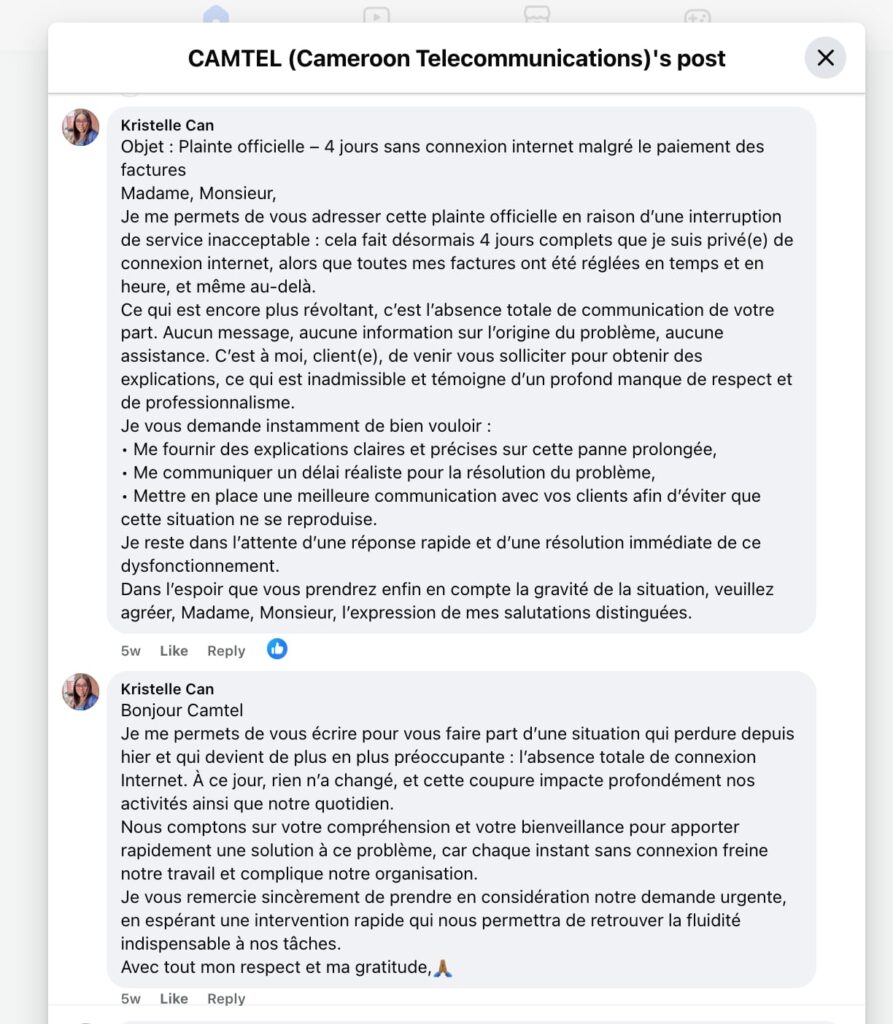
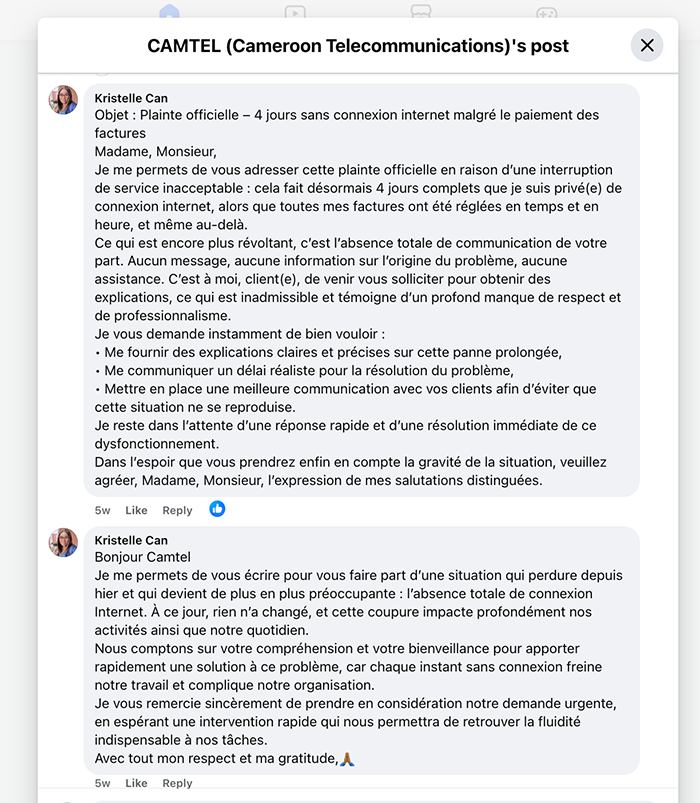
Kristelle Can turned her comment into an official complaint:

“It’s now been 4 days that I’ve been without internet access, even though all my bills are paid. What’s even more outrageous is the complete lack of communication from you. No message, no assistance. It’s up to me, the customer, to chase you for explanations. This is unacceptable and shows a profound lack of respect and professionalism.”

Unsurprisingly, this comment – like so many others – has gone unanswered.

Camtel’s post has received numerous complaints

See the post

A withdrawal from the market ​- and customers


This silent removal of Blue bundles, without prior notice or official explanation, amounts to a partial withdrawal from the market – specifically from customers who consume between 100 and 500 CFA francs per day – and a blatant neglect of customer relations.

Added to the operator’s many other issues, this approach only speeds up the exodus of subscribers to competitors eager to snap up dissatisfied clients. It is a combination of incompetence and blatant disregard for users. At Camtel, the customer is no longer king.


By Beaugas-Orain DJOYUM

Read the editorial by Beaugas Orain DJOYUM on this subject

Camtel + Blue = « System Error » : l’exposition d’une incompétence

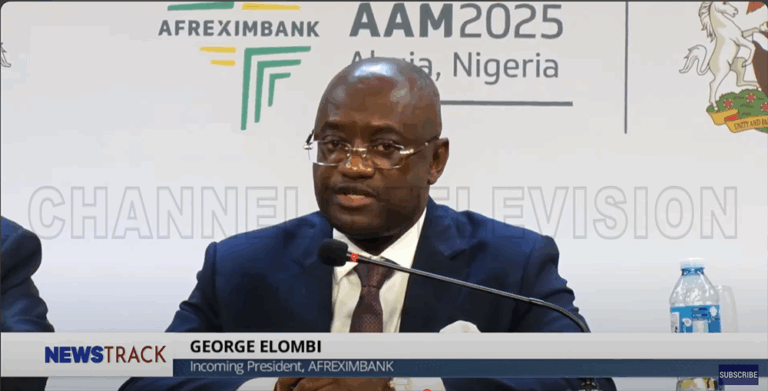
Meet Dr. George Elombi, the Cameroonian Now Heading Afreximbank and Driving Its Digital Agenda

[DIGITAL Business Africa] – Cameroonian national Dr. George Elombi was officially appointed President of the African Export–Import Bank (Afreximbank) on Saturday, June 28, 2025 in Abuja, Nigeria. His selection was one of the key decisions taken at Afreximbank’s 32nd Annual General Meeting and related events held in Abuja from June 25 to 28.

He succeeds Nigerian Benedict Oramah, who led the institution for ten years (June 2015 – September 2025), and becomes the fourth president of this pan-African development bank founded in 1993 – following Nigeria’s Christopher Edordu (1994–2005), Côte d’Ivoire’s Jean-Louis Ekra (2005–2015), and Oramah himself.

A crowning achievement for Dr. Elombi, who until now served as Afreximbank’s Executive Vice-President for Corporate Governance & Legal Services and as its Secretary-General, after nearly three decades with the institution.

“I have worked alongside remarkable colleagues and extraordinary leaders to help shape this institution’s vision, its mandate as well as its growth.  As we look to the future, I see Afreximbank as a force for industrialising Africa and for re-gaining the dignity of Africans wherever they are.  I will work to preserve this important asset,” he said immediately following his appointment.

Shareholders and his predecessor have set the ambitious goal of growing Afreximbank’s balance sheet to USD 250 billion within ten years – a bank that in its first 32 years has already mobilized over USD 250 billion across Africa and supported industries long overlooked by traditional financiers.

Strong Mandate and Deep Trust

Dr. Elombi’s commitment, loyalty and decades-long service to the bank earned him shareholders’ confidence.

“Our directors are pleased with the institution’s financial strength and the relevance of its projects. They want us to continue on this trajectory and reaffirmed their attachment to the bank’s founding principles. The many expressions of support throughout the week show these messages were fully embraced,” he added.

By choosing someone so intimately familiar with Afreximbank – who has worked in perfect synergy with his predecessor – shareholders ensured continuity at a critical juncture for the bank’s digital transformation.

A Strategic Appointment Rooted in Loyalty

Former Nigerian President Olusegun Obasanjo recounted at the opening of these meetings how Benedict Oramah was first appointed in 2015 for his loyalty to then-Presidents of the bank. “When Afreximbank was created, Egypt lobbied for its headquarters in Cairo, arguing it would never push for the presidency later. After Christopher Edordu left, Egyptians again lobbied for the post – and everyone almost agreed – until I said no,” Obasanjo explained. He recalled that when Côte d’Ivoire’s Jean-Louis Ekra was chosen, Egypt even refused him a visa, forcing him to run the bank from Abuja’s Hilton hotels for five years – “and only one person stood firm, with loyalty, dedication and total commitment: Oramah.

Similarly, Dr. Elombi’s long collaboration with Oramah – in his role as Executive Vice-President for Corporate Governance & Legal Services and Secretary-General – proved decisive.

His appointment followed a rigorous selection process initiated in January 2025, which included a global call for applications published in international media and on the Afreximbank website. Shortlisted candidates were interviewed by an international human resource executive search firm. The top candidates were presented to the Board of Directors, which recommended Dr. Elombi to the General Meeting of Shareholders for final approval.

Under the Afreximbank Charter, a president is appointed by the general meeting of shareholders upon the recommendation of the Board of Directors for a term of five years, renewable once.

A Distinguished Career

A Cameroonian national, Dr. George Elombi joined Afreximbank in 1996 as a legal officer. Over almost 30 years, he rose through the ranks:

  • Senior Legal Officer (2001–2003)
  • Chief Legal Officer (2003–2008)
  • Deputy Director, Legal Services / Executive Secretary (2008–2010)
  • Director & Executive Secretary (2010–2015)
  • Executive Vice President, Governance, Legal and Corporate Services (2015–2025)

Prior to joining Afreximbank, he lectured in law at the University of Hull (UK). He holds an LL.M and Ph.D. in Commercial Arbitration from the London School of Economics and a Bachelor of Laws from the University of Yaoundé (1989).

Dr. Elombi played a pivotal role in establishing Afreximbank group’s structure, including the formation of key subsidiaries that have expanded the Bank’s capacity to deliver on its mandate. As Chair of the Emergency Response Committee, he led the Bank’s response to the COVID-19 crisis, mobilising over $2 billion for vaccine acquisition and deployment across African and Caribbean nations. Under his supervision of the Equity Mobilisation and Investor Relations department, the Bank’s total ordinary equity mobilised amounted to USD 3.6 billion as at April 2025

About Afreximbank

The African Export-Import Bank (Afreximbank) is a pan-African multilateral financial institution dedicated to financing and promoting intra- and extra-African trade. For 30 years, Afreximbank has been deploying innovative structures to provide financing solutions that facilitate the transformation of African trade patterns and accelerate industrialization and intraregional trade, thereby supporting economic expansion in Africa.

A strong supporter of the African Continental Free Trade Area (AfCFTA) Agreement, Afreximbank launched the Pan-African Payments and Settlement System (PAPSS), which was adopted by the African Union (AU) as the payment and settlement platform to support the implementation of the AfCFTA.

In collaboration with the AfCFTA Secretariat and the AU, the Bank established a USD 10 billion Adjustment Fund to help countries effectively participate in the AfCFTA.

As of the end of December 2024, the Bank’s total assets and guarantees stood at approximately USD 40.1 billion, and shareholders’ funds stood at USD 7.2 billion.

Afreximbank is rated A by GCR International Scale, Baa1 by Moody’s, AAA by China Chengxin International Credit Rating Co., Ltd (CCXI), A- by Japan Credit Rating Agency (JCR), and BBB by Fitch. Over the years, Afreximbank has evolved into a group consisting of the Bank, its impact financing subsidiary, the Export Development Fund for Africa (EDFA), and its insurance management subsidiary, AfrexInsure (the three entities together form “the Group”). The Bank is headquartered in Cairo, Egypt.

Afreximbank and Digital Technologies in Africa

Afreximbank, the African Export-Import Bank, actively uses digital technology to boost intra-African trade and the continent’s industrialization. It has developed various digital platforms and solutions to facilitate transactions, improve access to finance, and strengthen economic integration.

A Track Record of Pioneering Digital Projects

Under the leadership of its predecessor, Afreximbank has positioned itself as a major player in the digital transformation of intra-African trade. With projects such as:

• Africa Trade Gateway (ATG)
A collaborative portal connecting trade, finance, and investment stakeholders to facilitate project co-financing. A single digital window platform for African exporters and importers, it simplifies customs and insurance procedures and integrates the Mansa solution for counterparty identity and compliance verification
Learn more → https://www.afreximbank.com/afreximbank-launches-africa-trade-gateway-a-single-window-for-digital-services/

• Pan-African Payment and Settlement System (PAPSS)
Local currency payment and settlement system for the African Continental Free Trade Area (AfCFTA), adopted by the African Union to reduce cross-border transaction costs and times.
Learn more → https://www.afreximbank.com/pan-african-payment-and-settlement-system-launched-by-president-akufo-addo-foreseeing-5-billion-annual-savings-for-africa/

Mansa
Online KYC/AML due diligence tool designed to improve transparency and accelerate the verification of customers and suppliers on the continent.
Learn more → https://www.afreximbank.com/fr/mansa-un-partenariat-strategique-gagnant/

• African Trade Exchange (ATEX)
B2B marketplace connecting African buyers and sellers, integrating payment and logistics solutions.
Learn more → https://www.afreximbank.com/afreximbank-reiterates-prioritization-of-food-security-promoting-trade-investment-and-advancing-the-african-continental-free-trade-agreement-afcfta-at-2nd-russia-africa-economic-humanit/

• Afreximbank TradeLink
A digital supply chain platform enabling seller financing based on buyer risk, without paperwork.
Learn more → https://www.portal.afreximbank.com/our-solutions/afreximbank-tradelink/

• TRADAR
A trade intelligence hub offering market data, sector analysis, and monitoring of African trade policies. Learn more → https://www.portal.afreximbank.com/our-solutions/tradar/

These platforms – ATG, PAPSS, Mansa, ATEX, etc. – aim not only to streamline intra-African trade, but also to strengthen financial inclusion and transaction traceability. Dr. Elombi, the first Cameroonian to chair a continental institution of this magnitude, will undoubtedly make history by maintaining these achievements, developing them, and bringing his vision and personal touch of innovation with pragmatism.

By Beaugas – Orain DJOYUM

Yello Tech Summit: For Ebenezer Asante, Cameroon Is MTN’s “Gateway” to West and Central Africa [Video]

[DIGITAL Business Africa] – At the conclusion of the Yello Tech Summit on June 26, 2025 in Douala – after two days of panels and exhibits – Ebenezer Asante, Senior Vice-President of Markets for MTN Group, reaffirmed Cameroon’s strategic role in the South African telecom giant’s regional expansion:

“For MTN, Cameroon is the gateway into West and Central Africa. Before we rolled out across the entire WECA region, we first tested our model here in Cameroon. It’s no coincidence that I live here today and that I’m choosing to turn this country’s successes into initiatives not only across West and Central Africa but in all MTN markets.”

Asante’s remarks underscore how MTN views Cameroon as a true “laboratory” for innovation and service rollout before continent-wide deployment.

Two Major Continental Initiatives in 2026

To leverage Cameroon’s vibrant ecosystem and share its best practices, Asante unveiled two flagship projects – born here – that will launch next year across all MTN subsidiaries:

1. Replicating the Yello Tech Summit
The two-day collaborative innovation forum – bringing together start-ups, research institutes, partners and pilot customers – will be duplicated in every MTN market. Organized locally by MTN Business Cameroon, the summit showcased digital solutions transforming SME operations. Asante explained that the goal of this expansion is to harmonize design thinking and agile experimentation to deliver regionally tailored digital services.
► Watch a Yello Tech Summit session: https://youtu.be/ujORm05ntds

2. Local-to-Pan-Africa Tech Hackathons
Each MTN operator will host an “Innovation, Technology & Digital Hackathon” on its home turf. The top three to five innovators from each national event will then compete in a continent-wide hackathon organized by MTN Group.

“I’ll also try to bring potential investors into the room for your pitches,” Asante promised in Douala. “From this competition, one or two African standout projects will emerge – and they’ll receive support both in their home market and across the MTN footprint.”


► Watch Asante’s full remarks:

Cameroon: A Hub for Experimentation and Acceleration

Since its 2000 launch, MTN Cameroon has led several “firsts,” including the country’s inaugural 3G network, the region’s first mobile-money platform (CEMAC zone), and an open innovation center. This early-adopter trajectory cements Cameroon as a talent pool and testing ground for new digital services.

With telecom operators worldwide investing heavily in cloud, AI and fintech, Asante’s call places Cameroon at the heart of MTN’s innovation industrialization strategy – particularly through:

  • Public-private partnerships accelerating proof-of-concept platforms to launch in under six months
  • Local developer training and mentoring via national, then pan-African, hackathons
  • Investor engagement at a dedicated “pitch day” tied to the continental hackathon
  • New startup incubator plans announced by MTN Cameroon in the coming months

Looking Ahead: A New Era of African Innovation

By choosing Cameroon as its digital development proving ground, MTN taps one of Africa’s most dynamic ecosystems – championed locally by Franck Gérard Kom (General Manager, Enterprise Business Unit) and Wanda Matandela (CEO, MTN Cameroon).

Performance Highlights (Q1 2025)

  • MTN Cameroon: ZAR 2,708 million revenue, +14.1 % YoY (constant currency)
  • MTN Côte d’Ivoire: ZAR 2,304 million revenue, –7.3 % YoY (constant currency)

This strong growth in Cameroon – driven by mobile-money adoption, digital services and data usage – contrasts with the contraction in Côte d’Ivoire, reflecting intense competitive and regulatory pressures there.

The upcoming 2026 initiatives – Yello Tech Summit rollouts and pan-African hackathons – will unite local tech communities and attract capital to turn ideas into viable startups.

As Ebenezer Asante makes clear, Cameroon is not just another market; it is the catalyst for MTN’s entire West and Central Africa strategy and beyond. Watch this space in 2026: the continent’s next great innovations may very well take flight from Douala.

By Beaugas Orain Djoyum

Controversial AFRINIC Election: ICANN Threatens to Withdraw Recognition, 24 Hours to Explain

[DIGITAL Business Africa] – On 25 June 2025, the Internet Corporation for Assigned Names and Numbers (ICANN) issued a formal notice to Gowtamsingh Dabee, the court-appointed liquidator of AFRINIC, the Regional Internet Registry for Africa and the Indian Ocean. ICANN’s letter, signed by CEO Kurt Erik Lindqvist, expresses “serious concern” about the conduct of AFRINIC’s board election and warns that a compliance audit may follow unless reported irregularities are swiftly remedied.

Major irregularities flagged

ICANN cites several member complaints:

  • Electronic voting registration failures: some candidates never received their online voting credentials.
  • Proxy abuses: AFRINIC’s bylaws cap proxies at five per proxy-holder for in-person voting, but 2025’s election imposed no limit-raising fears of fraudulent POAs and ballot stuffing.
  • Leak of voter lists: Numbers Resource Society (NRS) representatives circulated an “endorsement” form bearing AFRINIC’s logo, implying improper access to the official voter registry.
  • Suspension of the poll: voting resumed on 23 June but was abruptly “frozen” at 17:32 (Mauritius time) to allow investigations, with no clear timetable for reopening.

Digital Business Africa has obtained eyewitness accounts from two anonymous attendees of the canceled in-person vote, both describing an “apocalyptic” scene. Their stories, alongside ICANN’s notice, are rallying AFRINIC members to reassert control over their regional registry’s governance.

“A demonstration of organized fraud”

“We witnessed a demonstration of organized fraud engineered by NRS and its team, using a staggering volume of proxies-some genuine, many hacked,” reports one anonymous observer. Dozens of falsified POAs, mostly issued by NRS delegates absent from AFRINIC’s official database, were presented at the polling station. Only the combined pressure of TESPOT, ISPA-DRC, a local operator (Emtel), and an Indian Ocean candidate-backed by legal counsel-forced the Elections Committee to pause the vote for verification.

“Emtel uncovered a forged power of attorney”

“Emtel learned that an unrelated individual had cast its ballot using a fabricated POA, bearing a forged signature and notarized in South Africa by someone named Alexander Agyei,” explains an Emtel representative who was present at the vote.

This second testimony confirms the same modus operandi: entirely fictitious proxies certified by a dubious notarial act. Emtel’s spokesperson urges all members yet to vote online to check that no one has usurped their organization’s vote.

ICANN takes the offensive

Confronted with these serious breaches, ICANN on 25 June demanded that AFRINIC provide “complete and substantiated responses” before the Mauritius offices closed on 26 June 2025, or face a formal compliance audit. ICANN specifically demands clarification on:

  • Unauthorized use of proxies
  • Improper access to voter lists
  • Lack of transparency in suspending and resuming the vote

Among the required details: the exact status of the ballot, proxy management procedures, any third-party use of AFRINIC’s logo, and measures to restore a fair election process.

What’s next?

While awaiting the court-appointed liquidator’s reply, AFRINIC’s authority and legitimacy remain in jeopardy. Any attempt to certify results or reinstate the board without resolving these dysfunctions could prompt ICANN to withdraw recognition-jeopardizing IP address and ASN allocations for the entire African region.

Call for grassroots mobilization

In response, concerned members propose a collective action plan:

  1. National WhatsApp/Signal groups, moderated by each country’s IXP manager, to alert and inform all local AFRINIC members.
  2. Continental coordination channel among national moderators for guidance and best practices.
  3. Inclusive membership, ensuring even non-IXP members join these groups.
  4. Preferential online voting using only contacts listed in AFRINIC’s official database to curb proxy fraud.

“The lesson from this unfortunate episode is for AFRINIC members to organize and take ownership of their organization’s destiny,” stresses one anonymous participant.

Risks of non-compliance and stakes for Africa

As the RIR recognized by ICANN since 2005, AFRINIC must adhere to ICANN’s “ICP-2” principles: impartiality, independence, and equitable member treatment. The current allegations jeopardize:

  • Continued community support (criterion 2.6)
  • Fair resource allocation (2.11-2.12)
  • Status as an open, non-profit membership association (2.13)
  • Reliability of records and transparency (2.19)

If unresolved, AFRINIC risks losing member trust and ICANN recognition-threatening the vital IPv4, IPv6, and ASN resources that underpin Africa’s Internet infrastructure.

Digital Business Africa will closely monitor developments in this unprecedented governance crisis at AFRINIC, which for the first time endangers the future of Africa’s sole Regional Internet Registry.

By Digital Business Africa

Brief Timeline of AFRINIC’s Governance Crisis

Letter from Kurt Erik Lindqvis to AFRINIC, June 2025

Mark Zuckerberg Unveils Standalone Meta AI App to One Billion Users

[DIGITAL Business Africa] – Mark Zuckerberg, CEO of Meta, announced today via his official Facebook page the launch of the Meta AI App, a standalone application designed to enhance the way users interact with artificial intelligence across the Meta ecosystem.

“New Meta AI app out today! Almost a billion monthly active users use Meta AI across our apps, so we dropped a new standalone app. Check it out!” Zuckerberg wrote.

According to the Meta founder, the newly launched app represents a major step in Meta’s ambition to make artificial intelligence more personal, social, and interactive.

Your Personal AI Assistant

Zuckerberg explained that Meta AI is designed to function as a personal assistant powered by AI, with a focus on voice-driven interactions. Users can open the app and converse with it naturally, about the latest news, personal challenges, or any topic they wish to explore.

“Meta AI is designed to be your personal AI. That means it’s designed around voice conversations. You open up the app, and you can talk to it about whatever you want,” he said.

https://www.facebook.com/share/r/16BrVqpFyb/

Personalized and Evolving AI 

What sets Meta AI apart is its ability to personalize experiences over time. The app begins with a general understanding of user interests but will evolve to integrate more detailed information about the user and their close connections across Meta’s various platforms, including Facebook, Instagram, and WhatsApp.

“Over time, you’ll be able to provide Meta AI with a wealth of information about yourself and the people you care about across our apps,” Zuckerberg noted.

A Social Feed for AI Content 

Another innovative feature is the integrated social feed, showcasing how users are leveraging Meta AI creatively. Zuckerberg described it as a fun, exploratory tool that makes AI usage more communal and visible.

“We’ve also designed this social feed to help you discover various ways people are creating content with Meta AI. It’s enjoyable to explore,” he added.

Integration with Meta Devices

Beyond smartphones, the Meta AI App is set to integrate with Meta’s growing lineup of hardware, including Meta smart glasses and other AI-driven devices currently in development.

“You’ll also be able to use the app to manage your Meta glasses and other kinds of AI devices that we will be building in the future,” Zuckerberg revealed.

 A Long-Term Vision

The Meta CEO emphasized that this launch marks the beginning of a long-term journey for Meta AI, setting the foundation for how AI will interact with users on a personal and social level in the years ahead.

“Anyway, this marks the beginning of a long journey to develop this. But you know, go check it out. Let us know what you think.”

The Meta AI App is now available for download and will be gradually rolled out globally. 

By Digital Business Africa

Finnish Studio Psyon Games Launches Initiative to Combat HPV with Digital Game in Africa

[DIGITAL Business Africa] – Psyon Games, a health games studio based in Helsinki, Finland, announced on March 11, 2025, an initiative to leverage the power of digital games to raise awareness about the Human Papilloma Virus (HPV) and promote life-saving vaccinations.

The Human Papilloma Virus (HPV) is a common viral infection affecting skin and mucous membranes. There are over 100 types of HPV, some being higher risk than others. Certain types of HPV, known as high-risk types, can lead to precancerous lesions and cancers, particularly cervical cancer. Vaccination is an effective way to protect against the most dangerous types of HPV. Raising awareness about this can be done through video games.

Psyon Games is a Finnish game studio dedicated to improving people’s health behaviors through games for awareness, diagnosis, and therapy. The studio collaborates with researchers, NGOs, governments, patients, healthcare professionals, and the healthcare and life sciences industries.

The project, currently in its feasibility study phase funded by the Gates Foundation, aims to demonstrate the effectiveness of digital games in educating the public about HPV, a virus affecting over 80% of sexually active individuals. While most cases are harmless, HPV can lead to cervical cancer, a preventable disease that tragically claims the lives of women worldwide, particularly in low- and middle-income countries.

“Games have a unique ability to transform complex health challenges into engaging experiences,” said Olli Rundgren, Founder & CEO of Psyon Games. For him, “this collaboration combines global health expertise with innovative game design to tackle HPV vaccination barriers. By merging behavioral science with interactive design, we plan to create a tool that amplifies HPV vaccination awareness in ways traditional campaigns cannot.”

Psyon Games believes that the immersive and engaging nature of games, played by billions across diverse demographics, offers a powerful platform to explore health-related topics. The studio aims to develop a game-based strategy featuring interactive characters to enhance HPV vaccination campaigns, primarily focusing on Sub-Saharan Africa, a region with the highest prevalence of cervical HPV globally. The game will be available in multiple languages to ensure broad accessibility.

Creating a Vaccine Awareness Tool

The studio has a proven track record in developing impactful health games. Their previous game, “Antidote COVID-19,” created in partnership with organizations like WHO, Gavi, and Unicef Finland, was the only COVID-19-themed game approved by significant platforms during the pandemic. Academic studies have validated its ability to foster engagement and positive learning experiences.

Psyon Games asserts that game-based health awareness methods can achieve significantly higher engagement rates and longer-lasting impacts than traditional campaigns. These games can also enhance other campaign elements, such as social media reach and web traffic, providing sustained value for schools, healthcare professionals, and community health programs.

After completing the feasibility study in mid-2025, Psyon Games will seek further funding to develop and deploy the full-scale HPV awareness game. The project will be developed closely with key stakeholders, including subject matter experts, public health organizations, NGOs, governments, educators, community leaders, parents, healthcare providers, and the intended vaccination cohorts, ensuring cultural, contextual, and scientific relevance.

“Our mission is to create the most impactful vaccine awareness tool ever, increasing campaign effectiveness by 10–30 times compared to traditional methods,” Rundgren added.

Psyon Games invites new partners to join this initiative, reflecting a broader effort to address global health challenges through innovative technology and interactive experiences.

Crucial Cultural Contribution with a Cameroonian

Through Joinplay Games, a division of Noohkema Interactive Inc., Cameroonian Michel Nkuindja, who indicates he has been co-opted as a cultural consultant for this HPV Vaccine Awareness Game Initiative project, intends to play his part in the success of this initiative.

Michel Nkuindja
Michel Nkuindja

“My role will be to ensure the experience is immersive, authentic, and engaging by integrating visuals inspired by African arts and textiles, narratives rooted in oral traditions, and an inclusive linguistic approach. The goal is to create a game that effectively raises awareness about vaccination while highlighting the continent’s cultural richness,” says Michel Nkuindja.

By Digital Business Africa, Source: Psyon Games

Ray-Ban Meta x Coperni Limited Edition Glasses Debut at Paris Fashion Week for $549, Available in 15 Countries

[Digital Business Africa] – Paris Fashion Week is in full swing, and this year, the spotlight isn’t just on haute couture—it’s also on cutting-edge tech. During Coperni’s Fall Winter 2025 show, the fashion world witnessed the debut of the **Ray-Ban Meta x Coperni Limited Edition glasses**, a sleek fusion of style, design, and advanced technology.
Limited to just 3,600 pairs, these exclusive glasses feature the iconic Ray-Ban Wayfarer frames in Transparent Black with Grey Mirrored lenses and the Coperni logo subtly engraved on the arms. The design is a perfect marriage of sophistication and innovation, embodying the shared vision of both brands.

A Fashion-Tech Collaboration  

Coperni, known for its futuristic approach to fashion, themed its Fall Winter 2025 show around the concept of “digital community”. This aligns seamlessly with Meta’s mission to connect people through technology. The show was paired with a 200-person, 24-hour LAN party, blending the physical and digital worlds.
Models strutted down the runway wearing the Ray-Ban Meta x Coperni Limited Edition glasses, showcasing their hands-free recording capabilities. This feature allowed them to capture the excitement of the show in real time, highlighting how fashion and technology can coexist harmoniously.

Tech Meets Style  

The Ray-Ban Meta x Coperni Limited Edition glasses come packed with all the features of the standard Ray-Ban Meta models—and more. Since their launch, these smart glasses have evolved significantly, now offering:
  • – Shazam integration for instant music recognition.
  • – Voice-activated playback on Spotify and Amazon Music.
  • Meta AI assistance to help you remember tasks and provide real-time information.
For those in the Early Access program in the US and Canada, the glasses also offer live AI and live translation features, enabling real-time translation between English and Spanish, French, or Italian.

Price and Availability  

The Ray-Ban Meta x Coperni Limited Edition glasses will be available for purchase starting Monday, March 10, at 1 AM PDT / 9 AM CET. Priced at $549 USD, they can be purchased online through the following platforms:
  • – Meta.com: Available in the US, Canada, UK, France, Italy, Germany, Spain, and Australia.
  • – Ray-Ban and Coperni websites: Available in 15 countries, including the US, Canada, UK, Ireland, Austria, Belgium, France, Italy, Spain, Germany, Finland, Norway, Denmark, Sweden, and Australia.

Why This Collaboration Matters  

This partnership marks Meta’s first-ever collaboration with a fashion brand, signaling a bold step into the world of wearable tech. By combining Coperni’s avant-garde design with Meta’s cutting-edge technology, the Ray-Ban Meta x Coperni Limited Edition glasses are more than just an accessory—they’re a statement.
Whether you’re a tech enthusiast, a fashion aficionado, or simply someone who appreciates innovation, these glasses are designed to elevate your style and simplify your life.
By Digital Business Africa. Source: Meta

FCC Chair Criticizes EU Digital Rules and Advocates Trump-Era Policies at MWC25

[Digital Business Africa] – During his first appearance in Europe as Chairman of the Federal Communications Commission (FCC), Brendan Carr did not mince words in warning Europe. His stance echoed that of JD Vance, who had made similar remarks weeks earlier at the AI Action Summit in Paris.

During his keynote at MWC25, Brendan Carr strongly criticized the European Commission’s Digital Services Act (DSA), arguing that it poses a threat to freedom of expression.

This took place during Keynote 3, titled “Balancing Innovation and Regulation: Global Perspectives on Telecom Policy,” which featured speakers such as Henna Virkkunen, Executive Vice President of the European Commission for Technological Sovereignty, Security, and Democracy, and Jyotiraditya M. Scindia, India’s Minister of Communications.

Brendan Carr expressed concerns that the DSA’s regulatory framework could lead to excessive censorship, which he argued is incompatible with both U.S. free speech traditions and the commitments of U.S. tech companies operating in Europe.

“It’s a worry, I think, here for the people of Europe, but for US technology companies that do business here, the censorship that is potentially coming down the pipe from the DSA is something that is incompatible with both our free speech tradition in America and the commitments that these technology companies have made through diversity of opinions”, he stated.

Carr revealed that he has contacted U.S. tech companies subject to the DSA, seeking a strategy to avoid hefty fines while upholding American free speech principles.

He reaffirmed the Trump administration’s stance against protectionist regulations targeting U.S. companies, promising to ensure a level playing field. This commitment also extends to AI development, as recently emphasized by Vice President JD Vance.

“When it comes to US technology companies, if there is an urge in Europe to engage in protectionist regulation to give disparate treatment to US technology companies, the Trump administration has been clear that we’re going to speak up and defend the interests of US businesses,” declared the FCC Chairman.

On the domestic front, Carr outlined the FCC’s priorities, including deregulating the telecom sector and increasing spectrum availability. He emphasized the need to streamline state and local regulations that hinder network expansion, advocating for policies that encourage investment in new infrastructure rather than maintaining outdated networks.

Additionally, it was revealed that the FCC plans to auction off the AWS-3 spectrum, previously held by Huawei and ZTE, now deemed national security threats.

About Brendan Carr

Chairman Brendan Carr is the senior Republican at the Federal Communications Commission (FCC), having previously served as the FCC’s General Counsel. Nominated by both President Trump and President Biden, Carr has been unanimously confirmed by the Senate three times.

Described by Axios as the “FCC’s 5G crusader,” Carr has led the FCC’s efforts to modernize infrastructure rules and accelerate the deployment of high-speed networks. His reforms have cut billions in bureaucratic red tape, encouraged private sector investment in high-speed networks across the country, and reinforced U.S. global leadership in 5G.

Chairman Carr is also focused on expanding America’s skilled workforce—tower climbers and construction crews needed to build next-generation networks. His jobs initiative promotes community colleges and apprenticeships as pathways to well-paying 5G jobs. He recognizes the talent of American tower crews through a series of “5G Ready” hard hat presentations.

Chairman Carr also spearheads a groundbreaking telehealth initiative at the FCC. The Connected Care Pilot Program supports the delivery of high-quality care to low-income Americans and veterans.

The time Chairman Carr spends outside Washington helps refine his approach to the job. He regularly travels to hear directly from community members and understand how changes in federal policies could improve their lives.

Chairman Carr brings nearly 20 years of experience in both the public and private sectors in communications and tech policy. Before joining the FCC as a staffer in 2012, he worked as an attorney at Wiley Rein LLP, specializing in appellate, litigation, and telecom practices.

Previously, he clerked at the U.S. Court of Appeals for the Fourth Circuit under Judge Dennis Shedd. After earning his undergraduate degree from Georgetown University, Chairman Carr graduated magna cum laude with a Juris Doctor from the Columbus School of Law at the Catholic University of America, where he served as an editor of the Catholic University Law Review.

By Beaugas ORAIN DJOYUM, and Mobile World Live

Are You Attending the Mobile World Congress 2025 in Barcelona? Communicate with Digital Business Africa!

[DIGITAL Business Africa] – The Mobile World Congress 2025 is more than just an event—it’s a global movement shaping the future of technology and connectivity. Whether you’re a policymaker, industry leader, or innovator, MWC 2025 offers a platform to collaborate, learn, and drive meaningful change. If you’re attending, communicate effectively about your products, services, ambitions, and projects.

Digital Business Africa will be present at MWC25 to provide exceptional visibility for African stakeholders in the ICT, Telecoms, and Digital sectors and for investors, organizations, and businesses interested in Africa. Beaugas Orain DJOYUM, Publishing Director and CEO of ICT Media STRATEGIES, will lead the Digital Business Africa team at MWC.

As a leading platform for strategic communication on ICT, Telecoms, and Digital in Africa, Digital Business Africa offers a unique opportunity for businesses and organizations to showcase their innovations, expertise, and deployments at MWC25 and their actions on the international stage.

Mobile World Congress 2025: Global Tech Governance Takes Center Stage at the GSMA Ministerial ProgrammeWhy collaborate and communicate with Digital Business Africa?  


Maximum Visibility: Highlight your innovations, exhibitions, and presentations to a global audience, mainly targeting African decision-makers.
High-Quality Network: Connect with key decision-makers, professionals, and experts in Africa’s digital sector.

Targeted Communication: Leverage Digital Business Africa’s web platform, which attracts 100,000 professional visitors monthly, including decision-makers, professionals, experts, and digital enthusiasts. Additionally, 15,000 professionals receive our daily newsletter, ensuring your message reaches the right audience.

How Can Digital Business Africa Help You?

Media Coverage: Benefit from strategic coverage of your activities at MWC 2025.
Interviews and Reports: Make your voice heard through exclusive interviews and reports.
– Networking: Gain access to an influential network of digital stakeholders in Africa and beyond.

✨ Don’t miss this unique opportunity to strengthen your presence at MWC 2025 and expand your network across Africa and internationally.

Read our Media KIT

Contact Us Now!
Whether you’re a business, organization, or investor, Digital Business Africa is your partner for effective and targeted communication.

✉️ [email protected]
+237 674 61 01 68 (WhatsApp) / +237 690 80 77 81

Be part of the conversation shaping the future of the digital world. Make your voice heard and maximize your impact at MWC 2025!

See you in Barcelona!

By Digital Business Africa

Mobile World Congress 2025: Global Tech Governance Takes Center Stage at the GSMA Ministerial Programme

[DIGITAL Business Africa]​ – As the digital economy expands, the need for harmonized governance frameworks in critical areas such as cybersecurity, internet governance, and data protection has never been more urgent. These frameworks are essential for stimulating investment, protecting citizens, and empowering people worldwide. However, international cooperation and alignment remain complex and lengthy despite pressing global challenges.

The GSMA Ministerial Programme, a cornerstone of the Mobile World Congress (MWC) 2025, will address these issues. The programme starts on Monday, March 3, at the CC5 Ministerial Stage, Hall Upper Walkway, in Barcelona, Spain. Doors open at 09:30 CET, and the opening session, centered around the theme “Global Tech Governance: Rising to the Challenge,” will run from 10:00 to 11:30 CET.

The GSMA Ministerial Programme session will explore global digital policymaking’s successes, challenges, and opportunities. It will also highlight the growing importance of public-private partnerships in solving complex global issues. By bringing together policymakers, industry leaders, and experts, this session aims to foster dialogue and collaboration to advance tech governance.

Distinguished Speakers and Participants  

The session will feature an impressive lineup of global leaders and experts, including:

– John Giusti, Chief Regulatory Officer, GSMA
– Doreen Bogdan-Martin, Secretary-General, International Telecommunication Union (ITU)
– Mr. Krzysztof Gawkowski, Government Plenipotentiary for Cybersecurity, Poland; Deputy Prime Minister and Minister of Digital Affairs
– Mónica Aspe, CEO, AT&T Mexico
– Max Cuvellier Giacomelli, Head of Mobile for Development (M4D), GSMA
– Dr. Jakob Granit, Director-General, Swedish International Development Cooperation Agency (SIDA)
– Jyotiraditya M. Scindia, Minister of Communications, India
– ​Teresa Ribera, Executive Vice-President (2024-2029) for a Clean, Just, and Competitive Transition, European Commission
– Mike Fries, Co-Founder and CEO, Liberty Global
– H.E. Mr. Sherzod Shermatov, Minister of Digital Technologies, Republic of Uzbekistan
– Hon. Solly Malatsi, Minister of Communications and Digital Technologies, Republic of South Africa

These distinguished speakers will share their experiences and perspectives on the challenges and opportunities in global tech governance.

Celebrating Excellence in Digital Leadership  

The presentation of the prestigious Government Leadership GLOMO Award highlights the event. This award recognizes a government with exceptional commitment to digitalization within its national agenda. The winner will be announced and honored at the end of the session, celebrating their efforts to advance the digital economy and improve the lives of their citizens.

The GSMA Ministerial Programme 2025 promises to be a platform for thought leadership, innovation, and collaboration. It will bring together stakeholders worldwide to tackle the most pressing challenges in tech governance. If you are attending MWC25, don’t miss this opportunity to participate in the conversation that aims to shape the future of digital governance.

Digital Business Africa: Connecting Africa to the World  

Alongside the Ministerial Programme, Digital Business Africa will be present at MWC25 to provide exceptional visibility for African stakeholders in the ICT, Telecoms, and Digital sectors and for investors, organizations, and businesses interested in Africa. Beaugas Orain DJOYUM, Publishing Director and CEO of ICT Media STRATEGIES, will lead the Digital Business Africa team at MWC.

As a leading platform for strategic communication on ICT, Telecoms, and Digital in Africa, Digital Business Africa offers a unique opportunity for businesses and organizations to showcase their innovations, expertise, and deployments at MWC25 and their actions on the international stage.

Mobile World Congress 2025: Global Tech Governance Takes Center Stage at the GSMA Ministerial ProgrammeWhy collaborate and communicate with Digital Business Africa?  


Maximum Visibility: Highlight your innovations, exhibitions, and presentations to a global audience, mainly targeting African decision-makers.
High-Quality Network: Connect with key decision-makers, professionals, and experts in Africa’s digital sector.

Targeted Communication: Leverage Digital Business Africa’s web platform, which attracts 100,000 professional visitors monthly, including decision-makers, professionals, experts, and digital enthusiasts. Additionally, 15,000 professionals receive our daily newsletter, ensuring your message reaches the right audience.

Don’t miss this unique opportunity to strengthen your presence at MWC 2025 internationally and expand your network in Africa and beyond. Discover our various packages here.

Make your voice heard, and showcase your solutions and products!

The Mobile World Congress 2025 is more than just an event—it’s a global movement shaping the future of technology and connectivity. Whether you’re a policymaker, industry leader, or innovator, MWC 2025 offers a platform to collaborate, learn, and drive meaningful change. If you’re attending, communicate effectively about your products, services, ambitions, and projects. Don’t wait any longer—contact us:

Email: [email protected]  
Tel: +237 674 61 01 68 (WhatsApp) / +237 690 80 77 81  

Be part of the future of the digital world. And most importantly, make your voice heard. See you in Barcelona!

By Digital Business Africa

Why the Starlink Approval Process in Cameroon Needs to Be Accelerated

[Digital Business Africa] – On February 11, 2025, I listened to U.S. Vice President James David Vance at the Grand Palais in Paris during the AI Action Summit. His remarks sparked a reflection about the American company SpaceX, which is deploying its satellite internet solution, Starlink, in many African countries, including Cameroon. Yes, I couldn’t help but think about Cameroon. In Paris, JD Vance advocated for a liberal and optimistic vision of artificial intelligence (AI).

However, after praising American technological advancements in AI, he strongly criticized the excessive regulations imposed by some governments on U.S. companies, stating that the United States can no longer accept this.

WE ARE TROUBLED BY THE FACT THAT SOME GOVERNMENTS ARE CONSIDERING TIGHTENING SCREWS ON U.S. COMPANIES IN THEIR COUNTRIES. THE UNITED STATES CANNOT ACCEPT THIS. IT IS BAD FOR THE UNITED STATES BUT ALSO FOR YOUR COUNTRIES,” HE DECLARED.

“MANY OF OUR COMPANIES FACE ENORMOUS REGULATIONS, SUCH AS POLICING MISINFORMATION AND DISINFORMATION. FOR SMALLER BUSINESSES, THESE RULES ARE DIFFICULT TO MANAGE, WITH HIGH COSTS, FINES, AND SOMETIMES EVEN USER BLOCKADES,” EXPLAINED DONALD TRUMP’S RUNNING MATE IN THE RECENT U.S. PRESIDENTIAL ELECTION.

While his speech was primarily directed at European countries, the U.S. Vice President’s message also applies to African nations, especially those complicating the operations of American companies active in Africa. Among these companies is Elon Musk’s Starlink, a staunch supporter of Donald Trump who needs no introduction. Many African countries, such as Cameroon, Ivory Coast, the Democratic Republic of Congo, and Guinea, have asked SpaceX to halt the deployment of Starlink.

Very recently, Starlink, which had planned to launch in Cameroon in 2025, postponed its deployment to 2026. This suggests obstacles in the review process for Starlink’s application.

Re-examining Starlink Bans and Blockades


Considering the arrival of Donald Trump and his ally Elon Musk at the White House, the pivotal role Elon Musk, the head of Starlink, now plays in the Trump administration (as head of the Department of Government Efficiency, DOGE), and the assertive tone of JD Vance’s speech, I believe it is time for African countries to reconsider their stance on Starlink. They should expedite the processing of Elon Musk’s company’s application and others. This is especially crucial in a context where the United States has ended all aid and support programs for many countries, including those in Africa.

Given the Trump administration’s aggressive strategy of managing and protecting U.S. interests on the international stage, hindering the deployment of American companies is not advisable. This is even more true for a company owned by Elon Musk. His “DOGE Kids” are undoubtedly on standby, preparing to respond to governments that obstruct US companies’ operations and, by extension, their interests.

Against Internet Censorship

The U.S. Vice President’s speech undoubtedly reflects what is being prepared at the heart of the Trump administration. Moreover, it is a message to African governments that block the internet during crises or elections. Vance warned against using AI for censorship or controlling opinions.

For Africa, this means that African governments must avoid using AI to monitor or suppress dissenting opinions and should enact laws to ensure that AI tools used by governments (such as facial recognition) respect citizens’ fundamental rights.

In South Africa, for example, debates are ongoing on regulating the use of facial recognition by law enforcement to prevent abuses.

Vance emphasized the importance of creating a regulatory environment that encourages innovation rather than stifling it. African governments must balance protecting citizens (especially regarding personal data) and creating a framework conducive to innovation. Like the United States, African countries could establish “innovation zones” or “regulatory sandboxes” to allow startups and companies to test AI solutions without fear of immediate sanctions.

A “regulatory sandbox” is currently being implemented in Cameroon. In Rwanda, however, the government has already established policies favorable to emerging technologies, such as drones, by creating a flexible regulatory framework that has attracted international investments and partnerships. This is not yet the case in Cameroon, where some have recently spent days in jail for using or promoting the use of drones.

This is also a way to ask African countries to regulate multinational activities more carefully without excessive regulation. African nations could require foreign companies to comply with local laws, contribute to the local economy (e.g., through taxes or skills transfers), and protect African users’ data without hindering the operations of American companies. This already implies that states must enact personal data laws, as seen in Nigeria, Kenya, and, more recently, Cameroon.

Finally, for better international collaboration, African countries must actively participate in global forums on AI to defend their interests, share their experiences, and learn from others.

For example, African countries were notably underrepresented at the AI Action Summit in Paris. It is imperative that African nations have a more substantial presence and involvement in these international forums on the development, future, and regulation of AI and digital technologies and that they better understand and decode Vance’s message.

By Beaugas Orain DJOYUM, Publishing Director of Digital Business Africa and CEO of ICT Media STRATEGIES.

Read also:
– JD Vance Speaks Frankly at the AI Action Summit: “The United States Can No Longer Accept These Restrictions!”

JD Vance cash au sommet pour l’action sur l’IA : “Les États-Unis ne peuvent plus accepter ces restrictions !” 

– Internet: Why Cameroon and Africa Should Negotiate with Starlink, Not Reject It

Internet : Pourquoi le Cameroun et l’Afrique doivent négocier avec Starlink et non le repousser

– Starlink in Cameroon: The Ministry of Posts and Telecommunications Asks SpaceX to Suspend Its Satellite Internet Services

Starlink au Cameroun : Le Minpostel demande à SpaceX de suspendre ses services d’Internet par satellite

Wanda Matandela, the New CEO of MTN Cameroon, Presents His Ambitions to the Telecommunications Regulatory Board 

[DIGITAL Business Africa] – Outgoing CEO of MTN Cameroon, Mitwa Kaemba Ng’ambi, officially introduced her successor, Wanda Matandela, to Professor Philémon Zoo Zame, Director General of the Telecommunications Regulatory Board (TRB). The introduction took place yesterday, Monday, January 27, 2025, at the Platinum building offices of the regulator in Yaoundé.


This meeting marks a significant milestone in the leadership transition at MTN Cameroon. Wanda Matandela, a senior South African executive with extensive experience in the telecommunications sector, will officially assume the role on March 1, 2025.

During the ceremony, Mitwa Kaemba Ng’ambi highlighted the fruitful collaboration between MTN Cameroon and ART, expressing her gratitude for the years spent in Cameroon. She then handed over the floor to her successor.

For his part, Wanda Matandela expressed his commitment to advancing MTN Cameroon and enhancing its contribution to the country’s digital transformation. He emphasized the importance of improving the quality of customer services, expanding network coverage, and promoting digital inclusion.

The Director General of ART congratulated both leaders for their dedication and reaffirmed MTN Cameroon’s critical role in the country’s telecommunications sector. He also outlined key priorities for 2025, including improving the quality of service (QoS) provided by operators, rolling out 5G, and effectively implementing the three-year investment plan valued at approximately $300 million, announced last December during the visit of MTN Group CEO Ralph Mupita to Cameroon.

This leadership handover comes as MTN Cameroon celebrates its 25th anniversary. The company remains committed to building on its achievements and supporting Cameroon’s digital transition.

By Digital Business Africa