
Home Blog Page 3

Mark Zuckerberg: “It’s time to get back to our roots around free expression on Facebook and Instagram”

In a video posted on Facebook and text posted to Threads, Meta founder and CEO Mark Zuckerberg announced this 07th January 2025 sweeping changes to the company’s approach to content moderation. After years of developing ‘trust and safety’ and content moderation systems and policies, Zuckerberg now asserts that “we’ve reached a point where it’s just too many mistakes and too much censorship.” Zuckerberg has decided to return to a posture that he believes will prioritize free expression.

Specific policy changes announced include:

  • Eliminating fact-checkers in the US and replacing them with a “community notes” system similar to X (formerly Twitter);
  • “Simplifying” content policies by removing certain restrictions on topics like immigration and gender;
  • Changing enforcement approach for policy violations:
    • Focusing automated filters only on illegal and high-severity violations;
    • Requiring user reports before taking action on lower-severity violations;
    • Increasing the confidence threshold required before removing content;
    • Reintroducing civic and political content into recommendation systems on Facebook, Instagram, and Threads;
    • Relocating trust and safety and content moderation teams from California to Texas. “This will help remove the concern that biased employees are overly censoring content,” Zuckerberg wrote on Threads.

      Meta founder and CEO Mark Zuckerberg. Source

Zuckerberg says he is planning to work with President-elect Donald Trump to oppose global “censorship” pressures. He makes claims about such pressures mounting in multiple regions, including:

  • Europe’s “ever-increasing number of laws, institutionalizing censorship”;
  • Secret courts in Latin America that “that can order companies to quietly take things down”;
  • Chinese censorship.

He further claims that the only way Meta “can push back on this global trend is with the support of the US government, and that’s why it’s been so difficult over the past four years when even the US government has pushed for censorship.”

Zuckerberg’s statement was timed with the release of a post by Meta Chief Global Affairs Officer Joel Kaplan:

We want to undo the mission creep that has made our rules too restrictive and too prone to over-enforcement. We’re getting rid of a number of restrictions on topics like immigration, gender identity and gender that are the subject of frequent political discourse and debate. It’s not right that things can be said on TV or the floor of Congress, but not on our platforms.

Notably, Kaplan says the company is now deploying “AI large language models (LLMs) to provide a second opinion on some content before we take enforcement actions.”

Timed with the announcement, Kaplan also provided an “exclusive” interview with the Fox News morning program “Fox & Friends.”

Mark Zuckerberg’s Video

Below is a transcript of Zuckerberg’s remarks, followed by a transcript of the Kaplan appearance on Fox & Friends:

Mark Zuckerberg: “It’s time to get back to our roots around free expression on Facebook and Instagram”

Hey everyone. I want to talk about something important today because it’s time to get back to our roots around free expression on Facebook and Instagram. I started building social media to give people a voice. I gave a speech at Georgetown five years ago about the importance of protecting free expression, and I still believe this today, but a lot has happened over the last several years.

There’s been widespread debate about the potential harms from online content. Governments and legacy media have pushed to censor more and more. A lot of this is clearly political, but there’s also a lot of legitimately bad stuff out there. Drugs, terrorism, child exploitation. These are things that we take very seriously, and I want to make sure that we handle responsibly. So we built a lot of complex systems to moderate content, but the problem with complex systems is they make mistakes even if they accidentally censor just 1% of posts.

That’s millions of people, and we’ve reached a point where it’s just too many mistakes and too much censorship. The recent elections also feel like a cultural tipping point towards, once again, prioritizing speech. So, we’re going to get back to our roots and focus on reducing mistakes, simplifying our policies, and restoring free expression on our platforms. More specifically, here’s what we’re going to do.

First, we’re going to get rid of fact-checkers and replace them with community notes similar to X starting in the US. After Trump first got elected in 2016, the legacy media wrote nonstop about how misinformation was a threat to democracy. We tried in good faith to address those concerns without becoming the arbiters of truth, but the fact-checkers have just been too politically biased and have destroyed more trust than they’ve created, especially in the US. So, over the next couple of months, we’re going to phase in a more comprehensive community notes system.

Second, we’re going to simplify our content policies and get rid of a bunch of restrictions on topics like immigration and gender that are just out of touch with mainstream discourse. What started as a movement to be more inclusive has increasingly been used to shut down opinions and shut out people with different ideas, and it’s gone too far. So, I want to make sure that people can share their beliefs and experiences on our platforms.

Third, we’re changing how we enforce our policies to reduce the mistakes that account for the vast majority of censorship on our platforms. We used to have filters that scanned for any policy violation. Now, we’re going to focus those filters on tackling illegal and high-severity violations, and for lower-severity violations, we’re going to rely on someone reporting an issue before we take action. The problem is that the filters make mistakes, and they take down a lot of content that they shouldn’t. So, by dialing them back, we’re going to dramatically reduce the amount of censorship on our platforms. We’re also going to tune our content filters to require much higher confidence before taking down content. The reality is that this is a trade-off. It means we’re going to catch less bad stuff, but we’ll also reduce the number of innocent people’s posts and accounts that we accidentally take down.

Fourth, we’re bringing back civic content. For a while, the community asked to see less politics because it was making people stressed, so we stopped recommending these posts, but it feels like we’re in a new era now, and we’re starting to get feedback that people want to see this content again. So we’re going to start phasing this back into Facebook, Instagram, and Threads while working to keep the communities friendly and positive. Fifth, we’re going to move our trust and safety and content moderation teams out of California, and our US-based content review is going to be based in Texas. As we work to promote free expression, I think that will help us build trust to do this work in places where there is less concern about the bias of our teams.

Finally, we’re going to work with President Trump to push back on governments around the world. They’re going after American companies and pushing to censor more. The US has the strongest constitutional protections for free expression in the world. Europe has an ever-increasing number of laws, institutionalizing censorship, and making it difficult to build anything innovative there. Latin American countries have secret courts that can order companies to quietly take things down. China has censored our apps from even working in the country. The only way that we can push back on this global trend is with the support of the US government, and that’s why it’s been so difficult over the past four years when even the US government has pushed for censorship.

By going after us and other American companies, it has emboldened other governments to go even further. But now we have the opportunity to restore free expression, and I’m excited to take it. It’ll take time to get this right, and these are complex systems. They’re never going to be perfect. There’s also a lot of illegal stuff that we still need to work very hard to remove. But the bottom line is that after years of having our content moderation work focused primarily on removing content, it is time to focus on reducing mistakes, simplifying our systems, and getting back to our roots about giving people voice. I’m looking forward to this next chapter. Stay good out there, and more to come soon.

Transcript of Joel Kaplan appearance on Fox and Friends, January 7, 2025.

Lawrence Jones:

All right, buckle up. We got a Fox News alert moments ago. Meta the parent company of Facebook and Instagram announcing they are changing their policies to focus on free speech. CEO Mark Zuckerberg saying this.

Mark Zuckerberg:

We’re going to get back to our roots and focus on reducing mistakes, simplifying our policies, and restoring free expression on our platforms. More specifically, we’re going to get rid of fact-checkers and replace them with community notes similar to X starting in the US.

Ainsley Earhardt:

Wow, this is a big deal. Changes include ending its third-party fact-checking program and lifting restrictions on topics such as immigration and gender identity.

Brian Kilmeade:

Well, is there anything more important to talk about? Also, until now, meta used automated systems to scan for violations, but found they resulted in too much censorship. So from now on, they’ll focus on tackling illegal and severe violations like terrorism fraud to name a few.

Steve Doocy:

And joining us right now to name one Fox and Friends exclusive, met as Chief Global Affairs Officer, Joel Kaplan joins us live here on the couch. Joel, welcome.

Joel Kaplan:

Thanks. Great to be here on the couch on Fox and Friends.

Steve Doocy:

It’s great to have you. You here? Okay, so you are announcing these big changes as of two minutes ago. If you’re making big changes, does that mean you were doing something wrong before?

Joel Kaplan:

Look, this is a great opportunity for us to reset the balance in favor of free expression. As Mark says in that video, what we’re doing today is we’re getting back to our roots in free expression. There’s a number of changes we’re making, but if I could, and just highlight three first is, as you heard, we’re eliminating the third-party fact-checking system. Well-intentioned at the outset, but there’s just been too much political bias in what they choose to fact-check and how, so we’re just scrapping it entirely.

Brian Kilmeade:

You say “they,” what do you mean? You mean “you.”

Joel Kaplan:

The fact-checkers.

Brian Kilmeade:

You set up your, but they’re your fact-checkers, right?

Joel Kaplan:

So the idea was they’re independent, but they’ve just been too biased. And so what we’re going to do instead is adopt a system like X has of community notes. So we’re just going to rely on our own community of users to provide people more information about what they’re seeing and we think that’s going to work great.

Ainsley Earhardt:

So give us an example. If we said, if the headline is Donald Trump won the presidency, then anyone in the community can write notes underneath it.

Joel Kaplan:

Yeah, great question. So somebody can write a note and then the way it works is different people on the platform can sort of vote on that note. And if you get people who usually disagree who all say, yeah, that sounds right, then that note gets put on the post and people see it. X has been doing it for a while, we think it’s working really well, and we’re going to adopt that system.

Brian Kilmeade:

And what are the other ones you want? I know you want to go through.

Joel Kaplan:

Thank you. So the second one is about the rules that govern content on our platform. They’ve just become too restrictive over time about what people can say, including about those kind of sensitive topics that you mentioned that people want to discuss and debate. Immigration, trans issues, gender. We want to make it so that bottom line, if you can say it on tv, you can say it on the floor of Congress. You certainly ought to be able to say it on Facebook and Instagram without fear of censorship. So we’re changing those rules. And then the last thing, if I could, we’re also going to change how we enforce the rules and we’re going to make it so that there’s way less over-enforcement and way fewer mistakes that actually make up the vast majority of censorship that people experience on our platforms. So big changes all in service of getting us back to our values of free expression.

Lawrence Jones:

So Joel, I guess the big question is where are the changes coming from? Because I mean, it’s hard not to notice there’s been a change in Mark Zuckerberg. You’ve seen him as respectfully the nerdy kid, change over to the jujitsu. He’s put on some lean muscles. His viewpoints have changed, his posting content. When he does speak, he’s meeting with Trump, taking a different stance on certain things. Are these changes coming from him or from what the public is saying?

Joel Kaplan:

Well, there’s no question that the things that happen at Met are coming from Mark, but there’s also no question that there has been a change over the last four years. We saw a lot of societal and political pressure all in the direction of more content moderation, more censorship, and we’ve got a real opportunity now. We’ve got a new administration and a new president coming in who are big defenders of free expression, and that makes a difference. One of the things we’ve experienced is that when you have a US president administration that’s pushing for censorship, it just makes it open season for other governments around the world that don’t even have the protections of the First Amendment to really put pressure on US companies. We’re going to work with President Trump to push back on that kind of thing around the world.

Brian Kilmeade:

So Joel, why now? I know you said it’s a change, but did you feel restricted over the last four years and this is the first time you have, it’s in your business interests to express this quest for freedom?

Joel Kaplan:

Well, there’s no question that there’s an opportunity here with a new president taking office, as I said, who really believes in free expression. And that’s just going to give us the space to get back to those values that Mark has talked about for a long mark gave a big speech six years ago at Georgetown about free expression, about these values. Unfortunately, there’s been a lot of political and societal pressure here and around the world that have pushed away from those values. We’ve got a real opportunity to reset, get back to them, and really provide a space for how.

Ainsley Earhardt:

How was the Biden administration putting pressure on you specifically? Where they calling where they didn’t like a post? What did they say? Take it down.

Joel Kaplan:

Yeah. So Mark talked about this in a letter he sent to the House judiciary committee a few months ago that sort of outlined the way in which we got a lot of pressure around Covid in particular to take down more content, even things like humor and satire about the pandemic and about vaccines. So we did experience that kind of pressure. The decisions we made ultimately were our own. But there’s a real opportunity here with President Trump coming into office with his commitment to free expression for us to get back to those values and really provide space for people to have the kind of discourse and debate they want to have.

Brian Kilmeade:

Would you do what X did? And that is unleash independent journalists like Matt Taibbi and Bari Weiss and Michael Shellenberger onto, forensically, go through what you guys, or actually repressing, shielding, shadow banning over the last few years. Wouldn’t that be part of this cleansing process?

Joel Kaplan:

So we’ve had an opportunity to do a lot of that with the House Judiciary Committee and Chairman Jordan over the last few months and years. And he put out a really thorough report on the experience that we and other companies have had. Honestly, we’re pretty focused on the future and the opportunity we have right now with the changes we’re making today to really open up the space for debate and expression on our platform.

Lawrence Jones:

Is the idea to get out of politics. Totally. And focus on just the enterprise of the free market. People debating things, or is it for Mark Zuckerberg to become Elon Musk and be influential as well work with the next administration or a little bit of both? I don’t know.

Joel Kaplan:

Well, Mark’s always going to be Mark Zuckerberg, but I think there is a real opportunity to work with the new administration, both on free expression, but also on American leadership and technology and innovation. This is something we’ve seen President Trump is really focused on making sure that we maintain US competitiveness and leadership on technology, things like ai. Those are obviously super important to our company and our industry, and we’ll look forward to working with the new administration to advance those goals.

Steve Doocy:

And Joel, when you talk about content moderation, I think a lot of people watching right now are going, well, it sounds better if they’re not taking instructions from the federal government, the Joe Biden administration saying, Hey, this is wrong. Take that down. So people like the idea that they’re going to have a say where you can add the community notes going forward, but ultimately, is this one of the things you are doing as a company to make sure that Meta and the other social media companies aren’t regulated by Washington? The last thing you guys want.

Joel Kaplan:

Yeah. I think when it comes to expression, especially in the United States, we got a long tradition of the First Amendment and we think that the right thing is for individual users to have the ability to decide themselves what to say. Look, there’s bad stuff that people do online like they do in the real world, and we want to make sure we don’t have that. So we’re still going to be enforcing against terrorism and drug sales and child sexual exploitation things. Everybody agrees have no business being on our platform.

Ainsley Earhardt:

What about bullying all the young little girls? I remember, mark, remember he was on the Hill and he had apo…. he was kind enough to turn around and apologize to the families, but all those families have lost their kids from bullying. I have a nine-year-old, I’m starting to get concerned because eventually when she’s in high school or even after, she’ll be faced with these situations. So what do you say to those families?

Joel Kaplan:

Yeah, well, I’m a parent of two teenagers.

Ainsley Earhardt:

Gosh, you’re in it.

Joel Kaplan:

Yeah, I’m in it. So these are issues that I take really seriously and that a lot of my colleagues who are also parents at Meta and those who aren’t parents take really seriously. We got to make sure teens are protected online. We launched a few months ago a product called Teen Accounts that really puts parents in the driver’s seat and makes it so that they can see what their kids can see and do online, who can contact them. We put kids in sort of built in default settings, the most protective settings we have. And then if you’re under 16, you can’t change those settings on Instagram without your parents’ permission. We think that’s a really good innovation and something we’re hopeful. It’s an area where Congress can act.

Ainsley Earhardt:

How do we do that setting? How do the parents find that setting on the phone before they give it to their child?

Joel Kaplan:

Yeah, so we will send notifications basically to the parents to let them know that this opportunity exists and the kid can’t sign up for Facebook, or excuse me, for Instagram without being put into a teen account. And then their parent gets a notice and says, Hey, your kid’s trying to sign up and if you want to change any of the settings, you can do it here.

Brian Kilmeade:

So Joel, what you got to do is reestablish trust. I mean, people remember the Zuckerbucks into those key areas in 2020 that were deciding what candidate was going to win what state. And one of the reasons you are trying to do that is number one, making this announcement here. The other thing is changing your board to let people know maybe by the people that you’re hiring that you asked to join, that their agenda doesn’t match maybe the 2020 agenda. What have you done?

Joel Kaplan:

Well, we made a big announcement yesterday. Put three new board members on, great board members including Dana White, the president and CEO of UFC, guy’s a legend, an incredible businessman, incredible entrepreneur, marketing genius, super excited to have him. A couple other great board members with real deep business experience that we put on the board. So those are important voices. Mark has always been great about getting different perspectives so that we sort of cover the waterfront of ideas and perspectives that we want to make sure are getting fed into the process.

Lawrence Jones:

Joel, can you tell the audience and the world that this is not a temporary stance? And what I mean by that is this just because you got Donald Trump in there for four years, are you guys going to continue this after his presidency or is this just a temporary thing for the moment?

Joel Kaplan:

This is an opportunity for us to get back to the values that Mark founded the company on. This runs deep for Mark. It’s a great opportunity to rebalance and to get back to free expression.

Steve Doocy:

When you say rebalance, historically the big tech companies and social media companies have leaned to the left that is this dragging it closer to the center. I mean with Dana White, obviously a Trump ally as part of the board. Is the company becoming more central rather than leaning to one side or the other?

Joel Kaplan:

I think the way to look at it is we are a platform for all people and all ideas.

Steve Doocy:

I know, but some people don’t feel that certain and haven’t felt historically that certain social media companies were hospitable to their points of view.

Joel Kaplan:

No question. And that’s what I meant by rebalance. We want to make sure that they understand that their views are welcome and that we’re providing a space for them to come onto our platforms, engage, express themselves, engage in the important issues of the day or not in the important issues today, and just whatever it is they want to talk about and share. And so we need to make sure they feel welcome. We need to make sure we rebuild trust, and that’s a big part of what we’re doing today.

Brian Kilmeade:

So also there’s something else could be in front of the Supreme Court and that’s future of TikTok China controlled. So you’re an American company, you decide to make this announcement. How does this relate to what TikTok could possibly do?

Joel Kaplan:

So look, we like competition. We think it makes us better. I know there are concerns that Congress has expressed and that the President and Congress and the courts are working through With TikTok, we’re going to stay focused on what we’re doing and how we make our platform as open and welcoming a place as possible for all points of view.

Brian Kilmeade:

Do you think it should be banned?

Joel Kaplan:

Well, that’s something I’m going to leave to the president and the courts in Congress. We’re focused, again, we’re focused on what we can do to make our platforms the best they can be.

Brian Kilmeade:

If Elon Musk didn’t buy X and expose what he exposed and put community notes like that, do you think we’d be in? What did he in buying this and doing what he did do for the introspection that Facebook is showing right now?

Joel Kaplan:

I think Elon’s played an incredibly important role in moving the debate and getting people refocused on free expression. And that’s been really constructive and productive, and we’re just glad that we’ve got the opportunity now to make these kind of changes and to get back to our roots in free expression.

Ainsley Earhardt:

Maybe all social media companies can learn a lot from this, because y’all were the original, mark was one of the originals at least. And so y’all have had to see all the changes in what works and what doesn’t work and what Americans really want. So thank you for your honesty. Thank you for doing this for children and all your customers.

Brian Kilmeade:

Australia has banned social media up until you’re 16 years old. How do you feel about that?

Joel Kaplan:

We think the right way to do it is to trust parents. That’s what we’re doing with the teen accounts that I mentioned. And obviously we’ve got to work with governments and follow the laws that they pass, but I think there’s a better way, and that’s to put parents in charge. They know what’s best for their teens and their kids, and that’s what we’re trying to do.

Ainsley Earhardt:

What’s your biggest customer? What age group?

Joel Kaplan:

Oh, that’s a good question. I mean, we’ve got 3.2 billion people using our services, so we really have people across all ages and we want to make sure we’re serving them all and letting them express themselves in a way, especially with teens where they’re still kept safe.

Brian Kilmeade:

Did you talk to David Sacks about this? Who’s going to be coming in as the AI czar?

Joel Kaplan:

Yeah, we’ve talked to David. We’re really excited about that post. We think he’s going to do great things. He really understands the industry. He really understands crypto and AI, and we can’t wait to start working with him.

Steve Doocy:

Well, Joel, thank you very much for stopping by the couch and making a big announcement today.

Lawrence Jones:

Hopefully you’ll come back as well.

Joel Kaplan:

Absolutely. Thank you all for having me.

Brian Kilmeade:

A fair and balanced social media world. There you go. Thank you so much.

Ainsley Earhardt:

Thank you. Nice to meet you.

Source: TechPolicy.press
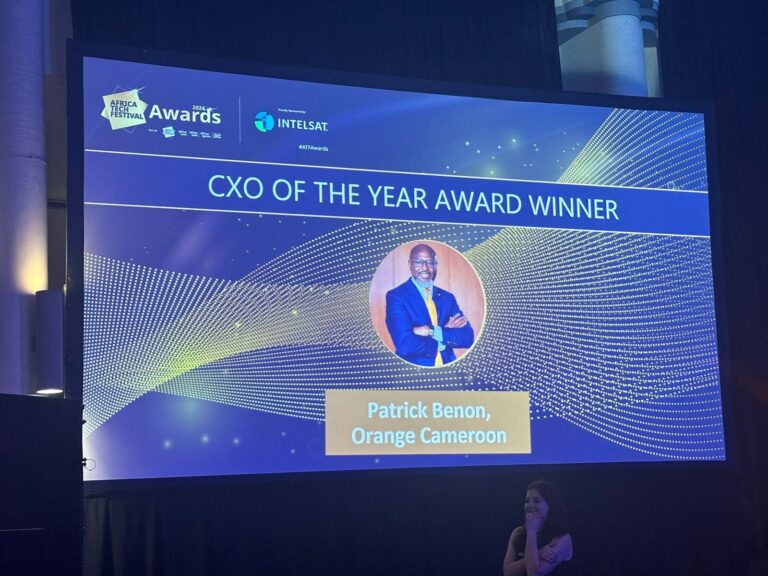
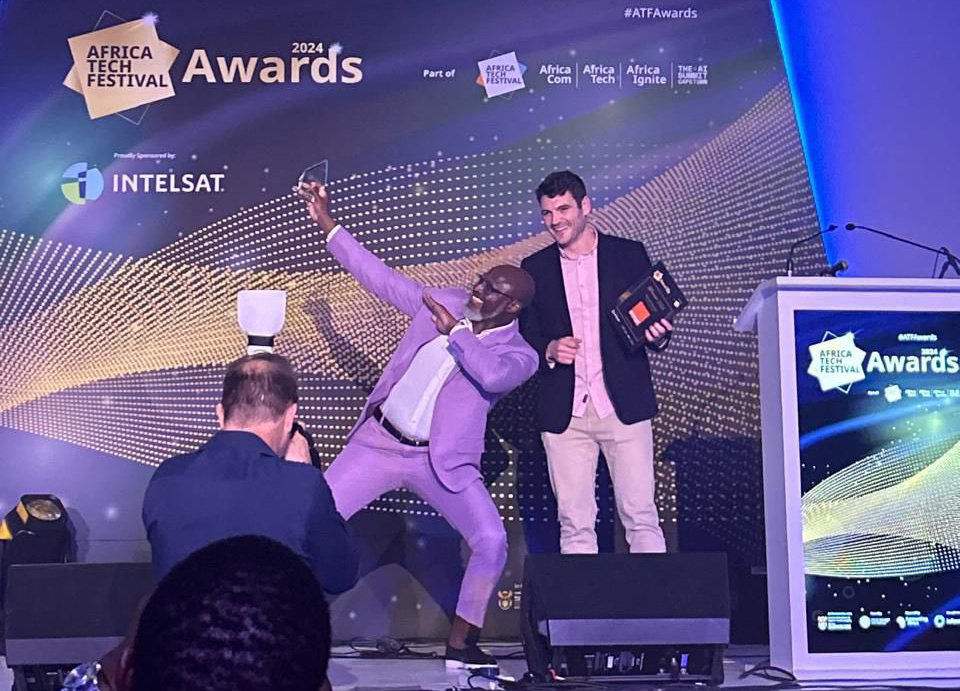
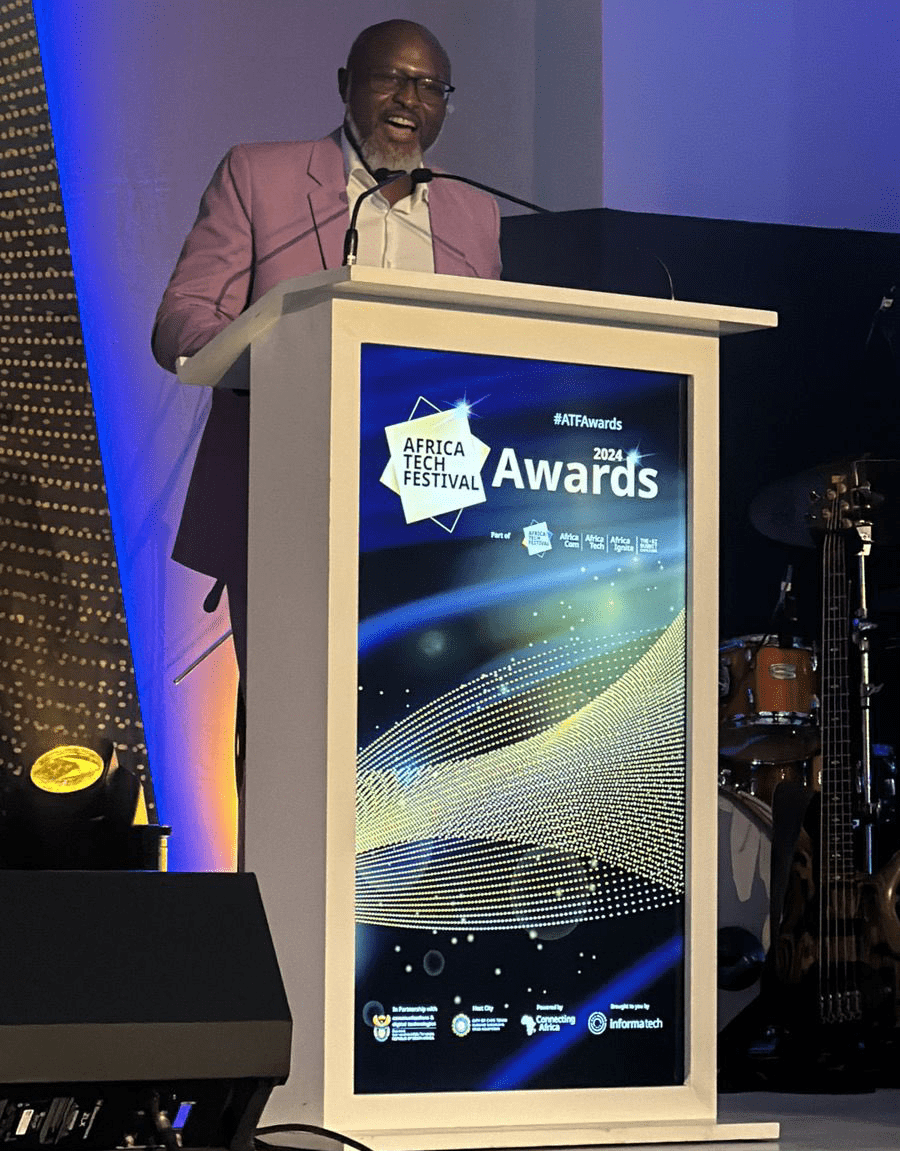
Dr. Patrick Benon wins the prestigious ‘CXO of the Year’ award at the 2024 Africa Tech Festival

[Digital Business Africa] –​ The Africa Tech Festival Awards 2024 ceremony delivered its verdict on November 13, 2024, at the Bay Hotel in Camps Bay, Cape Town, South Africa. A ceremony that celebrates technological advances and exceptional expertise across the continent.

The Africa Tech Festival Awards 2024 honored companies, individuals, and projects that have demonstrated excellence and commitment to pushing the boundaries of technology in Africa. Among the leaders and decision-makers rewarded, Dr. Patrick Benon, CEO of Orange Cameroon, was named “CXO of the year” in 2024.

The CXO of the Year 2024 Award recognizes exceptional leaders in Africa and their exceptional contributions to building teams, setting new standards, and realizing a clear vision in a rapidly changing business landscape.

Dr Patrick Benon wins this award against equally brilliant decision-makers who were shortlisted by the Africa Tech Festival Awards team led by Ciara McDonald Heffernan, the conference’s lead producer. Among them are Kapil Reesaul of Mauritius Telecom, Dejan Kastelic, Chief Technology Officer of Vodacom Group, Mary Mahuma, Chief Information Officer (CIO) for Southern Africa at PMSA, and Muhammad Ali Bhikhan, Chief Information Officer of Absa Regional Operations (ARO).

The CEO of Orange Cameroon has implemented a strategic plan called REPERES within his company. In a recent interview with Digital Business Africa, he explained that this plan clearly defined the strategic priorities carried by each of the letters of REPERES: R for Growth Relays, E for Customer Experience, P for People, E for Efficiency, R for Resilience, E for Environment/Social, and S for Security.

“THESE STRATEGIC PRIORITIES WERE BROKEN DOWN INTO STRATEGIC OBJECTIVES ACCOMPANIED BY MEASURABLE AND PRECISE PERFORMANCE INDICATORS. WE THEN CREATED PROJECT TEAMS, WHICH WE CALL INTERNALLY “BATTLES”, TO DEFINE AND IMPLEMENT ACTION PLANS THAT WILL LEAD US TO ACHIEVE THE STRATEGIC OBJECTIVES”, EXPLAINED DR PATRICK BENON.

Read Patrick Benon’s interview on his management strategies on Digital Business Africa.

The Africa Tech Festival Awards 2024 highlighted exceptional achievements. The list of companies and leaders rewarded:

2024 Africa Tech Festival Award Winners:

  • Telco of the Year: MTN Ghana
  • Innovation for Impact: WIOCC Group
  • CXO of the Year: Patrick Benon, Orange Cameroon
  • Changing Lives Award: Orange Burkina Faso
  • Female Innovator of the Year: Toyosi Odukoya, Mastercard Foundation
  • Cybersecurity Leader of the Year: Sithembile Songo, Eskom Holdings SOC Limited
  • Fintech Innovation of the Year: Ecentric Payment Systems (with partners Eastern Cape Transport Tertiary Cooperative Limited (ECTTC) & FORUS Digital)
  • Startup of the Year: SprintHive
  • Sustainability Project of the Year: Vodacom – Net Zero Project
  • Creative Visionary Award: Brighton Mhlongo
  • AIConics Award: GRIT – Gender Rights in Tech

By Digital Business Africa

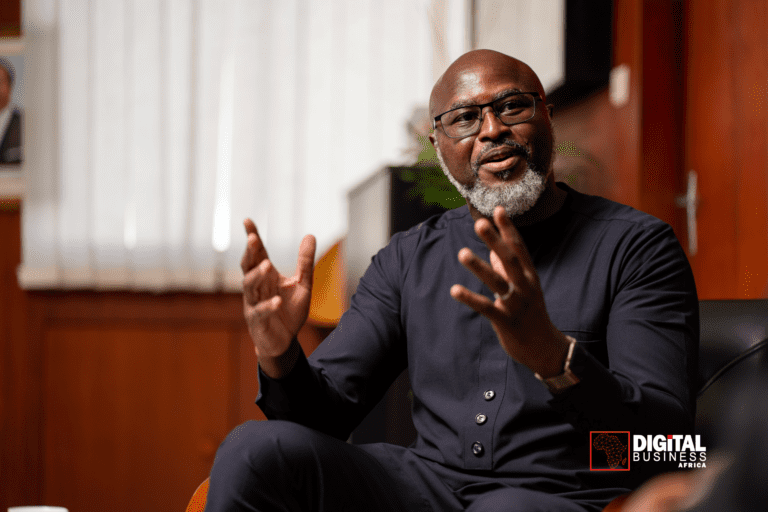
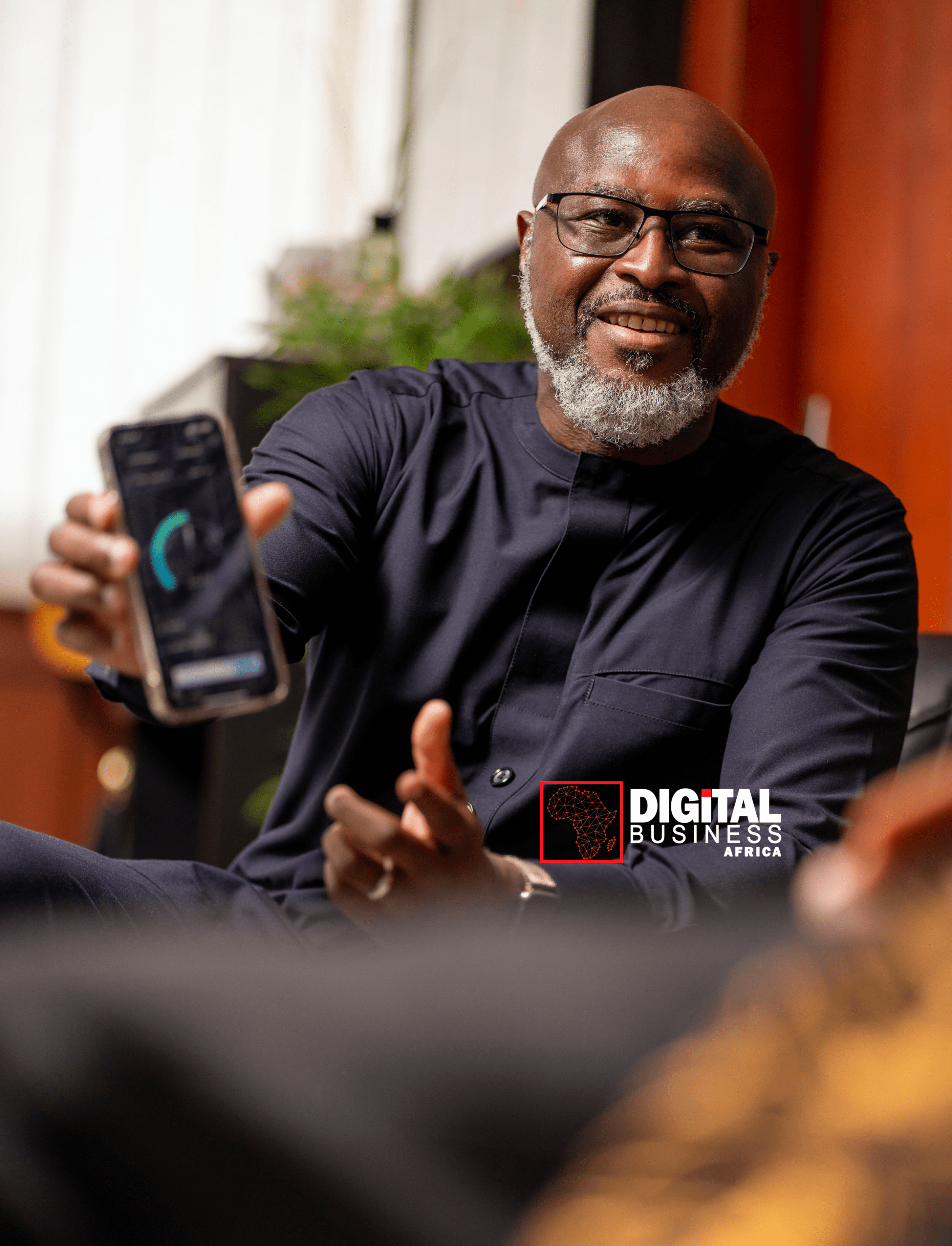
Interview with Dr. Patrick Benon, a “serial transformer” of telecommunications in Africa

[Digital Business Africa] – With 17 years of experience as CEO in West, Southern, and Central Africa, the current CEO of Orange Cameroun has been a critical player in the telecom revolution in Africa. Our editorial team spoke with this executive, who has led multiple companies through significant changes.

Digital Business Africa: Hello, Mister Patrick Benon! Thank you for this interview. You are a telecommunications engineer with a degree from the “Ecole Nationale Supérieure des Télécommunications de Paris” (Télécom Paris) and a PhD in Computer Science and Telecommunications Networks from the same prestigious school. Throughout your career, you’ve demonstrated exemplary leadership and a deep understanding of the African telecom market. How do you justify this longevity?

Dr. Patrick Benon: Indeed, I have been the CEO of major telecoms companies since 30 June 2007, when I was appointed as the head of Bénin Télécoms, the leading telecoms operator in Benin. After 4 years in this position, I joined the Orange Group, with my first job as CEO of Orange Centrafrique. Then, in December 2014, I joined Orange Botswana as CEO, where I served for almost seven years. Finally, in September 2021, I became the CEO of Orange Cameroun.

I am grateful to the Orange Group’s management, the Boards of Directors, and the countries’ authorities who have trusted me during my various appointments.

My longevity mainly comes from the good results obtained in the companies I’ve managed. These results have been quite good at an operational level (revenue increase, profitability, market share, etc.), developing local teams and supporting communities and economies in the countries where I have worked.

Digital Business Africa: The statistics on your achievements at the head of companies are impressive, especially the changes that occur as soon as you take the lead of a company. Your appointment as Head of Orange Centrafrique in 2021 came at a critical time, as the company was experiencing a drop in revenue and lagging behind its competitors. However, when you left in November 2014, the same company experienced significant growth of more than 40% and was second in the market before becoming number 1 a few years after your departure. The same thing happened at Orange Botswana, which you took over in a period of decline but experienced a growth of over 20% at your departure in 2021 before becoming number 1 on the market just a few years after you left. Something similar happened at Orange Cameroun, accelerating its growth under your management to over 18% in the first half of 2024. It is now leading the market, according to the figures published by the groups operating in Cameroon. How do you succeed at being such a serial transformer? What’s your recipe for achieving such results?

Dr. Patrick Benon: My recipe for success has always been the same: develop a robust strategy with my teams, entrust them with implementing it, and closely monitor the action plans defined together.

Three months after I arrived in Cameroon, I worked with my teams to develop our strategic plan, which we named “REPERES.” This plan clearly defined our strategic priorities, reflected in each letter in REPERES: R for growth, E for customer experience, P for people, E for efficiency, R for resilience, E for environment/social, and S for security.

These strategic priorities were broken down into objectives backed by precise, measurable performance indicators. We then formed project teams, known internally as ‘battles,’ to define and implement the action plans needed to achieve our strategic objectives. With Executive Committee members who sponsor the battles related to their activities, I attend the progress meetings of the projects, enabling quicker execution.

Above all, success must be sustainable if it is to be shared and felt by customers, staff, and communities through CSR (corporate social responsibility) programs.

Digital Business Africa: We understand that customer experience is one of your priorities. However, we can’t help but notice many complaints about your network’s quality. Could you please explain this situation to me? What solutions do you intend to implement regarding this issue?

Dr. Patrick Benon: Customer experience is our primary mission, so we treat it with utmost priority and rigor, focusing on three main areas:

  • Network quality
  • Offers and services
  • Management of Complaints

Network quality is a significant concern for our customers and our authorities. Early in October 2024, the Minister of Posts and Telecommunications visited our headquarters in Douala after the Director General of the Telecommunications Regulatory Board had also expressed serious concerns. This shows the commitment of our authorities to finding solutions to the current issues, and we have taken good note of the directives received during these visits. We will strictly fulfill the commitments we made.

We started this year with a vast and promising network modernization program. This involves renewing and reinforcing our equipment throughout Cameroon. It is an unprecedented plan in terms of scale, which will significantly improve quality.

The first phase of modernization has been completed in Yaounde and Douala. A second phase is underway, and we have noticed a significant improvement in the technical indicators measuring the network’s quality. Of course, we still have work to do so all our customers can see this improvement.

After Yaounde and Douala, we intend to modernize all the cities of Cameroon before finally moving on to rural areas. The aim will be to provide the latest technologies to all, including high-quality 4G, and then prepare to launch the 5G.

However, emphasizing that we heavily depend on infrastructure that is not under our control, especially optical fiber, is essential. The poor availability of fiber seriously undermines our efforts to modernize and improve the quality of service. This could become the weak point in Cameroon’s telecommunications sector, wiping out all efforts made.

We analyze customers’ complaints in detail about offers and services, enabling us to take proactive or corrective action. The complaints index is our leading indicator, and we take a range of actions to reduce it, thus reducing the number of complaints.

Regarding customer care, we are active on all customer contact channels: call centers, shops, robots, and digital assistance through our applications and social networks. A wide-ranging multi-channel transformation program is gradually helping us improve our customer satisfaction rate.

Digital Business Africa: You said the staff must feel and share success. How do you ensure this in concrete terms?

Dr. Patrick Benon: Managing people-related issues is paramount in our REPERES strategic plan and is a priority for people. We have made it a battle to ensure that action plans are correctly implemented, with strict measurement of performance indicators.

Entretien avec Dr Patrick BENON, « serial transformer » des télécommunications en AfriqueOur leading indicator here is the eNPS (Employee Net Promoter Score), which enables us to measure employee satisfaction and the impact of our actions. In two years, from mid-2022 to mid-2024, we went from a negative score of -25 to a positive score of +30, which shows that employee appreciation has significantly improved.

We regularly conduct employee surveys to identify areas of complaint, for which we draw up action plans. Our current plans address several areas: employee appreciation, well-being, efficiency and performance, career and development, and diversity/inclusion/diversity.

Digital Business Africa: You also mentioned the importance of CSR for your company’s positioning. Can you tell us more about your actions and how you impact communities?

Dr. Patrick Benon: CSR is essential to our company’s sustainable development, which must be in perfect harmony with the environments in which it operates. Also, as an African, I am fully aware of the contribution telecommunications operators bring to the economies of our countries and the vital role we need to play as catalysts for development.

In Cameroon, we have two main pillars through which we implement our social initiatives: the Orange Digital Center (ODC) and the Orange Cameroun Foundation.

The ODC is a training center, a high-tech startup accelerator, and a gateway to a network of high-tech talent for Africans.

In October 2021, we inaugurated our first ODC in Cameroon. Because of the vital importance of this infrastructure in supporting youth and startups in the digital sector, I have decided, together with the Orange Cameroon Executive Committee, to set up an ODC in each of Cameroon’s ten regions.

I am delighted to announce that in 2024, we are already halfway to achieving our ambition, with the opening of an ODC in five of Cameroon’s ten regions. After opening our first ODC in Douala (Littoral Region), we have opened ODCs in Yaounde (Centre Region), Buea (South-West Region), Ngaoundéré (Adamawa Region), and Dschang (West Region).

Our Foundation is very active in the support of less privileged populations and women’s empowerment. To this end, we have deployed four significant programs in Cameroon:

  • Orange Villages: building or renovating a school, a health center, and a water supply point in each selected village.
  • Digital schools: providing schools with digital equipment (tablets, servers, digital content, etc.) to introduce children to digital technology early.
  • Digital houses: providing women’s support centers with digital equipment (computers, tablets, training, etc.) to help empower women.
  • Solidarity actions to help the less privileged populations and also in the event of disasters.

Finally, we strongly support our employees’ involvement in the company’s CSR initiatives through our recently launched program, Engage for Change. This program gives employees three days of leave dedicated to the company’s CSR actions.

Digital Business Africa: As the GM of Orange Cameroun, you established Orange Money Cameroun, a subsidiary focused on mobile financial services. What motivated this strategic move?

Dr. Patrick Benon: Creating a subsidiary for mobile financial services primarily responds to the regulatory constraints that require separating this activity area.

We are very proud to have Orange Money Cameroon as the first approved payment institution in Cameroon. To achieve this, we had to transfer two activities: from the partner bank issuing electronic money to Orange Money Cameroun and from Orange Cameroun to Orange Money Cameroun. This was a particularly long and complex process, and I would like to congratulate our teams who worked on this project and who were able to make it a success.

Digital Business Africa: We recall that on 24 November 2023, you launched your Max It application in Africa in the presence of Christel Heydemann, CEO of the Orange Group. How far has it come today?

Dr. Patrick Benon: We were highly honored at Orange Cameroun to be chosen as host for the African launch of the Max It app in the presence of the CEOs of the Orange Group and Orange Africa and the Middle East.

This event began a story that will mark an important milestone in Africa’s digital development.

Today, the Max It Super application is operational in 8 African countries and has over 12 million active customers, including over 2.7 million in Cameroon.

With the Max It Cameroon app, we were able to bring together in a single application three key platforms, enabling a better customer experience:

All Orange Cameroun telecommunications services are completely digitalized in a user-friendly interface;

The section dedicated to Orange Cameroun’s financial services in a completely secure and ergonomic manner;

A marketplace that provides an innovative platform with access to e-ticketing, exclusive entertainment, information content, and services that enable daily customer support by capitalizing on partnerships across several assets like agriculture, education, health, etc.

We have succeeded in positioning our e-ticketing services, which enable access to tickets during events through an electronic pass sent to the customer’s smartphone to be validated with a QR code. This feature is now widely used in several significant events in Cameroon, including official football matches, concerts, etc.

Digital Business Africa: How do you see Africa’s future, marked by global upheaval with the advent of generative artificial intelligence, 5G, and big data?

Dr. Patrick Benon: We are at a crossroads and must ensure that Africa takes full advantage of the digital revolution. The current digital revolution represents the fourth industrial revolution, and Africans have the possibility and duty to be fully involved. The three previous revolutions took place without Africa’s involvement, leading to a significant slowback in the continent’s development on a global level.

During the first industrial revolution, which began at the end of the 18th century, the invention of the steam engine and the massive extraction of coal made it possible to mechanize production and develop railway networks. The second industrial revolution started at the end of the 19th century with the invention of the internal combustion engine and the introduction of electricity, gas, and oil, which made mass production possible. The third industrial revolution, starting at the end of the 20th century with the advent of nuclear power and electronics, will allow the miniaturization and automation of production.

The fourth revolution we are experiencing is digitalization, which has several waves, such as high-speed internet connectivity, smartphones, social networks, Big Data, and artificial intelligence. As of now, its exact scope and impact have yet to be determined. But this latest revolution will affect our lives even more than the first three.

We must realize that we are at a decisive moment in our history and give ourselves a chance to be actors in this revolution, not just spectators. Recent developments in Africa’s telecommunications sector show we can pioneer technology. Indeed, the development of mobile financial services, which is primarily an African success, demonstrates that in terms of technology, Africa can be ahead of other continents.

Artificial intelligence needs big data and high-speed connectivity to operate. The technologies you mentioned are all interconnected and will profoundly impact the productivity of individuals, companies, and countries. All stakeholders (governments, businesses, etc.) need to understand the stakes and define transformation plans that will enable Africa and Africa to benefit from them and be competitive.

Digital Business Africa: We learned you were shortlisted for the prestigious “CXO of the Year” award at the AfricaTech Festival, held annually in Cape Town, South Africa. I suppose it is already a satisfaction for you…

Dr. Patrick Benon: I am honored to be nominated for the CXO of the Year at the Africa tech festival. This award recognizes outstanding leaders in Africa and their contributions to building teams, setting new standards, and achieving a clear vision in a rapidly changing business landscape.

This prestigious award culminates in an awards ceremony that brings together the world’s technology leaders, entrepreneurs, policymakers, and media, shaping Africa’s digital transformation in one evening.

The four other shortlisted candidates have good career paths and outstanding achievements. The public’s votes and the jury’s expert judgment will decide who will be the best for this year.

Digital Business Africa: After 17 years as a manager in a hyper-competitive sector in telecommunications, what motivates you every morning?

Dr. Patrick Benon: Every morning, I commit to giving my colleagues and partners the means to think and develop relevant innovations for our countries according to the best international standards. I am an Afro-optimist, and my determination to promote the development of our people and our continent motivates me daily.

Interview by Digital Business Africa

Entretien avec Dr Patrick BENON, « serial transformer » des télécommunications en Afrique
Douala, October 21, 2024. Dr. Patrick Benon, CEO of Orange Cameroon, and Beaugas Oran DJOYUM, Editor of Digital Business Africa.

About Dr. Patrick Benon

Patrick BENON holds an engineering degree and a PhD from the École Nationale Supérieure des Télécommunications de Paris (Telecom Paris). Before returning to Africa to manage several companies, he started his career in France as a design engineer and marketing manager and then as a technology consultant for several international companies, such as Schlumberger and Accenture. He joined Benin Telecoms in 2006 and was appointed CEO in 2007. In 2011, he was appointed CEO of Orange Centrafrique until 2014. He continued his career as CEO of Orange Botswana from 2014 to 2021. He was then appointed CEO of Orange Cameroon in 2021, where he has been serving


Massive Data Breach: Millions of NSIF Records Up for Sale on Dark Web

[Digital Business Africa] ​- Several security experts note that millions of data from users of the National Social Insurance Fund (N​SI​F) of Cameroon are already available for sale on the dark web.

According to experts such as Mounir​ Nji Amine of the Enix firm, the prices of this data offered by hackers are 3,000 US dollars for all the data (25 GB) and 1,000 US dollars for partial data (10 GB).

Contacted this Friday by Digital Business Africa, the CNPS indicated that it had not yet issued an official statement on this subject. So, for the moment, there is no confirmation or denial.

Yesterday, September 12, 2024, a worrying message published on a hacking forum indicated that hackers had targeted the N​SI​F. In this message, we learned that the hacker group Space Bears had hacked a potentially lucrative data mine of the N​SI​F and demanded a ransom payment by September 22, 2024, or else this data would be sold on the dark web. They did not wait until this deadline.

However, some cybersecurity professionals say that Space Bears is just a data broker and that the real hackers who provided them with this information are elsewhere and have other copies.

According to the message published ​yesterday on this forum, this data contains:

– Information on employee and employer contributions
– Details of social security beneficiaries (over 1.5 million people)
– Financial documents and accounting reports
– Backup data and customer databases
– Huawei network structure diagrams
– Personal data of employees and citizens, including archived insurance information

The message published on the forum claims that the CNPS uses Huawei network infrastructure, although this detail cannot be independently verified. Even more alarming, the hackers appear to possess personal data of employees and citizens, including archived and potentially sensitive insurance information.

Des millions de données de la CNPS piratées et mises en vente sur le Darkweb
Le message posté par . Capture partagé hier dans un forum de piratage

This raises serious privacy concerns, as such data breaches could be exploited for identity theft, financial fraud, or even social engineering.

The NSIF is a crucial public institution responsible for managing Cameroonians’ social security benefits. If proven, this cyberattack could significantly hardship users of CNPS services.

The forum post did not specify whether data had already been compromised. However, the detailed information suggests that the hackers may have gained significant access to CNPS systems.

Urgent Actions Needed

Therefore, the NSIF should act quickly to investigate the validity of these claims and assess the extent of any potential data breach. They should also:

– Implement a robust incident response plan to contain the threat and prevent further damage.
– Investigate to determine the extent of the breach and identify vulnerabilities.
– Review and strengthen their cybersecurity measures to prevent future attacks.

According to Mounir Nji Amine of Enix, it is too late because this data is already for sale on the dark web. “Even if we were to pay the ransom, this information would already be compromised. Space Bears is a data broker, but the hackers who provided them with this information necessarily have a copy. As we often say in our country, when deploying a system, if there is a doubt about security, then there is no longer any doubt. We must immediately take precautions. Our institutions must pay more attention to prevention and anticipation,” explains this cybersecurity expert.

Importance of Data Privacy

This incident highlights the growing importance of data privacy in Africa and Cameroon for Beaugas-Orain DJOYUM, CEO of ICT Media STRATEGIES, a strategic monitoring and e-reputation firm. “The government and relevant institutions should act more quickly to implement strong regulations on personal data protection and at the same time promote cybersecurity awareness among citizens and organizations,” suggests Beaugas-Orain DJOYUM.

By Digital Business Africa

Surveillance legislation and data protection in Benin Republic

This assessment is intended to focus on governmental measures, especially :

  • Surveillance measures,
  • Situations where data relating to the private life of an individual is stored by public authorities, and Data retention by providers of electronic or telecommunication services i.e.,
  • storage of call detail records (CDRs) of telephony or internet traffic and transaction data (IPDRs).

Guarantee A :

Is processing based on clear, precise and accessible rules (legal basis) ?
The nature of the offences which may give rise to an interception or surveillance
order :

  • national independence, territorial integrity and security as well as national defense ;
  • the prevention of terrorism ;
  • the prevention of attacks on the government ;
  • the major interests of foreign policy, the execution of international commitments of Benin and the prevention of any form of foreign interference ;
  • crime and organized crime ; the fight against the proliferation of arms ;
  • economic, industrial and scientific interests.(Intelligence Services Act in Benin Republic : Article 3)

A definition of the categories of people that might be subject to surveillance :
The surveillance measures are applicable to any person on whom there are serious reasons to collect information for intelligence purposes, except members of parliaments, judges, public prosecutors and barristers during the period of their mandate or professional activity, as well as people who, by virtue of their statute are likely to know of the indictment of the President of the Republic and members of the Government.

The exemption can be lifted by the National Commission for the Control of Surveillance Measures as part of legal proceedings or under conditions of absolute necessity.
(Intelligence Services Act in Benin Republic : Article 6)

A limit on the duration of the measure :
The surveillance measures are granted for a maximum period of four (4) months by the National Commission for the Control of Surveillance Measures. They shall stop at the end of this period. They are renewable under the same conditions of form and duration.
(Intelligence Services Act in Benin Republic : Article 17)

The procedure to be followed for examining, using and storing the data obtained.
The authorization granted by the Head of Government to carry out surveillance measures is subject to the prior opinion of the National Commission for the Control of Surveillance Measures, except in the cases provided by the law.

The Commission has twenty four (24) hours to respond to requests and seventy two (72) hours if a plenary session of the committee is necessary.

After authorization by the Head of Government, and with the exception of the emergency cases listed in the law, requests for the implementation of surveillance measures are expressed in writing and are motivated by the National Intelligence Coordinator.

Each request must specify :

  • the organization for which it is presented ;
  • the purpose(s) pursued ; the reason(s) for the measure(s) ;
  • the person(s) concerned.

If the identity of the person(s) concerned is not known, s/he may be designated by his/her technical identifier(s) or his/her function(s).

Requests for renewal of an authorization also specify the reasons why this renewal is justified.
(Intelligence Services Act in Benin Republic : Article 14, 15, 16).

The precautions to be taken when communicating the data to other parties :
If a request for international mutual legal assistance, or if a national legal procedure concerns facts or acts committed by intelligence services and covered by the secrecy of national defense, the public prosecutor, under the authority of the minister in charge of justice, shall inform the National Intelligence Coordinator.

If this is the case, the Minister of justice shall inform the public prosecutor or the requesting international authority that its request cannot be granted, in whole or in part.

This decision is notified to the judicial authority at the origin of the request and shall obstruct the execution of the request or the return of performance documents.

If this is not the case, the National Intelligence Coordinator shall propose total or partial lifting of the secrecy of national defense, relating to these acts and acts committed.
(Intelligence Services Act in Benin Republic : Article 25)

The circumstances and substantive and procedural conditions relating to the access of the competent authorities :
The authorization and implementation of surveillance measures on national territory can only be decided if :

  •  they proceed from an authority legally empowered ;
  • they result from a procedure in accordance with the law ;
  • they respect the missions entrusted to the competent services ;
  •  they are justified by the threats, risks and challenges related to the fundamental interests of the Nation.
    (Intelligence Services Act in Benin Republic : Article 4)

Furthermore, please assess whether the number of persons who can access the stored data limited to what is “strictly necessary” in view of the objective pursued.
The agents committed for the collection of intelligence data must be sworn agents. They are responsible for any deliberate infringement of the individual liberties and the rights to privacy if the violations go beyond the provisions of the law.
(Intelligence Services Act in Benin Republic : Article 5)

Guarantee B :

Are necessity and proportionality with regard to the legitimate objectives pursued sufficiently demonstrated ?
In general, do the laws of your country impose such a limitation to what is “strictly necessary” ?
Rights to privacy, in particular the secrecy of correspondence, the protection of personal data and the inviolability of home, are guaranteed by law.
The public authority can only infringe on them in case of necessity, of public interest and within the limits fixed by law.
(Intelligence Services Act in Benin Republic : Article 4)

What objective criteria are used to determine which personal data of individuals are stored ?
Only information related to one of the following objectives can be retained :

  • national independence, territorial integrity and security as well as national defense ;
  • the prevention of terrorism ;
  • the prevention of attacks on the government ;
  • the major interests of foreign policy, the execution of international commitments of Benin and the prevention of any form of foreign interference ;
  • crime and organized crime ;
  • the fight against the proliferation of arms ; economic, industrial and scientific interests
    (Intelligence Services Act in Benin Republic : Article 18)

National legislation requires a relationship between the data which must be retained and a threat to public security.
(Intelligence Services Act in Benin Republic : Article 3)

National legislation does not restrict the data retention in relation to …
– Data pertaining to a particular time period and/or geographical area and/or a group of persons likely to be involved, in one way or another, in a serious crime ;
– Persons who could, for other reasons, contribute, through their data being retained, to fighting crime (i.e., witnesses).

National legislation provides for exception for persons under an obligation of professional secrecy (e.g., doctors, judges, public prosecutors, lawyers).
(Intelligence Services Act in Benin Republic : Article 3)

Guarantee C :

Is processing subject to an independent oversight mechanism ?
“Who” : Who is responsible for overseeing surveillance measures ? A judge or a different executive body, such as a control committee ? Is their sufficient impartiality and independence from the executive/government safeguarded, and if so, how ?
The National Commission for the control of surveillance measures is an independent administrative authority.

It is composed of five (5) members :-two (2) members of parliament designated for the duration of the legislature by the National Assembly, one (l) from the majority and one (l) from the minority ;- two (2) judges of the Supreme Court appointed by the President of the Supreme Court, one from the Administrative Chamber, the other from the Judicial Chamber ;

-one (1) high ranking officer, still in function or not, appointed by the Head of Government because of his knowledge and experience in intelligence and State security.In the exercise of their functions, the members of the commission do not receive instructions from any authority.(Intelligence Services Act in Benin Republic : Articles 7 and 8)

When” : At which “stage” during the lifecycle of a data processing operation does (independent) oversight in relation to surveillance measures take place ? If oversight only takes place at the third (last) stage, is such an oversight initiated ex officio ?
The authorization granted by the Head of Government to carry out surveillance measures is subject to the prior opinion of the National Commission for the Control of Surveillance Measures, except in the cases provided by the law.
(Intelligence Services Act in Benin Republic : Articles 7 and 14)

Guarantee D :

Are effective remedies available to the individual ?

National legislation provides for possibility for an individual to pursue legal remedies in order to have access to personal data relating to him or her, or to obtain the rectification or erasure of such data.
Any citizen who suspects that he or she is subject of surveillance can submit a complaint to the National Commission for control of surveillance measures which shall carry out investigations.
The Court of Appeal has jurisdiction in first instance to hear cases related the implementation of surveillances measures.

The Supreme Court has jurisdiction in last resort.
(Intelligence Services Act in Benin Republic : Articles 32 and 33)

Who should the individual address (see, Guarantee C) ?
An independent oversight committee

Does the court/control committee have access to all relevant information, including closed materials ?
The requests and authorizations are recorded in the registers kept by the National Intelligence Coordinator and accessible to the National Commission for the Control of surveillance measures whenever necessary.
(Intelligence Services Act in Benin Republic : Article 17)

Additional Information.

Law No 217- 44 of 5 February 2018 on Intelligence Services in the Republic of Benin
Constitutional Court decision No DCC 18-013 of 01 February 2018
(conformity of surveillance legislation with the Constitution)

Julien Coomlan Hounkpè,
Docteur en droit privé
hounkpej@yahoo.com

Louis-Paul Motaze: “The Cameroonian financial system has been transformed thanks to digital innovations.”

[DIGITAL Business Africa] – The Minister of Finance of Cameroon, Louis-Paul Motaze, president of the National Economic and Financial Committee (NEFC) of Cameroon, officially launched the first edition of the NEFC Scientific Days on the digital economy. It was yesterday, Thursday, April 6, 2024, at the Mont FEBE hotel in Yaoundé.

During this meeting, he indicated that one of the critical factors in the success of the digitalization of the Cameroonian financial system is improving the regulatory framework, which can unleash competition between digital financial services and other innovative financial services.

This meeting ends today and is organized by the NEFC on the theme: “Transformations of the financial system through digital innovations: challenges and perspectives for Cameroon”. The minister hopes that during this first edition of the scientific days, eminent experts from Cameroon and elsewhere will analyze the impact of regulation and the challenges of digital innovations in the financial sector, internationally and in Cameroon.

Digital Business Africa offers you the minister’s complete speech at the opening of this event.

“Madam Minister of Posts and Telecommunications;

Your Excellency, Ambassador of the United States;

Mr. Resident Representative of the United Nations Development Program (UNDP); 

Madam Representative of the United Nations Capital Development Fund (UNCDF);

Dear CEOs of Credit Establishments;

Distinguished guests,

I am honoured to address you at the opening of the first edition of the Scientific Days on the digital economy of the National Economic and Financial Committee (NEFC). During this, subjects of great importance for the future of our country will be discussed, namely the transformations of Cameroon’s financial sector in connection with digital innovations.

First, I express my gratitude to the American Cooperation for its multifaceted support to the CNEF for the success of this event. I would also like to thank the United Nations Development Fund (UNCDF) for its partnership in the organization of these scientific days.

We are very grateful for your support and hope to be able to count on your support in implementing the recommendations of this work.

Also read:

The urgency of regulations on the protection of personal data in Cameroon

Ladies and gentlemen,

The financial sector plays a crucial role in the economic development of a nation. It enables channelling savings into investment, financing businesses and households, and facilitating trade. A solid and efficient financial sector is essential for sustainable and inclusive economic growth.

Over the past two decades, the rapid growth of digital technologies has significantly contributed to creating wealth and improving the well-being of populations worldwide.

According to the World Bank, the digital economy already represents nearly 20% of global GDP and is expected to exceed 25% in less than seven years.

However, this contribution is much lower in developing countries.

In Cameroon, the digital economy’s contribution to GDP remains modest, around 5%, according to MINPOSTEL. Qualitative and quantitative inadequacies in infrastructure and human capital explain this delay.

Although we can consider that this pace is slow compared to its potential and the evolution observed in other countries, the Cameroonian financial system has gradually transformed thanks to the use of digital innovations, mainly digital payment technologies.

One of the most inclusive is Mobile Money, which allows populations to access various services, such as money transfers, online payments, microcredits and others. Of course, efforts remain to make it more inclusive in Cameroon.

Indeed, one of the significant challenges in the Cameroonian financial system is that of significantly raising the level of financial inclusion of the population, which remains low in our country.

According to a study conducted jointly by the CNEF and the World Bank, only 35% of adults have an account in a financial institution in Cameroon, compared to an average of 43% in Sub-Saharan Africa.

Additionally, only about 11% of adults have access to savings services at formal financial institutions, compared to 27% in Sub-Saharan Africa.

In this context, the transformations of the Cameroonian financial system through digital innovations represent an essential opportunity to promote financial inclusion and more vigorous economic growth.

Ladies and gentlemen,

Less than a week ago, I launched on behalf of Cameroon, in my capacity as president of the National Economic and Financial Committee, the National Financial Sector Development Strategy (SNDSF) for the period 2024-2030.

One of the critical factors for the success of this strategy is to improve the regulatory framework and unleash competition between digital financial services and other innovative financial services.


Therefore, this first edition of the scientific days comes at the right time. The eminent experts from Cameroon and elsewhere gathered here will analyze the impact and challenges of digital innovations in the financial sector, internationally and in Cameroon.


Although digital innovations present an opportunity for a more inclusive financial system, it is also worth emphasizing that they open the way to new risks, which need to be identified and prevented.

Without being exhaustive and for illustration purposes, customer data is today a gold mine. However, sharing it exposes customers to risks such as malicious attacks or hacking of bank and electronic accounts. Similarly, generalizing innovative technologies in the financial sector encourages speculative behaviour that can disrupt the economic system and lead to crises.


Finally, specific social, economic and cultural barriers limit access and familiarization with digital financial services and deepen the divide

digital to particular segments of the population, notably women and rural areas.

I do not doubt that the strong expertise mobilized during these scientific days on the digital economy will make it possible to identify these risks exhaustively, as well as the responses to be provided by the Government at the regulatory and technological levels.

Ladies and gentlemen,

This work will produce a draft “agenda for the digital transition of the Cameroonian monetary sector, in addition to the Project to Accelerate Digital Transformation in Cameroon (PATNUC) supported by the Government through the Ministry of Posts and Telecommunications.

Indeed, Cameroon does not want to be left behind. By emphasizing the digital transition of the national monetary sector, the Government wishes to align it with the radical evolution of the global financial industry.

I hope that the five workshops around which these two days of exchanges and debates will be structured will contribute to identifying measures and developing an action plan to achieve this objective.

With this, I declare open the first edition of the SCIENTIFIC DAYS ON THE DIGITAL ECONOMY OF THE NATIONAL ECONOMIC AND FINANCIAL COMMITTEE OF CAMEROON.

Thank you. »

Marc-André Loko: “Benin’s digital strategy involves a diversified portfolio of best-in-class partners”

Marc-André LOKO is the Director-General of the Agency for Information Systems and Digital (ASIN) of Benin. ASIN was formed following the merger of the four (4) implementing agencies in Benin’s digital sector, including the Agency for Digital Development (ADN), of which he has been Director-General since 2021. He now manages the implementation of flagship digital projects of the Benin Government’s Action Programme.

Marc-André Loko
Marc-André Loko

This interview is also available in French.

What is the digital development strategy in Benin? How does this strategy intend to close the digital gap that prevails in some parts of the country and how does this strategy fit into the broader African regional picture?

The digital component of the 2016 Government Action Plan was built in collaboration with Deloitte Monitor. The new 2021-2026 plan builds on this and becomes the new framework. This new strategy is to be driven by a new, more home-grown focus on the adoption of digital services. Some aspects of the plan have progressed more rapidly than others. One such area is digital payment infrastructure and platforms as well as projects related to financial inclusion (including mobile money). Building digital skills and entrepreneurship are key priorities if we are to achieve our vision for the benefit of our people. Integrating into the regional context remains a major challenge. We do not have the same frameworks. Benin has a digital code, for example, which covers all the levers needed to put digital at the service of other sectors. In Benin, the digital code was drawn up in collaboration with Jones Day and includes the legal and regulatory framework for electronic communications, cybersecurity and personal data protection. Cybersecurity is the field where there is the most collaboration at regional level and the synergy is particularly strong. In terms of digital infrastructure, the Economic Community of West African States (ECOWAS) has brought states together to work on the interconnection of fibre optic infrastructure. Similarly, in the field of education and research, the West African Education and Research Network (WACREN) promotes synergies between countries on higher education research matters. This facilitates networking among teacher-researchers, particularly in teaching. Having a common infrastructure on different themes makes it possible to link the different education and research networks of these countries in West and Central Africa. Finally, the Smart Africa organisation is financing the digital identity project, for which Benin is the project lead. This project will, among other things, put in place a framework for the interoperability of identification data in a secure way and a technical solution to enable citizens of one country to subscribe to mobile services in another country with their national identity, notably Senegal, Togo and soon Ghana.

What is the role of external partners in the development and implementation of this digital strategy? Who are the main partners? What is the role of China, which seems to be particularly active both in terms of supplying equipment and developing digital infrastructures?

The partnerships we have can be grouped into two categories. The first category are those that complement our strategic objectives through partnerships to develop expertise, as with Estonia and Rwanda with which Benin is developing a long-term approach. They provide solutions (including e-government) that we implement with technology companies such as Cybernetica and eGA. The other category consists of business-oriented partnerships that are set up through specific projects included in our project specifications. Here, Chinese companies are privileged partners because they provide financing (Huawei or CITCC via China Development Bank and China EximBank for example) and offer favourable debt payment deferrals. We also have partnerships with companies certified by Microsoft and Oracle. Feasibility studies for infrastructure projects have often been commissioned from French companies such as Sofrecom, Tactis or Horus. This allows us to benefit from French skills and know-how. As far as its digital strategy is concerned, Benin is developing a diversified portfolio of best-in-class partners. Among them are Tunisian firms such as Digitalis or MGI BFC providing economic studies on digital service adoption and economic models such as PKI. This South-South collaboration was strengthened in 2021 by the implementation of the delegated management contract of the Beninese digital infrastructure company with Sonatel, the Senegalese telecom operator and subsidiary of the Orange Group.

How are these contracts negotiated? What about the transfer of technology and skills in these contracts?

In general, China is a flexible partner in negotiations provided that one has a robust and structured negotiating team. Beyond the global challenge of competing technological standards, there is a sense that they are eager to do business, which leads them to be less rigid. Chinese companies also have local subsidiaries established in Africa with which we can dialogue directly. Huawei, for example, puts a lot of emphasis on the skills transfer dimension. This is not the case with a number of Western companies that are more rigid and come with pre-established frameworks into which we are expected to fit. As soon as the project reaches a certain size, Benin uses western auditing firms as AMOA from the definition of the project, during its execution and for evaluation after the project.

In addition, the Smart Africa alliance provides technical support, feedback and pilot project expertise and helps African countries to pool resources. The alliance appears more reactive than the African Union, which tends to be more bureaucratic. Benin, for example, shares its expertise in digital identity while Kenya shares its expertise in broadband infrastructure. Smart Africa is financed by many private actors. Each country leads a project. They can also help to finance a supervisory firm but on regional projects.

For the conclusion of contracts, Benin has a public procurement code that incorporates a collective component, requiring the presence of national consultants for the public procurement of intellectual services. It also promotes consortia between international and national partners to reduce dependence. But this practice is still marginal and not deliberate enough, especially for PPP contracts. With regard to the execution of projects, there is a strong presence of local companies to boost the local ecosystem. Issues of change management, training and skills transfer are now systematically included in project specifications and addressed in negotiations with the same degree of importance as financial issues.

There is a lot of rivalry between powers in the digital domain, especially between the United States and China. African countries are also calling for more digital sovereignty. What is your analysis?

It seems to me that the business attitude that I observe in Benin is pragmatic: the enemy of my friend is not necessarily my enemy, at least in the context of concluding contracts. These rivalries are above all driven by protectionist thinking. Companies like Huawei are bigger than the European leaders like Ericsson and Nokia combined. For us, the challenge is to accelerate our digital transformation.

We are well aware that there is a global battle around digital sovereignty issues. African countries have identified the cyber-security risks to which they are exposed and the war in Ukraine has reinforced this geopolitical reality. Concerted action on a national cybersecurity strategy/policy, particularly for critical infrastructures, is consistent thanks to the regulatory framework in place. All infrastructures and information systems with systemic risks will soon be required to undergo an audit and inspection process. There is also more collaboration between the government structures whose countries are known to be the origin of cyber-attacks, notably China.

Public financing that Benin has received is mainly for energy and roads, but opportunities could open up in the current geopolitical context. USAID funding is mainly focused on feasibility studies in the digital sector for digital applications in the health and social sectors, for example.

We have observed in other countries in the sub-region that, when it comes to matters such as the implementation of video surveillance projects, rivalries can have an impact on the choice of technological partners. In addition to the factors linked to conditions of financing and technologies used in the equipment, the dimension of digital sovereignty is becoming increasingly important. It is worth mentioning that Benin has built its first Tier 3 datacenter. This project allowed Beninese to be trained at national level, which increased our technical skills and contributed to the progress of our digital maturity. The purpose of this national datacenter is to be able to store sensitive data locally for better control of the use of our data.

But there is still a huge gap when it comes to digital sovereignty. This sovereignty requires the acceleration of projects to develop digital skills and facilitate the emergence of Beninese technological players in the digital sector. Strictly speaking, however, this sovereignty is a challenge for all countries: our data is everywhere, and data is trafficked via various international operators and carriers. We are going to invest in our local internet exchange point in order to confine as much traffic as possible to the local level and improve the quality of services to users.

Current efforts are helping to bring this concern of digital sovereignty to the forefront. In the meantime, it is necessary to choose and collaborate with actors who evolve in a legislative framework closer to our own. This will help to reduce our sources of vulnerability.

What is Benin’s position on issues related to internet governance, digital rights and data protection in international forums?

Benin will soon ratify the Malabo convention on cybersecurity and personal data protection, and the Budapest convention on cybercrime. The country is aware of these issues and participates in multilateral bodies such as the ITU and ICANN. We do not yet have a lobbying strategy to have more influence on the policy directions. The negotiation teams are not very influential. However, there is an awareness internally that we need to build a strategy and forge alliances. The Ministry of Digital Affairs coordinates these multilateral issues.

This interview is part of the Negotiating Africa’s digital partnerships: interview series led by Dr Folashade Soule with African senior policymakers, ministers, private and civic actors to shed a light on how African actors build, negotiate and manage strategic partnerships in the digital sector in a context of geopolitical rivalry. The series is part of the Negotiating Africa’s digital partnerships policy research project hosted at the Global Economic Governance programme (University of Oxford) and supported by the Centre for International Governance Innovation (CIGI).

Source: Geg.ox.ac.uk

Orange Digital Center and Coursera join forces to offer free certification courses for new digital professions

Orange Digital Center is launching a free high-level certification training program in partnership with Coursera, the world leader in online learning. This partnership aims to offer young people in Africa and the Middle East the opportunity to acquire essential skills in digital professions, free of charge and at their own pace.

The Orange Digital Center (ODC) network is driving digital inclusion for young people and entrepreneurs across Africa and the Middle East through its 16 centers. It is launching this initiative to provide young people in the region with key skills in essential areas such as artificial intelligence, cybersecurity, digital marketing, and entrepreneurship. These programs are designed to meet the needs of the ever-evolving job market, providing talented young people with the knowledge and skills they need to enter the job market, develop their careers, or encourage them to become digital entrepreneurs.

Orange Digital Centers are physical structures designed to be hubs of innovation and learning, free and open to all, providing a dynamic environment where young people can develop their skills, explore new technologies, and stimulate their creativity.

Equipped with the latest technologies, they support young people throughout the entire technological innovation and entrepreneurship value chain. This innovation ecosystem consists of several spaces that offer free learning programs: a Code School, a Solidarity FabLab, an ‘Orange Fab’ startup accelerator, and Orange Ventures Middle East and Africa, the Orange Group’s investment fund that invests in the most promising startups.

Asma Ennaifer, Executive Director CSR, Orange Digital Centers and Communication, Orange Africa and Middle East, says: “At Orange, we firmly believe that digital inclusion is the key to creating a fairer and more prosperous future for everyone. In partnership with Coursera and through the Orange Digital Centers, we are opening the doors of certification training to all our beneficiaries, offering educational and professional development opportunities to those who need them most. “

Source: Orange

Winners of Huawei ICT Competition 2023–2024 Global Final Announced

[Shenzhen, China, May 27, 2024] Today, the closing and awards ceremony of the Huawei ICT Competition 2023–2024 Global Final was held in Shenzhen. This year’s competition attracted more than 170,000 students from over 2,000 universities and colleges across more than 80 countries and regions, making it the largest offline competition since its launch. More than 160 teams, adding up to a total of 470 contestants from 49 different countries and regions, made it through national and regional competitions to reach this year’s global final, held in Shenzhen May 23-26.

After fierce competition, 19 teams from nine countries (Algeria, China, Nigeria, Pakistan, Poland, the Philippines, Tanzania, Türkiye, and Uganda) won the Grand Prizes of the Practice and Innovation Competitions. The Best Social Media Popularity Award was won by a team from Pakistan. The Green Development Award was won by two teams from China and Morocco. The Women in Tech Award was granted to four teams from Kenya, Malaysia, Morocco, and Uganda. And the TECH4ALL Digital Inclusion Award was won by two teams from China and the Philippines.

PIC1Closing and awards ceremony

Zhou Hong, President of Huawei’s Institute of Strategic Research, said: “To make sure everyone can truly enjoy the benefits of digitalization while such technologies are making radical progress, Huawei believes it is crucial to guarantee that digital technologies are accessible to all.”

Stefania Giannini, UNESCO Assistant Director-General for Education, said in a video message: “UNESCO works to uphold the basic rights and agency of every learner and teacher when using digital technology and AI, and promote an inclusive, equitable, open, and secure digital future for all. Many thanks to our partners like Huawei for their longstanding support.”

PIC2Participants and an official in one of the competitions part of the Global Final program

Ritchie Peng, President of Huawei’s ICT Strategy and Business Development Department, stated: “ICT is the cornerstone of the intelligent world. Through the Huawei ICT Competition, we aim to provide students with a global platform to compete and exchange ideas.”

On the same day, Huawei also held the ICT Accelerating Education Transformation Summit. At the summit Huawei awarded 24 instructors the title “Huawei ICT Academy Global Most Valuable Instructor.” The awards, given out for the first time this year, aims to show gratitude for the important contributions the instructors have made to talent development, and mark them as role models showing how the brightest minds can grow even brighter. These role models will help drive sustainable development of the ICT talent ecosystem.

The Huawei ICT Competition is an annual contest held by Huawei for global university and college students. Through the competition, Huawei aims to provide students with an international platform for healthy competition and exchange of ideas. Since its launch in 2015, the competition has helped students enhance their ICT knowledge and practical skills, while also increasing their ability to innovate by using new technologies and platforms. The ultimate goal is to advance technological development and facilitate digital inclusion around the world.

Source :HUAWEI

Eutelsat Ku-band capacity selected by InterSAT to extend its Pan-African satellite services to enterprise and retail customers

  • Strategic multi-year partnership for satellite capacity over Central and Eastern Africa on EUTELSAT 70B satellite
  • Complementing existing Ka-band agreement on the EUTELSAT KONNECT satellite
  • Highlighting the role of VSAT services delivered through powerful, geostationary capacity to reach remote areas

Paris, 23 May 2024 – Eutelsat Group (ISIN: FR0010221234 – Euronext Paris / London Stock Exchange: ETL) has extended its partnership with InterSAT one of Africa’s leading satellite service providers to support InterSAT’s growth in the Pan-African enterprise and retail segments.

Under the latest multi-year strategic deal, InterSAT will add Ku-Band capacity over Central and Eastern Africa on Eutelsat’s EUTELSAT 70B satellite to its current portfolio which already includes Ka-Band capacity on the EUTELSAT KONNECT satellite.

Located at the 70.5° East orbital position, EUTELSAT 70B offers a broad wide beam coverage and four high-performance fixed beams, with a high degree of on-board connectivity.

Commenting on the agreement, Hanif Kassam, Chief Executive Officer of InterSAT said: ‘We are delighted to be able to rely on Eutelsat capacity once again to support our growth ambitions in Africa, home to some of the world’s most remote and underdeveloped regions which represent a challenging environment for building terrestrial communication networks. Leveraging our VSAT service expertise and our teleport infrastructure, we are able to use satellite communication to deliver reliable and cost-effective connectivity to remote and underserved areas while assuring a high-end user experience for our customers.”

Ghassan Murat, Eutelsat’s RVP of the AMEA region added: “We are honoured to be selected by our long-standing partner, InterSAT, to accompany the further roll-out of its services in Africa. The growth of VSAT services in Africa is a testament to the potential of this technology to transform the continent’s ICT landscape, connecting more people and businesses than ever before, as well as the ongoing relevance of our powerful geostationary in-orbit assets to deliver a compelling and reliable connectivity service to the remotest areas.”

Topics

About Eutelsat Group

Eutelsat Group is a global leader in satellite communications, delivering connectivity and broadcast services worldwide. The Group was formed through the combination of the Company and OneWeb in 2023, becoming the first fully integrated GEO-LEO satellite operator with a fleet of 36 Geostationary satellites and a Low Earth Orbit (LEO) constellation of more than 600 satellites. The Group addresses the needs of customers in four key verticals of Video, where it distributes more than 6,500 television channels, and the high-growth connectivity markets of Mobile Connectivity, Fixed Connectivity, and Government Services. Eutelsat Group’s unique suite of in-orbit assets and ground infrastructure enables it to deliver integrated solutions to meet the needs of global customers. The Company is headquartered in Paris and the Eutelsat Group employs more than 1,700 people across more than 50 countries. The Group is committed to delivering safe, resilient, and environmentally sustainable connectivity to help bridge the digital divide. The Company is listed on the Euronext Paris Stock Exchange (ticker: ETL) and the London Stock Exchange (ticker: ETL)

Find out more at www.eutelsat.com

Media enquiries

Joanna Darlington
Tel. +33 674 521 531
[email protected]

Anita Baltagi
Tel. +33 643 930 178
[email protected]

Katie Dowd
Tel. +1 202 271 2209
[email protected]

Investors

Joanna Darlington
Tel. +33 674 521 531
[email protected]

Hugo Laurens Berge
Tel. +33 670 80 95 58
[email protected]

DISCLAIMER

The forward-looking statements included herein are for illustrative purposes only and are based on management’s views and assumptions as of the date of this document. Such forward-looking statements involve known and unknown risks. For illustrative purposes only, such risks include but are not limited to: risks related to the health crisis; operational risks related to satellite failures or impaired satellite performance, or failure to roll out the deployment plan as planned and within the expected timeframe; risks related to the trend in the satellite telecommunications market resulting from increased competition or technological changes affecting the market; risks related to the international dimension of the Group’s customers and activities; risks related to the adoption of international rules on frequency coordination and financial risks related, inter alia, to the financial guarantee granted to the Intergovernmental Organization’s closed pension fund, and foreign exchange risk. Eutelsat Communications expressly disclaims any obligation or undertaking to update or revise any projections, forecasts or estimates contained in this document to reflect any change in events, conditions, assumptions, or circumstances on which any such statements are based, unless so required by applicable law. The information contained in this document is not based on historical fact and should not be construed as a guarantee that the facts or data mentioned will occur. This information is based on data, assumptions and estimates that the Group considers as reasonable.

Source : PRESS RELEASE

Viasat and Azercosmos to expand satellite services across EMEA and Asia

Viasat and Azercosmos to expand satellite services across EMEA and AsiaBaku, Azerbaijan May, 23, 2024– Viasat, Inc. (NASDAQ: VSAT), a global leader in satellite communications, today announced it is working with Azercosmos to bring its highly reliable L-band satellite services to Azerbaijan and beyond.


Under the proposed partnership, Azercosmos and Viasat will provide connectivity for a range of industrial applications to help organizations operate more efficiently, sustainably, or safely – even in the most remote locations. This includes powering applications like tracking and telemetry for advanced transport systems, pipeline monitoring and control for energy companies, real-time control for utilities, and environmental or safety monitoring for mining and agriculture.

Azercosmos  provides a range of telecommunications, remote sensing, surveying, and ground station communications services in both public and private sectors. The partnership with Viasat will significantly expand its available connectivity offering, meaning it can provide more services for existing and new customers alongside connectivity from its existing satellite fleet.

It will hallmark the first time that Viasat-enabled satellite services are being offered within the Republic of Azerbaijan.

Andy Kessler, President, Viasat Enterprise and Land Mobile, said: “Our global satellite fleet powers a vast range of applications and sectors across the world, ranging from a single explorer using a satellite phone to major industrial sites managing complex supply chains across borders. To make that happen, we are proud to work with a diverse ecosystem of partners to put our customers’ vision first. Partnering with Azercosmos is an exciting step forward to bring those services to new people and organizations.”

Fuad Aslanov, the Vice-chairman of Azercosmos noted: The agile response in the satellite service market is critically important for us, and as Azercosmos, we aim to expand our reliable service to consumers and businesses globally. This landmark agreement with our strategic partner, Viasat, will solidify our collaboration in unlocking boundless possibilities in connectivity in EMEA and Asia.

About Viasat

Viasat is a global communications company that believes everyone and everything in the world can be connected. With offices in 24 countries around the world, our mission shapes how consumers, businesses, governments and militaries around the world communicate and connect. Viasat is developing the ultimate global communications network to power high-quality, reliable, secure, affordable, fast connections to positively impact people’s lives anywhere they are — on the ground, in the air or at sea, while building a sustainable future in space. In May 2023, Viasat completed its acquisition of Inmarsat, combining the teams, technologies and resources of the two companies to create a new global communications partner. Learn more at www.viasat.com, the Viasat News Room or follow us on Facebook, Instagram, LinkedIn, X or YouTube.

Source: Azercosmos

Orange launched the 14th edition of the Orange Social Venture Prize in Africa and the Middle East (OSVP)

[Digital Business Africa] – Orange has launched the 14th edition of the Orange Social Venture Prize in Africa and the Middle East (OSVP) to support social innovation and encourage entrepreneurship.

The 14th Orange Social Venture Prize in Africa and the Middle East has opened for submissions on Monday, March 18, 2024. Candidates from the 17 countries within the Orange footprint have until May 26, 2024, to submit their project on the website “https://www.orange.com/en/osvp“.

Since 2011, the OSVP prize has been rewarding innovative start-up projects that use and develop new technologies to positively impact Africa and the Middle East in fields such as education, healthcare, e-commerce, agriculture, and the environment. Through this prize, Orange, as a committed operator, aims to contribute to socio-economic development, support social and environmental innovation, and encourage entrepreneurship.

There are two stages to the competition:
A national stage to collect applications between March and May 2024 at Orange’s 17 subsidiaries, Cameroon included. When this stage is complete, a jury with representatives from Orange’s local start-up ecosystem will meet in each subsidiary to choose 3 national winners (per subsidiary) who will automatically qualify for the second phase of the competition, the international stage.

The winners will be awarded:

  • CFA F 2 000 000 for 1st place;
  • CFA F 1 000 000 for 2nd place;
  • CFA F 500 000 for 3rd place;
  • and CFA F 1 000 000 for the National Women Prize.

An international stage, where each subsidiary will be represented by the projects of its three winners and the projects competing for the Inter-National Women’s Prize. The projects will be evaluated by an evaluation committee made up of group employees. After their evaluation, 10 finalists will be chosen for the International Grand Prize and 5 for the International Women’s Prize.

A final jury made up of leading figures from the worlds of tech and entrepreneurship in Africa and the Middle East will then be responsible, in October 2024, for choosing the three winners of the International Grand Prize and the winner of the OSVP International Women’s Prize from among the 15 projects selected by Orange Group employees.

The winners will be awarded:

  • 25,000 (CFA F 16,000,000) for the 1st prize-winner;
  • €15,000 (CFA F 9,000,000) for the 2nd prize-winner;
  • €10,000 (CFA F 6,000,000) for the 3rd prize-winner;
  • €20,000 (CFA F 13,000,000) for the International Women’s Prize winner.

Since the launch of OSVP in 2011, Orange has received more than 13,000 applications, is proud to have awarded around €700,000 in prize money to over fifty winners, and has provided capacity-building support to around one hundred entrepreneurs. In addition to financial support, the OSVP winners will receive support from Orange Digital Centers in their respective countries.

The application deadline for POESAM is Sunday, May 26, 2024.

About Orange Middle East and Africa (OMEA): 

Orange is present in 18 countries in Africa and the Middle East and had 149 million customers as of December 31, 2023. With 7.1 billion euros of revenues in 2023, Orange MEA is the first growth area in the Orange group. Orange Money, its flagship mobile-based money transfer and financial services offer, is available in 17 countries and has more than 90 million customers. Orange, a multi-services operator and key partner in digital transformation provides its expertise to support the development of new digital services in Africa and the Middle East.

About Orange Digital Centers :

The Orange Digital Centers are a real crossroads of opportunities, bringing together in the same space a School of Code, a Solidarity FabLab, a digital manufacturing workshop that enables projects to be prototyped and learn by doing, an Orange Fab, a start-up accelerator that supports young start-ups and enables them to develop national and international business partnerships with one or more Group entities, and Orange Ventures Africa & Middle East, a €50 million investment fund that finances innovative start-ups.

Press Contacts: Orange Cameroon : 
Stephane MOUKOURI: [email protected]; +237 699949183

Erika Wilson: [email protected]; +237 699949754

Source: Orange Cameroun, Douala, May 13, 2024


From April 24 to May 23, 2024, Orange Cameroon is in the “winning Data” mood

#111*0# is the code that must be dialled to have a chance to benefit from one of the many prizes that Orange Cameroun offers to its loyal customers. For one month (from April 24 to May 23, 2024) Orange Cameroun subscribers are encouraged to subscribe to their voice and data bundles on Best deal or through the Max it application, and thus, try their chance of winning 2 million CFAF to be shared every day, giant Smart TVs, communication credit and Data or even 10,000 CFAF in cash every five minutes.

Since April 24, 2024, each Orange customer subscribes to Best deal and receives their share of generosity from Orange Cameroun. In this outpouring of appreciation towards its subscribers, the operator has launched a new promotional campaign entitled “The winning Data”. Running from April 24 to May 23, 2024, this initiative aims to celebrate customers by offering them the chance to win a range of attractive prizes. Field caravans are deployed throughout the country, to celebrate Orange Cameroon customers and above all to give each customer the opportunity to win one of the many prizes.

Among the rewards are millions of CFA francs to share every day, smart TVs, call bonuses, and data packages, as well as other surprise prizes. These sumptuous lots demonstrate Orange Cameroon’s desire to satisfy its customers and express its gratitude to them for their renewed trust daily.

To claim these prizes, the procedure is simple. Simply renew your usual Best Deal package by dialing the USSD code #111*0# or via the MAX it mobile application. MAX it, which is Orange Cameroon’s “super-app”, which brings together in a single universe telecom service, Orange Money payment solutions and a wide range of digital content, thus offering users a unique and practical experience.

Apart from the multiple prizes to be won, the campaign encourages subscribers to opt for the Best Deal plan, offering them more mobile data and call bonuses at a lower cost. This very generous package is part of Orange Cameroon’s strategy aimed at offering competitive offers adapted to the evolving needs of its customers.

This initiative demonstrates the commitment of Orange Cameroon, the telephony leader in Cameroon, to its customers, thus rewarding their loyalty with substantial prizes and advantageous offers. By celebrating its subscribers in this way, the operator strengthens its brand image and its status as a company concerned with the well-being of its user base.

Source: Orange Cameroun

SES to acquire Intelsat in compelling transaction focused on the future

HQ
SES to acquire Intelsat in compelling transaction focused on the future
Share
  • Value accretive transaction underpinned by €2.4 billion (NPV) of readily executable synergies.
  • Creating a stronger multi-orbit operator with ~60% of revenue in high growth segments.
  • Enhances competitive offerings to deliver customer value through segment-relevant solutions.  
  • Expanded cash flows, profitable growth outlook, & strong balance sheet drive total shareholder return.

Luxembourg and McLean, VA, 30 April 2024 — SES S.A. (“SES”) and Intelsat S.A. (“Intelsat”) announce an agreement for SES to acquire Intelsat through the purchase of 100% of the equity of Intelsat Holdings S.a.r.l. for a cash consideration of $3.1 billion (€2.8 billion) and certain contingent value rights. The combination will create a stronger multi-orbit operator with greater coverage, improved resiliency, expanded suite of solutions, enhanced resources to profitably invest in innovation, and benefit from the collective talent, expertise, and track record of both companies.

The combination will deliver greater value for customers and partners, as well as providing a compelling alternative in the new era of growth, innovation, and competition for the satellite communications industry.

The transaction, which is subject to relevant regulatory clearances/filings and customary provisions concerning cooperation and measures in seeking such regulatory clearances, which are expected to be received during the second half of 2025, is fully supportive of SES’s financial policy and is underpinned by expected total synergies equivalent to 85% of the total equity value of the transaction. The transaction has been unanimously approved by the Board of Directors of both companies and Intelsat shareholders holding approximately 73% of the common shares have entered into customary support agreements requiring them to vote in favour of the transaction.

Transaction highlights
•    Delivers €2.4 billion (NPV) of synergies (85% of equity consideration) with 70% executed within 3 years after closing.
•    Expands multi-orbit satellite-based capabilities, spectrum portfolio, and global ground network to serve customers.
•    Increases revenue in high demand and growing Networks segments representing ~60% of expanded revenue base.
•    Combines complementary investment in space, ground, and network innovation to unlock future value and opportunity.
•    Brings together a wealth of collective talent, expertise, engineering knowledge, and go-to-market capabilities.
•    Company( ) will benefit from gross backlog of €9 billion, revenue of €3.8 billion, and Adjusted EBITDA of €1.8 billion.
•    Medium-term Adjusted EBITDA growth driving future free cash flow (FCF) generation outlook.
•    Commitment to investment grade metrics with net leverage below 3 times within 12-18 months after closing.
•    Commitment to annual dividend of €0.50 per A-share with expanded FCF base supporting potential for future increases.

Adel Al-Saleh, CEO of SES, commented: “This important, transformational agreement strengthens our business, enhances our ability to deliver world-class customer solutions, and generates significant value for our shareholders in a value accretive acquisition which is underpinned by sizeable and readily executable synergies.

In a fast-moving and competitive satellite communication industry, this transaction expands our multi-orbit space network, spectrum portfolio, ground infrastructure around the world, go-to-market capabilities, managed service solutions, and financial profile. I am excited by the opportunity to bring together our two companies and augment SES’s own knowledge base with the added experience, expertise, and customer focus of the Intelsat colleagues.

Going forward, customers will benefit from a more competitive portfolio of solutions with end-to-end offerings in valuable Government and Mobility segments, combined with value-added, efficient, and reliable offerings for Fixed Data and Media customers. This combination is also positive for our supply chain partners and the industry in creating new opportunities as satellite-based solutions become an increasingly integral part of the wider communications ecosystem.

Our expanded business will deliver sustained EBITDA growth and strong cash generation, in turn supporting incremental profitable investment in capabilities and solutions to fulfil rapidly expanding and evolving customer demand while also delivering sustained returns to shareholders.”

David Wajsgras, CEO of Intelsat, commented: “Over the past two years, the Intelsat team has executed a remarkable strategic reset. We have reversed a 10-year negative trend to return to growth, established a new and game-changing technology roadmap, and focused on productivity and execution to deliver competitive capabilities. The team today is providing our customers with network performance at five 9s and is more dedicated than ever to customer engagement and delivering on our commitments. This strategic pivot sets the foundation for Intelsat’s next chapter.

By combining our financial strength and world-class team with that of SES, we create a more competitive, growth-oriented solutions provider in an industry going through disruptive change. The combined company will be positioned to meet customers’ needs around the world and exceed their expectations.”

All financial information in this press release is stated using a foreign exchange (FX) rate of €1: $1.09. Pro forma (combined) revenue and gross backlog is adjusted to eliminate intercompany transactions. Pro forma leverage is after acquisition costs including related fees. The financial outlook assumes nominal satellite launch schedule and nominal satellite health status. Net Present Value (NPV) of expected synergies includes expected realisation costs. Further information regarding the financial information presented is provided below.

Overview of the transaction

On closing of the transaction (subject to receipt of relevant regulatory clearances and other relevant requirements expected during the second half of 2025), SES will pay $3.1 billion (€2.8 billion) to acquire 100% of the equity of Intelsat Holdings S.a.r.l. in a transaction which implies an Enterprise Value of $5.0 billion (€4.6 billion). The transaction will be financed from existing cash and equivalents (which stood at €2.4 billion on 31 March 2024) and the issuance of new debt, including hybrid bonds. Additionally, SES will issue contingent value rights in respect of a portion of any potential future monetisation of the combined collective usage rights for up to 100 MHz of C-band spectrum.

Prior to closing, both company’s existing management teams will maintain their focus on executing against their respective near-term business and financial objectives, as well as closing of the transaction.

The combined SES will continue to be headquartered and domiciled in Luxembourg, while maintaining significant presence in the U.S., notably in the greater Washington, D.C. area.

Highly accretive acquisition

The transaction will be free cash flow accretive to SES from Year 1 and brings together two trusted operators with a combined gross contract backlog of €9 billion, growth-oriented portfolios concentrated on Networks segments with expanding demand, shared vision of delivering seamless end-to-end customer solutions, and complementary investment in innovation, while also sharing strong balance sheet metrics and long-term cash generation fundamentals.

By integrating the two companies, SES expects to deliver synergies with a total net present value (NPV) of €2.4 billion (after approximately €155 million of estimated realisation costs), representing an annual run rate of €370 million of which approximately 70% is anticipated to be executed within 3 years after closing of the transaction. The NPV of the synergies is equivalent to 85% of the total equity value of the transaction, while opportunities to realise further synergies will be explored before and after closing.

Most of the synergies are expected to be executed from the combination of selling, general, and administrative savings as well as optimisation of third-party capacity costs and future efficiencies in procurement. The remaining synergies will be captured from optimising the combined satellite fleets and ground infrastructure with the process expected to start soon after closing.

Creating a stronger multi-orbit operator in the new market landscape

Bringing together these two companies, with the associated synergies, will create a stronger multi-orbit operator better able to compete in a fast-moving satellite communications landscape and respond to the evolution of competing communications technologies.

With a combined fleet of more than 100 Geostationary Earth Orbit (GEO) and 26 Medium Earth Orbit (MEO) satellites, the combined SES will benefit from enhanced coverage, greater network resiliency, complementary spectrum (C-, Ku-, Ka-, Military Ka-, X-band, and Ultra High Frequency) rights, and improved service delivery utilising an expanded network of ground segment assets.

By end-2026, 8 new GEO (including 6 software-defined) satellites and 7 new MEO (O3b mPOWER) satellites are expected to be launched adding further redundancy and additional growth capacity.

On a pro forma basis, Government, Mobility, and Fixed Data segments with expanding customer demand for reliable, high-performance connectivity solutions anywhere on land, at sea, or in the air will represent around 60% of SES’s total expanded revenue base of €3.8 billion, underpinning the group’s orientation to valuable growth segments.

The integrated company will have a stronger financial profile compared with the standalone SES, with combined gross backlog of €9 billion (on 31 December 2023) underpinning future cash flow visibility, expected Adjusted EBITDA of €1.8 billion (year ended 31 December 2024) demonstrating robust profitability, and expected Adjusted EBITDA less CapEx of €0.8 billion (year ended 31 December 2024) supporting recurring cash generation fundamentals.

In turn, the stronger financial profile enhances the ability to better invest in future network infrastructure, customer solutions, and future use-cases and/or business diversification opportunities with a better risk profile, than could be done by the two companies on a standalone basis.

Strengthening competitive positioning with enhanced customer solutions 

With the creation of a stronger multi-orbit operator, customers across Government, Mobility, Fixed Data, and Media segments will benefit from an expanded set of capabilities and solutions which will enable them to expand their network reach, add further resiliency, improve productivity across their operations, and bring world-class experiences to their end-users.

The combined company will be able to better meet growing Government demand for secure, reliable, and high-performance connectivity for a wide range of mission-critical applications. Customers will benefit from the integrated, multi-orbit solutions of both companies and their expertise in delivering trusted services for some of the most demanding government agencies and missions around the world.

In Mobility, customers will be better served from bringing together the two companies’ complementary offerings, notably Intelsat’s commercial aviation division which today is serving nearly 3,000 connected aircraft, and SES’s maritime business which includes supporting five major cruise line operators via fully managed, multi-orbit connectivity agreements. The combination will also support the evolving needs of channel partners across the segments.

In Fixed Data, customers will be able to take advantage of the combined company’s expanded multi-orbit network coverage, complementary innovations in software-defined delivery, and competitive offerings capable of seamless integration with cloud and 5G applications. Both companies have a proven record serving the requirements of major telecommunications companies, mobile network operators and cloud service providers in this growth segment.

In Media, the transactions brings together complementary capabilities for customers including pay-TV operators, free-to-air/free-to-view platforms, public and private broadcasters, and sports & events brands who will have access to global audience reach with improved redundancy features via a competitive range of broadcast solutions, plus additional value-added services.

Building sustained total shareholder return 

Based on the 2024 financial outlook, the combined company is expected to generate approximately €3.8 billion in annual revenue (after adjusting for intercompany eliminations) and is expected to deliver low- to mid-single digit average annual growth over the medium-term. Growth will be driven by the combination of high growth Government, Mobility, and Fixed Data businesses, anchored by a Media business with solid cash generation fundamentals, despite contracting capacity demand in mature markets due to expansion of terrestrial broadband networks and changing consumer viewing habits against which the combined company will be better positioned to compete.

Including the benefit of OpEx synergies, 2024 pro forma Adjusted EBITDA of approximately €1.8 billion is expected to increase by a mid-single digit average annual growth rate. Adjusted EBITDA includes around €175 million of Intelsat non-cash revenue.

The two companies are expected to invest combined CapEx of approximately €1 billion in 2024, with an average of €600-650 million per annum for the period 2025-2028 including synergies. The combination of growing EBITDA and decreasing CapEx will support future free cash flow expansion, supporting future investment in innovation and shareholder returns.

The transaction is expected to deliver an internal rate of return of more than 10%. On closing, Adjusted Net Debt to Adjusted EBITDA is forecast to be around 3.5 times before reducing to below 3 times within 12-18 months after closing, consistent with SES’s commitment to maintain investment grade balance sheet metrics. SES will maintain an annual base dividend of €0.50 per A-share (€0.20 per B-share) with a stable to progressive dividend policy.

Guggenheim Securities acted as lead financial advisor to SES. Morgan Stanley acted as co-financial advisor. Deutsche Bank Securities Inc also acted as a financial advisor. Morgan Stanley & Co LLC and Deutsche Bank AG, Filiale Luxembourg are providing committed financing for the transaction. Both Guggenheim Securities and Morgan Stanley & Co LLC rendered a fairness opinion to SES’s Board of Directors. Gibson, Dunn & Crutcher, Arendt & Medernach, Hogan Lovells, and Freshfields served as legal counsel to SES.

PJT Partners served as financial advisor to Intelsat and rendered a fairness opinion to the Intelsat S.A. Board of Directors. Skadden, Arps, Slate, Meagher & Flom, and Elvinger Hoss Prussen served as legal counsel to Intelsat.

Financial information presented in this press release

Accounting recognition and measurement principles: SES financial information presented using the recognition and measurement principles of International Financial Reporting Standards (IFRS). Intelsat financial information uses those of U.S. Generally Accepted Accounting Principles (GAAP). The financial information presented for SES and Intelsat does not apply a consistent set of accounting policies.

Currency conversion: all financial numbers based on an assumed foreign exchange (FX) rate of €1: $1.09. Pro forma financial information are aggregations of the corresponding SES and Intelsat financial information, adjusted for the elimination of material intra-group transactions. Financial Outlook information is conditional on nominal satellite health and nominal launch schedule.

The following Additional Performance Metrics (APMs) are used: “Adjusted EBITDA” is reported EBITDA excluding significant special items as defined by SES and Intelsat respective managements, including (but not necessarily limited to) reorganisation costs and the impact of U.S. C-Band repurposing; “Gross Debt” represents current and non-current borrowings plus 50% of perpetual hybrid bonds; “Adjusted Net Debt” represents current and non-current borrowings plus 50% of perpetual hybrid bonds, less cash & cash equivalents; “Net Leverage” refers to Adjusted Net Debt divided by Adjusted EBITDA; “Capital Expenditure (CapEx)” represents net cash absorbed by investing activities excluding acquisitions, financial investments, and U.S. C-band repurposing; and “Gross Backlog” represents expected future revenue under existing customer contracts and includes both cancellable and non-cancellable contracts

Source SES

Addressing the gaps and challenges to unlock the full potential of AI in Africa [Report] 

Africa is embracing Artificial Intelligence in ways unique to the continent and is by no means showing signs to slow doen. This executive summary provides a brief overview of the report on the State of AI in Africa prepared by the Centre for Intellectual Property
and Information Technology Law (CIPIT).

The report highlights the potential of AI technologies to transform various sectors in Africa, such as business operations, healthcare, education, legal and judicial services, and transportation. However, the report also identifies significant gaps in access to knowledge/information, data, education, training, and human resources necessary for AI development and adoption.

The report focuses on four key thematic areas: AI and Data, AI and Innovation, AI Use and Impact in Health, Agriculture, Legal and Creative Fields, and Responsible AI. It highlights the challenges faced in AI adoption in Africa, including ill-equipped policy frameworks, ethics, skills and capacity, and a need for a structured data ecosystem. The absence of robust policy frameworks leaves AI deployment largely unregulated, and ethical concerns such as accountability, data bias, transparency, and socio-economic implications arise.

The involvement of external entities like IBM, Google, and Microsoft in promoting AI
adoption in Africa is acknowledged. However, the report emphasizes the increasing role of grassroots startups by Africans in deploying ethical AI and developing local talent. It suggests a multistakeholder approach involving public bodies, civil society organizations, developers, researchers, and local communities to address the challenges in AI skills development.

The report highlights the importance of AI in various sectors, such as agriculture, healthcare, education, and the creative industry. Examples of the binding nature of AI include educational chatbots like Botter and financial management applications such as Jumo in South Africa and Mipango App in Tanzania. However, there is a need for comprehensive AI policies and frameworks to ensure responsible innovation, address ethical concerns, and promote equitable access to AI benefits for all communities. African governments should establish privacy policies to protect data subjects from the adverse effects of data breaches in AI utilization and define clear guidelines on surveillance limits.

Africa should approach AI strategically, focusing on its unique challenges and solutions rather than simply replicating techniques from the Global North. Collaboration and investment from the public and private sectors are crucial to establish the necessary infrastructure and promote capacity building in digital skills. Building a diverse skill set, including non-computer-related disciplines, can provide valuable insights for AI systems in various industries. It emphasizes the need for a deeper and more accessible data pool to enable effective problem-solving using AI solutions.

The ethical implications of AI, including privacy concerns and surveillance practices, are also discussed, focusing on the need for data protection measures and responsible AI frameworks.

To promote the sustainable adoption of AI in Africa, the report suggests prioritizing data governance, capacity building, and the development of local data sets. It calls for the involvement of African innovators, policymakers, and academics in AI conversations to ensure solutions align with African needs and priorities. Establishing comprehensive AI policies and frameworks, developing a responsible AI ecosystem, and creating a conducive environment for startups are highlighted as crucial steps for AI advancement in Africa.

The report recognizes the efforts made by some African countries in developing AI national strategies and policies, as well as the contributions of organizations like the African Commission on Human and People Rights (ACHPR) in shaping AI policy. However, it emphasizes the need for more comprehensive policies and frameworks to address ethical concerns, promote responsible innovation, and ensure equitable access to AI benefits.

The CIPIT report highlights the growing AI ecosystem in Africa and the potential for AI to drive positive change across sectors. It underscores the importance of addressing the existing gaps and challenges, such as access to data, skills, and policy frameworks, to unlock the full potential of AI in Africa. By prioritizing responsible AI practices, investing in research and knowledge transfer, and fostering local innovation, Africa can harness the benefits of AI while safeguarding privacy, promoting inclusivity, and respecting African norms and ethics.

Source: THE STATE OF AI IN AFRICA REPORT 2023
Prepared by the Centre for Intellectual Property and Information Technology Law (CIPIT)

Cosmas Zavazava: “In many countries, fixed-broadband Internet is prohibitively expensive, if it is available at all”

I am pleased to present you the 2023 edition of Facts and Figures, ITU’s independent, meticulously researched, and timely snapshot of the state of digital connectivity around the world.

The Facts and Figures series is an important record of where we are – and a good motivator to drive us to where we want to be. By mapping important data sets, we have a better understanding of how and where to put our resources and efforts towards achieving our goal of universal and meaningful connectivity.

There are reasons to be optimistic. According to our estimates, just over two-thirds of the world’s population are now online, with some 280 million new Internet users in 2023. Connectivity is progressing everywhere, but at different pace. On average, connectivity in the least-connected countries is tending to grow faster than that in other countries, but from an extremely low base. Currently, there is no evidence at the aggregate level of catch up or leapfrogging.

As we strive towards our goal of universal connectivity, we must address digital disparities across and within regions, and among populations. New technology introduction may bring new divides, and this is already proving the case for 5G. Global estimates produced here for the first time show that 89 per cent of the population in high-income countries is covered by 5G. In low-income countries, only one per cent of the population is covered.

In fact, 3G – not even 4G – remains by far the most prevalent mobile broadband technology in the poorest countries, where more than 20 per cent of the population remains off the connectivity grid.

Affordability is a significant enabler of connectivity and Internet has become more affordable in all regions and for all income groups. However, in low-income countries, the typical price of an entry-level mobile broadband subscription is equivalent to 9 per cent of average income, a share twenty times higher than in high-income countries. In many countries, fixed-broadband Internet is prohibitively expensive, if it is available at all. Fixed-broadband technology expands our digital capabilities as it is needed for the most data-intensive applications of the Internet.

Indeed, Internet traffic estimates, published here for the first time, reveal that fixed broadband accounts for 83 per cent of the world’s traffic, despite the rise of mobile broadband subscriptions and their greater affordability. This highlights the importance of investment in both fixed and mobile broadband infrastructures to meet user needs.

The importance of data collection and analysis are paramount in digital development. Data is relied upon by our Member States, our partners, and all the stakeholders committed to achieving universal and meaningful connectivity. With its robust evidence and global reach, ITU’s Facts and Figures remains a powerful advocacy tool to accelerate digital uptake worldwide. We can – and must –ensure that the benefits of digital connectivity are shared by all, laying the foundation for a more inclusive and sustainable future.

By Cosmas Luckyson Zavazava
Director, Telecommunication Development Bureau International Telecommunication Union

Source: Measuring digital development. Facts and Figures 2023, By ITU

Guide: The Best Cybersecurity Conferences and Events of 2024

There is no doubt that our world has never seen as much data as what we have to handle today. And data needs to be protected. A great way to stay up-to-date with the latest trends and threats is to attend conferences. And luckily, 2024 has plenty of them.

This post is a non-exhaustive overview of some of the upcoming events covering cybersecurity platforms, methodologies, and technologies. These include in-person, remote, and hybrid conferences and, and we’ve offered some info about why each of them can be worth attending.

We’ll keep updating this post as much as possible through the year (most recent update: March 11, 2024). Note that some information may have changed after publication. Let’s get started!

2024 Cybersecurity, IndoSec, and IT Conferences

InfoSec, cybersecurity, and IT conferences or events bring together professionals, experts, researchers, and enthusiasts in the fields of information security, cybersecurity, and information technology.

These events provide unique opportunities for networking, knowledge sharing, learning about the latest trends and technologies, and discussing current challenges and best practices. Here are the most important ones for the coming year.

SANS Cyber Threat Intelligence Summit & Training 2024

The SANS Cyber Threat Intelligence Summit & Training 2024 is a prominent event that offers a platform for cybersecurity professionals to enhance their skills and knowledge in the field of cyber threat intelligence. The summit—which will take place on January 29-30, 2024, in Washington, DC, and virtually—features hands-on training, dynamic presentations, and exclusive networking opportunities with leading experts and peers in the community.

This event will cover a wide range of topics, including hacker tools, techniques, incident handling, and Windows forensic analysis. Attendees can expect to gain new perspectives, learn from case studies, and connect with thousands of cybersecurity professionals from around the world. The summit also provides access to exhibit halls, evening social events, and first-access to recordings and presentations.

Live online attendees will have access to select talks and content, as well as interactive chat on Slack.

When: January 29 – February 5, 2024

Where: Virtual / Washington DC, United States

Cost: Free (virtual) / $425 (In Person)

Innovate Cybersecurity Summit

The Innovate Cybersecurity Summit 2024 is scheduled to take place from February 25-27, 2024, at the Grand Hyatt Nashville in Nashville, Tennessee. This event is described as “The New Standard of Cybersecurity Education” and is powered by the knowledge of hundreds of experts from various industries. It is positioned as a premier resource for CISO education and collaboration, aiming to provide attendees with the latest knowledge and best practices in the cybersecurity field.

The summit offers expert education sessions built on direct experience, elite networking opportunities, and a platform for cybersecurity professionals to gain new knowledge, connect with peers, and stay updated on emerging security technologies. The event is designed to empower executives and decision-makers with best practice advice and facilitate engagement with vendors to find value-added propositions.

The Innovate Cybersecurity Summit 2024 is expected to be a valuable forum for CISOs and security professionals to discuss ideas, challenges, and solutions freely.

When: February 25 – 27, 2024

Where: Nashville, Tennessee, United States

Cost: TBD (but it will be invitation-only).

Gartner Identity & Access Management Summit 2024

The Gartner Identity & Access Management Summit 2024 in London, UK, is designed to help organizations evolve their Identity and Access Management (IAM) strategy to enhance cybersecurity. The summit, scheduled for March 4-5, 2024, will feature over 50 sessions of the latest Gartner research, focusing on the difference between Access Management and Identity Governance and Administration, as well as the challenges and modernization of IAM infrastructure.

This conference will provide insights into the latest updates on the Magic Quadrant and Critical Capabilities for the privileged access management and access management markets. It aims to help security leaders evolve their IAM toward an identity-first approach, putting identity-based controls at the heart of their organization’s protection architecture to enhance cybersecurity posture while delivering digital transformation and business value.

The summit will also offer in-person experiences, including live presentations, engaging sessions by Gartner experts and visionary leaders, and opportunities for peer networking and interaction with solution providers.

When: March 4-5, 2024

Where: London, United Kingdom

Cost: €3,425

19th International Conference on Cyber Warfare and Security

The 19th International Conference on Cyber Warfare and Security (ICCWS) is scheduled to take place from March 26-27, 2024, at the University of Johannesburg, South Africa. Organized by Academic Conferences and Publishing International Limited, this conference serves as a global forum for academics, military professionals, practitioners, and consultants to share insights and present their research findings in the realm of cyber warfare and security.

Covering a broad spectrum of subjects, the event explores areas such as cyber defense, cyber terrorism, cyber security, cyber crime, cloud security, social networking threats, psychological warfare, big data security, and digital forensics. Serving as a noteworthy platform, it provides a venue for presenting empirical studies, case histories, and various theoretical and practical contributions. In addition to presentations, the conference offers valuable networking opportunities and invites doctoral degree candidates to participate in paper and poster presentations.

The conference proceedings are conveniently accessible online, and papers featured in the proceedings have the potential for further development and publication in esteemed journals.

When: March 26-27, 2024

Where: Johannesburg, South Africa

Cost: TBA

Cybertech Global

The Cybertech Global conference is known for being a top B2B networking platform for the cyber industry.

The conference and exhibition bring together C-level executives, government officials, and decision-makers from various sectors, including multinational corporations, startups, investors, and experts to connect with industry players. The event is scheduled to take place from January 29-31, 2024, in Tel Aviv, Israel. It features top speakers worldwide, a rich company and startup exhibition, special events, and networking platforms.

Anticipated to draw around 20,000 participants, the conference will encompass a Startup Pavilion hosting over 75 startups, attract thousands of daily visitors, and facilitate over 750 pre-scheduled B2B meetings.

When: April 8-10, 2024

Where: Tel Aviv, Israel

Cost: $325 (Students) to $1200 (VIP)


RSA Conference 2024 San Francisco

The RSA Conference 2024 is possibly one of the most highly anticipated events in the field of cybersecurity, and it’s scheduled to take place from May 6-9 at the Moscone Center in San Francisco, USA.

This conference is known for bringing together cybersecurity experts to share innovation, best practices, and insights, with a focus on strengthening organizations and providing ongoing career resources. The event is expected to feature a large expo area with a diverse range of products and services showcased by a ton of exhibitors.

The RSA Conference is renowned for offering valuable networking opportunities and is a significant platform for exchanging ideas, sharing success stories, and examining failures in the cybersecurity industry. The 2024 conference is themed “The Art of Possible,” and it is anticipated to attract a large turnout of delegates, including cybersecurity professionals, researchers, and industry leaders.

When: May 6-9, 2024

Where: San Francisco, United States

Cost: Starting at $99

45th IEEE Symposium on Security and Privacy

The 45th IEEE Symposium on Security and Privacy is a flagship conference that will be held from May 20-22, 2024, at the Hilton San Francisco Union Square.

Since 1980, this event has stood as a leading platform for showcasing various advancements in security and electronic privacy, uniting researchers and practitioners in the field. The symposium, scheduled for May 20-22, will highlight the most recent research and developments in security and privacy through various workshops. There will also be security and privacy workshops on May 23.

The conference will include presentations by leading experts, providing valuable insights into the rapidly evolving landscape of cybersecurity. The symposium is expected to be a significant gathering for professionals and researchers in the field of security and privacy, offering a platform for the exchange of ideas and the discussion of the latest advancements and challenges in the industry.

When: May 20-23, 2024

Where: San Francisco, California

Cost: TBA

CyberWiseCon Europe 2024

The CyberWiseCon Europe 2024 is an IT security conference scheduled to be held in Vilnius, Lithuania, on May 20, 2024. The conference is set to take place at the Multikino Ozas venue and is organized in conjunction with the well-known DevDays Europe and DevOps Pro Europe conferences.

This event is expected to provide a groundbreaking experience for attendees, focusing on IT security and related topics. It aims to be a significant gathering for professionals and experts in the field, offering valuable insights and networking opportunities. There’s an online component that runs from May 20-21, and an in-person event that spans May 22-24.

When: May 20-24, 2024

Where: Virtual / Vilnius, Lithuania

Cost: €160 (Online) – €430 (In Person)

Sleuthcon

Sleuthcon is a single-day event focused on identifying and exploring cybercrime and financially-motivated threats. Taking place Friday, May 24, 2024, the conference will highlight the work done by cybersecurity researchers, defenders, academics, law enforcement, and others.

When: May 24, 2024

Where: Hyatt Regency Crystal City in Arlington, Virginia

Cost: $50 virtual ticket, $350 in person

16th Annual CYCON

The 16th Annual International Conference on Cyber Conflict, also known as CyCon, is scheduled to take place from May 28-31, 2024, in Tallinn, Estonia. Hosted by the NATO Cooperative Cyber Defence Centre of Excellence, CyCon is a significant event that brings together decision-makers, opinion leaders, law and technology experts from nearly 50 countries to address current cybersecurity challenges in an interdisciplinary manner.

The conference is a multidisciplinary event that connects practitioners with academia, government and military with industry, early career professionals, and senior managers. It addresses the most relevant issues concerning the cyber defense community.

When: May 28-31, 2024

Where: Tallinn, Estonia

Cost: TBA


Cybersec Europe 2024

[youtube https://www.youtube.com/watch?v=X8BiqPvqjOs?feature=oembed]

Billed as an event for all experience levels in cybersecurity, this two-day conference in Brussels will feature keynotes, workshops, and exhibition floor and more.

This year’s Cybersec Europe will focus on topics such as cybersecurity strategy, human firewall, hybrid IT protection, data protection & privacy, compliance, web3, and more.

When: May 29 and 30, 2024

Where: Brussels Expo in Brussels, Belgium

Cost: Free for attendees


Gartner Security & Risk Management Summit

The Gartner Security & Risk Management Summit 2024 in National Harbor, MD, is a premier event that aims to deliver the latest technology, strategy, and leadership insights critical to CISOs and senior cybersecurity and risk leaders. The carefully crafted agenda aims to tackle the most pressing challenges facing these leaders, with a primary focus on cybersecurity resilience, digital risks, and strategies for navigating the intricate cyber landscape of today.

This summit serves as a gathering point for experts, thought leaders, and innovators to delve into the dynamic landscape of digital risks and resilience strategies, underscoring the vital role of human factors in establishing robust security systems. While the detailed schedule for the 2024 summit is still in development, attendees can anticipate valuable insights spanning the multifaceted challenges of the contemporary cyber environment. The event is expected to cover a spectrum of issues, ranging from cutting-edge threat intelligence to the nuances of effective incident response.

When: June 3-5, 2024

Where: National Harbor, Maryland

Cost: Starts at $3,825

Infosecurity Europe

Infosecurity Europe is a leading cybersecurity event for the information security community. The event is scheduled to take place from June 4-6, 2024, at ExCeL London. It is described as Europe’s largest event for information security professionals, providing access to the latest technologies, information security solutions, and networking opportunities.

The conference program offers a range of sessions, workshops, and events, aiming to provide insights, learning, and knowledge exchange in the field of cybersecurity. The event is designed to bring information and cybersecurity to life, offering professionals the insight they need to manage cybersecurity challenges effectively. It is an opportunity to immerse in the realm of cutting-edge cybersecurity and engage with global solution providers united by the shared mission of cyber defense.

When: June 4-6, 2024

Where: London, United Kingdom

Cost: TBA

36th Annual FIRST Conference

The 36th Annual FIRST Conference is scheduled to take place from June 9-14, 2024, in Fukuoka, Japan. The conference, organized by the Forum of Incident Response and Security Teams (FIRST), is a significant event that brings together security professionals and incident response teams from around the world.

The conference program will feature a range of expert speakers, and the event will also include pre-conference weekend training. The conference is open to the public, including non-members, press, and social media coverage. Presentation materials will be made available on the public area of the FIRST website after the conference.

When: June 9-14, 2024

Where: Fukuoka, Japan

Cost: TBA

Black Hat USA

[youtube https://www.youtube.com/watch?v=878kF4zBcjg?feature=oembed]

The Black Hat USA conference is definitely another prominent event in the field of cybersecurity. The 2023 conference featured a two-day main event with over 100 selected Briefings, open-source tool demos in Arsenal, and a robust Business Hall.

The 2024 Black Hat USA conference is scheduled to take place from August 3-8, 2024 in Las Vegas. Black Hat conferences are known for featuring the latest research, developments, and trends in information security, making them significant gatherings for cybersecurity professionals and researchers.

When: August 3-8, 2024

Where: Las Vegas, Nevada

Cost: TBA

DEF CON 32

[youtube https://www.youtube.com/watch?v=ezo0Lf-7l6M?feature=oembed]

DEF CON 32 is an annual hacker convention held in Las Vegas, Nevada. Rumors of this year’s event being canceled were greatly exaggerated. The event is scheduled to take place from August 8-11, 2024, at the at the Las Vegas Convention Center (LVCC) with workshops and training at the Sahara.

Widely recognized as one of the globe’s premier computer security conferences, DEF CON serves as a platform for showcasing the latest advancements in software, computer architecture, hardware modification, and various other “hackable” domains. The conference encompasses diverse speaker tracks addressing a broad spectrum of computer and hacking topics, cyber-security challenges, and engaging competitions or “wargames”.

Renowned for its inventive contests, DEF CON spans activities ranging from establishing the lengthiest Wi-Fi connection to devising optimal ways to chill a beverage amidst the Nevada heat. Its audience reflects a diverse cross-section, including computer security specialists, journalists, legal professionals, federal government personnel, security researchers, students, and hackers alike.

You can also watch a lot of previous DEF CON presentations and events here. More info and FAQs on this year’s event can be found here.

When: August 8-11, 2024

Where: Las Vegas Convention Center (LVCC), Las Vegas, Nevada

Cost: $480 online pre-reg, $460 at the door

StateRAMP Cyber Summit

The StateRAMP Cyber Summit will be an interactive event featuring industry experts, thought leaders, government officials, and service providers that will allow attendees to explore cybersecurity trends, innovations, and best practices. Through various keynote presentations, panel discussions, and educational sessions, the attendees will gain valuable insights, strategies, and actionable takeaways to enhance their cybersecurity posture and navigate compliance more effectively. More information available here.

When: September 12, 2024

Where: Indianapolis, Indiana

Cost: TBA

NICE K12 Cybersecurity Education Conference

In its 10th year, the NICE K12 Cybersecurity Education Conference gathers the most innovative cybersecurity education leaders and professionals for a highly-collaborative exploration. One of the main goals is to promote the discovery of cybersecurity careers and multiple pathways, identify methods to transform learning, and a whole lot more.

NICE K12 is very well known to cybersecurity-related educators and educational stakeholders as the best place to engage with the thought leaders and pioneers leading the charge in classrooms, schools, districts, and regional and statewide cybersecurity education programs. NICE K12 is also recognized as the national hub for providing resources in innovative teaching and learning for K12 educators to inspire their students to be the future cybersecurity workforce.

When: December 9-10, 2024

Where: San Antonio, Texas

Cost: TBA

Cost: TBA

Black Hat Europe

Black Hat Europe is a significant event in the field of cybersecurity. In 2023, the event took place in London from December 4-7, and comprised two days dedicated to hands-on technical training, succeeded by two days of presenting cutting-edge research and disclosing vulnerabilities during the Briefings. Beyond that, a virtual experience, encompassing recordings of all Briefings and Sponsored Sessions, was made accessible one week later.

This event served as a platform for attendees to gain insights into the latest research, development, and trends in information security, fostering collaboration among professionals and researchers in the industry.

When: December 9-12, 2024

Where: London, United Kingdom

Cost: TBA

Looking ahead

The conferences we have listed in this article play a crucial role in fostering collaboration, knowledge exchange, and community building within the fields of information security, cybersecurity, and IT. Attending these events can be particularly valuable for professionals that are looking to enhance their skills, stay informed about the latest threats and technologies, and expand their professional network.

If you’re interested in learning more about cutting edge cybersecurity, check out Coro. Happy travels!

Youth Advisory Board: 12 young leaders to support UN Digital Agency in advancing global connectivity

[Digital Business Africa] –The International Telecommunication Union (ITU) has announced the formation of its first Youth Advisory Board composed of 12 young digital experts and innovators aged 18 to 30. The board was announced on 01 March 20240 in Geneva and represents different regions. 

Representing different regions spanning the globe, these entrepreneurs, policy-makers, researchers and scientists will combine their expertise in artificial intelligence (AI), environmental issues, space, innovation, and youth empowerment to promote technology for good.

Doreen Bogdan-Martin, Secretary-General of the International Telecommunication Union (ITU), underscored the value of youth perspectives as governments and industry work together to connect the 2.6 billion people still offline around the world. “These brilliant young minds breathe passion and ambition, focused on one powerful goal: to bridge the digital divide in this generation,” she said upon the announcement of the diverse 12-member advisory group.

The Youth Advisory Board will provide concrete, innovative, and inclusive recommendations to the ITU Secretary-General to enhance worldwide cooperation in strengthening global connectivity. At the heart of this initiative is the goal of giving young people a voice within the UN Digital Agency and bringing fresh perspectives to the table.

Appointed members of the ITU Secretary-General’s Youth Advisory Board are:

From Africa:

  • Daniella Darlington (Ghana), Co-founder of Copianto AI, a passionate advocate for responsible technology development and Affiliate at All Tech Is Human.
  • Clinton Oduor (Kenya), Machine Learning Engineer at Amini, Co-Founder of Rhinos Lab, a wildlife conservation startup, and leading the TinyML Kenya community.

From the Americas:

  • Joshua Ingersoll (US), Space policy analyst, science educator, and youth STEM advocate, currently serving as Senior Regulatory Affairs Manager at Astranis Space Technologies Corp.
  • Melissa Michelle Munoz Suro (Dominican Republic), Director of Innovation at the Government Office of Information and Communication Technologies of the Dominican Republic (OGTIC)  and Coordinator of the Innovation Cabinet of the Dominican Republic.

From the Arab States:

  • Maitha Aljamris (UAE), International Cooperation Officer in the UAE’s telecommunications sector and member of the TDRA Youth Council.
  • Halima Ismail (Bahrain), Senior AI Data Scientist and part-time lecturer, is deeply committed to advancing Internet technology, industry, and governance.

From Asia and the Pacific:

  • Hamza Hameed (Pakistan), Lawyer, Senior Practice Manager for Space & Policy at Access Partnership and presently serving as the Chair of the Space Generation Advisory Council (SGAC).
  • Khanh Linh Tong (Viet Nam), Deputy Director of the Center for Education Promotion and Empowerment of Women (CEPEW), is committed to building digital capacity for people with disabilities, young women leaders, and people from ethnic minorities.

From the CIS Region:

  • Uliana Stoliarova (Russia), Specialist on ICT Development and Implementation at Russian Radio Research & Development Institute.
  • Nadir Atayev (Azerbaijan), Hardware Research Engineer and scientist, currently working in the Research and Development department at the Space Agency of the Republic of Azerbaijan (Azercosmos).

From Europe:

  • Roser Almenar (Spain), Co-Lead of the AI and Space Law research group, hosted by the Space Law and Policy Project Group of the Space Generation Advisory Council (SGAC).
  • Okan Dursun (Türkiye) a pioneering figure in sustainability and education, Co-Founder of the Carbon Gate climate tech venture and founding member of Twin Science.

Members of the inaugural Youth Advisory Board were selected from a global pool of 850 exceptional candidates. They will serve in their capacities for a two-year term.

About ITU

The International Telecommunication Union (ITU) is the United Nations specialized agency for information and communication technologies (ICTs), driving innovation in ICTs together with 193 Member States and a membership of over 1,000 companies, universities, and international and regional organizations. Established in 1865, it is the intergovernmental body responsible for coordinating the shared global use of the radio spectrum, promoting international cooperation in assigning satellite orbits, improving communication infrastructure in the developing world, and establishing the worldwide standards that foster seamless interconnection of a vast range of communications systems. From broadband networks to cutting-edge wireless technologies, aeronautical and maritime navigation, radio astronomy, oceanographic and satellite-based earth monitoring as well as converging fixed-mobile phone, Internet and broadcasting technologies, ITU is committed to connecting the world.

By Digital Business Africa. Source: ITU

MTN Revolutionizes Software Development with CHENOSIS at PROMOTE 2024 [Video]

[Digital Business Africa] – MTN took center stage at PROMOTE 2024 with the grand unveiling of CHENOSIS, a groundbreaking API Marketplace set to redefine software development across the African continent. Positioned as a Pan African Developer Accelerator Platform (DxP), CHENOSIS represents MTN’s bold initiative to empower developers and enterprises alike, ushering in a new era of application development.

With CHENOSIS, developers gain access to an array of tools and resources designed to streamline the application development process, fostering greater efficiency and cost-effectiveness. As an Application Programming Interface (API) Marketplace, CHENOSIS facilitates seamless communication between software systems, enabling enhanced connectivity and functionality. By democratizing access to advanced development tools, CHENOSIS aims to elevate Cameroon’s status in the global software engineering domain.

MTN Revolutionizes Software Development with CHENOSIS at PROMOTE 2024

Among the notable CHENOSIS APIs already available in Cameroon is SIM Swap, a pivotal security layer for banks, startups, Insurtech and Fintech companies. This feature enhances customer experience and instills trust in banking services by validating crucial transactions. Additionally, services such as SMS, USSD and KYC further reinforce MTN’s commitment to delivering innovative solutions tailored to the evolving needs of businesses.
In conjunction with CHENOSIS, MTN Business showcased a diverse range of innovative products and services at PROMOTE 2024, including Microsoft-Copilot, MTN Serenity (a remote video surveillance solution for business owners), SD-WAN, MTN Smart Card etc. These offerings underscore MTN’s unwavering dedication to enhancing customer experience and fostering trust in digital transactions.

MTN Revolutionizes Software Development with CHENOSIS at PROMOTE 2024Furthermore, PROMOTE 2024 provided the ideal platform for MTN to engage with customers through a series of events and workshops, culminating in the insightful 29th edition of the MTN MasterClass. Themed “The Keys to Success in Digital Marketing and Advertising,” the MasterClass offered attendees invaluable insights into digital marketing strategies and mobile advertising solutions, with a particular focus on the SME Go Digital program.

As MTN charts a transformative course in software development, CHENOSIS emerges as a beacon of innovation, promising to revolutionize the technological landscape in Cameroon and beyond. With its visionary approach, MTN is poised to lead the charge towards a brighter, more connected future.

Source: MTN Cameroon


Cette vidéo est également disponible sur la chaîne YouTube de la plateforme d’informations stratégiques sur les TIC, les Télécoms et le Numérique en Afrique Digital Business Africa

GSMA MWC BARCELONA BRINGS INDUSTRIES TOGETHER FOR FOUR DAYS OF DISCUSSION AND DEBATE ON THE FUTURE OF CONNECTIVITY

[Digital Business Africa] – MWC Barcelona 2024 welcomes the most iconic names in connectivity for nine keynote sessions; event features include 4YFN, Connected Industries, Journey to the Future, GSMA Foundry and the GSMA Ministerial Programme.

GSMA MWC Barcelona 2024 returned to the Fira de Barcelona today, 26 February 2024, marking the beginning of the world’s largest and most influential connectivity event.

Hosted by the GSMA, MWC Barcelona convenes leaders from the global mobile ecosystem and adjacent industries for four days of networking, driving new business and delving into the latest trends shaping the future of connectivity.

Mats Granryd, Director General of the GSMA, said, “It is fantastic to be here with you today at the opening of MWC in beautiful Barcelona! With over half of our attendees coming from beyond the core mobile ecosystem, MWC no longer represents just one industry. As connectivity brings us together, technology opens possibilities – with connectivity driving a fusion of technology and purpose across all sectors, enabling new possibilities. This week is all about exploring the future’s potential for businesses and society.”

Industry leaders and innovators on the MWC Main Stage 

MWC Barcelona welcomes some of the most respected names in connectivity as keynote speakers, representing leading figures from business, government, academia, and non-government organisations.

Among the sessions taking place at the MWC Main Stage on Day 1 is an exclusive gathering of the CEOs at Europe’s largest mobile operators – Tim Höttges, CEO of Deutsche Telekom; Christel Heydemann, CEO of Orange; José María Álvarez-Pallete, Chairman & CEO of Telefónica; and Margherita Della Valle, Group CEO of Vodafone Group – from 4:30-5:00pm CET. 

The keynote will explore the state of the mobile industry in Europe, the need for policy change to support infrastructure investments, the transition to green energy, and the importance of fostering industry-wide collaborations such as the GSMA Open Gateway.  

 José María Álvarez-Pallete, Chairman of the GSMA Board and Chairman & CEO of Telefónica, said, “In April this year, we celebrate 100 years that Telefónica has been bringing people closer through the power of connectivity. As Telefónica has changed with the times, so too has our industry which now benefits every business and individual on the planet. At MWC Barcelona 2024, you will see how collaboration and connected innovations are driving positive societal change that will help us realise the future’s potential over the next 100 years.” 

GSMA Open Gateway: Unlocking the potential of 5G  

The GSMA outlined the progress the industry and its partners are making in unlocking the full potential of 5G and commercialising network APIs through the GSMA Open Gateway initiative.

Unveiled at MWC Barcelona 2023, the Open Gateway is designed to accelerate the growth of digital services and apps by providing developers with universal access to operator networks. Over the last 12 months, 47 mobile operator groups – representing 239 mobile networks and 65% of global connections – have now signed up to the initiative.

Working with technology partners including AWS, Infobip, Microsoft, Nokia and Vonage, a total of 94 APIs are now commercially available to enterprise developers in 21 markets across Africa, Asia-Pacific, Europe, the Middle East and the Americas.

Purposes for which APIs have recently been brought to market include fraud prevention and identity verification.    

Mobile Economy Report 2024 

To mark the opening of MWC Barcelona, the GSMA launched its annual Mobile Economy Report. It spotlights the latest trends shaping the global mobile ecosystem and recommends areas of investment to help the industry expand mobile access and improve service quality. Key findings include: 

  • 5G will account for over half (51%) of total mobile connections by 2029 and reach 56% adoption by the end of the decade. 
  • 58% of the world’s population were using mobile internet at the end of 2023, representing 4.7 billion users and an increase of 2.1 billion since 2015.  
  • 3 billion people are still not using mobile internet despite living in an area covered by mobile broadband networks (the ‘Usage Gap’), underscoring the urgency of addressing barriers to adoption highlighted in the GSMA’s ‘Breaking Barriers’ campaign, such as handset affordability and literacy/digital skills.  
  • Mobile technologies and services generated 5.4% of global GDP in 2023, a contribution that amounted to $5.7 trillion of economic value.  
  • 5G is expected to benefit the global economy by more than $930 billion in 2030, of which the primary beneficiaries are expected to be manufacturing (36%), public administration (15%) and the services (10%) industries. 

GSMA Ministerial Programme   

 The GSMA Ministerial Programme is the world’s largest gathering of policymakers and industry leaders that enable the digital economy. Ministers, heads of regulatory authorities and policymakers come to MWC every year to meet with mobile industry CEOs and senior representatives of international organisations, share knowledge, and evolve priority policy and regulatory issues.

New and returning features for MWC Barcelona 2024 include theTalent Arena by Mobile World Capital Barcelona in Hall 3; the startup and innovation platform, 4YFN, which celebrates its 10th anniversary edition in Halls 8.0 and 8.1; Connected Industries and GSMA Foundry on the GSMA Pavilion in Hall 4; Journey to the Future in Hall 6.

The MWC Barcelona keynotes and content from the Debate Stage will be live streamed from the MWC website and app, as well as from Mobile World Live. All of this content and the conference sessions will be available on demand on the MWC website.

Digital Business Africa. Source: GSMA