

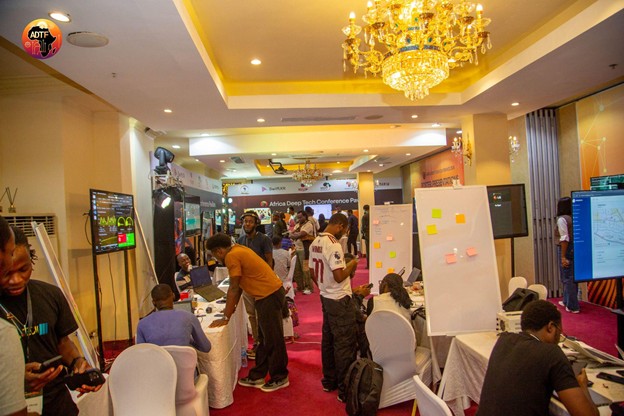

[DIGITAL Business Africa] – Running generative artificial intelligence entirely offline on a standard laptop equipped with just 8GB of RAM. This is the challenge issued to African engineers, researchers, startups, research teams and builders by the Africa Deep Tech Foundation as part of the Africa Deep Tech Challenge 2026.
Dubbed “The Laptop LLM Challenge,” the competition aims to encourage the development of language models capable of running directly on devices already used by businesses, schools, hospitals and innovators across the continent, without relying on a remote cloud server.
The objective is clear: to develop powerful, secure and accessible artificial intelligence capable of operating without a permanent Internet connection or costly cloud service subscriptions.
AI adapted to African infrastructure
The initiative is based on a simple observation: most artificial intelligence tools available today were designed for environments with fast Internet connectivity, reliable electricity, continuous cloud access and substantial computing capacity.
However, these conditions are not available everywhere in Africa. In several countries, businesses, universities, healthcare facilities and public institutions must contend with limited connectivity, power outages, high application programming interface costs and restricted access to graphics processing units.
According to the Africa Deep Tech Foundation, AI models hosted exclusively in the cloud therefore risk excluding a significant proportion of African users from the benefits of artificial intelligence.
“If every tool we build depends on a remote server thousands of miles away, we are not building true independence,” said Emeka Afigbo, Convener of the Africa Deep Tech Foundation.
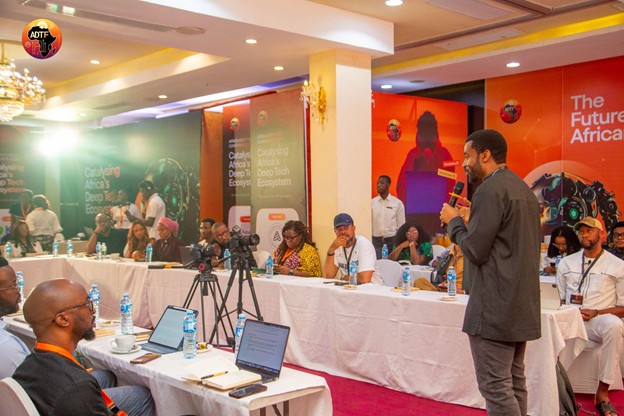
In his view, AI that is genuinely suited to the continent should be able to run directly on the laptop of a bank teller in Lagos, a nurse in Arusha, a student in Dakar or an entrepreneur operating in an area where Internet access remains unreliable.
Building with the hardware already available
Through this competition, the Africa Deep Tech Foundation is inviting developers to reverse the traditional logic of technological innovation. The question is no longer what additional infrastructure must be acquired to use artificial intelligence, but rather what solutions can be built with the equipment already sitting on desks across the continent.
Participating teams will therefore be required to develop a language model that can run completely offline on a laptop with 8GB of RAM, without relying on any cloud infrastructure.
This approach is aligned with the development of edge-native artificial intelligence, in which models are executed directly on users’ devices. It can help reduce costs, strengthen data privacy and expand the use of AI in sectors such as healthcare, education, finance and public services.
Running advanced AI on standard hardware
For Oji Udezue, Founder of the AI Africa XPrize, the ambition goes beyond developing lightweight AI tools. The goal is to make advanced, “frontier-grade AI” run offline on standard computing hardware.
Achieving this objective represents both a major scientific challenge and a strategic necessity for the continent. According to Oji Udezue, the future of African innovation cannot depend solely on a stable connection to foreign, distant and expensive cloud infrastructure.
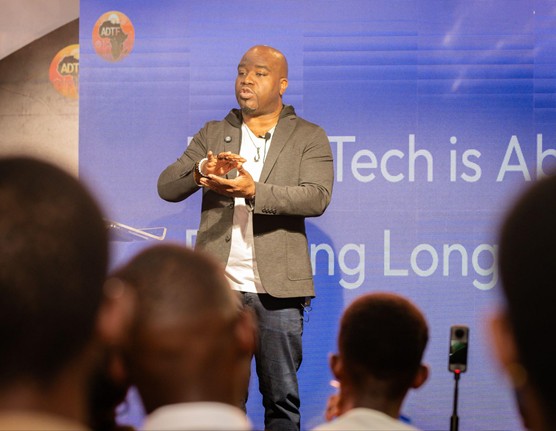
Mastering models that can operate locally could enable millions of African citizens and innovators, over the next few years, to develop solutions for their own markets using the machines they already have.
Winners of the Laptop LLM Challenge could also join the AI Africa XPrize competition, which has a total prize purse of $10 million.
Turning African constraints into business opportunities
For Iyinoluwa Aboyeji, Founding Partner at Future Africa, the continent’s technological constraints can also become a source of major business opportunities.
In his view, Africa’s largest technology companies will not necessarily emerge from copying Western software models, but from designing solutions that address local problems using the resources that are available.

Because African engineers rarely have abundant access to GPUs, they must optimise both their models and computing capacity. This ability to innovate with limited resources could support the emergence of a new generation of startups specialising in lightweight, local and decentralised artificial intelligence.
More than $20,000 and a six-month scale-up residency
The Laptop LLM Challenge is supported by the Nduzi Foundation, the AI Africa XPrize, Future Africa, Accelerate Africa, Udu Technologies (also known as the Africa GPU Hub), and Crowther Labs.
The competition offers a prize pool of more than $20,000. Top teams will also receive technical mentorship, exposure to investors and a six-month scale-up residency designed to help them improve their models and bring them to market.
Initial submissions for the first stage, known as “Gate 1,” will close on August 25, 2026.
Interested engineers, researchers, startups, research teams and builders can find the full competition details and register at: https://africadeeptech.org/challenge-2026.
By Digital Business Africa