[Digital Business Africa]– Paradise Game Center officially opened its doors on Wednesday July 24th 2019. Located in the neighbourhood with the largest population of the ivorian capital, the first floor of the new shopping center Cosmos Yopougon, is now home of the largest video game venue of West Africa.
With 1200 sq. meters of space, the center has the latest equipments and focuses on the promotion of esports in Africa through tournaments and esport players training for international competitions. Video game fans can now enjoy the latest games while preparing for the upcoming FEJA, the largest esport event in Africa.
Starting in September 2019, a dedicated room of 80 m² will host middle school and high school students for training sessions on computers, robotics, and the development of video games.
In 2020, the game center will host the first « edtech & e-learning program » of Yopougon where startups, teachers, students and entrepreneurs will work together on creating the future educational tools for Africa.
These two initiatives are aimed at getting the youth to join the new technology wave and be abreast of robotics, artificial intelligence and virtual reality.
Entertainment for children
Paradise Game provides entertainment for children and parents as well. Through various games and activities, they will learn how to build a stronger parent-children relationship.
For the opening of the game center, the entire month of august will be dedicated to celebration activities both inside and outside the Cosmos Yopougon shopping center. From video game crash courses to learning poems and playing board games, the community will be able to discover everything Paradise Game Center has to offer.
« We ambition to transform the entertainment industry in Africa by using games as a way to learn and by allowing young Africans to discover the video game field, robotics and virtual reality », declared Sidick Bakayoko, founder of Paradise Game.
With more than 500 000 visitors expected per year, Paradise Game Center is positioning itself as a platform to entertain, educate and empower young Africans.
[Digital Business Africa] – There’s no doubt that the promise of the interior décor market is extremely attractive as an opportunity for signmakers and graphics producers to diversify into more profitable applications. FESPA’s 2018 Print Census (https://bit.ly/2YuKsXj) revealed that 74% of wide format print service providers (PSPs) identify wall coverings and interior décor generally as a growth area for their business. But to truly succeed in décor, you may need to acquire new knowledge and expertise over and above your ability to produce high quality printed graphics.
In entering the décor market, you should look to build your technical understanding of how décor applications are inherently different to other types of print, in terms of their lifespan, their functional use, the settings where they are installed and the physical stresses on them.
You must also be mindful of how the décor application will be installed and removed at end of life and take this into account in their choice of materials, adhesives and fixtures. In commercial settings, speed and cleanliness of décor installations are particular considerations, as every hour of closure or disruption translates to lost productivity and revenue.
offset printing-vs-digital printing
Unique physical demands
A primary consideration is that décor projects place physical demands on print that go far beyond those faced by conventional graphics. To start with, décor installations – whether for retail, hospitality, corporate or domestic clients – have a significantly longer lifespan than short-term promotional graphics.
Wall coverings, flooring and surface décor will be expected to stay in place and keep their original aesthetic and performance qualities for years at a time. They must also withstand physical impact: repeated footfall, brushes against a wall or counter edge, hard knocks from bags and trolleys, and so on.
Much like outdoor graphics, décor applications may also need to withstand extremes of temperature, UV light and wet conditions, and functional printed applications such as table or counter tops will have to be resistant to all manner of regular use. Compliance and consistency
When printing for interior environments, compliance with environmental and/or health and safety standards is another important consideration. Décor prints should be free of odours, emissions, irritants and contaminants, as well as being fire retardant.
This means that when working on indoor décor projects, certified inks need to be used that comply with low chemical emissions standards. Prints may also be handled in certain ways specific to the environment; for example, applications used in healthcare settings should be optimised to withstand cleaning and disinfection to meet legislative requirements or best practice guidelines.
In the décor sector, visual consistency is also a critical factor in customer satisfaction. But while it may not be a concern you currently face with conventional signage and graphics, this may become more problematic when working with diverse materials. The proximity between items printed on different substrates – such as wall coverings adjacent to printed acoustic panels – as well as the ability to view décor applications within close range poses further production challenges when it comes to colour management for décor projects and maintaining colour consistency across different applications.
Whathever the project is, faithful reproduction of brand colours across multiple substrates, and even in multiple locations is important.
Prime, print, protect: individual recipes for success
It’s important not to underestimate the complexity of décor. While you may feel confident of your ability to produce high quality print, certain décor applications require additional expertise for the choice of materials, inks, and production method to optimise overall quality and performance.
Each décor application has a unique specification based on the environment where it will be installed, the duration of the installation, the expected physical stresses and the printable substrate. Consequently, you may need to develop individual ‘recipes’ for each décor product, bringing together the right combination of digital print solutions, primers and coatings to achieve the desired outcome and performance in response to the client’s brief.
This can make for bewildering choices and – in the worst case scenario where premium materials are involved – expensive mistakes. Happily, the choice of primers, printing processes and coatings continues to expand in tandem with growth of applications, and technology solutions providers have developed expert teams who actively build and share their expertise and knowledge for the benefit of print businesses active in the décor sector.
Across our worldwide network, we have collaborated with independent suppliers of primers and coatings to optimise almost every imaginable printed décor application, from melamine bathroom panels, to glass whiteboards for hospitals, to imitation leather seats for sports stadiums. With this collective accumulated experience, we can support you in building out your offering as décor service providers, and help you to achieve excellent high quality outcomes, healthy profit margins and sustainable business growth from decorative print.
The election of Ursula von der Leyen as the next European Commission president is the perfect opportunity to start a series of posts on technology and innovation in Europe – covering areas of excellence, key priorities and political challenges.
Supercomputers belong in all of these three categories – and, in this field, Europe has a card to play.
There are ideas that get repeated so often that they turn into deeply ingrained beliefs.
In the technology industry, one of these ideas is that Europe is bound to be relegated to a satellite role in a global competition led by China and the United States. And, despite being the world’s second economic power, Europe should get used to watching from the sidelines while the two superpowers and their tech giants, GAFA on the one side and BATX (Baidu, Alibaba, Tencent Xiaomi) on the other, fight for global dominance.
Of course, this point of a self-fulfilling prophecy – how could Europe seriously compete if it’s already prepared to admit defeat?
How could Europe seriously compete if it’s already prepared to admit defeat?
Moreover, I believe that this idea is deeply wrong: Europe has many areas of excellence, many domains in which it can be a global leader. Supercomputers, a topic I’m particularly interested in, are among them.
Europe can excel on the global tech scene
In this field where big players are few and far between, Atos is Europe’s number one. And last June, we proved once again that, in this strategic area, Europe could lead the way.
How? By inaugurating France’s most powerful research supercomputer, designed for the Atomic Energy Commission (CEA).
It currently delivers a peak power of 9.4 petaflops, and will reach 22 petaflops of processing power by 2020 – the equivalent of 75,000 PCs!
This supercomputer will provide European researchers with new computing capabilities that can be used in a wide range of areas, from astrophysics to geology and climate research.
And when it comes to minimizing our environmental footprint, European companies are second to none. This supercomputer only uses half as much energy as its predecessor, representing a 4.5 increase in computing capacity – it’s a new milestone for Atos, which has already manufactured 15 of the world’s 100 most energy efficient supercomputers.
Technological sovereignty is a key challenge for Europe in the 21st century
But you may be wondering: why is it so important to have strong European actors in the tech arena? Will it really make a difference?
I believe that the current international situation proves how much it matters. In the trade war between China and the United States, Europe needs to take its destiny into its own hands.
Being entirely dependent on other actors for our technology and for our strategic data comes at a price. It means, in particular, that we accept that these actors write the rules of the game for us.
The European Union is increasingly aware of this, and it is coming to terms with the fact that European companies cannot tap into the same financing opportunities as their American and Chinese counterparts, which often have access to large government and military programs in their home countries.
But things are changing – as demonstrated by two ambitious programs conceived to help Europe achieve technological leadership in some innovative fields.
The supercomputer delivered to the CEA is part of a program named EuroHPC JU, which brings together leading European companies to create a computer that can reach the exascale – a quintillion, or a billion billion, operations per second.
It builds on a second program dedicated to microprocessors, the European Processor Initiative – which Atos has been elected to lead.
In the tech race, Europe should not take a backseat
These two programs are important – if only for the fact that technological leadership will increasingly be a matter of sovereignty. If Europe wants to be a contender, it needs to be fully engaged and display the kind of willpower that can beat pessimism and fatality.
We have the capacities, the know-how and some of the most skilled people in power.
Every year, millions of young people graduate from our schools and universities. At Atos, which partners with some of Europe’s best universities, we know this as much as anyone. Our infrastructures are also among the best on the planet.
Therefore, it bears saying and repeating: there is no reason, none whatsoever, why we Europeans should watch the upcoming global technology race from the sidelines.
Thierry Breton, Chairman and CEO, ATOS
Former Minister for Economy, Finance and Industry, FranceA former Minister of Economy, Finance and Industry of France, Thierry Breton is currently Chairman and CEO of ATOS SE, an international IT services company with annual revenues of € 13 billion and 120,000 employees in 73 countries. Serving a global client base, it delivers hi-tech transactional services, payment services, consulting, system integration and managed services. Atos is the Worldwide IT Partner for the Olympic Games.
Appointed Chairman and CEO in November 2008, Thierry Breton has led the transformation of the company to improve its operational performance and drive innovation that delivers value for clients, which include multi-national blue chip companies and leading public sector organisations. Thierry Breton has also completed the acquisition of Siemens IT Solutions and Services to create a new global IT champion, as well as the acquisition of Bull in 2014 and Xerox ITO in 2015.
In his career Thierry Breton has held a number of senior positions in business, politics and academia. Most recently, before joining Atos, he was a professor at Harvard Business School, teaching leadership and corporate accountability. From 2005 to 2007, he served as France’s Minister for Economy, Finance and Industry. As Minister, he significantly reduced the French public debt for the first time in 30 years, reached a primary budgetary surplus, decreased taxes and unemployment, and focused on privatisations and on investment on new growth territories such as non-tangible assets. From 2002 to 2005, he was chairman and CEO of France Telecom where he is recognised for turning the business around and reducing debt from 68 billion to 35 billion euros.
From 1997 to 2002, he was Chairman and CEO of Thomson, where he is credited with increasing the value of the company. From 1993 to 1997, he was at Honeywell Bull Group, where, as a SEVP for strategy, he helped to reposition the company before being promoted to CEO and Vice Chairman of the Board. Thierry Breton began his career as an entrepreneur in New York, where he created software company Forma Systems. He is a member of many Boards of Directors, including Carrefour in France, Sonatel in Africa, SATS in Singapore and is a member of Bank of America Global Advisory Council since 2012 in the US.
Thierry has won much industry recognition, including receiving the prestigious French Légion d’Honneur (Commandeur) and was elected as President of the French National Association for Research and Technology (ANRT) and Member to the National Academy of Technologies (France) in 2015. He was awarded the French National Order of Merit in 2004 and, in the same year, named European Business Leader of the Year. He is Grand Officier in the French National Order of Merit since 2012. In January 2010, the Harvard Business Review published a list of The 100 Best-performing CEOs in the World in which Thierry Breton was one of the few Europeans to be awarded. The author of many books about information technology and the economy, Thierry Breton is a graduate of SUPELEC in Paris, holding a master degree both in electrical engineering and computer science. He is also a graduate of the French Institute for Higher National Defense (IHEDN).
[Digital Business Africa] – A l’occasion de son troisième événement annuel « Google For Nigeria » qui s’est tenu ce 24 juillet 2019 à Lagos, Google a annoncé de nouveaux produits et de nouvelles fonctionnalités pour rendre Google plus utile à plus de monde au Nigeria et à travers toute l’Afrique. Dans une note que Digital Business Africa vous propose, Juliet Ehimuan-Chiazor, Directrice pays de Google Nigeria (photo), expose toutes les nouveautés de Google qui sont disponible dès aujourd’hui au Nigéria et dans cinq pays africains : en République du Bénin, au Ghana, au Rwanda, au Togo et en Ouganda. « Chaque jour, au Nigeria, en Afrique et dans le monde entier, des gens se tournent vers Google pour avoir de l’aide. Nous espérons que les produits et les mises à jour que nous annonçons aujourd’hui rendront Google encore plus utile pour trouver ce que vous cherchez et faire avancer les choses. Nous maintenons notre engagement à mettre à portée de tous, partout dans le monde, le pouvoir qu’a la technologie à transformer nos vies », déclare-t-elle. Toutes les explications de Juliet Ehimuan-Chiazor.
Des cartes mieux adaptées pour les Nigérians et cinq pays d’Afrique « Google Maps vous aide à vous déplacer, à explorer et à réaliser ce que vous voulez faire. Le Nigeria compte plus de 10 millions de motos et nous savons tous que se déplacer en moto n’est pas la même chose qu’en voiture. C’est la raison pour laquelle nous avons ajouté un mode de transport dédié pour fournir des indications et des outils de navigation pour les motos au Nigeria.
Ce mode sera également disponible dès aujourd’hui en République du Bénin, au Ghana, au Rwanda, au Togo et en Ouganda. Nous lançons également des instructions de navigation avec une voix nigériane pour la conduite moto et voiture, pour que les noms locaux et les lieux soient correctement prononcés.
Traverser Lagos, l’une des villes les plus fréquentées d’Afrique, est souvent un défi avec des impondérables qui affectent les temps de trajet. Dans les prochains mois, nous proposerons une nouvelle offre d’orientation pour Lagos, optimisée pour les transports alternatifs, en intégrant les itinéraires Danfo dans Google Maps.
Pour faciliter l’exploration visuelle des lieux au Nigeria, nous publions plus d’images panoramiques sur Street View. Nous avons commencé à prendre des images de Lagos il y a deux ans, et aujourd’hui, nous ajoutons des images Street View de Abuja, Bénin City, Enugu, Enugu et Ibadan avec près de 12 000 kilomètres de routes supplémentaires.
Galerie Go : une galerie de photos rapide et intelligente accessible hors ligne Avec le succès des Android, de plus en plus de Nigérians possèdent des téléphones qui prennent des photos. Mais tout le monde n’a pas accès à un Internet haut débit fiable ou au stockage sur le cloud pour trouver rapidement une photo.
C’est pourquoi nous présentons aujourd’hui Galerie Go – une galerie de photos rapidement accessible et intelligente conçue pour les utilisateurs qui ne disposent pas d’une connexion Internet fiable. Gallery Go offre bon nombre des meilleures fonctionnalités de Google Photos sur appareil, pour vous aider à trouver, modifier et gérer vos photos, même lorsque vous êtes hors ligne.
L’appli propose des fonctionnalités astucieuses pour organiser automatiquement vos photos et les retoucher grâce à des outils faciles à utiliser tels que l’auto-amélioration en un seul clic. L’appli ne demande que 10 Mo pour garder un maximum d’espace et de rapidité sur votre téléphone et passer plus de temps à prendre des photos souvenirs.
Gallery Go est disponible dès aujourd’hui sur Google Play pour les appareils fonctionnant sous Android 8.1 (Oreo) ou supérieur, et seront préinstallés en tant qu’appli galerie sur l’Itel S15 et certains appareils A55, bientôt disponibles au Nigeria.
Google Go : vous aider à profiter du meilleur du web L’an dernier, nous avons lancé Google Go, qui permet de profiter aisément d’Internet, même sur les smartphones à capacité de mémoire limitée ou avec des connexions capricieuses.
Aujourd’hui, nous annonçons quelques mises à jour qui, nous l’espérons, rendront Google Go encore plus utile. Nous avons intégré la fonction Discover feed dans Google Go pour vous aider à suivre l’actualité de vos centres d’intérêts. Elle vous donne un aperçu en continu de tout ce que vous aimez, comme les derniers résultats de votre équipe de football, les personnalités que vous suivez, la musique et les actualités.
Dès la semaine prochaine, vous pourrez également accéder à l’Assistant directement depuis Google Go. En commandant seulement par la voix, vous pourrez demander à Google d’appeler votre mère, de jouer la dernière vidéo de Burna Boy, ou de vous trouver le meilleur jollof de la ville. L’assistant est également proposé avec une nouvelle voix nigériane.
Google Lens et Bolo : comprendre et apprendre en toute simplicité Google Lens permet à tous d’en apprendre davantage sur le monde qui les entoure grâce à leur appareil photo et leurs photos. C’est pourquoi nous lançons Lens dans Google Go pour que tout le monde puisse lire, traduire et rechercher les mots qu’ils voient, simplement en utilisant leur appareil photo. Il suffit d’ouvrir Lens, de le pointer vers un signe et d’écouter les mots lus à voix haute. Si vous ne parlez pas la langue, vous pouvez la faire traduire dans votre propre langue. Aujourd’hui, nous lançons également un support en hausa, yoruba et igbo.
Bolo est une appli de lecture basée sur l’apprentissage oral qui aide les enfants à apprendre à lire en anglais. Il les encourage à lire à voix haute et leur font ensuite un retour individualisé et personnalisé pour les aider à améliorer leurs capacités de lecture. Nous avons déjà lancé Bolo en Inde cette année et aujourd’hui, nous l’introduisons au Nigeria et au Ghana.
Un avant-goût du Nigeria avec Google Arts & Culture Google Arts & Culture a élaboré un projet, Come Chop Bellefull: A Taste of Nigeria qui rend hommage à la culture culinaire variée et vivante du Nigeria, à travers les générations et les régions du pays. Vous pouvez maintenant explorer la cuisine et la culture régionales nigérianes grâce à 2000 images en haute résolution et 30 histoires créées en collaboration avec The Centenary Project at the Pan-Atlantic University.
Actions en faveur des musiciens nigérians sur YouTube YouTube a annoncé aujourd’hui son engagement à apporter son soutien aux talents émergents du Nigeria. Pour commencer, YouTube s’associe à la star nigériane de la musique, M. Eazi, et à l’initiative emPawa pour apporter son soutien à 10 musiciens nigérians émergents et les aider à créer, à développer leur fan-base et à se connecter au monde entier via YouTube.
emPawa Africa est une initiative et un incubateur lancé par M. Eazi qui donne à la prochaine génération d’artistes africains, les outils, les connaissances, les réseaux et les investissements dont ils ont besoin pour devenir des artistes indépendants. Jusqu’à ce jour, emPawa a aidé 22 artistes nigérians à se former pour développer leurs compétences sur des plateformes numériques telles que YouTube. »
[Digital Business Africa] – At the cabinet meeting on 25 July 2019 in Yaoundé chaired by Prime Minister Joseph Dion Ngute (Photo: Hakon Mosvold Larsen/NTB Scanpix/AFP), Cameroon’s Minister of Domains and Land Affairs, Henri Eyebe Ayissi, reviewed the digitalization of the land registry and the security of public property in Cameroon.
With regard to the digitisation of the land register, the Minister explained that the operations of spatial planning and the securing of the real property rights of economic actors are governed by Law No. 76/25 of 14 December 1976 on cadastral organisation.
It is this law that provides for the establishment of a digital cadastre, through the progressive transfer of data relating to property and parcels from analogue or paper media to computer media.
It is with this in mind that in 2010, with the support of financial partners, the Government launched the Cadastre Modernization and Business Climate Support Project (PAMOCCA). A project structured around three main levels: the establishment of the national geodetic network, the preparation of large-scale digital mapping and the production of digital cadastral maps of the municipalities.
Cameroon’s Minister of Lands and Lands Affairs, Henri Eyebe Ayissi,
According to Henri Eyebe Ayissi’s explanations, among the results already obtained by this program, we can mention among others the implementation of 2,974 geodetic points determined in
coordinates, the digitization of 198,510 technical cadastral records.
According to the Minister, procedures are under way for the digitization of 130,000 land titles and 480,000 parcels of national and public land in the four pilot cities of Yaoundé, Douala, Garoua and Maroua.
At the end of the Minister’s presentation, Prime Minister Joseph Dion Ngute asked the Minister to accelerate the implementation of this cadastral digitization program.
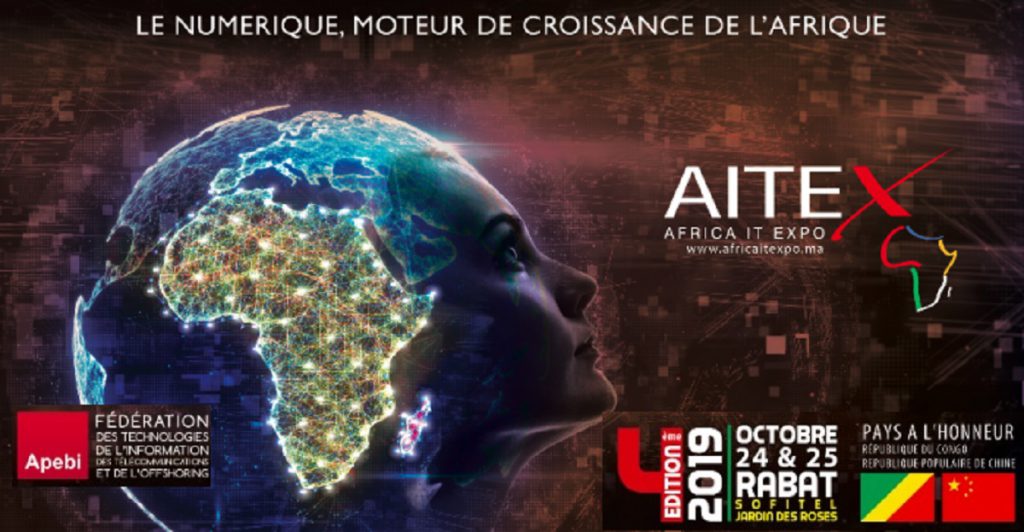
[Digital Business Africa] – La 4e édition de l’AFRICA IT EXPO (AITEX 2019), Business Forum international des technologies de l’information, se tiendra les 24 et 25 octobre 2019, à l’hôtel Sofitel Jardin des Roses à Rabat au Maroc. L’annonce est de l’Apebi, la Fédération des Technologies de l’Information, des Télécommunications et de l’Offshoring, organisatrice de cet événement devenu une vitrine IT pour le continent africain. Le thème retenu cette année est : « Faire du Numérique une nouvelle ressource de l’AFRIQUE et un moteur de croissance ».
The countries honoured this year are Congo Brazza and China. “Digital technology is becoming an undeniable growth resource for the Continent, without forgetting the challenges. The continent’s constraints and needs are being addressed by Africa’s strong capacity to meet the challenges, making AITEX 2019 the innovation and technology agora,” says Saloua Karkri Belkeziz, President of APEBI.
Saloua Karkri-Belkeziz , president of APEBI, Photo Maroc.ma
The themes that will be addressed during this 4th edition are diverse. We can mention: Which digital Africa in Horizon 2025; Reverse innovation; the future of work; disruptive technologies and their impact (AI ,5G ,IOT,….); Citizen Centric or Cybersecurity
20 pays dont 10 africains en 2019
En effet, la troisième édition du Salon Africa IT Expo, s’était tenue à Rabat au Maroc du 04 au 05 octobre 2018. 20 pays dont 10 africains, 50 experts et conférenciers du secteur du numérique, 150 start-up sélectionnées dans le cadre du concours STARTEX et plus de 1200 participants venus du monde entier s’étaient réunis autour du thème : « quel digital pour l’Afrique ? ».
AITEX offers visitors solutions and innovations every year, while bringing together the experiences, testimonials, cross-views and lighting of internationally renowned experts and consultants.
As for the last three editions, AITEX will be for two days the platform of exchanges, partnerships and meetings between companies, institutions, consultants and renowned experts. AITEX will offer multiple opportunities for companies, to develop their innovation ecosystem, collaborate with startups, present the latest technologies, develop networks, discuss new ideas and meet decision-makers.
[Digital Business Africa] – Lors de l’installation des membres de la 6ème mandature de la Haute Autorité de l’Audiovisuel et de la Communication (HAAC) ce 22 juillet 2019 à Cotonou, le Président Patrice Talon a appelé les nouveaux membres à « déployer des trésors d’ingéniosité, d’habilité et sans doute aussi beaucoup d’audace et de fermeté pour engager les uns et les autres dans les voies qui permettront de sortir le métier (journalisme et homme de médias, ndlr) de l’amateurisme et de la vénalité ».
Pour le président, les 30 ans de pratique du journalisme n’ont pas suffi à assainir les mœurs. Patrice Talon leur conseille de s’emparer très vite de « la pertinente question de l’éthique et de la déontologie dans les médias, pour en faire le principal instrument de la discipline au sein de la corporation, en concertation avec les associations professionnelles ».
Mais, le président Patrice Talon n’hésite pas d’observer que les travers qui existent aujourd’hui dans les médias « trouvent leur origine dans la précarisation de la profession que rien n’a préparé à la concurrence des réseaux sociaux et autres médias alternatifs. Ce qui, bien entendu, pose le problème des sources de financement des médias et du modèle économique à mettre en place à leur profit ».
Le président béninois pense qu’il est temps que les métiers des médias se réinventent. Surtout, explique le président, « dans un environnement de plus en plus rude où, à la faveur de l’explosion des réseaux sociaux, n’importe qui se découvre la vocation d’informateur voire de journaliste, en s’affranchissant de la responsabilité sociale, des normes déontologiques et du devoir de preuves qui vont avec. A telle enseigne qu’ici comme ailleurs, on ne dénombre plus les médias emblématiques voire légendaires qui ont disparu ou sont menacés de faillite à cause de la révolution numérique ».
« Cette liberté, nous devons la préserver et la protéger »
Pour le président de la république, la liberté de presse, c’est le droit de dire, d’écrire ou de diffuser ce que l’on veut, mais c’est aussi et surtout le devoir de l’assumer et d’en répondre. Patrice Talon a réaffirmé dans son discours d’installation son attachement au pluralisme des opinions et à leur libre expression. « Cette liberté, indique le président, nous devons la préserver et la protéger. Mais nous avons aussi le devoir de la réguler. Telle est la double mission que vous assigne notre constitution. Elle est ingrate certes, mais noble ».
« Monsieur le Président, Mesdames et messieurs les Conseillers, En cet instant où vous entrez en fonction, je voudrais vous rendre attentifs au sort de nos médias et en appeler à votre sollicitude…. C’est cet engagement qui permettra d’initier une prise de conscience déontologique, d’apporter des réponses pertinentes à la problématique de l’amélioration des conditions de vie et de travail des professionnels des médias, et d’asseoir les bases de l’émergence de grands organes de presse au Bénin », a conclu Patrice Talon qui n’a pas manqué de saluer l’équipe sortante de la HAAC.
C’est Rémi Prosper Moretti qui a été choisi par le président Patrice Talon comme nouveau président de la HAAC en remplacement de Adam Boni Tessi. Franck Kpochémé, ancien président de l’Union des professionnels des médias du Bénin (Upmb), a été élu dans la catégorie presse écrite. Dans la catégorie Audiovisuel, Armand Hounsou est élu et Cécile Ahoumènou a reçu l’approbation des techniciens pour siéger au sein de la HAAC.
Côté gouvernement, Rémy Prosper Moretti, Bastien Salami et Bilikissou Ali Machiffa ont été désignés. Le parlement quant à lui a désigné Ali Camarou, Mariane Domingo et Fernand Gbaguidi. Le quorum des neuf membres est donc atteint.
Conformément aux dispositions des articles 24, 142, et 143 de la constitution, la Haac a pour missions de garantir et d’assurer la liberté et la protection de la presse ainsi que de tous les moyens de communication de masse dans le respect de la loi ou encore de veiller au respect de la déontologie en matière d’information et à l’accès équitable des partis politiques, des associations et les citoyens aux moyens officiels d’information et de communication.
[Digital Business Africa] – The 6th edition of the Africa Early Stage Investor Summit (#AESIS2019) is announced by VC4A and ABAN. They also announce partnership with R1.4 billion start-up funding unit, Naspers Foundry. The Summit will take place from 13-15 November 2019 at Workshop17 at the V&A Waterfront in Cape Town, South Africa. The conference brings together leading investors from Africa and beyond to network, exchange insights, create partnerships and make deals. This event is designed ‘for investors, by investors’.
What’s in store at #AESIS2019
The Summit’s
speakers and guests hail from the leading angel networks, venture capital (VC)
funds, impact investors, accelerators, corporate venture divisions, industry
associations, and the public sector. The number of Africa-focused angel
investor networks and investment funds are rapidly growing and maturing,
bringing both critical challenges and greater opportunities for venture capital
funding on the continent. Summit delegates will explore developments in
Africa’s early stage investment space and will set the agenda for the coming
years.
Day 1 on 13 November is ‘Academy Day’, which includes a series of interactive masterclasses and workshops, ending with a welcome cocktail reception. Day 2 on 14 November is the main Summit Day and will include inspiring keynote presentations by industry leaders and roundtable discussions, and it will end with an Investor Dinner. Day 3 on 15 November is the optional Innovation Tour featuring insightful visits to key start-up hubs, accelerator programs and scaled up start-ups in the Cape Peninsula area. The detailed program is being finalized.
Announcing Naspers Foundry’s 2019
partnership
Naspers Foundry
will be sponsoring the Summit’s main cocktail reception on 14 November, and
will be contributing to the Summit’s program development. Naspers Foundry is a
R1.4 billion start-up funding initiative aimed at boosting the South African
technology sector. As well as providing much needed funding, Naspers Foundry
helps talented and ambitious technology entrepreneurs develop and grow
businesses that improve people’s daily lives.
“At Naspers, we believe in backing local entrepreneurs in growth markets and helping them by leveraging our global scale and experience. The Africa Early Stage Investor Summit provides an unique opportunity for Naspers to engage with like-minded investors and ecosystem partners from across the continent as we build out Naspers Foundry, and our broader investment ambitions”, said Phuthi Mahanyele-Dabengwa, CEO South Africa, Naspers.
Building on the success of
2018
The 2018 edition brought together over 300 investors from prominent African angel networks and VC funds to identify and address the critical gaps in the early stage investment space going into 2019. At the 2018 Summit, a number of successful partnerships were created, including a new partnership between South Africa’s Technology Innovation Agency (TIA), a public entity and the South African angel investor networks, Dazzle Angels and Jozi Angels. ABAN also signed an MoU with the African Union to deepen their collaboration to support entrepreneurship across the continent.
Additionally, L’Afrique Excelle, the Francophone edition of the World Bank Group’s XL Africa post-accelerator, formally launched at the 2018 Summit. The programme brought an unprecedented spotlight and momentum to French-speaking African growth stage start-ups. Over 30 VC funds including the IFC, ODV, Proparco, Outlierz Ventures and Compass VC formally signed up as investment partners for the program, with most of these partnerships formed over the two days of the Summit.
VC4A Venture Showcase – Series
A
In 2017 and 2018, the Summit also featured a venture showcase of leading African digitally enabled scale-ups from across the continent, resulting in a number of series A deals totaling over $15 million.
In the 6th
edition, ten growth stage companies that have been selected and vetted by
Africa’s leading VCs, will be introduced in the showcase. These companies
represent a new class of investment opportunities across the continent. The
selected ventures have strong revenues, are well positioned for regional and
international expansion, and demonstrate important innovations that are
disrupting industries like agriculture, healthcare, housing, transportation,
and finance.
VC4A is an ecosystem builder that leverages its
infrastructure, network and expertise for the programs that contribute to
Africa’s startup movement. Since 2008, the organization designs, structures and
implements successful entrepreneurship programs on the continent. VC4A runs an
online platform featuring the world’s largest database of African startups and
connecting local entrepreneurs to learning resources, mentors, investors and
partner programs.
The African Business Angel Network (ABAN) is a Pan-African non-profit association. ABAN was founded in early 2015 to support the development of early stage investor networks across the continent and to grow the cohort of early stage investors excited about the opportunities in Africa.
About Naspers
Naspers is a global consumer internet group and one of the largest technology investors in the world. The group operates and partners a number of leading internet businesses across Central and Eastern Europe, Africa, the Americas and Asia in sectors including online classifieds, payments and fintech, food delivery, travel, education, health, and social and internet platforms. Naspers has a primary listing on the Johannesburg Stock Exchange (NPN.SJ) and a secondary listing on the A2X Exchange (NPN.AJ) in South Africa, and has an ADR listing on the London Stock Exchange (LSE: NPSN).
Digital Business Africa and Venture Capital for Africa
(VC4A)
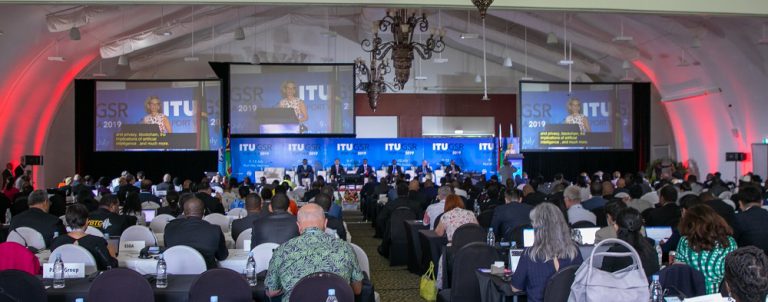
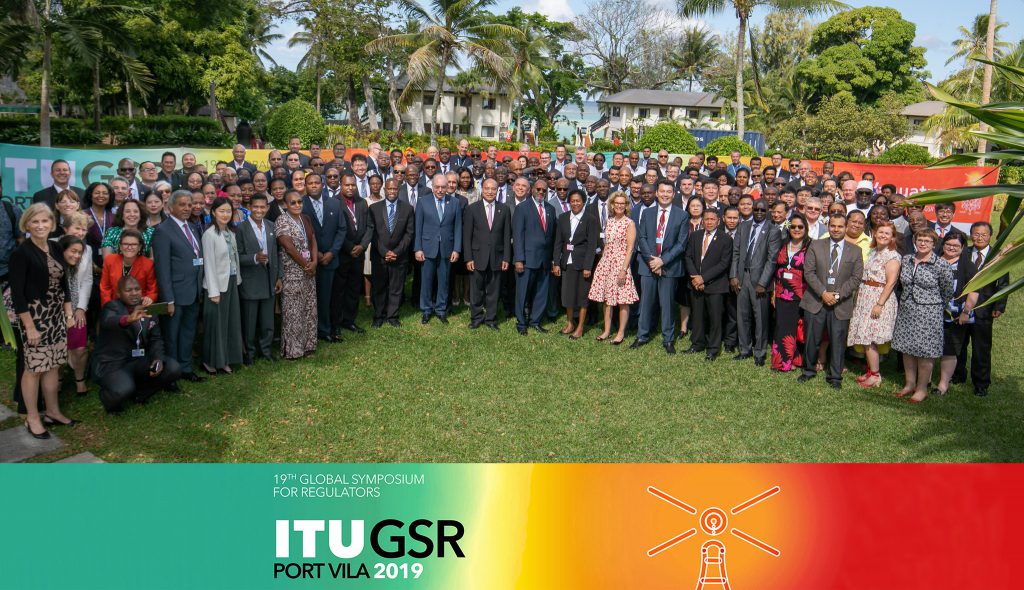
[Digital Business Africa] – ITU Global Symposium for Regulators adopts GSR-19 Best Practice Guidelines on fast-forwarding digital connectivity for all. Regulators from around the world gathered in Port Vila, Vanuatu, from 9 to 12 July for the ITU Global Symposium for Regulators (GSR). They identified and endorsed a set of regulatory Best Practice Guidelinesto fast forward digital connectivity and allow people everywhere to benefit from digital transformation and participate in today’s digital economy.
Organized by ITU, GSR is the world’s largest specialized gathering of information and communication technology regulators and policy specialists from the public and private sectors. The theme of GSR-19 was “Inclusive connectivity: The future of regulation”. GSR-19 was held in Port Vila, Republic of Vanuatu, from 9 to 12 July. It marked the first time GSR came to the Pacific region. More than 400 participants attended GSR-19.
In fact, to unlock the full potential of digital technologies and
accelerate progress towards the United Nations Sustainable Development Goals
(SDGs), the Guidelines emphasize the need for a more actionable, collaborative,
and innovative outcome-based approach to regulation. They urge regulators and
all stakeholders to be open to new regulatory tools and solutions and act now.
“This week, Vanuatu was the centre of the ICT regulatory world. GSR-19 gave
us a golden opportunity to discuss connectivity strategies with regulators from
the entire Pacific region and the rest of the world,” said ITU
Secretary-General Houlin Zhao. “As regulators everywhere are faced with new
technologies and new business and investment models, the GSR-19 Best Practice
Guidelines show how critical collaborative regulation is to achieving the SDGs
and delivering on the promise of the digital economy, including for the 3.7
billion people who are still not using the Internet.”
“The regulatory landscape of digital markets is fast-moving and extremely
complex. There is still much work to be done, and regulators across all sectors
must rise to the challenge of connecting the other half of world’s
population,” said Mr Brian Winji, Chairman of GSR-19 and
Telecommunications, Radiocommunications and Broadcasting Regulator of the
Republic of Vanuatu. “The GSR-19 Best Practice Guidelines we adopted are an
invaluable tool that enables regulators to address the challenges ahead and
navigate through rapidly evolving technologies, business models and market
structures that are affecting economies, society and people around the
world.”
The GSR-19 Best Practice Guidelines call for the adoption of three new and
innovative approaches for achieving inclusive digital infrastructure and
services, based on:
Core design principles for collaborative regulation − to help respond to new technology paradigms and business models.
Benchmarks for
regulatory excellence and market performance − grounding regulatory decisions
in robust, multifaceted and thoughtfully interpreted evidence can prove
instrumental in generating positive market dynamics in the short and long term.
Regulatory tools and approaches at hand for enabling digital experimentation − to contribute towards improving digital market outcomes, countries need to leap forward to the next level of collaborative regulation with a new attitude and a new toolbox.
“Looking back over nearly 20 years of GSR, the role of the ICT regulator has never been more important,” said Doreen Bogdan-Martin, Director of the ITU Telecommunication Development Bureau. “ICTs are at the heart of efforts to attain the 17 UN Sustainable Development Goals, and accessible, affordable ICT infrastructure is the pre-condition of every nation’s ongoing socio-economic development. Based on the contributions of regulators from all regions, and adopted by consensus, the new guidelines will light the way towards achieving inclusive digital connectivity globally.”
On 9 July, at the 10th Private Sector Chief Regulatory Officers meeting, regulators addressed critical questions from the industry’s perspective. To ensure that inclusivity can be achieved commercially in a sustainable way, participants highlighted the need for appropriate incentives provided by the policy and regulatory environment. They also stressed that in areas that are uneconomical, the right balance has to be struck between regulation, public sector involvement and competitive market forces.
[Digital Business Africa] – In response to the circular consultation letter from the Director of BDT (ITU) concerning best practice guidelines on the general theme “Fast forward digital connectivity for all”, on the occasion of the Global Symposium For Regulators 2019 (GSR-19), the Telecommunications / ICT Regulatory Authority of Ivoiry Coast (ARTCI) submitted some proposal. Didigat Business Africa share those proposals with its readers.
« In the
light of the fundamental principles and benchmarks proposed above, the
following new regulatory tools and approaches should be considered:
. To have a more flexible regulatory framework through framework laws that promote innovation; innovation is an essential lever for the long-term growth of a sector. The possibility of decentralized innovation in networks is essential for the emergence of digital tools and services with innovative business models. • To enable the regulator to exercise its powers in a proportionate, impartial and transparent manner: As a key player in the digital economy ecosystem, the regulator must have the powers to promote effective, fair, transparent, non-discriminatory and sustainable competition for the benefit of other stakeholders (operators, users); moreover, traditional regulatory principles must be versatile and geared towards the digital transformation. • To take into account the need for technological neutrality in regulation. • To harmonize regional regulatory policies with those of the telecommunications/ICT sector on emerging issues such as OTT and matters relating to GAFAM, infrastructure sharing, IoT, number portability, rules for access to scarce resources (frequencies, telephone numbers, IP addresses etc.). • To promote the deployment of next-generation backbone and access networks and the adoption of broadband applications and services by all. • To modernize and redefine universal service and access to include broadband, encourage public-private partnerships and extend universal service beyond network deployment alone by stimulating services uptake and access to online services and applications. • To promote digital financial inclusion: Ensuring digital financial inclusion is of the highest importance in a digital world. The absence of or limited access to financial services presents a barrier to socio-economic development in particular for developing countries. It would also be desirable to expand access to financial services for unbanked or underbanked people, particularly in rural, remote and disadvantaged areas. This should enable users in these areas to play a role in the global digital economy. In this context, digital financial inclusion must be the cornerstone of national financial inclusion strategies. • To devise measures to protect data, privacy and personal freedoms. • To establish guidelines to ensure that technological innovation is always for the benefit of humanity’s well-being and not at its expense. • To develop national and regional collaborative approaches to address all due diligence matters related to digital trust.
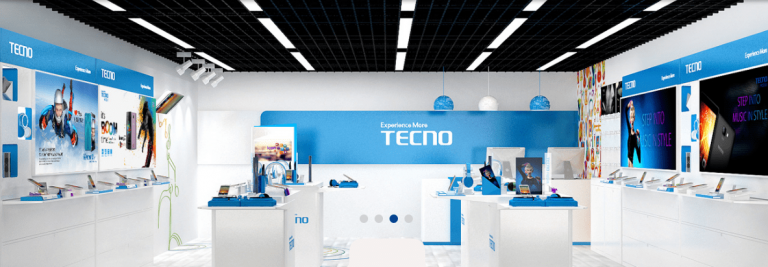
[Digital Business Africa] – TECNO SPARK 3, a smartphone model
by TECNO, a global mobile phone brand, has been awarded as the smartphone brand
of the year at the 2019 edition of the Africa Information Technology &
Telecoms Awards (AITTA). The information was released this at LAGOS, Nigeria,
this July 15, 2019.
AITTA recognises customer service, innovation and excellence in Africa Telecom and Information Technology industry. The reputable awards now in its third year and has been acclaimed as one of the most prestigious and biggest platform recognising excellence and innovation in the African telecoms and technology industry.
TECNO SPARK 3 was awarded as the phone of the year as a result of its cutting edge features as well as its outing market outing positive reception of the TECNO brand loyals and customers. This is the only smartphone recognized by AITTA this year. As one of the most remarkable devices to “light up” the photos, SPARK 3 have been upgraded by AI technology to furthermore advanced the camera features to be available in Africa, middle-east and Southeast Asia market.
Starting their business from the
Africa market in 2006, TECNO has been Africa’s leading smartphone brand and was
the first dual-SIM handset supplier to the African continent, which boosted an
astonishing 53% of all Smartphone sales in Africa in the year 2011. Focusing on
providing high performance and cutting edge smartphone that use the latest
technology and at sweet price point, TECNO smartphones have become incredibly
popular throughout Africa due to the exceptional value-for-money they
offer.
TRANSSION, TECNO Mobile ’s parent
company, its brand portfolio comprises leading mobile phone brands in emerging
markets. In 2018, TRANSSION sold 124 million mobile phones globally. IDC
figures for 2018 show that TRANSSION ranks 4th in global mobile phone brands
and holds the largest market share in Africa. Their global sales network covers
more than 70 countries in emerging markets including Nigeria, Tanzania, Kenya,
Ethiopia, Egypt, India, Pakistan, Indonesia, Vietnam and Bangladesh to name a
few.
About Tecno
Established in 2006, TECNO Mobile is a smartphone brand from TRANSSION Holdings. Upholding the brand essence of “Expect More”, TECNO is committed to giving the masses access to latest technology at accessible prices, allowing the consumers to reach beyond their current limitations and uncover a world of possibilities.
TECNO understands the needs of
consumers from different markets and provides them with localized innovations
across a product portfolio featuring smartphones, tablets, and feature phones.
It is a major global player with presence in around 50 emerging markets across
the world. In 2017, TECNO achieved a sales volume of more than 43 million
units. TECNO Mobile is also the Official Tablet and Handset Partner of
Manchester City Football Club.
[Digital Business Africa] – Canon Middle East has announced today July 11, 2019 in United Arab
Emirates the release of two instant camera printers, the Canon Zoemini S and
Canon Zoemini C. Building on the success of the original Canon Zoemini which
launched in 2018, the new product range of all-in-one instant camera printers
are the perfect pocket-sized companions for encouraging creativity with easy to
print, peel-and-stick photos on the go.
Amine Djouahra, Senior Sales & Marketing Manager – B2C, Canon Central and North Africa (CCNA) commented: “The Canon Zoemini S is ideal for those wanting to capture, print and share their holiday adventures, a spontaneous selfie, photos with friends or an Instagram-worthy plate of food. Consisting of an eight-megapixel camera, front-mounted mirror, ring-light and remote shutter capability, the Canon Zoemini S is easy to use and will ensure its users are ready to take the perfect selfie in an instant.”
The Canon Zoemini S comes in three stylish finishes; rose
gold, matte black and pearl white and fits seamlessly into the palm of a hand,
pocket or backpack for exceptional portability.
Whether out shopping with friends, celebrating a
birthday party or attending a music festival, Canon Zoemini S and Canon Zoemini
C users can shoot and print mini photos in a matter of moments on 2×3-Inch (5 x
7.6cm) Zink™ sticky-backed photo paper. Capturing everyday moments has never
been easier or more fun with these compact and lightweight gadgets, so friends
can share their stories whenever the mood takes them.
The Canon Zoemini S is supported by the free-to-download
Canon Mini Print App (iOS/Android), which enables users to print their images
directly from a smart device using Bluetooth® as well as edit from an array of
creative filters and frames. Users can also remove the challenge of capturing
group selfies, simply by using the Canon Mini Print App’s remote shutter and
self-timer function, so no one will be out of shot.
In addition to Instagram and Facebook, the Canon Mini Print app enables users connect with Google Photos and Dropbox, so they can print physical copies of treasured memories while out and about.
For those seeking a streamlined version of the Canon Zoemini S, the Canon Zoemini C is available without the Canon Mini Print App compatibility and packs a five-megapixel camera, a selfie supporting reflective mirror and a Micro SD card slot. The Canon Zoemini C is available in four eye-catching colours; bubble gum pink, bumblebee yellow, mint green and seaside blue for instant keepsakes on the go.
Both the Canon Zoemini S and Canon Zoemini C come with 10
sheets of sticky-backed, smudge and tear-proof Zink™ printing paper, making it
easy to print and decorate anything from a bedroom wall to a fridge or smart
device. Additional paper is available to purchase in packs of 20 or 50.
[Digital Business Africa] – Stillfront Group has announced in March 2019 that Alexis Bonte has been
appointed Group COO and member of the Group´s executive management team. Alexis
is Co-founder and CEO of eRepublik Labs, a studio within Stillfront
Group.
eRepublik Labs was established in 2007
and is an award- winning games studio and a pioneer in online
free-to-play games. eRepublik Labs has an international team of 40
professionals with offices in Dublin, Bucharest and Madrid. eRepublik Labs
latest hits are “World at War” and “War and Peace: Civil War”. Both are in the
mobile strategy game category. Since inception, more than 20 million players
worldwide have or are playing an eRepublik Labs game. Alexis is
also a Venture Partner at Atomico, advising on new investments in
France, Spain, Portugal and Eastern Europe.
”I am very pleased to welcome Alexis to
our executive management team. Alexis has extensive experience within the
industry both as a founder and developer of online strategy games as
well as an investor. In 2018 we completed three acquisitions and Stillfront is
today a global group of 11 studios with 500 professionals. Looking
ahead, we strive to expand intra-group cooperation, increase the level of
synergies as well as accelerate our growth agenda. Alexis deep know-how and
industry expertise will be very valuable in further developing Stillfront”,
says Jörgen Larsson, CEO, Stillfront Group.
“Since I decided to have eRepublik Labs
join the Stillfront Group back in May of 2017, I have been able to experience
first-hand how powerful the concept of an alliance of semi-autonomous studios
that Jörgen and the team have put together is. I look forward to now help the
Group scale that concept further and to support the growth acceleration of our
existing studios”, says Alexis Bonte.
Before co-founding eRepublik, Alexis worked for lastminute.com for six years, first as
Head of Business development in UK, Marketing and Sales director in France and
then as MD for Italy. Alexis holds a BA Honours Degree in
International Business and Languages from the European Business School,
London.
Alexis will progressively assume his
position starting in April of 2019 and transition to being fulltime Group COO
in January 2020. During this transition period, Alexis will continue his
position as CEO of eRepublik Labs until a successor is appointed.
ABOUT STILLFRONT
Stillfront is a group of independent creators, publishers and distributors of digital games – with a vision to become the leading group of indie game creators and publishers. Stillfront operates through eleven near-autonomous subsidiaries: Bytro Labs in Germany, Coldwood Interactive in Sweden, Power Challenge in the UK and Sweden, Dorado Online Games in Malta, Simutronics in the United States, Babil Games in UAE and Jordan, eRepublik in Ireland and Romania, OFM Studios in Germany, Goodgame Studios in Germany, Imperia Online, Bulgaria and Playa Games, Germany. Stillfront’s games are distributed globally. The main markets are Germany, the United States, France, UK and MENA
[Digital Business Africa] – New Burkina Faso-based bank BADF has chosen Sopra Banking Software to support its launch. The announcement was mad this 3rd July 2019 in Paris, by Sopra Banking. In order to meet its ambitious development plans, Banque Agricole du Faso decided to implement the Sopra Banking Amplitude solution. The Bank opted for this publisher with 40 years of experience, which is an international leader in the sector, to support its strategic development.
Its choice of a robust digital
core banking solution should address any issues arising from creating the new
institution within a limited timescale. BADF’s choice to launch in partnership
with Sopra Banking Software is driven by the publisher’s experience with this
type of project in the region, as well as its credentials in digital banking
project support.
Banque Agricole du Faso (BADF) has been founded with the purpose of helping farmers to access funding. Its primary missions are to promote access to savings schemes in rural areas, and to fund agribusiness. It should be noted that the rural sector covers 80% of the population, and generates close to 30% of Burkina Faso’s GDP. Only 15% of farming producers currently have access to bank loans. This figure could increase rapidly with the launch of the new Bank.
Patrick Navarro, Senior Vice-President Middle East & Africa at Sopra Banking Software said “We are proud to support the BADF with its business launch in Burkina Faso”. Sopra Banking Software is now a leading player in the banking sector as a whole and in Africa, where it has over 250 clients. Over 800 financial institutions worldwide have put their trust in its services.
About BADF
Banque Agricole Du Faso,
abbreviated to BADF, was incorporated on 30 August 2017 as a société anonyme
(public limited company) with a Board of Directors. It has a share capital of
14,277,570 CFA Francs. It obtained its certification on 16 April 2018 (number C
00207 J), and opened its counters to customers on 25 February 2019. Its Board
of Directors comprises ten (10) members, including three (3) farming
representatives.
BADF operates as a universal
bank, and therefore employs experienced staff, including experts in farming,
banking, finance and management. It offers a wide range of products and
services to all “promoters of the economy”. The bank’s ambition is to
boost the economy of its core profession, the farming sector, by providing a
loan system which is suited to the realities and requirements of this business
sector.
The BADF’s head office is located
at 1035, Avenue de la Grande Mosquée, Secteur n°4, Arrondissement 01, commune
of Ouagadougou 01 BP 4050 Ouagadougou 01 BURKINA FASO – Tel +(+226) 25 32 99
00. It plans to open branches in Bobo-Dioulasso and Dédougou, gradually
expanding to cover all of Burkina Faso’s provinces.
About Sopra Banking Software
With 4 300 experts, a pro forma
turnover 2018 of € 373,7 million and one of the deepest, broadest portfolios of
software and services, Sopra Banking Software is a trusted, long-term partner
of over 800 banks in more than 70 countries. Sopra Banking Software has an
unequalled ability to address the requirements for banks and financial
institutions of any size and scope, allowing them to innovate and expand their
services. Sopra Banking Software is a subsidiary of the Sopra Steria Group, a
European leader in digital transformation, with more than 44 000 employees. In
2018, Sopra Steria achieved generated a revenue of € 4,1 billion.
[Digital Business Africa] – Viavi Solutions Inc. (VIAVI) (NASDAQ:
VIAV) has announced on July 1, 2019 in San Jose,
California, that Samsung Electronics (Samsung) has selected the VIAVI TM500 Network Tester and TeraVM5G Core
Emulator to validate 5G network equipment performance. The partnership marks
the first wrap-around testing of 5G stand-alone (SA) base station equipment,
and emulating real-world conditions enables end-to-end test of the radio access
network (RAN), thereby ensuring performance and reliability in the field.
The
TM500, a scalable test system for validating network performance as
experienced by end users, is considered the standard in its class, and is in
use with almost every base station manufacturer in the industry.
Recently released industry-first features include uplink MIMO on two
layers; downlink 8CC CA; MIMO support; 4CC uplink and downlink carrier
aggregation at 120 kHz and 240 kHz; millimeter wave support; and support for
large numbers of UEs on 5G in both Non-Standalone (NSA) and Standalone (SA)
modes. In addition to the industry-leading capabilities of the TM500 and TeraVM
solutions, VIAVI is known for its long-standing reliability built from years of
successful experience and knowledge, technology roadmap and robust local
support.
“At Samsung, we
are proud to be at the forefront of 5G commercialization, delivering 5G network
equipment to operators around the world that is designed and tested to the
highest standards,” said Wonil Roh, Vice President and Head of Technology
Strategy Group, Samsung Networks Business. “Through close collaboration
with ecopartners like VIAVI, and leveraging our R&D expertise, we will
continue accelerating innovation in 5G commercial services.”
“As a mobile
communications pioneer and a customer for over 15 years, Samsung’s
requirements are critical inputs to the VIAVI track record for innovation,”
said Rajesh Rao, Vice President, Asia Pacific and Japan, VIAVI. “Our end-to-end
networking expertise and position in the industry also supports Samsung’s goals
to deliver market-leading equipment and interoperable solutions in any
ecosystem in which it participates, contributing to the level of excellence
that Samsung’s customers have come to expect.”
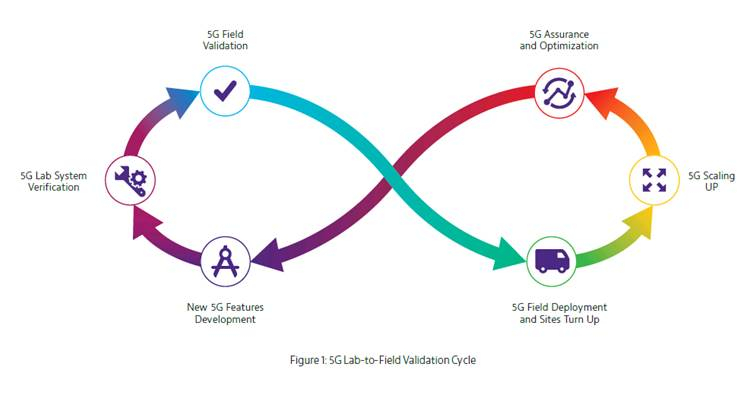
About VIAVI Lab To Field
VIAVI
offers a range of 4G and 5G validation, deployment and assurance
solutions that accelerate testing, facilitate network evolution and speed time
to market. The 3GPP-compliant TM500 Network Tester, largely regarded as the standard for wireless network testing, has seen
significant market adoption for testing throughout the R&D lifecycle and
also is used to stress-test networkperformance prior
to launch of new services. Together with the 5G Core Emulator, CellAdvisor 5G and NITRO Mobile solutions, VIAVI offers a powerful combination
of end-to-end testing, validation and assurance solutions that
support the complete network lifecycle from the lab to the field.
VIAVI (NASDAQ: VIAV) is a global
provider of network test, monitoring and assurance solutions to communications
service providers, enterprises, network equipment manufacturers, civil,
government, military and avionics customers, supported by a worldwide
channel community including VIAVI Velocity Partners. We deliver end-to-end
visibility across physical, virtual and hybrid networks, enabling customers to
optimize connectivity, quality of experience and profitability. VIAVI is also a leader in high performance thin film optical coatings,
providing light management solutions to anti-counterfeiting, consumer
electronics, automotive, defense and instrumentation markets.
[Digital Business Africa] – In preparation for the impending release of next-generation Wi-Fi technology later this year, the Wireless Broadband Alliance (WBA) released on this July 10, 2019 to Londona new white paper that provides deployment guidelines for a number of possible scenarios utilizing Wi-Fi 6 technology. With today’s white paper release, operators, enterprises and cities now have the tools needed to embrace and deploy Wi-Fi 6 when it’s released later this year.
Globally,
dependence upon Wi-Fi continues to grow exponentially, driven
by a number of factors:
· Global enterprises this year will generate more than 33 billion exabytes of
IP traffic. By 2022, that number will grow to more than 63 billion exabytes of IP traffic, a compound annual growth rate (CAGR) of 23
percent.
· Wi-Fi is the primary access technology in most broadband households,
with 76 percent of US households using Wi-Fi as the primary broadband connection.
As this newest white paper from WBA illustrates, savvy deployment of Wi-Fi 6 can mitigate some of the growing pains that Wi-Fi is experiencing, while ensuring that operators, enterprises and vendors meet important service-level agreements (SLAs). As such, the work released today proposes guidelines to ensure SLAs around bandwidth, throughput, latency, traffic prioritization and numerous other factors.
The paper also
provides guidelines for RF planning and design, with consideration given to
factors like band steering, MU-MIMO and adjusting for high-density deployments
that demand increased capacity. Additionally,
today’s release addresses ways that Wi-Fi 6 deployments can provide
seamless mobility and backward compatibility with previous Wi-Fi generation
technology.
“Since its
inception 20 years ago, Wi-Fi has become a fundamental expectation
for consumers and enterprises alike,” said Tiago Rodrigues, General Manager,
WBA. “This latest white paper comes at a crucial time; not only is
global demand for Wi-Fi continuing unabated, but operators worldwide are
ramping up 5G networks, and governmental authorities around the world are
preparing to open 6GHz spectrum to Wi-Fi traffic. Today’s announcement
illustrates the dedication of the WBA and its member companies to providing
timely, expert direction to ensure that Wi-Fi deployments successfully
accommodate all of these global factors.”
To that end, the
paper provides a number of deployment scenarios for Wi-Fi 6,
including public venues, stadiums, residential and multi-dwelling units, the
Internet of Things (IoT) and enterprise WLANs. Today’s release was
developed in conjunction with WBA’s Next Gen Wi-Fi Work Group develop,
including operator representatives from Boingo Wireless, BT and Charter
Communications, as well as vendor representatives from Broadcom, Cisco and
CommScope.
Several industry
experts weighed in about the importance of Wi-Fi 6 deployment guidelines:
“Technologies
like Wi-Fi 6 and PasspointTM are steering unlicensed networks into the 5G era,
meeting high performance expectations across speed, latency, reliability,
security and traffic management. To realize digital transformations for both
people and things, we’ll need Wi-Fi and its ability to carry the bulk of data
traffic with unparalleled efficiencies,” – Dr. Derek Peterson, CTO at Boingo
Wireless and Co-Chair of
WBA.
“Investment is driven by market opportunities, Wi-Fi-cellular aggregation, customer retention and new business opportunities, such as IoT,” said Dr. Youngseok Oh, Manager, SK Telecom. “SK Telecom has been engaging in Wi-Fi 6 services that provide reliable, predictable services to customers anytime and anywhere, while also delivering new capabilities and business models.”
“As we work with
mobile and broadband operators around the world, the need for high-capacity
Wi-Fi continues to be a major driver,” said Finbarr Coghlan, CTO,
Accuris Networks. “Wi-Fi 6 addresses a number of critical
requirements being driven by user experience and service delivery demands,
including connecting to more devices simultaneously, interference management
and reduced power consumption, which dramatically improves battery life for
mobile and IoT devices. Accuris is excited to work with our Wi-Fi
equipment partners to realize these benefits to further improve enterprise and
IoT applications over Wi-Fi.”
“Enterprises
like hotels, travel hubs and retail, can use Wi-Fi 6 to build carrier-grade
infrastructure that will complement 5G,” said Chris Bruce, Managing Director,
GlobalReach Technology Inc. and Board Member of WBA. “Deploying Wi-Fi 6
alongside Hotspot 2.0 /NGH allows venue owners to control their entire user
experience. This next generation of Wi-Fi will also allow these venues to
negotiate mobile data offload access to their infrastructure on equal terms
with cellular operators.”
The Wireless Broadband Alliance
Founded in 2003,
the vision of the Wireless Broadband Alliance (WBA) is to drive seamless,
interoperable service experiences via Wi-Fi within the global wireless
ecosystem. WBA’s mission is to enable collaboration between service providers,
technology companies and organizations to achieve that vision. WBA undertakes
programs and activities to address business and technical issues, as well as
opportunities, for member companies.
WBA work areas
include advocacy, industry guidelines, trials and certification. Its key
programs include NextGen Wi-Fi, 5G, IoT, Testing & Interoperability and
Roaming, with member-led Work Groups dedicated to resolving standards and
technical issues to promote end-to-end services and accelerate business opportunities.
WBA’s membership is comprised of major operators and leading technology
companies, including Broadcom, BSNL, Orange, Facebook, Google, HPE Aruba,
Huawei, Microsoft, NTT DOCOMO Ruckus, Shaw, SK Telecom and T-Mobile US.
The WBA Board
includes AT&T, Boingo Wireless, BT, Cisco Systems, Comcast, Deutsche
Telekom AG, GlobalReach Technology, Intel and KT Corporation.
The latest report, Wi-Fi 6 Deployment Guidelines, is available to download here
[Digital Business Africa] –Temenos (SIX: TEMN) the banking software company, today, 30 may 2019, announced that ARB Apex Bank has chosen to renew its contract with Temenos to continue its mission to provide banking and non-banking services for Ghana’s Rural and Community Banks (RCB’s) and their customers. Using Temenos banking software, ARB Apex Bank serves over six million customers with almost seven million accounts, processing an average of 220,000 daily transactions and empowering Ghanaians with modern day financial services.
The bank, which acts as the “mini” central bank for Ghana’s RCBs, connects 144 rural and community banks in Ghana, totaling 700+ branches. ARB Apex Bank has opted for Temenos Infinity, the breakthrough digital banking product and Temenos T24 Transact, the next generation core banking system as well as a host of additional solutions including Risk and Compliance and Temenos Payment Hub.
ARB Apex Bank was recently recognized as part of the “Best in Banking Awards” held at the Temenos Community Forum in The Hague in April 2019 and awarded the “Best Inclusive Banking” prize. This award recognizes ARB Apex Bank for delivering a truly customer-centric experience and for passing on its operating costs efficiencies to its end-customers in the spirit of financial inclusion.
Established Ghana in 2000 and receiving its banking license in 2001, ARB Apex Bank became a Temenos client in October 2009. The bank currently has 11 branch offices throughout the country and hosts over 140 Rural and Community Banks (RCBs) on a private cloud, run from their premises in Accra, Ghana.
Kojo Mattah, Managing Director ARB Apex Bank, said: “It is our desire to use technology-enabled products to support our member banks in becoming customer-centric organizations with innovative, value-added services for their customers. With Temenos banking software, we gain operational efficiencies and we can offer seamless and compelling banking experiences. We want our customers to feel confident and proud to walk into the banking halls of our RCBs and receive outstanding products and services”.
Jean-Paul Mergeai, Managing Director Middle East & Africa at Temenos, said: “I am delighted to announce the continuation of our longstanding relationship with ARB Apex Bank. We have worked together for almost 10 years now and we look forward to extending our relationship. Temenos cloud-native, package and functionally rich offering which is also tailored for the needs of inclusive banking will help the bank towards its admirable vision of increasing customer satisfaction and offering access to financial services to the broader population. .
Temenos has actively sought to grow and strengthen our team in the region significantly over the past number of years as well as expanding our footprint with financial institutions of all sizes from Central and Tier 1 banks, to microfinance organizations. We now serve 157 customers across 35 countries in Africa, all of whom receive the same world-class Temenos software regardless of their size”.
[Digital Business Africa] – Altran’s Intelligent Switching Solution (ISS) has become the first commercial network operating system (NOS) to support the Marvell® Prestera® CX 8500 family of fully integrated Ethernet switches, architected to meet the distinctive data center requirements needed for connected intelligence, edge computing and 5G applications. Altran and Marvell will jointly demonstrate the combined solutions from May 28, 2019 to June 01, 2019 during COMPUTEX Taipei 2019, one of the world’s largest computer and technology trade shows. Announcement made by COMPUTEX and Santa Clara this 30 May 2019.
Extending Altran’s successful relationship with Marvell, the Altran ISS now includes support for the Marvell Prestera CX 8500 switch portfolio, scaling up to 12.8 terabits per second. The combination of the Marvell Prestera CX 8500 and the Altran ISS delivers a feature-rich, production-grade switch platform across networking verticals. Specific to the data center segment, the Marvell Prestera CX 8500 family offers unprecedented flow visibility and analytics with its Storage Aware Flow Engine (SAFE) technology. It enables a reduction in network layers by leveraging Marvell’s high-radix switch core technology known as Forwarding Architecture using Slices of Terabit Ethernet Routers (FASTER).
SAFE facilitates virtual
storage orchestration on the Marvell Prestera CX 8500 family by providing
greater insight into network flows with per flow visibility, advanced telemetry
and comprehensive diagnostics that identify and resolve network congestion. The
gNMI-enabled advanced network monitoring features of the ISS are designed to optimize
the Prestera CX 8500’s dedicated hardware engines, which have programmability
to address the latest telemetry packet formats and monitoring data exporting
methods such as INT, iOAM and TAM.
Altran, the global leader in engineering and R&D services, developed ISS as a highly portable and modular software architecture that supports a wide range of application-specific integrated circuits (ASICs) and network processing units (NPUs) and interfaces for the development of intelligent Ethernet switching and routing applications. Both hardware and operating system agnostic, ISS supports a wide range of standards for advanced routing, switching and management features, data center features and 5G mobility infrastructure. It delivers high performance and scalability through containers and micro services-based architecture.
“Altran’s ISS is an
integral part of more than 100 products from leading networking and telecom
equipment manufacturers. It enhances switching capability, reduces development
times and increases focus on advanced application development,” said N.
Mohan Rangan, Group SVP and chief engineering officer at Altran North America.
“We also have a strong, longstanding relationship with Marvell for developing
solutions that usher in next-generation technologies for the entire networking
ecosystem.”
Altran’s ISS is
pre-integrated on Marvell’s Prestera and Link Street® switch solutions, and
facilitates original equipment and device manufacturers (OEMs/ODMs) and network
operators to create white-box platforms with support of rich feature sets and a
faster time to deployment. Similarly, Altran’s SDvAS portfolio of Universal
CPE, Virtual OLT, Virtual BNG, Fronthaul and Backhaul gateways, built on the
Altran ISS control plane and VNF manager, enables high performance SDN-enabled
solutions for enterprise, residential users and mobility infrastructure. SDvAS
promotes flexible and scalable deployment options to support ODM platforms and
VNFs deployable as VMs or containers on x86 compute nodes with hardware acceleration
offload support.
“The robust feature set
of Altran’s ISS complements our advanced switch ASIC pipeline to make possible
a wide range of networking deployments,” said Guy Azrad, vice president
of Engineering in the Networking Business Unit and general manager at Marvell
Israel. “By integrating Altran’s ISS onto our Marvell Prestera CX 8500
family of switches and leveraging a wide ODM white-box ecosystem, we are
enabling customers to deploy solutions this year.”
About Altran
Altran ranks as
the undisputed global leader in Engineering and R&D services. The Group
offers clients an unmatched value proposition to address their transformation
and innovation needs. Altran works alongside its clients, from initial concept
through industrialization, to invent the products and services of tomorrow. For
over 30 years, the company has provided expertise in Automotive, Aeronautics,
Space, Defense & Naval, Infrastructure & Transportation, Industry &
Consumer Goods, Life Sciences, Communications, Semiconductors & Electronics,
Software & Internet, Finance and the Public Sector. The Aricent acquisition
extends this leadership to semiconductors, digital experience and design
innovation. Altran generated revenues of €2.9 billion in 2018, with nearly
46,000 employees in more than 30 countries.
About Marvell
Marvell first
revolutionized the digital storage industry by moving information at speeds
never thought possible. Today, that same breakthrough innovation remains
at the heart of the company’s storage, processing, networking, security and
connectivity solutions. With leading intellectual property and deep
system-level knowledge, Marvell’s semiconductor solutions continue to transform
the enterprise, cloud, automotive, industrial and consumer markets.
[Digital Business Africa] – The International Telecommunication Union (ITU) today, 30 May 2019, launched the redesigned ITU Academy portal academy.itu.intto facilitate a more mobile user-friendly and secure access to ITU capacity development activities, courses and workshops in the field of information and communication technologies (ICTs) and digital development. The redesigned portal facilitates a more mobile user-friendly and secure access to ITU’s training and capacity development activities
The training portfolio ranges from general programmes for government policy-makers and regulators, professional business-focused curricula for senior ICT executives and managers, to specialized programmes for technical and operational staff and accredited academic programmes. The ITU Academy portal has also become a tool for digital inclusion as the training offerings have been widened to include ICT accessibility and training courses targeted at indigenous and marginalized communities.
“Since its launch in October 2012, the ITU Academy has responded to a growing demand for ICT training, teaching and research, equipping ITU members and other stakeholders with the specialist knowledge and tools they need to find their way around the fast evolving digital ecosystem,” says Houlin Zhao, ITU Secretary-General. “The revamped ITU Academy portal is a testament of our commitment to improving the capacity of ITU membership to accelerate the attainment of the Sustainable Development Goals by leveraging and using information and communication technologies.”
The redesigned portal is the main
online gateway to all ITU capacity development activities, and will enable the
three ITU Sectors to highlight their work on a regular basis.
“The development and upgrading of digital skills is key to the effective use of new technologies, improved job and career opportunities, and capacity to design and implement appropriate policies, strategies and initiatives,” says Doreen Bogdan-Martin, Director, ITU Telecommunication Development Bureau. “The ITU Academy is a unique platform providing ICT-related training to a global audience regardless of distance and time. I trust that the ITU Academy will act as a vehicle for delivering skills that will contribute to digital transformation and the achievement of the United Nations Sustainable Development Goals.”
The portal is easy to navigate,
has a modern feel and look, and is accessible on different digital platforms
including tablets and mobile phones. It is designed to make it easy for users
to browse through the catalogue of courses, training and workshops.
Furthermore, the portal has additional security software, which significantly reduces
threats such as data breach, viruses or cyberattacks. Also available are
virtual badges that can be used to show learners’ progress and celebrate their
achievement.
Courses are delivered online,
face-to-face and through blended learning.
[Digital Business Africa] – Channel VAS, the global fintech and data analytics company, has annouced today July 10, 2019 in Kigali its happiness to support the Mobile 360 Africa event, holding the position of Fintech Sponsor in this prestigious event that is taking place July 16-18 in Kigali, Rwanda.
With most of the Channel VAS’ 30-plus countries of operation being in the African region, events like Mobile 360 Africa, which is part of the GSMA Series of global events are a prime opportunity for the company to network with key players in the mobile industry and showcase its innovative ideas, aiming to improve people’s financial inclusion in underserved and underbanked areas of the continent.
Mr. Bassim Haidar, Channel VAS’ founder and CEO, stated of this partnership: “As a global leader in the Fintech field, Channel VAS is always keen on supporting major events like the M360 Africa, which promotes inspirational and disruptive ideas, like the services we offer, to shape the continent’s mobile and digital future. With theChannel VAS vision being the financial inclusion of unbanked populations in Africa, coming closer to other major players in the mobile ecosystem to work together towards that goal is facilitated through events like M360 Africa.”
“Mobile 360 Series – Africa aims to showcase how mobile connectivity is providing a foundation for innovation and entrepreneurship across the region, delivering a range of essential services across finance, healthcare and digital identity,” said Akinwale Goodluck, Head of Sub-Saharan Africa, GSMA. “We are looking forward to welcoming our speakers, guests and sponsors in Rwanda next week and discussing the positive and transformational impact mobile is having throughout this incredible region.”
A delegation of Channel VAS executives will be attending the event and will have important meetings with some of the region’s major businesses, aiming to expand the delivery of the company’s services towards financial inclusion to more countries and people in the region.
Channel VAS is offering Airtime Credit and Data Credit Services, as well as other innovative Mobile Finance and fintech services in over 30 countries worldwide, covering most of West Africa, South and East Africa as well as several Middle Eastern and Asian countries. The company’s expansion is supported by a strong portfolio of proprietary intellectual properties on the products and tools offered to MNOs and businesses across the globe.





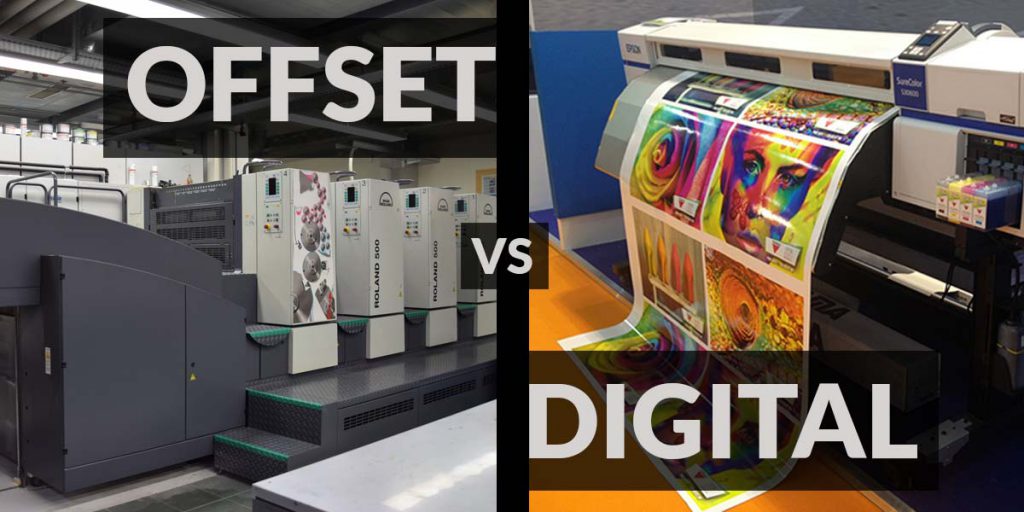

![Thierry Breton*: The future of supercomputers is being written in Europe [OPINION]](https://www.digitalbusiness.africa/wp-content/uploads/2019/07/Thierry-Breton-768x390.jpg "Thierry Breton*: The future of supercomputers is being written in Europe [OPINION]")
![L’avenir des supercalculateurs s’écrit en Europe : « Refusons l’Oscar du meilleur second rôle ! » [Thierry Breton*]](https://www.digitalbusiness.africa/wp-content/uploads/2019/07/Thierry-Breton-1024x520.jpg)
![L’avenir des supercalculateurs s’écrit en Europe : « Refusons l’Oscar du meilleur second rôle ! » [Thierry Breton*]](https://www.digitalbusiness.africa/wp-content/uploads/2019/07/Thierry-Breton-2-1024x377.jpg)